

The American Institute for Boys and Men is a nonpartisan, nonprofit research organization focused on the wellbeing of boys and men.
Joined May 2023
- Tweets1.2K
- Following95
- Followers3.8K
- Likes372




Pinned Tweet
In 2023 alone, 39,045 men took their own lives, roughly one every 13 minutes.
The risk is even greater for working-class men, and since 2010, rates among men aged 25-34 have climbed by 30%.

Students' math scores have increased steadily over the past 10 years, but have since declined after the pandemic in 2020. Research by AIBM’s Ben Smith uncovered this trend from the Main National Assessment of Educational Progress.
aibm.org/research/boys-start…

Tomorrow at 12pm ET: join @RichardvReeves and @AspenInstSports to unpack our new “Boys in Sports” report and discuss community-based solutions to keep boys engaged. Register: aspeninstitute.zoom.us/webin…


When does investing become gambling? AIBM’s @JonathanDCohen1 explains why prediction markets are forcing that question, and why young men have the most at stake.
Our new survey with @ThirdWayTweet finds that around 76% of men under 50 say boys’ and men’s issues aren’t taken seriously. The data shows that they want lower costs, mental health support, and childcare & paid leave for dads.
aibm.org/research/priorities…

Gambling is more accessible than ever, but safeguards for vulnerable populations haven’t kept pace. New policy paper from @JonathanDCohen1 on how to fix that:
aibm.org/policy/how-to-fix-o…

American Institute for Boys and Men retweeted

Today, @aibm_org's @JonathanDCohen1 released a ten-point plan to fix online gambling. As an institute, we are not against gambling, but we are against destructive platform practices.
If you care about this issue, this paper is not one to miss: aibm.org/policy/how-to-fix-o…

Why do so few men enter nursing, therapy and social work? Help us find out. AIBM’s new Men in HEAL grants fund research and field tests. Concept notes are due Nov. 15th:
aibm.org/wp-content/uploads/…
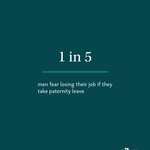
Over time, more non-college men have moved in with their parents. The argument goes that it's a temporary move, yet 1 in 5 non-college men in their early 30s live with their parents, and rates remain high into their 40s.
aibm.org/research/higher-ren…

“Demoralized men are not depressed in the clinical sense. They can still enjoy things, still function when motivated, still complete tasks that interest them. What they lack is a felt sense that effort connects to a future worth reaching.” New piece by Bruno Manno:
aibm.org/commentary/why-cant…

AIBM’s @JonathanDCohen1 endorses the idea of “practical ‘speed bumps’ like deposit limits or time limits as a default setting to create more friction for people engaged in betting” in a recent @politico piece.
politico.com/news/magazine/2…
“Among boys currently playing organized sports, half selected “playing with friends” and half selected “having fun” as favorite parts of the experience.” Boys need more outlets to connect with their peers outside of the digital world. Our new report with @AspenInstSports:
aibm.org/research/whats-goin…

American Institute for Boys and Men retweeted

If you read @JennyVrentas' story in the NYTimes about how DraftKings uses AI to target bettors vulnerable to gambling addiction, you'll want to hear the backstory about the 24-year-old who built the model, and why he ultimately left the company.
Full convo with @JonathanDCohen1: menonline.org/p/inside-draft…
American Institute for Boys and Men retweeted
Does watching pornography depicting choking make people more likely to choke a partner during sex?
Wright, Herbenick & Tokunaga (2023) found a correlation (not causation) for college students. Prior research by Burch & Salmon, Ferguson & Hartley casts doubt.
Now an opportunity for policy research:
England and Wales’ upcoming ban on porn depicting strangulation or suffocation creates an opportunity to evaluate what happens when access is restricted.
Does exposure decline? Do attitudes or sexual practices change?
deseret.com/u-s-world/2026/1…

At age 22, Jayden Butts helped DraftKings save millions with a tool he built as an analyst. Then he learned what it was really doing: targeting the customers most likely to lose. Listen to Jayden’s conversation with AIBM’s @JonathanDCohen1: menonline.org/p/inside-draft…
College success may begin in elementary school. New research by AIBM’s @ChrisLPulliam finds that boys fall behind girls on childhood behavior skills, which is linked to earning a four-year degree.
aibm.org/research/why-gender…

American Institute for Boys and Men retweeted

👷 What challenges are boys and men facing in today's economy, and what can policymakers do about them?
@RichardvReeves of @aibm_org and @swinshi of @AEI join EIG's @m_cosic to examine the relationship between men, work, and economic opportunity.
#AmericanWorkerConference

Research on social media and AI is getting millions in funding, but porn—despite being so widespread—is still met with embarrassment, shame, and taboo, says AIBM's @oso in a recent piece for @MensHealthUK on the role of pornography in men's lives.
menshealth.com/uk/mental-str…

American Institute for Boys and Men retweeted

Back in the 1980s, tribal bingo first emerged through a loophole in state gambling law. Sound familiar?
I'm not sure PMs are the existential threat many tribes seem to think they are, but I understand the concerns, and tribes' legal case against PMs seems like a slam dunk

NEWS: Four Native American tribes are launching new prediction apps with Kalshi — breaking ranks with most of Indian country, where opposition to the prediction industry runs high, over fears that it threatens tribal casinos that brought in $46b last year cnn.com/2026/10/07/business/…

About 69% of sports prediction market volume comes from states without legal sports betting, with Texas and California alone making up 43%, according to @JonathanDCohen1 on the @ProfGMarkets podcast:
podcasts.apple.com/us/podcas…
