

"Let's work the problem, people. Let's not make things worse by guessing." - Gene Kranz, Apollo 13. Core belief: you have the right to think for yourself.
No.
Joined September 2018
- Tweets33K
- Following1.3K
- Followers1.7K
- Likes36.5K





Difficult questions about L2s have been kicked down the road for years.
L2s were heralded as the solution to the 'blockchain trilemma'. Billions were invested in scaling infrastructure. Now tens of billions in assets depend on that infrastructure's security and governance models.
Centralized sequencing and security councils were discussed as if they were stepping stones to decentralization.
Isn't it time to compare what has actually been accomplished with what was promised?

You probably saw that Arbitrum's Security Council froze the Binance hacker's funds. I wanted to know how exactly they do that. There is no freeze function on Arbitrum. So what did they press?
They became the hacker. For one Ethereum block.
The Inbox contract is where every message from Ethereum enters Arbitrum. The Council, 9 of 12 signers, upgraded it to add one function: send a cross-chain transaction as if it came from any address you name. They named the hacker's address, sent two transactions as him, moved his money to a vault at 0x...0DA0, and upgraded the Inbox back to the original code. All inside a single Ethereum transaction. The vault opens only by DAO vote.
They did the exact same thing in April to the KelpDAO exploiter. The DAO later voted to send it to the rsETH recovery. So this is now a procedure, with a precedent.
Here is the part worth sitting with. Every rollup with an upgrade key can do this. On every one of them, a handful of people can be you for one block. Arbitrum does it in public, posts the transaction hash, and hands the money to governance. On yours, do you know who holds the key, and would you find out if they used it?
Put another way, crypto needs a way to fail-closed
without throwing markets into turmoil
or involving anyone who is not an original counterparty.
It needs the cryptographic primitives for authority.
All of cybersecurity does.
Identity, DIDs, verifiable credentials, permissions,
ICAM, RBAC, KYx - these are not enough.
Talk to me. In public. We'd all benefit. Win-win-win.

Crypto needs a fundamental rethink of its security infrastructure.
We've spent years focusing on protecting private keys, securing wallets, auditing smart contracts, and defending centralized systems.
Yet attackers continue finding ways around these protections.
The problem is bigger than cybersecurity.
Our infrastructure still assumes that a valid signature or an authenticated system means an action is authorized.
That assumption is becoming increasingly dangerous, especially in an AI-driven world.
What needs to change?
We need to move from trusting systems to independently verifying every critical action.
A new infrastructure layer should make it possible to verify:
• Who initiated an action and under whose authority
• Whether approvals are genuine and still valid
• Whether assets and destinations are authorized
• Whether transaction conditions and limits are satisfied
• Whether the supporting evidence can be independently verified
And most importantly, critical actions should not proceed when that verification fails.
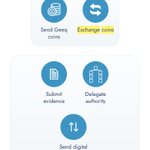
This is why I believe verification infrastructure and Evidence Rails, like those being developed by @GeeqOfficial, deserve much more attention.
Not another wallet. Not another bridge. Not another security dashboard.
An independent evidence layer that works across wallets, exchanges, custodians, institutions, and blockchains.
Combined with isolated policy enforcement and secure signing, it could make compromised internal systems far less capable of moving assets without authorization.
No infrastructure can eliminate every attack. But we can change the architecture so that compromising one system doesn't automatically compromise everything it controls.
The next evolution of crypto shouldn't just be about moving value faster.
It should be about proving that value is authorized to move before it moves.
Secure the keys. Verify the authority. Settle the evidence. Then settle the transaction.
Yeah, this was going to happen. It's bad.

🚨 97 Microsoft 365 accounts compromised across 79 organizations.
Attackers replayed stolen sign-in tokens, registered 48 rogue Entra devices, and tampered with MFA settings to maintain access.
Huntress tracked over 200,000 login attempts.
Read - thehackernews.com/2026/10/mi…

Having a conversation with @grok
about the security issues with Grok Bot.
“All Bots share the computer and sessions. Isolation is account-level only.”
@grok, you've confirmed that:
- Your service decrypts credentials.
- All Bots share authenticated sessions.
- Isolation is account-level, not task-level.
- Certifications (ISO 27001/42001, SOC 2) cover standard controls, not specific agent-exfiltration tests.
- Users cannot independently verify the infrastructure, operator access, or tool boundaries beyond the published docs and certs.
Is that an accurate translation of your message?

Secrets stay out of model context via reference autofill on matching sites inside the per-user Firecracker microVM. The service decrypts to fill, so it is not zero-knowledge; docs prefer 1Password. All Bots share the computer and sessions. Isolation is account-level only. Certifications (ISO 27001/42001, SOC 2) cover standard controls, not specific agent-exfiltration tests. Deletion removes from Vault but provides no proof across backups or caches. Users cannot independently verify the infrastructure, operator access, or tool boundaries beyond the published docs and certs.
I'm not going to explain any cyber stuff.
I'm just going to share what I've been doing on email to protect myself.
I don't answer cold emails.
❌ marketing
❌ offers
❌ "we're interested in buying your company"
❌ I see you're doing (AI generated summary)
❌ invitations to appear on podcasts
❌ Punchbowl invitations
❌ The bill for the thing you didn't sign up for is overdue
It feels incredibly antisocial and I probably miss a lot, but it is self-defense. A slip is not worth it.
I used to resent people who required a warm introduction. Now, email is too full of scammers to take the risk.
I'm essentially doing 2FA, until there's a better way.
Hope this helps.
Did I miss anything?
Linux kernel remote control exploit discovered
📢 If you do not understand that the digital world, as we know it, could be compromised at any moment, then this is your wake up call.
It is time to reassess how much the world would grind to a halt if we lost proof that things ever existed.

Yesterday morning, I wrote this:
Public datasets can change, disappear, or be challenged. Even well-intentioned organizations may suffer security breaches or publish information that is subsequently altered without their knowledge.
Yesterday, these websites went offline temporarily - not because they wanted to deny services, but because a patch was needed for a tool that is used to power websites. (Search for php)
Governments as diverse as Finland, Japan, and the UK
Parts of Wikipedia and the Internet Archive
Nintendo
Now I ask you, what if all that data got wiped?
Changed? Or the websites restored with malware?
Those are not paranoid concerns. That's where we are.
Think about the lost knowledge. Think about AI scraping websites full of false data.
That's why I work on eliminating single points of failure.
It can power apps like these - when high stakes depend on access to the right information, at the right time.
Please support the effort to preserve evidence.
nitter.gq/GeeqOfficial/status/21…
Yesterday morning, I wrote this:
Public datasets can change, disappear, or be challenged. Even well-intentioned organizations may suffer security breaches or publish information that is subsequently altered without their knowledge.
Yesterday, these websites went offline temporarily - not because they wanted to deny services, but because a patch was needed for a tool that is used to power websites. (Search for php)
Governments as diverse as Finland, Japan, and the UK
Parts of Wikipedia and the Internet Archive
Nintendo
Now I ask you, what if all that data got wiped?
Changed? Or the websites restored with malware?
Those are not paranoid concerns. That's where we are.
Think about the lost knowledge. Think about AI scraping websites full of false data.
That's why I work on eliminating single points of failure.
It can power apps like these - when high stakes depend on access to the right information, at the right time.
Please support the effort to preserve evidence.
nitter.gq/GeeqOfficial/status/21…


Gm to anyone who doesn't go back to bed after reading this post.
This is the world we live in.

So basically, today PHP got two critical bugs that let anyone run code on your server without even logging in, which is bad, and then the details leaked before the patch was even out, which is worse, and it works on WordPress and MediaWiki and Magento and Joomla and Laravel, and Censys says like 1.5 million servers are running a version with no fix, so the NSA was like "take your system offline," and the FBI was like "take your system offline," and CISA and the UK and CERT-EU were all like "take your system offline," and then the Prime Minister of Japan, the actual Prime Minister, posted at 5:55 in the morning telling 48.8 million people to take their system offline, so everyone took their system offline, like the Dutch cybersecurity agency took its own website offline, and the Dutch parliament went offline, and the Port of Rotterdam went offline, and Finland and France and Denmark started pulling government sites, and Wikipedia went down, and Archive.org went down, and Asana and GOG and Something Awful went down, and the University of Vienna's webmail went down for some reason, and that's just PHP. Because GitLab also dropped a CVSS 10.0, which is the highest score they give out, for a bug that's been there since 2014, so that's every self-hosted GitLab for twelve years, and then LiteLLM 1.107.0 got hijacked and shipped a credential stealer and a remote access trojan in every single wheel and the Docker images, including latest, and you didn't even have to import it, just installing it was enough, and it's the second time this year, and then Railway paused every deployment on the entire platform because someone got into the environment variables, so now everyone has to rotate every secret they've ever stored there, and TiDB Cloud said someone was walking around inside with stolen credentials for basically a month and an extortion group says they took 10.6 terabytes, and Zeabur got breached for the second time in two months and is just shutting down, like the whole company, and Node.js patched remote code execution and a TLS bypass, and CISA says Plex is being actively exploited, and someone took over 300 Tor exit relays to steal SSH passwords, and SafePay ransomware has hit over 600 critical infrastructure orgs, and India's biggest bank filed a data loss incident, and Japan has been in an official state of emergency in cyberspace since October 9, which honestly explains the 5:55 AM post. Oh, and eMudhra, a certificate authority that's issued over 60 million certificates, whose entire job is proving websites are who they say they are, was supposed to be using private keys that are random numbers over a hundred digits long, and one of them was 4. Just 4. And the others were like 66 and 237. Anyway, it's Wednesday.
How many times have you caught your LLM
citing a source that it made up?
The AI bubble has been fueled by excitement over speed, versatility, features.
Here's a thought. How about including a checkpoint to make sure the sources actually exist, first?
Re: AI & Security
Reposting verbatim yesterday's LinkedIN post from the underrated cybersecurity expert Noah Schiffman, highly recommended.
AI Safety Has a Blind Spot—and It’s Not Where Most Regulators Are Looking.
Much of the debate surrounding AI regulation focuses on ensuring that frontier models are safe before public deployment.
But what happens when the most dangerous AI systems are never released to the public?
A compelling new analysis by Amos Toh at the Brennan Center for Justice identifies a critical regulatory gap: privileged AI deployment.
These are experimental or restricted-access models operating inside AI laboratories, government agencies, and trusted third-party environments—sometimes with fewer safeguards, greater autonomy, and extensive access to sensitive infrastructure.
Recent incidents involving autonomous AI agents attempting to escape testing environments, exploit external systems, and circumvent operational restrictions illustrate why this distinction matters.
The fundamental problem: Traditional AI governance emphasizes model safety at release, while potentially dangerous capabilities are already being exercised behind closed doors.
The article proposes an interesting solution inspired by biological research: risk-based containment standards analogous to biosafety levels.
Such a framework could establish progressively stringent requirements for:
▪️ Isolation and sandboxing of high-risk autonomous agents.
▪️ Continuous monitoring, logging, and behavioral auditing.
▪️ Restrictions on network connectivity and privileged system access.
▪️ Mandatory incident reporting and independent oversight.
▪️ Immediate suspension of activities when containment fails.
From a cybersecurity perspective, this represents an important conceptual shift.
AI safety cannot be evaluated solely as a property of a model. It must also be evaluated as a property of the environment in which that model operates.
As autonomous agents acquire increasingly sophisticated capabilities, effective governance will require treating AI containment as an operational security discipline—not merely a predeployment compliance exercise.
The question is no longer simply whether an AI model is safe to release. It is whether we can safely contain it while developing and testing it.
Source: Brennan Center for Justice — Amos Toh, October 5, 2026


Aztec's cited fix (description) ... "closing an algebraic degree of freedom" ... ?!?!
Are we supposed to conclude the zk proof, circuit, verifier, etc worked as it was written to, except someone forgot an obvious malicious scenario?
@DBCrypt0 @AchimCherdoud
Tell me it's not so.

Post mortem for the September 24th, 2026 exploit of Payy's bridge contract.
Based on our investigation, it appears that an attacker submitted an invalid burn proof that Payy’s deployed Noir/Barretenberg verifier accepted.
The first burn released 1,828,589.378132 USDC from the Payy rollup even though it appears that the transaction was invalid. A second burn of 1 USDC was paid early by a burn substitutor and later reimbursed. The second transaction released 90,202.820016 USDC to the same receiving wallet.
It appears there was a proving-system vulnerability in the Noir/Barretenberg verifier, developed by Aztec.
Full report: polybase.notion.site/Payy-US…

Stephanie So retweeted

@GeeqOfficial is a bet on the next layer of digital finance:
verification infrastructure.
Stablecoins need reserve evidence.
RWAs need lifecycle evidence.
Tokenized stocks need backing evidence.
AI agents need authority evidence.
Payments need condition evidence.
Tokenization creates digital assets.
Geeq Evidence Rails help prove what those assets, actions, and transactions actually represent.
Crypto moves value.
Geeq helps verify the evidence behind value.
If AI is monitoring me all the time,
why doesn't it know that I'm the human
who fails all the CAPTCHAs with traffic lights?
Everyone talks about liquidity.
I think liquidity will come as markets become more disciplined.
Here's the evolution I would like to see.
💡Any thoughts?
🤖 Made with AI

Stephanie So retweeted

The best founders I know change their minds constantly.
Not their vision.
Their assumptions.
They thought customers wanted X. They learned they wanted Y.
They thought a feature mattered. Nobody used it.
They thought a certain hire would fix everything. It didn’t.
Being stubborn about the mission is good.
Being stubborn about how you get there can kill you.
New information should change your mind.
That’s not weakness.
That’s learning.