

@databricks
Account based inUnited States
About this account
- Account based in
- United States
- Connected via
- Web
Account-level information from X, not a live location or the device used for a specific post.
Databricks is the Data and AI company, helping organizations build and scale data and AI apps, analytics and agents.
Joined July 2013
- Tweets15.8K
- Following1.1K
- Followers98.8K
- Likes9.6K
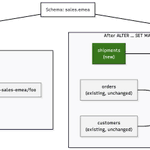




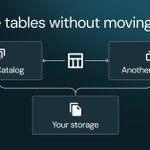


With Unity Catalog managed tables, you can keep your data in cloud storage you own, at a location you control.
✓ Set managed storage locations at the metastore, catalog, or schema level
✓ Change where new tables land as requirements evolve
✓ Choose the destination when converting external tables to managed
Read our guide to storing Unity Catalog managed tables: databricks.com/blog/your-dat…

Databricks retweeted

Databricks AI Runtime (AIR) is now GA, offering an easy and super-fast way to launch GPU workloads. Unlike provisioning your own GPU servers, you get GPUs with your code in seconds, with easy access to all your data. This is especially relevant now that agents can automate much of AI training, and want to scale up/down experiments quickly. Read how companies like Robinhood, Superhuman, Factset and Merck have been using AIR to accelerate AI training: databricks.com/blog/ai-runti…

Databricks and @nvidia are expanding our collaboration so enterprises can customize open models on their own data and take them all the way to production.
With AI Runtime, developers can use NVIDIA NeMo, NGC containers and new Nemotron cookbooks to train and fine-tune models on serverless NVIDIA GPUs alongside governed enterprise data. Nemotron 3.5 lightning and Super VL are also ready to load, adapt and serve on Databricks from day one.
Customize with governed enterprise data. Serve in production. All on Databricks.
databricks.com/blog/databric…

AI Runtime is now generally available, bringing serverless, on-demand GPUs directly into Databricks to power the next generation of AI development.
As AI teams scale model training and agent-driven experimentation, they need GPU infrastructure that can keep pace. AI Runtime delivers seconds-level launch latency, reliable multinode training, and Unity Catalog governance on every workload.
Hundreds of customers, including Robinhood, PicPay, Flo Health and FactSet already use it to ship deep learning models to production.
Accelerate AI innovation, from experimentation to production → databricks.com/blog/ai-runti…
Introducing MemCurrent, a persistent memory architecture designed to help production agents stop starting from zero.
MemCurrent combines episodic memory with derived memory across three access patterns:
• Plugins to log and load context automatically
• Tools the agent calls on demand
• An offline “dreaming” pipeline that consolidates memory in the background
Agents carry forward user preferences, prior corrections, metric definitions and successful workflows instead of rediscovering them every session.
On our internal benchmark built from real enterprise data, MemCurrent triples the agent's pass rate while using 31% fewer tokens and running 26% faster. It's built into Agent Bricks' Memory offering and already powers memory in Genie.
Read the research: databricks.com/blog/memcurre…
More than 1 million Genie Agents were created in 2026. Which ones should you build first?
Across dozens of rollouts, the agents that get adopted fastest share a clear pattern: tightly scoped domains, high-frequency repetitive questions, and governed data with strong metadata.
One team built a risk and portfolio Q&A agent that saw usage climb before it even reached production. Another had a working agent live in weeks because the demand and data were already there.
We put together a simple rubric to help you score and rank candidate workflows before you build 👇
databricks.com/blog/how-choo…

DeepSeek V4.1 Flash 1017 is now available on Databricks as a new endpoint.
Same architecture, updated weights, with substantial improvements across reasoning, coding, agentic tasks and visual benchmarks.

DeepSeek 4.1 Flash is on Databricks the day it ships.
On OfficeQA Pro V2, it lands on the Pareto frontier, making it a strong open-source option for enterprise document reasoning.
You can point it at the data already in your Lakehouse and use it to build governed AI apps and agents from day one.
↳ Every call routes through Unity Gateway
↳ Access, spend, and performance stay under one view
↳ The same control layer applies across @deepseek_ai and every other model you run
docs.databricks.com/aws/en/r…
Open table formats are important. But they don’t answer the harder question: who actually controls the data, and can you move it without copying everything somewhere else?
That’s the standard we use for openness in Unity Catalog.
Your managed tables can live in customer-owned storage. The best table features work on those tables. And with REGISTER and UNREGISTER in Private Preview, tables can move between catalogs while the underlying data stays in place.
For us, an open catalog should give you storage ownership, full capabilities on the tables you own, and a clean way out.
databricks.com/blog/what-mak…

New York is becoming one of Databricks’ biggest AI hubs. 🗽
We’re expanding at 5 Bryant Park to ~120,000 square feet across five floors, including a dedicated Engineering and Research floor.
With teams building technologies behind Genie, Unity Gateway and CustomerLake, our momentum in NYC is only growing.


[DEMO] With Git worktrees and Lakebase Postgres database branching, each coding agent gets its own isolated, copy-on-write branch to run migrations, test changes, and experiment without affecting other environments.
GitHub Actions then creates a fresh database branch per PR to validate migrations and preview the app before anything reaches production.
Watch the full workflow: youtube.com/watch?v=RPsyHKiW…

Databricks retweeted

Can a single database architecture satisfy both vibe-coded and large scale enterprise apps?
The same approach makes small database ultra cheap to run and branch can also make a large one faster and easier to operate. We call this architecture Lakebase.
The energy has been electric at #DataAIWorldTour 2026, and we’re not even halfway through!
Next up:
🌬️ Thu, Oct 29 — Chicago
🇩🇪 Wed, Nov 4 — Munich
🍑 Tue, Nov 10 — Atlanta
🇳🇱 Tue, Nov 10 — Amsterdam
🇬🇧 Wed, Nov 11 — London
Across each stop, learn how organizations are grounding AI in enterprise data and business context, governing data and AI usage, and putting apps, agents and analytics into production.
Find a stop near you: databricks.com/dataaisummit/…


Saturday night under the lights at Databricks Field at California Memorial Stadium.
Cal vs. Wake Forest. Databricks on the field, on the helmets and in the stands.
Kickoff at 7:30 PM PT.
#GoBears 🐻


Restoring a 100 TB database with Lakebase Postgres takes seconds.
How?
A branch-based restore is a metadata operation. It creates a branch at a point in time, referencing immutable history that already lives in decoupled storage. No copying data, no replaying WAL. Recovery is near-instant regardless of database size, and simple enough for agents to use in branching and undo workflows.
databricks.com/blog/lakebase…
Decide faster. TypeSafe's Jev-1.14 is now available on Databricks.
Jev isn't a text generator. It's a structured decision model. It classifies, scores, and returns calibrated probabilities, resolving each decision in roughly 70 to 500 milliseconds, 20 to 200 times faster and up to 400 times lower cost than standard LLMs. For Databricks customers, that means real-time decisioning across millions of records at a fraction of the cost.
With our frictionless access, you can get started testing Jev right away. Put Jev to work directly on the data in your Lakehouse through ai_classify and ai_decide. Tag documents, route records, and score decisions across millions of rows, with every call governed, monitored, and secured by Unity Gateway.
Try Jev → dbricks.co/3TQncpg
The fifth edition of the Big Book of Data Engineering is here.
This one covers how to bring ingestion, transformation, and orchestration onto a single governed platform, build millisecond-latency streaming pipelines at scale, and use built-in AI agents to accelerate pipeline authoring and resolve data failures.
Includes real-world examples from NAB, Panasonic, Toyota, AccuWeather, Daikin, and Coinbase.
📙 Download now: databricks.com/resources/ebo…


Congrats to @reflection_ai on the Beam launch. Excited to see what builders create 🫡

Beam is now available across platforms, with open weights under the Apache 2.0 license - in collaboration with an ecosystem of 40+ partners.
We're releasing:
- Weights, tokenizer, and reference implementation
- BF16, FP8 and NVFP4 weights and a DFlash2 drafter
- The open source harness we built and trained Beam on: Mirror CLI
Weights and model card on Hugging Face: huggingface.co/reflection

Databricks retweeted

Neon now has realtime, built by the team behind Electric. Turn any SQL query into a live query, joins and aggregates included. All inside Postgres, and ready for agents.
It’s in public beta and available in all Neon plans. Give it a try and tell us what you think!
We published a step-by-step playbook for rolling out Genie One across your organization 👇
The teams that get this right tend to start small: one team, one governed data domain, a set of questions with known-correct answers. They earn trust with a handful of users, act on feedback, then widen deliberately.
The playbook walks through each phase, from a first-team pilot to org-wide AI coworkers, with governance and evaluation built into every step.
databricks.com/blog/how-roll…
