

The funder-researcher collaboration and open-access journal for research in the life and biomedical sciences | @eLifeCommunity
Cambridge, UK
Joined September 2011
- Tweets26.4K
- Following692
- Followers177K
- Likes12.5K





Mid-zone hepatocytes trade proliferation for survival via Atf4-Chop axis in early acute liver injury
elifesciences.org/articles/1…

148
What does it mean to be AI?
elifesciences.org/digests/10…
1
1,664
Looking for a home for your neuroscience paper?
We welcome research in all areas of neuroscience, including brain function, neuronal circuits, synapses, sensory processing, and motor pattern generation.
Take a look at what we publish ⬇️
elifesciences.org/subjects/n…

ALT Three researchers in lab coats stand on a giant brain while a sky of connected stars and constellations evokes mapping neural networks.
Modulation of human dorsal root ganglion neuron excitability by Nav1.7 inhibition
elifesciences.org/articles/1…

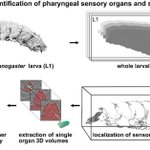
Morphology and ultrastructure of pharyngeal sense organs of Drosophila larvae
elifesciences.org/articles/1…

Mapping the topographic organization of the human zona incerta using diffusion MRI
elifesciences.org/articles/1…
1,319
📅 Coming up this Monday, 23 November, 5pm GMT.
Hear from the eLife Early-Career Advisory Group and DORA on fair research assessment, and how early-career researchers can take action.
Not registered yet? Sign up here ⬇️
us02web.zoom.us/meeting/regi…

This landmark study is part of a large-scale effort to assess the consistency of published findings in Drosophila immunity.
The conclusions on the consistency of the claims, as presented in this paper, are based on mostly convincing evidence.
elifesciences.org/reviewed-p…

ALT Project timeline showing milestones from collecting 400 papers and annotating claims, through verification, experimental testing, database creation and the ReproSci website launch, to data analysis, publications (2025–26), and continued community participation.
Reporting on an analysis of claims made in approximately 400 research papers from Drosophila immunity literature, the authors perform validation experiments to test a subset of the claims that are most inconsistent with current understanding.
1
2
772
An IL-21R STAT hypomorph circumvents functional redundancy in germinal centre responses
elifesciences.org/articles/1…
Mycobacterium tuberculosis suppresses protective Th17 responses during infection
elifesciences.org/articles/1…
Publishing in Physiology? Meet the editors reviewing your submissions at eLife and discover more about the research they’d like to see.
Meet the team:
elifesciences.org/inside-eli…

ALT meet our physiology editors, hear from them in our latest blog
We spoke to Senior Editors Christopher Huang, Merritt Maduke and Satyajit Rath about their research experience and what they are looking for in a Physiology paper.

ALT image of Chris Huang, Merritt Maduke and Satyajit Rath
1
690
At eLife we aim to review Physiology research that uses quantitative experimental and computational approaches to uncover mechanisms driving biological function across levels of organisation, with emphasis on cellular and molecular physiology.
elifesciences.org/subjects/p…
598
Large language models poorly capture how word order shapes representations of sentence meaning in the human brain
elifesciences.org/articles/1…
A hormonal message for a longer life
elifesciences.org/articles/1…
Olfactory combinatorial coding supports risk–reward decision-making in Caenorhabditis elegans
elifesciences.org/articles/1…
Motor unit mechanisms of speed control in mouse locomotion
elifesciences.org/articles/1…
In the latest blog from eLife Pathways they explore the current state of modular science, including highlighting the work of others in the community.
Find out more about their next steps and how you can get involved.
elifepathways.org/blog/post-…
