

Official Account of the Ministry of Finance, Government of Pakistan
Islamabad, Pakistan
Joined June 2014
- Tweets10.9K
- Following15
- Followers262K
- Likes431





Ministry of Finance, Government of Pakistan retweeted

𝗣𝗮𝗸𝗶𝘀𝘁𝗮𝗻: 𝗙𝗿𝗼𝗺 𝗠𝗮𝗰𝗿𝗼𝗲𝗰𝗼𝗻𝗼𝗺𝗶𝗰 𝗦𝘁𝗮𝗯𝗶𝗹𝗶𝘁𝘆 𝘁𝗼 𝗘𝗮𝗿𝗹𝘆 𝗜𝗻𝘃𝗲𝘀𝘁𝗺𝗲𝗻𝘁 𝗠𝗼𝗺𝗲𝗻𝘁𝘂𝗺
Pakistan’s landmark $500 million MIGA-backed transaction with Commerzbank, J.P. Morgan and Standard Chartered comes at a particularly encouraging time — when the country’s broader investment landscape is showing measurable signs of improvement.
Beyond restoring macroeconomic stability, Pakistan is increasingly witnessing stronger capital flows, improving corporate performance, new international business entrants and expansion by existing investors.
𝗧𝗵𝗲 𝗲𝗺𝗲𝗿𝗴𝗶𝗻𝗴 𝗶𝗻𝘃𝗲𝘀𝘁𝗺𝗲𝗻𝘁 𝘀𝘁𝗼𝗿𝘆 — 𝗶𝗻 𝗳𝗮𝗰𝘁𝘀 𝗮𝗻𝗱 𝗻𝘂𝗺𝗯𝗲𝗿𝘀:
𝟭. 𝗙𝗼𝗿𝗲𝗶𝗴𝗻 𝗗𝗶𝗿𝗲𝗰𝘁 𝗜𝗻𝘃𝗲𝘀𝘁𝗺𝗲𝗻𝘁 𝗔𝗰𝗰𝗲𝗹𝗲𝗿𝗮𝘁𝗶𝗻𝗴
▪️ Net FDI reached $936 million in 4MFY27, up 22% YoY.
𝟮. 𝗙𝗼𝗿𝗲𝗶𝗴𝗻 𝗣𝗼𝗿𝘁𝗳𝗼𝗹𝗶𝗼 𝗜𝗻𝘃𝗲𝘀𝘁𝗺𝗲𝗻𝘁 𝗜𝗺𝗽𝗿𝗼𝘃𝗶𝗻𝗴
▪️ Foreign inflows into government securities reached $748 million gross and $275 million net in 4MFY27, with longer-term PIBs alone attracting $234 million net, against net outflows last year.
𝟯. 𝗖𝗼𝗿𝗽𝗼𝗿𝗮𝘁𝗲 𝗣𝗿𝗼𝗳𝗶𝘁𝗮𝗯𝗶𝗹𝗶𝘁𝘆 𝗦𝘁𝗿𝗲𝗻𝗴𝘁𝗵𝗲𝗻𝗶𝗻𝗴
▪️ Listed corporate profits grew 18% in FY26 and 24% in 1QFY27.
▪️ Foreign-owned listed companies/MNCs recorded even stronger profit growth of 26% and 36%, respectively.
𝟰. 𝗙𝗼𝗿𝗲𝗶𝗴𝗻 𝗜𝗻𝘃𝗲𝘀𝘁𝗼𝗿𝘀 𝗥𝗲𝗺𝗶𝘁𝘁𝗶𝗻𝗴 𝗥𝗲𝘁𝘂𝗿𝗻𝘀
▪️ Profit and dividend repatriation reached $2.3 billion in FY26 — nearly seven times the FY23 level.
▪️ Cumulative repatriation since July 2023 reached $7.9 billion, reflecting improved foreign exchange availability and ease of remitting earnings.
𝟱. 𝗚𝗹𝗼𝗯𝗮𝗹 𝗖𝗼𝗺𝗽𝗮𝗻𝗶𝗲𝘀 𝗘𝗻𝘁𝗲𝗿𝗶𝗻𝗴 𝗮𝗻𝗱 𝗘𝘅𝗽𝗮𝗻𝗱𝗶𝗻𝗴
▪️ Google opened its Pakistan office; Alibaba entered regulated fintech; Turkish Petroleum commenced offshore seismic exploration through its partnership; and VEON doubled its investment commitment from $1 billion to $2 billion.
▪️ The 5G spectrum auction attracted half a billion dollars, with participation from VEON, China Mobile and e& (Etisalat).
𝟲. 𝗡𝗲𝘄 𝗙𝗼𝗿𝗲𝗶𝗴𝗻 𝗕𝘂𝘀𝗶𝗻𝗲𝘀𝘀𝗲𝘀 𝗥𝗲𝗴𝗶𝘀𝘁𝗲𝗿𝗶𝗻𝗴
▪️ 1,035 foreign-linked companies registered in FY26, with another 352 in 1QFY27.
𝟳. 𝗣𝗿𝗶𝘃𝗮𝘁𝗲-𝗦𝗲𝗰𝘁𝗼𝗿 𝗖𝗿𝗲𝗱𝗶𝘁 𝗘𝘅𝗽𝗮𝗻𝗱𝗶𝗻𝗴
▪️ Outstanding private-sector credit reached Rs11.3 trillion in 1QFY27, up 17% YoY, reflecting improving financial intermediation.
𝟴. 𝗜𝗻𝗱𝘂𝘀𝘁𝗿𝗶𝗮𝗹 𝗮𝗻𝗱 𝗗𝗼𝗺𝗲𝘀𝘁𝗶𝗰 𝗗𝗲𝗺𝗮𝗻𝗱 𝗥𝗲𝗰𝗼𝘃𝗲𝗿𝗶𝗻𝗴
▪️ Large-scale manufacturing grew 5% in FY26 and around 2% in early FY27, reversing earlier contractions.
▪️ Improving demand across cement, fertilizer, petroleum, automobiles and mobile phones signals recovering economic activity.
𝟵. 𝗟𝗼𝗰𝗮𝗹 𝗕𝘂𝘀𝗶𝗻𝗲𝘀𝘀𝗲𝘀 𝗥𝗮𝗶𝘀𝗶𝗻𝗴 𝗘𝘅𝗽𝗮𝗻𝘀𝗶𝗼𝗻 𝗖𝗮𝗽𝗶𝘁𝗮𝗹
▪️ 11 IPOs in FY26 — a 20-year high — and another five in 4MFY27, all raising expansion capital, with a significant IPO pipeline ahead.
𝟭𝟬. 𝗣𝗿𝗶𝘃𝗮𝘁𝗶𝘇𝗮𝘁𝗶𝗼𝗻 𝗔𝘁𝘁𝗿𝗮𝗰𝘁𝗶𝗻𝗴 𝗚𝗹𝗼𝗯𝗮𝗹 𝗜𝗻𝘁𝗲𝗿𝗲𝘀𝘁
▪️ FESCO received 12 expressions of interest, GEPCO 11, and IESCO had 10 interested parties prequalified.
▪️ Investors from Türkiye, China and Saudi Arabia are participating across these processes, while airport transactions are also attracting international interest.
𝟭𝟭. 𝗠𝗶𝗻𝗲𝗿𝗮𝗹𝘀 𝗮𝗻𝗱 𝗡𝗮𝘁𝘂𝗿𝗮𝗹 𝗥𝗲𝘀𝗼𝘂𝗿𝗰𝗲𝘀 𝗨𝗻𝗹𝗼𝗰𝗸𝗶𝗻𝗴 𝗢𝗽𝗽𝗼𝗿𝘁𝘂𝗻𝗶𝘁𝗶𝗲𝘀
▪️ November’s minerals forum produced 13 agreements, alongside wider international engagement involving US-based Ivanhoe Atlantic, Canada’s Barrick and China’s Minmetals, among others.
𝟭𝟮. 𝗘𝘅𝗽𝗼𝗿𝘁 𝗖𝗮𝗽𝗮𝗰𝗶𝘁𝘆 𝗦𝘁𝗿𝗲𝗻𝗴𝘁𝗵𝗲𝗻𝗶𝗻𝗴
▪️ Total exports grew 8.3% YoY in 4MFY27, led by value-added exports.
▪️ IT exports reached a record $4.6 billion in FY26 and $1.7 billion in 4MFY27.
▪️ Freelancers’ earnings surged 47% YoY to $760 million in 4MFY27, following a record $1.76 billion in FY26.
1/2
Ministry of Finance, Government of Pakistan retweeted

Thank you, @MusadaqZ. Cashless Pakistan is a national priority championed and led by Prime Minister @CMShehbaz, whose direct leadership and sustained oversight are driving the country's transition towards a digital economy.
Since June 2025, we have made significant progress:
▪️Digital payment acceptance touch-points being actively used at small businesses and merchants using has quadrupled, from 0.5 million to over 2 million
▪️Digital banking users have grown from approximately 95 million to 140 million.
▪️Annual digital transaction volumes have more than doubled to 16 billion
▪️All 10 million BISP beneficiaries have individual digital wallet accounts linked to their own SIMs and have begun receiving social protection payments directly into them
▪️76% of payments by Centralized and Self-Accounting Government Entities are now digitised and processed through Raast
▪️99% of NADRA service-centre payments are now digital, reducing cash transactions from 71% to just 1%
▪️Raast QR codes for instant and free payments are now available on over 51 million monthly electricity and gas bills
The Committee, led by the PM, that has been actively working on this national agenda, consists of government ministers and officials, @StateBank_Pak, @PakBanksAssoc, fintechs and @KarandaazPK.
Our collective focus remains on accelerating adoption, strengthening digital public infrastructure and improving the experience, transparency and reach of digital payments for citizens and businesses.
On the government payments front, we are working to ensure that all payments by federal and provincial governments are digital only, and all citizens paying for any government service in Pakistan have at least one digital payment option available to them for making that payment.

A cashless Pakistan is vital for our economic progress, financial inclusion and greater documentation of the economy. Kudos to @PakBanksAssoc under patronage of SBP for embracing this initiative and to @KarandaazPK for spearheading the groundwork. highly appreciate @BilalAKayani for his unwavering commitment and dedicated efforts to advance this important national cause.
@PakPMO
@StateBank_Pak
Ministry of Finance, Government of Pakistan retweeted
𝗣𝗮𝗸𝗶𝘀𝘁𝗮𝗻 𝗘𝘅𝗽𝗮𝗻𝗱𝘀 𝗚𝗹𝗼𝗯𝗮𝗹 𝗙𝗶𝗻𝗮𝗻𝗰𝗶𝗮𝗹 𝗣𝗮𝗿𝘁𝗻𝗲𝗿𝘀𝗵𝗶𝗽𝘀, 𝗨𝗻𝗹𝗼𝗰𝗸𝘀 𝗡𝗲𝘄 𝗔𝘃𝗲𝗻𝘂𝗲𝘀 𝗳𝗼𝗿 𝗜𝗻𝘁𝗲𝗿𝗻𝗮𝘁𝗶𝗼𝗻𝗮𝗹 𝗖𝗮𝗽𝗶𝘁𝗮𝗹
The Government of Pakistan has selected three leading global financial institutions — Commerzbank, J.P. Morgan and Standard Chartered Bank — for a USD 500 million MIGA-backed Trade Finance Facility, following competitive bids from nine international financial institutions.
𝗧𝘄𝗼 𝗹𝗮𝗻𝗱𝗺𝗮𝗿𝗸 𝗳𝗶𝗿𝘀𝘁𝘀:
▪️ Pakistan’s first-ever credit enhancement transaction with MIGA under its Trade Finance programme.
▪️ First-ever participation of Commerzbank and J.P. Morgan in commercial lending to the Government of Pakistan.
A significant milestone in mobilising international private capital, broadening global financial partnerships and leveraging innovative multilateral risk-mitigation instruments.
𝗚𝗿𝗼𝘄𝗶𝗻𝗴 𝗚𝗹𝗼𝗯𝗮𝗹 𝗖𝗼𝗻𝗳𝗶𝗱𝗲𝗻𝗰𝗲 | 𝗦𝘁𝗿𝗲𝗻𝗴𝘁𝗵𝗲𝗻𝗶𝗻𝗴 𝗚𝗹𝗼𝗯𝗮𝗹 𝗣𝗮𝗿𝘁𝗻𝗲𝗿𝘀𝗵𝗶𝗽𝘀 | 𝗨𝗻𝗹𝗼𝗰𝗸𝗶𝗻𝗴 𝗡𝗲𝘄 𝗢𝗽𝗽𝗼𝗿𝘁𝘂𝗻𝗶𝘁𝗶𝗲𝘀
#PakistanEconomy #GlobalConfidence #Pakistan #TradeFinance
@Financegovpk @StateBank_Pak @jpmorgan @MIGA @StanChart @StanChartPAK @commerzbank @WBG_Pakistan @WorldBankGroup
Government Opens New Avenues for International Financing Through USD 500 Million MIGA-Backed Trade Finance Facility
Announces Consortium of Commerzbank, J.P. Morgan and Standard Chartered Bank as Financing Partners
Federal Minister for Finance and Revenue, Senator Muhammad Aurangzeb, held a virtual meeting with the senior leadership of a consortium of international banks and representatives of the Multilateral Investment Guarantee Agency (MIGA), a member of the World Bank Group, regarding a USD 500 million trade finance facility backed by MIGA.
Following a competitive selection process and receipt of bids from nine international financial institutions, the Finance Division, Government of Pakistan, has selected the following banks as financing partners for the facility:
1. Commerzbank
2. J.P. Morgan
3. Standard Chartered Bank
The one-year facility, renewable on a rolling 1+1+1 basis, will support the financing of essential imports and trade-related expenditures. The transaction marks the Government of Pakistan's first-ever credit enhancement transaction with MIGA under its Trade Finance programme, while also representing the first-ever participation of Commerzbank and J.P. Morgan in commercial lending to the Government of Pakistan.
The banks were selected on the basis of the most competitive financing terms offered to the Government of Pakistan. The strong response and participation from international financial institutions reflect growing confidence in Pakistan's improving economic outlook and progress towards sustainable growth. The Government appreciates the interest shown by all participating institutions and is grateful for their time, effort and engagement throughout the process.
The transaction marks an important step towards mobilising private international capital through multilateral risk-mitigation instruments, diversifying external financing sources and exploring innovative financing structures, while maintaining prudent debt management and fiscal responsibility.
The Ministry of Finance and Revenue looks forward to building strong and lasting relationships with all three global institutions: Commerzbank, J.P. Morgan and Standard Chartered Bank.
The Government of Pakistan will work closely with MIGA and the selected banks to advance the transaction towards its timely execution.


Ministry of Finance, Government of Pakistan retweeted

Prime Minister Muhammad Shehbaz Sharif presents shields to CEOs and senior management of commercial banks in recognition of their performance in loan disbursement for Prime Minister's Apna Ghar Programme.
#گھر_ہو_تو_اپنا
#PMApnaGharProgram


Finance Division Calrifiies News Commentary Regarding PM's Financial Package for Khyber Pakhtunkhwa
The Finance Division has taken note of a commentary published in a section of the press regarding the financial package announced by the Prime Minister for Khyber Pakhtunkhwa.
In this regard, it is clarified that the Prime Minister of Pakistan announced Rs160 billion for the Area Development Secretariat comprising twelve districts of Khyber Pakhtunkhwa. An amount of Rs10 billion has been released till date. This is in addition to the Rs151.1 billion current and development budget allocation for eight Newly Merged Districts (NMDs) in FY 2026-27. The releases are made as per existing fiscal transfer arrangements.
Finance Minister Calls for Expeditious Finalisation of Power Sector Regulatory Reforms, Emphasises Affordable Electricity and Investor Confidence
Federal Minister for Finance and Revenue, Senator Muhammad Aurangzeb, chaired a meeting of the Steering Committee on Power Sector Regulatory Regime at the Finance Division today to review progress on the proposed reforms and recommendations emerging from the Technical Working Group (TWG). The meeting continued the government's deliberations on developing a comprehensive regulatory and market framework to improve efficiency, promote competition, attract private investment and ensure affordable electricity for consumers.
The Committee was briefed on the TWG's detailed work covering tariff methodology, regulatory certainty, investment incentives, performance benchmarks and the future structure of the electricity market. Discussions focused on ensuring that the proposed framework addresses investor concerns while safeguarding consumer interests and strengthening the sector's long-term financial sustainability.
A key area of deliberation was the need for clear, transparent and predictable regulatory rules for distribution network operators (DNOs) and competitive suppliers. The Committee considered proposals relating to investment approvals, monitoring of investment plans, service and performance standards, transmission and distribution losses, conflict-of-interest safeguards and the scope of ancillary commercial activities. The importance of clearly defining the respective roles of NEPRA and the Competition Commission of Pakistan, while avoiding regulatory overlaps, was also highlighted.
The Committee reviewed proposals for strengthening the incentive structure under the Multi-Year Tariff (MYT) framework, including mechanisms to reward improvements in operational efficiency, service quality and reduction in distribution losses. Discussions also covered the treatment of returns on equity, inflation-related adjustments and sharing of efficiency gains, with a view to balancing commercially viable investment incentives with consumer protection. It was emphasised that efficiency improvements should translate into tangible benefits for consumers.
The evolving dynamics of the electricity market, particularly rapid solarisation, battery storage and changing consumption patterns, also featured prominently. The Committee discussed the challenges arising from excess generation capacity, declining grid demand and the resulting pressure of capacity-payment obligations on electricity tariffs. In this context, proposals for adapting the Competitive Trading Bilateral Contract Market (CTBCM) design to Pakistan's changing circumstances were examined. These included the possibility of aligning existing supply obligations and consumer demand with distribution companies being privatised, as a potential pathway towards a more competitive electricity market.
The discussions recognised the need to address the imbalance between available generation capacity and actual consumption, while preventing further increases in the burden on grid-connected consumers. The proposed market arrangements could provide greater flexibility for competitive suppliers to develop tariff structures, improve efficiency and make better use of existing generation capacity. Their implications for existing power purchase agreements, capacity-payment obligations and uniform tariff arrangements would, however, require further examination.
The Finance Minister emphasised that the overriding objective of the reform process must be to reduce electricity costs, improve service delivery and establish a financially sustainable power sector. He observed that Pakistan's changing energy landscape required practical and forward-looking solutions tailored to the country's specific challenges. The reforms must create a viable environment for private investment while ensuring affordable and competitive electricity for households, businesses and industry.
The Committee also discussed the pace and sequencing of the transition towards a competitive retail electricity market. While recognising the need to move towards greater competition, participants highlighted the importance of a realistic implementation roadmap that takes account of regulatory and institutional readiness, consumer protection and investor confidence. The need to balance the urgency of reforms with the practical requirements of market preparedness was underscored.
The proposed arrangements for managing residual assets and liabilities of distribution companies in the context of privatisation were also discussed. These include land, receivables, pension obligations and litigation. The Finance Minister called for a pragmatic and cost-effective institutional arrangement, avoiding unnecessary duplication and ensuring effective management of these responsibilities.
The Committee agreed that further work was required on certain technical and policy aspects of the proposed framework. The Finance Minister directed the relevant teams to clearly identify outstanding issues, including areas of divergent views, and bring forward considered recommendations for the Steering Committee's further deliberation. Continued coordination with NEPRA and other stakeholders was emphasised to ensure that the eventual framework is technically sound, legally robust and implementable.
The Finance Minister reiterated the government's commitment to advancing power-sector reforms within clear timelines, with affordability, financial sustainability, regulatory predictability, improved service quality and greater private-sector participation as the guiding objectives.
The meeting was attended by Federal Minister for Power Sardar Awais Ahmad Khan Leghari; Special Assistant to the Prime Minister on Energy, Lt. Gen. Muhammad Zafar Iqbal; Minister of State for Finance and Railways, Mr. Bilal Azhar Kayani; Adviser to the Prime Minister on Privatisation, Muhammad Ali; Chairman NEPRA; senior officials of the Finance Division; and representatives of relevant public-sector institutions and stakeholders.


Finance Minister Chairs ECC, Approves Key TSGs and Export Financing Reforms
The Economic Coordination Committee (ECC) of the Cabinet met today at the Finance Division under the chairmanship of Federal Minister for Finance and Revenue, Senator Muhammad Aurangzeb and approved facilitative measures to boost SME exports beside Technical Supplementary Grants (TSGs) for various Ministries.
The ECC approved a summary submitted by the Finance Division for the provision of TSG for execution of National Economic Initiatives (NEI) projects. The Committee underscored the importance of NEI projects in advancing key national development priorities.
On a separate summary submitted by the Finance Division, the ECC approved amendments to the Long Term Export Growth Financing Facility, administered through EXIM Bank of Pakistan, to facilitate SME financing and support emerging exporters. The amendments have lowered the minimum threshold of 80 percent exports to 50 percent within four years. The Committee also directed a review of progress after six months.
On a summary submitted by the Ministry of Religious Affairs and Interfaith Harmony, the ECC approved a TSG of Rs. 100 million for Minorities Welfare Fund (MWF). These funds will support financial assistance, scholarships, marriage grants for orphan minority girls, emergency relief and repair of minority places of worship.
The ECC also approved three separate summaries requiring approval of various TSGs submitted by the Ministry of Interior and Narcotics Control. These included a TSG of Rs. 26.500 million for the purchase of helicopter spare parts for Pakistan Rangers (Punjab) to meet its maintenance requirements; a TSG of Rs. 100 million to meet the salary requirements of the Social Media Protection and Regulatory Authority (SMPRA) and the Social Media Complaint Council (SMCC) for FY 2026-27; and a further TSG of Rs. 67 million for the annual repair and maintenance of helicopters under use by the Frontier Corps Balochistan (North).
On a summary submitted by the Ministry of Federal Education and Professional Training, the Committee approved modification of its earlier decision regarding the release of Rs. 2 billion for the Daanish Schools Authority. The modification allows utilisation of Rs. 500 million from the released amount to meet the operational expenses of Daanish Schools during FY 2026-27, including salaries, boarding, utilities, transport, security and maintenance.
The ECC also considered a summary summitted by Petroleum Division and approved a TSG of Rs. 1 billion for settlement of the outstanding guaranteed throughput claim of Pak-Arab Pipeline Company Limited (PAPCO).
on a summary submitted by the Ministry of National Food Security and Research, the ECC considered the recommendations of Cabinet Committee headed by Deputy Prime Minister regarding exports of Sugar to safeguard farmers' interests in the form of adequate price support for their produce. The Committee also reiterated the importance of deregulating the sugar sector.
The meeting was attended by Federal Minister for Board of Investment, Mr. Qaiser Ahmed Sheikh; Federal Minister for National Food Security and Research, Rana Tanveer Hussain; Federal Minister for Power, Sardar Awais Ahmad Khan Leghari; Federal Minister for Commerce, Mr. Jam Kamal Khan; Minister of State for Finance, Mr. Bilal Azhar Kayani; and along with Federal Secretaries and senior officials from the relevant Ministries, Divisions and departments.


Finance Minister Holds Meetings with World Bank, IFC and GFTN Leadership on SME Development and Fintech Cooperation
Federal Minister for Finance and Revenue, Senator Muhammad Aurangzeb, held meetings with senior leaders of World Bank on the sidelines of the Singapore FinTech Festival 2026, focusing on strengthening Pakistan’s small and medium enterprises (SMEs), expanding access to finance, promoting fintech innovation and enhancing international cooperation in financial services.
The Finance Minister met Mr. Pablo Saavedra, World Bank Group Vice President for Prosperity, and Mr. Alfonso Garcia Mora, IFC Vice President for Europe, Latin America and the Caribbean. Discussions focused on opportunities to accelerate SME development in Pakistan and strengthen collaboration in this important sector.
The Minister highlighted the significant contribution of SMEs to Pakistan’s economy. He observed that despite their substantial economic contribution, SMEs had not received adequate attention in the past. The government was now prioritising the sector as a key driver of employment generation, economic growth and export diversification, he added.
The Finance Minister apprised the World Bank and IFC leadership of the government's initiatives to expand access to finance for SMEs. He informed them that the government aimed to increase the share of SME financing in private sector credit from the current 9.9 per cent to 13 per cent over the next two years. This would entail doubling SME financing from approximately Rs1 trillion to Rs2 trillion by June 2028. He also underscored the role of the Small and Medium Enterprises Development Authority (SMEDA) in strengthening the institutional and financial capacity of SMEs and enhancing their ability to access formal financing.
The Minister also highlighted Pakistan's progress in digital financial infrastructure, including the Roshan Digital Account, the growing fintech ecosystem and the operations of five digital banks. He discussed opportunities to leverage digital solutions to improve financial inclusion, particularly for farmers and businesses operating in the agricultural sector. Strengthening agricultural value chains and promoting meat exports were also identified as important areas, in line with Pakistan's broader objective of pursuing export-led growth.
The discussions also explored potential areas of cooperation, particularly supply-chain development, data infrastructure, digital invoicing, fast payment systems and strengthening the regulatory framework to facilitate SME growth and improve access to finance.
In a separate meeting, the Finance Minister met Mr. Sopnendu Mohanty, Co-founder and Group CEO of the Global Finance & Technology Network (GFTN). Mr. Mohanty briefed the Minister on GFTN's establishment in 2024 and its role in advancing innovation and transformation in the financial sector through its four operating arms: Forums, Advisory, Platform and Capital. He appreciated the Finance Minister's efforts towards stabilising Pakistan's economy.
The Finance Minister highlighted Pakistan's initiatives to enhance the capabilities of its youth and informed Mr. Mohanty about the establishment of a Centre of Excellence at the Lahore University of Management Sciences (LUMS). He expressed Pakistan's interest in benefiting from GFTN's global platform, particularly in the fintech domain, and exploring opportunities for knowledge-sharing, capacity building and institutional collaboration.


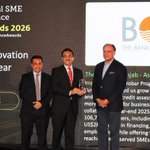
Bank of Punjab Wins Global SME Finance Award for Product Innovation at Singapore FinTech Festival 2026
The Bank of Punjab has won the prestigious Product Innovation of the Year award at the 9th Global SME Finance Awards, hosted by the SME Finance Forum on the sidelines of the Singapore FinTech Festival 2026.
Federal Minister for Finance and Revenue, Senator Muhammad Aurangzeb, attended the awards ceremony and presented awards to the winners across various categories. The Bank of Punjab received the award in recognition of its contribution to innovation in SME financing.
The Global SME Finance Awards recognise innovation, excellence and leadership in advancing access to finance for small and medium enterprises (SMEs) across emerging markets and developed economies. The 2026 awards recognised outstanding institutions from across the financial sector in four core categories: SME Financier of the Year, Product Innovation of the Year, Sustainable SME Financier of the Year, and Best Financier for Women Entrepreneurs.
The recognition of the Bank of Punjab at this international forum highlights Pakistan's growing contribution to innovation in SME finance and its efforts to strengthen financial inclusion and expand financing opportunities for small and medium enterprises.


Minister of State for Finance Chairs Meeting on EFS Amendments, Emphasises Exporter Facilitation and Export-Led Growth
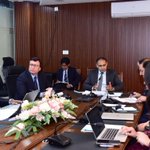
Minister of State for Finance and Railways, Mr. Bilal Azhar Kiyani, chaired the ninth meeting of the Prime Minister’s Committee to Review the Export Facilitation Scheme (EFS) at the Ministry of Finance to discuss proposed amendments aimed at facilitating exporters, simplifying procedures and strengthening compliance and revenue safeguards.
The Minister of State reiterated the Government’s commitment to advancing the Prime Minister’s vision of a business-friendly environment, export-led growth and greater private sector participation. He emphasised that the proposed amendments should make the EFS more accessible and predictable for exporters, while ensuring transparency.
The Committee reviewed proposed amendments to make the EFS simpler and responsive to exporters’ needs, while strengthening risk-based oversight. The proposals aim to reduce compliance costs, encourage new investment and local value addition, and ensure that benefits under the scheme remain linked to actual export performance.
The meeting reviewed proposals to simplify exporter categorisation, rationalise authorisation periods and broaden access to the scheme for new and established exporters. Discussions also focused on introducing a uniform value-addition formula to replace varying calculations across Collectorates, drawing on available data while ensuring a practical approach for new entrants and due consideration of small and medium enterprises (SMEs). The importance of stakeholder consultation to ensure clarity and practical application of the proposed formula was also highlighted.
The participants also considered measures to strengthen risk-based oversight and prevent misuse of the scheme. These included clearly defining the sampling and follow-up procedures for the Regulatory Collector and the Collector at the exporting station, alongside streamlined security requirements.
The Minister of State emphasised that simplification of the scheme must go hand in hand with strong compliance and revenue safeguards. He underscored the need for eligibility criteria and prescribed procedures to be applied uniformly while maintaining continued engagement with exporters and relevant trade bodies to address their concerns and facilitate legitimate export activity.
The meeting also underscored the importance of continued consultation with stakeholders in finalising the proposed amendments. It was decided that stakeholder briefing sessions would be convened ahead of implementation to familiarise exporters with the proposed changes. The meeting reaffirmed the importance of strengthening the EFS to facilitate exporters and support sustained export-led growth.
The meeting was attended by senior officials from the Ministry of Commerce and the Federal Board of Revenue (FBR), Mr. Musadiq Zulkarnain, Chairman and Chief Executive Officer of Interloop Limited, representatives of exporters’ associations, including the All Pakistan Textile Mills Association (APTMA) and the Pakistan Textile Exporters Association (PTEA), the Sialkot Chamber of Commerce and Industry, and prominent exporters.


Advisor to Finance Minister Khurram Schehzad Highlights Islamic Finance, Economic Recovery and Digital Growth at ICIBF 2026
Advisor to the Federal Minister for Finance and Revenue, Mr. Khurram Schehzad, @kschehzad , highlighted Pakistan's progress towards macroeconomic stability, the expanding role of Islamic finance, growing digital exports and ongoing structural reforms, emphasising their importance in supporting investment, financial inclusion and sustainable economic growth.
Addressing the 10th International Conference on Islamic Banking and Finance (ICIBF 2026) as Guest of Honour, Mr. Schehzad underscored the opportunities for Islamic banking and Shariah-compliant financial instruments to contribute more effectively to national development. The conference was held under the theme, “Islamic Finance for National Transformation: Building a Riba-Free, Digital, Inclusive and Sustainable Economy.”
Highlighting developments in Pakistan's Islamic capital market, he noted that cumulative domestic sovereign Sukuk issuance had crossed the historic Rs 10 trillion milestone, reflecting the growing importance of Shariah-compliant instruments in government financing and debt-market development. He emphasised the need to further broaden Islamic financial products, deepen capital markets and expand participation by individual, institutional and international investors.
Sharing an overview of Pakistan's macroeconomic progress through 25 key indicators, Mr. Schehzad highlighted the country's transition from economic contraction towards stabilisation and recovery. He noted that real GDP growth had recovered to 3.7 percent in FY2026, compared with a contraction of 0.2 percent in FY2022–23, while industrial growth had improved to 3.34 percent from a contraction of 3.9 percent over the same period.
He further highlighted the reduction in the fiscal deficit to below 3 percent of GDP in FY2026, its lowest level in 22 years, alongside the achievement of a primary fiscal surplus, reflecting progress in fiscal consolidation and expenditure management.
Referring to Pakistan's strengthening external position, he noted that the State Bank of Pakistan's foreign exchange reserves had recovered significantly to US$21.6 billion in November 2026, from critically low levels of around US$3bn in FY2022–23. He added that the government's debt management strategy remained focused on diversifying financing sources, managing borrowing costs and improving the maturity profile of public debt. He also referred to improvements in Pakistan's sovereign credit ratings as indicators of progress in restoring macroeconomic stability and investor confidence.
Discussing the expanding digital economy, Mr. Schehzad highlighted that Pakistan's IT exports had reached a record US$453 million in October 2026, increasing by 17.4 percent from US$386 million in October 2025. He also noted that freelancers' export earnings had reached a record US$210 million in October 2026, underscoring the growing contribution of digital services and independent professionals to foreign exchange earnings.
He emphasised that the government, under the leadership of Prime Minister Muhammad Shehbaz Sharif and Finance Minister Senator Muhammad Aurangzeb, remained committed to export-led and private-sector-led growth, with particular emphasis on SMEs, agriculture, housing, digitalisation, entrepreneurship and investment. He highlighted the importance of the government's Access to Finance agenda, being spearheaded by the Finance Minister, in supporting business expansion, broadening financial inclusion and deepening capital markets through increased listings and an expanding investor base.
On financial inclusion, Mr. Schehzad referred to the government's affordable housing finance initiative, which provides eligible first-time homebuyers financing at a subsidised 5 percent markup rate for the first ten years. He underscored the importance of expanding access to affordable housing finance, including through Islamic banking institutions, to support wider financial participation and homeownership.
He also outlined ongoing structural reforms, including privatisation of state-owned enterprises, energy-sector reforms, taxation and pension reforms, and rightsizing of federal government ministries and departments. He stressed that sustained economic progress would require continued reforms, greater efficiency, stronger institutions and an enabling environment for private-sector investment.
Mr. Schehzad emphasised that Islamic finance must evolve beyond traditional banking and sovereign financing to become a stronger driver of investment, entrepreneurship, financial inclusion and sustainable economic growth, supported by innovation, digital transformation and deeper participation by domestic and international investors.
The conference also featured discussions on the roadmap towards a Riba-free financial system, inclusive economic growth, digital transformation and sustainable national development.
The conference was also attended by H.E. Dr. Mohamed Waheed Hassan, Former President of the Republic of Maldives; Dr. Ishrat Husain, Former Governor of the State Bank of Pakistan and Former Adviser to the Prime Minister on Institutional Reforms and Austerity; Mr. Saleem Ullah, Deputy Governor, State Bank of Pakistan; Prof. Dr. Imam Uddin, Associate Dean, Industry Linkages, College of Business Management (CBM); Prof. Dr. Muhammad Kashif, Dean, CBM, IoBM; Mr. Talib S. Karim, President, IoBM; and Mr. M. Bashir Jan Mohammad, Chancellor, IoBM.
The 10th International Conference on Islamic Banking and Finance (ICIBF 2026) was organised by the Centre for Islamic Business and Finance (CIBF), College of Business Management, Institute of Business Management (IoBM), under the patronage of the Accounting and Auditing Organization for Islamic Financial Institutions (AAOIFI).
The conference brought together scholars, researchers, policymakers, banking professionals and industry experts from Pakistan and abroad to discuss emerging developments and opportunities in Islamic banking and finance.


Finance Minister Meets Pakistani Diaspora and Business Community in Singapore
Federal Minister for Finance and Revenue, Senator Muhammad Aurangzeb, met with members of the Pakistani diaspora and business community in Singapore at a dinner hosted by High Commissioner of Pakistan to Singapore, Rabia Shafiq, at Pakistan House on Wednesday evening.
During the interaction, the Finance Minister briefed participants on the improving macroeconomic stability of Pakistan and the measures being undertaken by the government to strengthen the economy and reduce the fiscal deficit. He highlighted the government's commitment to fiscal discipline, economic reforms and creating a conducive environment for investment.
Recalling his time spent in Singapore, Federal Minister Senator Muhammad Aurangzeb described the Pakistani diaspora as a valuable national asset and an important partner in the country's economic development. He encouraged overseas Pakistanis, particularly members of the business community, to play an active role in promoting Pakistan as an investment destination and to facilitate greater engagement between Pakistani and investors in Singapore.
The Finance Minister also apprised participants of the investment opportunities available in Pakistan across various sectors. He highlighted the government's privatisation programme, noting that the privatisation of state-owned enterprises (SOEs) would help reduce the financial burden on the national exchequer, contain government expenditure and improve economic efficiency.
Members of the Pakistani business community shared their perspectives on strengthening Pakistan's investment appeal and attracting foreign investors. They also discussed opportunities for greater business-to-business engagement and offered suggestions for promoting investment and economic cooperation.


Minister of State for Finance Meets Newly Elected APTMA Office Bearers, Discusses Textile Sector Priorities and Export-Led Growth
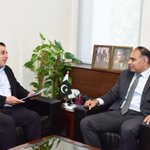
Minister of State for Finance and Railways, Mr. Bilal Azhar Kayani, met a delegation of the newly elected office bearers of the All Pakistan Textile Mills Association (APTMA), led by its Chairman, Mr. Asad Shafi, at the Ministry of Finance. The delegation called on the Minister to discuss key issues facing the textile and apparel industry, share feedback on the business environment and exchange views on measures to strengthen the sector’s competitiveness and export performance.
The Minister welcomed the newly elected office bearers and extended his best wishes for their tenure. The APTMA delegation appreciated the Government’s efforts to improve the ease of doing business and acknowledged recent measures announced in the last federal budget, including the reduction in taxes on exports and the elimination of super tax for SMEs and mid-sized corporates. The participants discussed key industry concerns affecting textile production, investment and exports, along with opportunities to further improve the operating environment for the industry.
The discussions also covered the Federal Board of Revenue’s (FBR) efforts regarding the Production Monitoring System (PMS), as well as the availability and utilisation of financing facilities for exporters. Particular attention was given to the terms and scope of the Export Finance Scheme (EFS) and the Long-Term Export Growth Financing Facility (LTEGFF). APTMA shared suggestions on making these facilities more accessible and responsive to the financing needs of textile exporters, supporting both working capital requirements and long-term investment.
The participants also exchanged views on promoting Pakistani textile brands in international markets and enabling local manufacturers to move further up the value chain through brand development and direct engagement with overseas consumers. The Minister acknowledged the importance of these initiatives in enhancing value addition and strengthening Pakistan’s position in global textile and apparel markets.
The Minister of State appreciated APTMA’s constructive engagement and recognised the textile sector’s significant contribution to the country’s exports and economic activity. He emphasised the importance of building on the sector’s performance by strengthening competitiveness, encouraging investment and expanding export markets.
Both sides reaffirmed their commitment to continued coordination between the Government and the private sector and agreed to maintain close and regular engagement on matters concerning the textile industry, with a shared focus on strengthening the sector and promoting sustained export-led growth.


Ministry of Finance, Government of Pakistan retweeted
🇵🇰 𝗣𝗔𝗞𝗜𝗦𝗧𝗔𝗡'𝗦 𝗙𝗥𝗘𝗘𝗟𝗔𝗡𝗖𝗘𝗥𝗦' 𝗘𝗫𝗣𝗢𝗥𝗧 𝗘𝗔𝗥𝗡𝗜𝗡𝗚𝗦 𝗛𝗜𝗧 𝗔𝗟𝗟-𝗧𝗜𝗠𝗘 𝗠𝗢𝗡𝗧𝗛𝗟𝗬 𝗛𝗜𝗚𝗛!
Pakistan's digital talent continues to break records and earn valuable foreign exchange!
■ 𝗢𝗰𝘁𝗼𝗯𝗲𝗿 𝟮𝟬𝟮𝟲: Record US$210mn, surging 53% YoY — the highest ever in a single month!
■ 𝗝𝘂𝗹–𝗢𝗰𝘁 𝗙𝗬𝟮𝟳: Earnings reached US$760mn, up 47% YoY, compared with US$515mn same period last year.
■ 𝗙𝗬𝟮𝟲: Freelancers achieved a historic US$1.76bn in annual export earnings.
■ 𝗙𝗬𝟮𝟳 𝗢𝘂𝘁𝗹𝗼𝗼𝗸: At the current growth momentum, annual freelancers' export earnings could comfortably surpass US$2bn, setting yet another record for Pakistan's young digital workforce.
Pakistan's freelancers are emerging as a powerful engine of services exports, expanding the country's global digital footprint, strengthening foreign exchange inflows and creating new economic opportunities for its youth.
𝗗𝗶𝗴𝗶𝘁𝗮𝗹 𝗧𝗮𝗹𝗲𝗻𝘁 𝗥𝗶𝘀𝗶𝗻𝗴 | 𝗚𝗹𝗼𝗯𝗮𝗹 𝗘𝗮𝗿𝗻𝗶𝗻𝗴𝘀 𝗚𝗿𝗼𝘄𝗶𝗻𝗴 | 𝗘𝗺𝗲𝗿𝗴𝗶𝗻𝗴 𝗣𝗮𝗸𝗶𝘀𝘁𝗮𝗻
@StateBank_Pak @Financegovpk @GovtofPakistan
#EmergingPakistan #PakistanEconomy #Freelancers #DigitalPakistan #ITExports #DigitalEconomy

Finance Minister Highlights Pakistan’s Reforms to Expand SME Financing at Global SME Finance Forum 2026
Federal Minister for Finance and Revenue Senator Muhammad Aurangzeb highlighted government’s ongoing efforts to expand access to finance for small and medium enterprises (SMEs), promote digital financial inclusion and mobilise private investment while addressing the Ministerial Dialogue on SME Growth, Jobs and Competitiveness at the Global SME Finance Forum 2026 in Singapore, held during the ongoing Singapore Fintech Festival.
The Minister underscored the vital role SMEs played in Pakistan’s economy, accounting for 90% of businesses, 40% of GDP, around 20% of exports and approximately 78% of non-farm employment. He observed that the sector’s contribution could be significantly greater with improved access to finance and a more enabling business environment.
Highlighting the government’s financing ambitions, he outlined the target of increasing SME financing to Rs 2 trillion by June 2028—almost double the current level. He emphasised the need to move beyond conventional, collateral-based lending towards technology-enabled, data-driven and inclusive financing solutions, supported by stronger participation from banks, fintech companies, development finance institutions and private investors.
The Minister highlighted the SME Connect Portal, launched by the State Bank of Pakistan on 1 November 2026, as an important step towards facilitating SME registration, improving access to financing, enabling application tracking and enhancing transparency in banks’ responses and processing times.
He stressed the importance of accessible working capital and long-term financing to strengthen the productive capacity of SMEs and help them compete in international markets. He also emphasised the role of the Small and Medium Enterprises Development Authority (SMEDA) in building the capacity of businesses to better understand and manage their balance sheets and disclosures, enabling them to become more financially prepared and attractive to lenders and investors.
Emphasising the role of technology, the Minister identified fintech solutions, digital payments, alternative credit assessment and digital lending as important tools for widening access to finance, particularly for businesses that lack conventional collateral. He also called for greater use of risk-sharing mechanisms to facilitate lending to SMEs.
He also highlighted the potential for engagement with Singapore’s financial technology ecosystem, including through the Global Finance & Technology Network (GFTN).
The Minister called for greater mobilisation of private capital and stronger partnerships with development finance institutions, international financial institutions and investors through credit guarantees, risk-sharing arrangements, blended finance and technology transfer.
Reaffirming Pakistan’s commitment to developing an inclusive, competitive, digitally enabled and export-oriented SME ecosystem, the Minister emphasised that international partnerships, innovation and private-sector investment would be essential to unlocking the sector’s full potential.
The Minister also visited the Singapore FinTech Festival, where he inaugurated Ignite’s Pakistan Pavilion and interacted with Pakistani companies including Tax Nerd Pakistan, Ping Up, Bagh-e, Fortanixor Technologies, and Lendverse / Tawha Technologies. Representatives of the participating companies briefed him on their respective products, services and innovative fintech solutions.
The Minister also visited the pavilion of Ant International, where he was briefed on the company’s services and solutions.
1/4


Federal Minister for Finance and Revenue, Senator Muhammad Aurangzeb, interacting with representatives of Pakistani start-ups participating in the Singapore FinTech Festival (SFF) 2026 and receiving briefings on their innovative products, services and fintech solutions.
3/4


