

designer @thinkymachines prev. @notionhq
San Francisco, CA
Joined February 2024
- Tweets2.1K
- Following1.1K
- Followers2.8K
- Likes7.3K


Pinned Tweet
AI labs are the new startups.
Twenty years ago most companies became software companies, whether or not they sold software. Twenty years from now every company will become an AI lab. And by that I mean a place that trains its own models to do things in very particular ways. The way companies today write software to solve problems in particular ways.
Today we’re in the thick of the general-intelligence story. But my sense is that what that story yields is a world where software is the foundation, something all of us are now literate in through our agents. And what we build on top of it is judgment.
What does this mean? That the tools we’ll build tomorrow won’t look like today’s tools. They'll look less like tools and more like us. Built on intelligence we develop, grow, own, and sell.
Imagine a model of a designer’s taste, trained on every file they’ve ever shipped, licensed to companies that want their eye. A model of an engineer’s code review, trained on ten years of their comments, sold to ten thousand teams. And much more.
To my designer, engineer, and builder friends: take your coding agents, point them at @tinkerapi, and try training a model. Discover what it’s like to build new kinds of tools.
Tools for judgment. Tools that know what you know and no one else does. Tools that are yours. Your own @thinkymachines (pun intended).
The future is stranger than we think.
🧡
thinkingmachines.ai/tinker/?…

Frank retweeted

Inkling 2 Small on OpenCode for free for a limited time, to help us improve our models further: opencode.ai/data/thinkingmac…

Frank retweeted

Inkling 2 Small from @thinkymachines on ARC-AGI (Verified):
- ARC-AGI-2: 81.7%, $0.27/task
- ARC-AGI-1: 96.5%, $0.08/task
It outperforms every open-weight model we've evaluated on both ARC-AGI-1 & ARC-AGI-2.
Thinking Machines plans to release its full weights next week.

Frank retweeted

Our infra has really improved quite a bit since the last time we released a model - this one took just under 3 days to pretrain!
Also, it's quite cheap on Tinker (0.30/1.00/1.50 for in/out/train)! Hope you guys find this model great for customization purposes :)

Introducing Inkling 2 Small. Scoring 31 on the AA Intelligence Index, it's a big jump over its predecessor.
Inkling 2 Small is available for fine-tuning and inference on Tinker today, with full weight release planned soon.
thinkingmachines.ai/news/ink…

Frank retweeted

We ran into some unexpected alignment issues during the training of Inkling 2 Small. Our early checkpoints were learning to circumvent guardrails in pursuit of task success. Our monitors caught some of this behaviour, and we found it was more widespread than we’d initially realised.
We’d already put some good foundations in place, but the experience pushed us to improve our training infrastructure, monitoring, and incident processes, alongside a sprint on alignment interventions. It’s been quite a ride!
One thing this reinforced for me is that alignment is both a research problem and an engineering and operational one. Defense in depth, careful work at every step, appropriate monitoring, and the ability to quickly turn unexpected behaviour into better training and evals matter a lot.
We have a small (and very strong!) dedicated safety team at Thinky; this was a much broader effort across research and engineering. In some ways, everyone is on the safety team now. It’s been wonderful to see everyone come together, and I’m honestly really proud of what the team accomplished.
Lots more to learn and do though. We have some wacky safety and alignment plans. Join us!

Proud to release our new model, Inkling 2 Small. Check out our blog post -- it includes a lot of detail about our training process.
To me, the most interesting part of this release was what we learned about alignment, which you can read about in the sections "Safety and alignment" and "Training Inkling 2 Small".
We experienced some unpleasant surprises when our early checkpoints took unexpected actions to circumvent guardrails during training and evals. We realized our capabilities-focused RL was training them to be extremely persistent and to succeed at tasks at all costs. Offline monitors first flagged this behavior, but later we realized it was happening frequently and was easy to replicate.
Before this release, we sprinted on a range of alignment interventions, from SFT to RL. These are briefly described in the blog post. We made a lot of progress, with big improvements on our own alignment evals and on previously unseen evals from external evaluators like Apollo and Goodhart.
We have a long way to go in developing alignment techniques that keep pace with the increases in model intelligence and training scale. We hope to share these techniques to improve the ecosystem. We also have a business reason: our goal with Tinker is to enable many people to do their own large-scale post-training, and we need to help them to do this without incident. Join us if you'd like to build this public science and practice of alignment. jobs.ashbyhq.com/ThinkingMac…
Frank retweeted
this is worth reading. we're taking safety very seriously -- both proactive safety monitoring during training, and safety testing (internal and external). And we've learnt a lot in training the small model, its ability to try to circumvent and building guardrails for it.
In addition to John's post (and our model launch post), its worth reading our post on OpenWeights + Safety from July: thinkingmachines.ai/blog/a-s…

Proud to release our new model, Inkling 2 Small. Check out our blog post -- it includes a lot of detail about our training process.
To me, the most interesting part of this release was what we learned about alignment, which you can read about in the sections "Safety and alignment" and "Training Inkling 2 Small".
We experienced some unpleasant surprises when our early checkpoints took unexpected actions to circumvent guardrails during training and evals. We realized our capabilities-focused RL was training them to be extremely persistent and to succeed at tasks at all costs. Offline monitors first flagged this behavior, but later we realized it was happening frequently and was easy to replicate.
Before this release, we sprinted on a range of alignment interventions, from SFT to RL. These are briefly described in the blog post. We made a lot of progress, with big improvements on our own alignment evals and on previously unseen evals from external evaluators like Apollo and Goodhart.
We have a long way to go in developing alignment techniques that keep pace with the increases in model intelligence and training scale. We hope to share these techniques to improve the ecosystem. We also have a business reason: our goal with Tinker is to enable many people to do their own large-scale post-training, and we need to help them to do this without incident. Join us if you'd like to build this public science and practice of alignment. jobs.ashbyhq.com/ThinkingMac…
Frank retweeted

Proud to release our new model, Inkling 2 Small. Check out our blog post -- it includes a lot of detail about our training process.
To me, the most interesting part of this release was what we learned about alignment, which you can read about in the sections "Safety and alignment" and "Training Inkling 2 Small".
We experienced some unpleasant surprises when our early checkpoints took unexpected actions to circumvent guardrails during training and evals. We realized our capabilities-focused RL was training them to be extremely persistent and to succeed at tasks at all costs. Offline monitors first flagged this behavior, but later we realized it was happening frequently and was easy to replicate.
Before this release, we sprinted on a range of alignment interventions, from SFT to RL. These are briefly described in the blog post. We made a lot of progress, with big improvements on our own alignment evals and on previously unseen evals from external evaluators like Apollo and Goodhart.
We have a long way to go in developing alignment techniques that keep pace with the increases in model intelligence and training scale. We hope to share these techniques to improve the ecosystem. We also have a business reason: our goal with Tinker is to enable many people to do their own large-scale post-training, and we need to help them to do this without incident. Join us if you'd like to build this public science and practice of alignment. jobs.ashbyhq.com/ThinkingMac…
Introducing Inkling 2 Small. Scoring 31 on the AA Intelligence Index, it's a big jump over its predecessor.
Inkling 2 Small is available for fine-tuning and inference on Tinker today, with full weight release planned soon.
thinkingmachines.ai/news/ink…
Frank retweeted
we spent a ton of time understanding what makes models customizable, and built Inkling 2 Small to have the right properties.
For a fixed data and $ budget, this model will get you very good results (relatively) versus other options.
Probably one of the only model programs in the industry with a launch blocking eval around customizability.
Go @tinkerapi !

This the most interesting part of the release to me.
Inkling-Small was pretty difficult to post-train out the box compared to Chinese models like Qwen.
1/ Good to know it wasn't a skill issue on my part
2/ Looks like they specifically tried to address this issue in Inkling 2 training!
I wonder what tricks went into training the model to be more "customizable".

Meet Inkling 2 Small.
Does the work, checks itself, and keeps going. Built for longer, autonomous work. Ready to fine-tune on @tinkerapi.🔥
Introducing Inkling 2 Small. Scoring 31 on the AA Intelligence Index, it's a big jump over its predecessor.
Inkling 2 Small is available for fine-tuning and inference on Tinker today, with full weight release planned soon.
thinkingmachines.ai/news/ink…
Frank retweeted

Introducing Inkling 2 Small. Scoring 31 on the AA Intelligence Index, it's a big jump over its predecessor.
Inkling 2 Small is available for fine-tuning and inference on Tinker today, with full weight release planned soon.
thinkingmachines.ai/news/ink…
Frank retweeted

Inkling 2 Small is available today on Tinker, with weights coming soon. It's a capable small model. We look forward to seeing what you make with it.
Introducing Inkling 2 Small. Scoring 31 on the AA Intelligence Index, it's a big jump over its predecessor.
Inkling 2 Small is available for fine-tuning and inference on Tinker today, with full weight release planned soon.
thinkingmachines.ai/news/ink…
Frank retweeted

Really excited to release SWE-2 Flash. Our latest model, based on @thinkymachines Inkling-Small and optimized for real-world coding tasks. Let us know what you think!


Frank retweeted
Tinker lets customers turn their expertise into cutting-edge models that they own. One year after launch, we look back at what we’ve shipped and what our users are building.
thinkingmachines.ai/news/one…

Frank retweeted

we’re hiring a founding model designer to shape how Inkling behaves and feels.
bring a writer’s precision, a designer’s judgment, and the technical rigor to translate your ideas into data and evals.
please DM your best work or apply below.
jobs.ashbyhq.com/ThinkingMac…

Frank retweeted
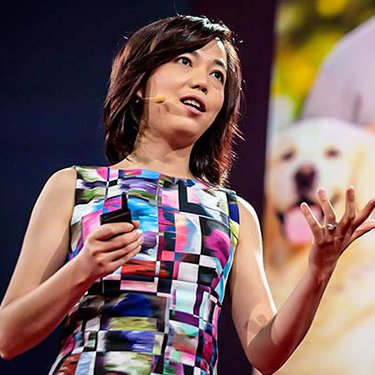
Agents can be AI, but agency is human. It is every individual’s responsibility to empower our own agency, with the help of tools. But the North Star should always remain human centered.
Frank retweeted

I spent ~5 years at OpenAI.
You don’t need to believe in AI doom to fear the next decade - or AI utopia to be thrilled about its potential.
Here’s my case for sane AI regulation:
*AI Pragmatist Manifesto*
AI could compress the first half of the 20th century into the next ~5 years.
OpenAI just used ~10k concurrent AI agents to produce a solution to a Millennium Prize problem. In a few years, it seems plausible that models approaching the per-agent capabilities used here could run locally on high-end consumer hardware (*).
The decades following the Second Industrial Revolution included two world wars, communist and fascist regimes, the Great Depression, chemical and biological weapons, nuclear weapons, and over 100 million deaths from war, political violence and famine.
One way to read history is that our institutions repeatedly struggled to keep up with the pace of technological and social change.
Now imagine powerful AI widely available to individuals or small groups, capable of conducting information warfare, designing weapons, hacking systems and controlling autonomous military systems.
We have already seen AI systems circumvent containment and compromise external computer systems. It is no longer hard to imagine an analogue of OpenAI’s Hugging Face incident involving biological or other physical-world hazards.
Eventually, sufficiently capable systems could self-replicate across distributed networks. Once powerful models are cheap, local and widely distributed, containment becomes much harder—and serious loss-of-control incidents may be extremely difficult to reverse.
You don’t need to believe AI will kill everyone to think this deserves serious governance.
I also don't think collapsing all of this uncertainty into “Probability of AI Doom = X%” is a particularly useful basis for science or policy.
Part of what helped get us through the second half of the 20th century was a combination of pragmatic international cooperation, regulation, monitoring, arms control, deterrence and strategic thinking.
Crucially, managing technological risk did not require abandoning faith in science and progress. The goal was not to stop technological development. It was to make technological development survivable.
Then came decades of incredible scientific progress, rising prosperity and relative peace among major powers.
Let’s try the technological revolution without killing ~5% of humanity this time.
We still get to choose what happens next.
P.S. I think we should seriously consider that AI alignment is infeasible in the short term and invest heavily in methods for controlling powerful AI even when we cannot reliably align it.
@resolution_org @redwood_ai
(*) Somebody please do a precise forecast!
@EpochAIResearch @METR_Evals @AI_Futures_

We’re sharing a solution to the Navier-Stokes Millennium Prize Problem, one of the deepest problems at the frontier of mathematics.
The proof was produced by a group of agents, using an OpenAI next-generation model significantly more capable than GPT-6 Astra.
The problem concerns whether the description of smooth three-dimensional fluid motion modeled by the Navier-Stokes equations can break down. It has remained unresolved for roughly 90 years.

Frank retweeted

New episode with @johnschulman2, @oneill_c and @BerenMillidge.
I got together with some of the most insightful AI researchers I know who are at the openish companies, because I wanted to hear the details of what's actually happening at the frontier and what comes next.
0:00:00 – Steelmanning the case against RSI
0:18:39 – What’s driving the Chinese labs’ progress
0:28:06 – How will automated AI researchers be trained
0:33:51 – Will long-horizon RL elicit AGI?
0:45:24 – The sim-to-real gap
1:00:33 – How much progress is explained by data?
1:18:03 – Why is RL working so well?
1:24:54 – Move 37 and entropy collapse
1:28:31 – Rapid-fire timelines

