

CEO and founder, Strategy Risks. Columnist, Barron's. Visiting fellow, @AtlanticCouncil, adjunct, NYU.
下东区,NYC
Joined September 2009
- Tweets6.2K
- Following6.3K
- Followers44.4K
- Likes12.2K




Pinned Tweet
A stunning 50% of Americans see China as the greatest threat to America. Agree or disagree, like it or not, support it or hate it, this is our reality. Businesses, Investors, regulators, elected officials, everyone needs to understand and discuss this.
pewresearch.org/short-reads/…

Isaac Stone Fish retweeted

Washington has spent four years trying to keep the most advanced AI chips out of China because of the security threat, should they fall into CCP hands.
But Microsoft now wants to sell ByteDance, one of China's biggest tech companies, another $500 million in OpenAI models, which effectively circumvents chip controls. This would allow at least one Chinese firm to distill (or train their models on) America's models.
Microsoft, in other words, is ruthlessly, and very unethically, exploiting a hole in the export control regime, and stands to do a great deal of damage. @theinformation
theinformation.com/articles/…

Isaac Stone Fish retweeted
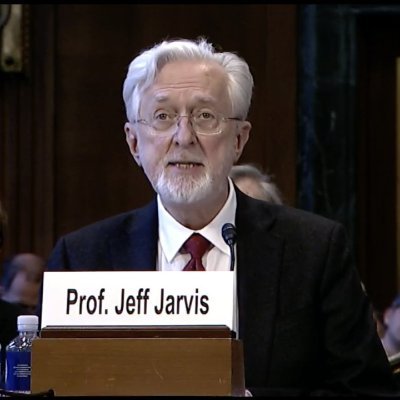
I joined this @OpentoDebateOrg special on l'affaire Jensen Huang. I subverted the "debate" shtick by seeking nuance in the discussion.
youtube.com/watch?v=6qo1Z9xu…


Journalists in Shenzhen, who want to try something different: go visit Windows of the World (世界之窗). It's a theme park that represents the entire world, from China's perspective. The African part was quite offensive: when I visited in 2006 they had Chinese in blackface dressed as Africans, dancing in their "village" -- no joke. (I got to think they stopped doing that years ago, but someone should go and see for themself.)
People really have Nvidia and the Trump-Xi summit wrong.
Two things are true at the same time.
The Nvidia scandal is massive, and will reshape US corporate policy to China.
AND, it will barely register at the Trump-Xi meeting.
Why? Beijing always denies it spies, and Trump has downplayed the national security concerns while it admitting the obvious: countries spy on each other all the time.
Both leaders have other priorities that to them overtake Nvidia and semiconductors in importance. Nvidia will continue to be mentioned in the media coverage, but it will not animate or shape the summit.

Isaac Stone Fish retweeted

Yesterday the US moved to shut off China’s access to remote chip rentals.
For a sense of just how blatant these rentals can be, check out the website of ZOSIM, a Jiangsu-based company that advertises remote access to restricted Nvidia H100 chips right on its homepage:

Isaac Stone Fish retweeted
People completely missed this, but Alice Huang was reportedly added to an Interested Persons list for Five Eyes intelligence sharing. She applied for a job with HSBC, to be the assistant to the president of the bank. "The application was unusual: it came from outside the formal hiring channels, at the insistence of an executive at the bank." More here from this story, below.
asianvalueinvestor.com/news/…

Isaac Stone Fish retweeted

Here’s a nugget in BIS’s new remote access rule. I’m calling it the “Don’t Be Nvidia” footnote.
It basically tells companies they can't hide from information that would alert them to an illegal transaction. Many export control violations require "knowledge." The exporter needs to know a violation is occurring to be held liable. That can incentivize self-blinding, a practice that Nvidia seems to have taken to its logical extreme, blinding itself to any information that would raise red flags about its customers.
BIS rules have previously warned against self-blinding, but now BIS is saying companies need to collect information on customers that would make self-blinding impossible. No more hiding from potential violations.

Isaac Stone Fish retweeted

The Commerce Department has released a major new export control rule targeting China’s access to advanced AI compute.
It’s pretty good! Here’s what it does:
(1) Restricts Chinese access to overseas AI clusters (seeks to address one of China’s largest and fastest-growing sources of AI compute)
This is a new worldwide end-use control, which we’ve previously recommended (third option in image below).
A license is required if providing cloud AI compute to Chinese or D:5-headquartered countries, or if acting as an intermediary training models for these actors.
Technical requirements are:
- Applies to any data center or group of “linked data centers” or providing more than 12 million aggregate TPP of compute (the equivalent of around 760 H100s) of AI chips meeting the current controlled thresholds.
- “Linked data centers” are defined as sharing physical or virtual computing resources, jointly balancing workloads, or replicating data as a unified whole. So this is intended to capture multi-data center training runs.
This applies everywhere except the US. It also covers existing data centers, which have a 90-day deadline to get a license.
(2) New controls for AI chips going to Malaysia, Singapore, Indonesia, Thailand, and Brazil (seeks to address smuggling of AI chips to China via third countries)
The evidence for large-scale smuggling of AI chips to China via Malaysia and Singapore is strong, and there’s also evidence this is happening via Indonesia and Thailand. Brazil, on the other hand, is a bit of a head-scratcher.
This is a case-by-case license review policy, rather than a presumption of denial (that's the policy for chips going directly to China/D:5 countries).
BIS will evaluate each license on national security grounds.
There’s an exclusion for qualifying US-headquartered recipients, subject to reporting requirements.
(3) Formally repeals the AI Diffusion Rule
This has been a long time coming. This eliminates the country-tier system, the Validated End User authorizations (VEU) for data centers, and export controls on advanced AI model weights.
However, the replacement measures above address many of the gaps created by this, and, of course, the AI Diffusion rule wasn’t actually being enforced.
(4) Tightens controls on Chinese chip designs manufactured abroad
This modifies and strengthens the Biden-era “Foundry Due Diligence” rule, which applies to foundries and OSATs.
This seeks to prevent Chinese chip designers from circumventing export controls through overseas foundries and packaging facilities. It’s an important complement to the measures above.
—
So what are the gaps? More on this to come, but from an initial read:
(1) To determine remote-access eligibility, the rule requires due diligence on direct or indirect Chinese ownership or control. However, its licensing trigger is based around company headquarters and ultimate-parent headquarters, which could allow for some shenanigans around corporate structures.
(2) The rule doesn’t prescribe how AI compute providers must verify customers' identities, or require them to identify and verify every user accessing their compute. The rigor of these checks could vary widely across providers.
(3) The end-use restrictions don’t apply when compute is used exclusively for commercial recommender systems. So this opens a path for large-scale Chinese AI compute usage. This could be fine if verifying this kind of use is possible, but this is likely outside the current technical capabilities of many AI compute providers.
(4) The end-use restrictions don’t apply to data centers in the US. So a Chinese company can still access large amounts of AI compute via US data centers.
This is an interim final rule, meaning it would take effect upon publication in the Federal Register, while allowing 60 days for public comments.
Read the full interim final rule here: bis.gov/media/documents/rin-…

Let me tell you a story about Chinese espionage that is playing out in real time. I'm at a conference today, somewhere in the United States. There are at least two officials from the People's Liberation Army sitting in the audience. Are they reporting back to the Chinese Communist Party about what's happening here? Of course. No doubt. That's their job. But I wouldn't call them spies -- because they are so obviously here to transmit information. They're not hiding what they're doing.
So does that mean there are no spies in the audience? Unfortunately, no; that's a more difficult question. If someone else who is here -- say, a journalist, or a Chinese student -- took notes on what is being said here and shared that with the Chinese Communist Party, that would be spying, because they would be using covert means (being undercover, as something that doesn't fully show who they are).
Very simply:
--Jensen got fired for lying to the board about his affairs.
( This is the complicated part, but, as it relates to the question of being fired, it's secondary to the issue of corporate governance: One of those affairs may have been with a Chinese spy. Whether she is or isn't a spy depends more on your definition of what a spy is: "was Alice Huang a full-time employee of the Ministry of State Security"? Almost certainly yes. "did Alice Huang act as an agent of the Chinese Communist Party, and pass on sensitive information from Jensen Huang back to the Communist Party?" Almost certainly yes.)
--REGARDLESS of whether or not Alice Huang was a spy, Jensen Huang got fired for lying to the board about his affairs.

The articles backtracked from their original incendiary, and now clearly false, claims to something more like "Jensen did lawful things that powerful people didn't like". It still appears the original claims came from a single competing Big Tech lobbyist.
The reporting successfully disrupted corporate governance processes, with a running cost of $1.8 trillion in losses to American pension funds and shareholders.
Here's what I fear is being lost in these articles: The proper interface between government and private citizens and their corporations is rule of law. Laws are passed, and if wrongdoing as alleged, then there's due process: an investigation followed by facts and evidence presented in open court. Due process should happen here: let the facts come out whole, and not as a trickle of dubious claims.
Press takedowns full of sketchily sourced claims and backtracking narratives are not the way. It's what we see outside of the free world, and is no model for The United States of America.
In particular, if the Jensen takedown succeeds on the basis of these journalistic failings, which is not by any means certain as Sam Altman's case shows, then it foreshadows an economically and institutionally ruinous new playbook to be adopted with no end in sight.
Imagine a weekly stream of takedowns emerging from opportunistic alignments between corporate lobbyists and political interests which, given the new partisan split between the executive and legislative branches, will attack in all directions, undermining not only the US economy but American leadership in the world.
I hope cooler heads prevail this coming week as they did not on Thursday November 12. And I urge anyone who happened to oppose Jensen, open models, and the underlying trade policies in question, to recognize that this isn't a win for "team regulation". It's a change in the game from a transparent rules-based one to a sinister new form centered around politicans and lobbyists.

Isaac Stone Fish retweeted
Much of the modern world runs on Microsoft. Hospitals, airlines, banks, courts, governments -- they all depend on its software and cloud servers.
Last week a hidden bug knocked out Microsoft’s Outlook, Teams, and Copilot software around the world for roughly a day. It was so bad that the entire nation of New Zealand had to stop processing visas.
The software has repeatedly posed a systemic risk. Chinese and Russian spies have been getting into American systems through Microsoft for years. I’ve followed the company since my time as a reporter in China. Here’s a thorough record of incidents:
2020: Russian spies broke into federal agencies through a Microsoft flaw. A former Microsoft engineer says he had warned the company about the problem for years and was ignored.
2023: Chinese hackers stole a Microsoft security key and were able to read the email of top US officials, including the Secretary of Commerce. A federal review board said the hack “should never have happened.”
2024: Russian spies, from the same agency behind the 2020 hack, guessed the password to an old, forgotten Microsoft account that had no second layer of security. They used it to read the emails of executives and break into Microsoft’s source code and they also stole emails Microsoft had exchanged with US agencies, some containing passwords and login keys. America’s cyber defense agency called it a “grave and unacceptable risk.”
2024: Federal reviewers didn’t trust Microsoft’s government cloud. One called it “a pile of sh*t.” They approved it anyway because so many government agencies already relied on it.
2025: We learned that for nearly a decade, Microsoft had engineers in China help maintain Pentagon computer systems. The American employees assigned to watch them often lacked the skills to check their what those engineers were really doing in Pentagon systems. Congress has since banned the practice.
2025: Microsoft patched a flaw in SharePoint, the software offices use to store and share documents. Hackers got around the patch within days. Oops. And so Microsoft had to rush out an emergency fix. By then the hackers had broken into the agency that oversees America’s nuclear weapons. Hundreds of organizations were hit in all. Microsoft blamed Chinese government hackers.
2026: Microsoft’s cloud software in China is run by a Chinese company called 21Vianet. In September, investors tied to CATL bought more than a third of it -- and yet the Pentagon lists CATL as a “Chinese military company.” 21Vianet’s own SEC filing says “the Chinese government may intervene or influence operations of a China-based company, such as us.”
@WIRED on last week’s outage: wired.com/story/the-microsof…

Isaac Stone Fish retweeted

Nguyen Pham Muoi, a retired Vietnamese reporter for The Wall Street Journal and Dow Jones, has been detained in Hanoi for several weeks in an investigation led by the Security Investigation Agency of Vietnam’s Ministry of Public Security. Authorities have not disclosed the nature of the investigation.
According to people familiar with the case, it involves security-related accusations tied to Vietpan, a media-monitoring service founded in 1998 and run by Mr. Muoi with a team of about half a dozen translators. Its clients include foreign embassies, nongovernmental and international organizations in Vietnam.
Mr. Muoi has been a fixture of the foreign press corps in Vietnam for decades. He spent 15 years with Dow Jones/The Journal, starting in 1999, when Western news organizations were reopening bureaus in Hanoi.
vietpan.com/
People completely missed this, but Alice Huang was reportedly added to an Interested Persons list for Five Eyes intelligence sharing. She applied for a job with HSBC, to be the assistant to the president of the bank. "The application was unusual: it came from outside the formal hiring channels, at the insistence of an executive at the bank." More here from this story, below.
asianvalueinvestor.com/news/…
Isaac Stone Fish retweeted

“Chinese spy” is a short hand. It’s unlikely Alice Huang was a full time fully trained intelligence officer. But that’s not the only type of “spy.” It looks like she was more of a shady businesswoman who reported to and thereby worked for the MSS. A front. A bagwoman. A cutout. An asset. Call it what you will. The point is that she was a national security risk passing intel to our adversary. That’s a “Chinese spy” in the common sense understanding of the term.
Isaac Stone Fish retweeted

👋 look at the list, Yiming Zhang!
The guy who wrote a letter pledging his allegiance to Xi and the CCP and the “four consciousness”
🔗 medium.com/@pandaily/open-ap…


Fascinating: this tweet from Bo Guagua, son of former Chinese Politburo member Bo Xilai.

We’ve all had a good laugh at the Jensen memes, but it’s time to exercise restraint and give him and his family the privacy to deal with it. His personal failings as a husband, or perhaps misjudgements as a CEO, should be measured against the tremendous value he has created. He is still undoubtedy one of the great industrialists of our era.
He is being manourvred out by a coordinated effort using information that has long sat dormant publicly. It is for him to endure the public shaming, but it is for us to try and show some decency.