

High-quality basic & translational research representative of biomedical specialties & physician-scientists. Bluesky: https://xitter.cf/t.co/AksMLnEAMq
Joined October 2016
- Tweets6.2K
- Following2.4K
- Followers39.7K
- Likes487




Pinned Tweet
Immune cell profiling from pleural fluid offers prognostic value and potential targets in lung cancer: doi.org/10.1172/jci.insight.…
This issue’s Cover features work by Khatri et al., reporting that macrophage reprogramming is associated with poor survival outcomes for patients with metastasis of #LungCancer to the pleural space. The cover image shows tumor-associated macrophages (CD163, red) surrounding an invading lung cancer metastatic lesion (pan-cytokeratin, green). Credit: Aaditya Khatri.
@DukePACC @DukePulmFellows @CHESTFoundation

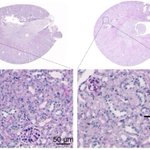
Sunday Read💫: A novel axis that can fine-tune the immune response to glomerular and tubule cell damage: doi.org/10.1172/jci.insight.…
Jamie R. Privratsky @JamiePrivratsky & team @DukeKidney @Duke_Anesthesia identify a novel myeloid cell-endothelial cell immunoregulatory axis, supporting a model whereby myeloid IL-1R1 activity constrains ER stress–mediated EBI3/IL27 secretion, thereby attenuating type I IFN expression in kidney endothelial cells and ameliorating
autoimmune nephritis.
The figure shows anti-IFNAR1 therapy abrogates kidney injury after NTS nephritis in mice lacking IL-1R1 specifically in myeloid cells (bottom); littermate controls (top).
#AKI #Nephrology #kidney #macrophage


Saturday Highlight💫: Full-length macrophage TREM2 protects against atherosclerosis: doi.org/10.1172/jci.insight.…
Tang et al. unravel the links between #Prediabetes, #CardiovascularDisease, and #HepaticSeatosis, identifying increased levels of soluble TREM2 in human subjects and preclinical models of prediabetes. Soluble, macrophage-derived TREM2 associated with plasma apolipoprotein C3, which in turn reduces clearance of triglyceride-rich lipoproteins and increases heart disease risk. Importantly, preservation of full length TREM2 in prediabetic, steatotic mice reduced dyslipidemia and atherosclerosis.


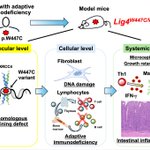
This study links faulty DNA repair to abnormal immune responses: doi.org/10.1172/jci.insight.…
Yusuke Yamashita & team discover a partial defect in DNA repair weakens immune defenses yet promotes severe intestinal inflammation in a novel mouse model that recapitulates DNA-LIG4 syndrome.
#DNARepair #Immunodeficiency #IntestinalInflammation

Transcriptomic profiling of immune cells in malignant pleural effusions identifies macrophage reprogramming associated with survival: doi.org/10.1172/jci.insight.…

Why does tuberculosis infection worsen HIV-1 outcomes? doi.org/10.1172/jci.insight.…
Samantha Cronin, Gabriel Duette @_GabrielDuette et al. @WestmeadInst demonstrate that the TB-altered immune microenvironment enriches the presence of genetically intact virus and impairs CD8 T cell-mediated antiviral responses. These results may explain worsened outcomes for people coinfected with HIV-1 and TB.
The accompanying image shows the experimental design to evaluate the effect of coculture of pleural effusions from patients with TB and CD8 T cells from people living with HIV.
@_GabrielDuette
#HIV #TB

An unexpected regulatory relationship reveals a therapeutic vulnerability in high-Wnt tumors: doi.org/10.1172/jci.insight.…
Using pancreatic cancer models, David M. Virshup, Babita Madan & team @dukenus find that the cell-surface receptor EPHA2 cooperates with Wnt in the tumor environment to inhibit MAPK signaling.
#CancerBiology #WntSignaling

JCI insight retweeted

Really proud of our stellar postdoc @SElasoru 🔥🔥for the Herculean effort to get his "side" project published. Kudos to the stellar study team including but not limited to Zhilin Qu, Robert Harvey, @shivkumarmd!!! @jclinicalinvest @JCI_insight @UCLAHealth

This Research Letter reports a new role for Neuropeptide Y in #CardiacElectrophysiology: doi.org/10.1172/JCI204258
Olujimi A. Ajijola @OluAjijola & team @UCLAHealth show Neuropeptide Y deficiency perturbs L-type calcium and outward potassium currents leading to ventricular arrhythmogenesis in mice
@shivkumarmd
#Arrhythmia

Unraveling links between #Prediabetes, #CardiovascularDisease, and #HepaticSeatosis: doi.org/10.1172/jci.insight.…
Tang et al. identified increased levels of soluble TREM2 in human subjects and preclinical models of prediabetes. Soluble, macrophage-derived TREM2 associated with plasma apolipoprotein C3, which in turn reduces clearance of triglyceride-rich lipoproteins and increases heart disease risk. Importantly, preservation of full length TREM2 in prediabetic, steatotic mice reduced dyslipidemia and atherosclerosis.

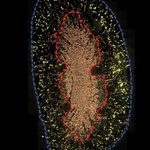
Sunday read💫: Another piece of the pie for time restricted feeding: doi.org/10.1172/jci.insight.…
Jennifer S. Pollock @JS_Pollock & team @UABNews discover time-restricted feeding reverses kidney fibrosis and damage in diet-induced obese mice by reducing the infiltration of pro-inflammatory immune cells, particularly those migrating from the small intestine and associated tissues.
The image shows a whole mouse kidney for spatial analysis with regions of interest marked for the cortex (NCC staining, yellow) and the medulla (NKCC2 staining, orange).🧵
#KidneyFibrosis

Time-restricted feeding reverses kidney fibrosis through reduced CD8+ T cell infiltration in obese mice: doi.org/10.1172/jci.insight.…

Saturday Spotlight💫: The role of SMOC2 in #KidneyFibrosis: doi.org/10.1172/jci.insight.…
✅ Several models of kidney injury
✅ Human biopsy samples
✅ In vitro assays to focus on a mechanistic pathway
Casimiro Gerarduzzi @CasGerarduzzi & team describe a novel role for SMOC2 in promoting partial epithelial-to-mesenchymal transition and maladaptive repair mechanisms in renal tubular epithelial cells.
@UMontreal @KidneyCanada @NSERC_CRSNG @CIHR_IRSC


JCI insight retweeted

Our review in @JCI_insight/@theJCI: Next-generation CDK inhibitors in HR+/HER2− breast cancer, from CDK4-selective agents and CDK2-directed approaches to broader multi-CDK strategies. [link] #bcsm #BreastCancer jci.org/articles/view/207631

Presenting a novel axis that can fine-tune the immune response to glomerular and tubule cell damage:
Jamie R. Privratsky @JamiePrivratsky & team @DukeKidney @Duke_Anesthesia identify a novel myeloid cell-endothelial cell immunoregulatory axis, supporting a model whereby myeloid IL-1R1 activity constrains ER stress–mediated EBI3/IL27 secretion, thereby attenuating type I IFN expression in kidney endothelial cells and ameliorating
autoimmune nephritis.
The figure shows anti-IFNAR1 therapy abrogates kidney injury after NTS nephritis in mice lacking IL-1R1 specifically in myeloid cells (bottom); littermate controls (top).
#AKI #Nephrology #kidney #macrophage

Mitochondrial gene therapy restores vision in a mouse model: doi.org/10.1172/jci.insight.…
Cheng Ai @ai_cheng_zju Min-Xin Guan @MinxinGuan et al. @ZJU_China report allotopic expression of mitochondrial ND6 restored retinal and optic nerve function and improved vision in a mouse model of mitochondrial disease.
The featured images show restored retinal cells and mitochondrial morphology after AAV2-ND6 treatment in mice.
#MitochondrialDisease #GeneTherapy


Providing practical insights for the medical and scientific communities to support the next generation of physician-scientists: doi.org/10.1172/jci.insight.…
Brian Thomas @bthomasZOU, Cynthia Y. Tang @_CynthiaTang et al. used publicly available data and a survey to identify barriers and challenges experienced during grant writing for dual-degree trainees across the nation.
@DanielCBrock
#PhysicianScientists

JCI insight retweeted

Happy to announce the publication of some of my PhD research in JCI Insight!
insight.jci.org/articles/vie…
At a time of growing anxiety surrounding artificial intelligence, I view this sort of experimental work as something deeply human. We meandered, we ran into dead ends – again and again – and dealt with frustration and disappointment. But we persevered, and the work is a testament to how science can yield interesting and unexpected results to those patient enough to unravel its mysteries.
I hope you enjoy reading the paper and building on our findings. I also hope to be fortunate enough to contribute more to the scientific literature in the years to come.
Many thanks to the people who contributed to this story and stuck with me and with the science all the way to this culmination.
Can AI help identify the most aggressive variant subtypes of #ProstateCancer? doi.org/10.1172/jci.insight.…
Michael C. Haffner, Stephanie A. Harmon & team @fredhutch & @NIH report deep-learning based tools can provide quantitative assessment of molecular phenotypes in metastatic prostate cancer biopsies.
@DrDavidNanus @DrScottTagawa @mishabeltran @cnsternberg

Highlighting vacuolar H+-ATPase as a promising therapeutic target in Alzheimer’s disease: doi.org/10.1172/jci.insight.…
Using human tissue, primary neuronal cultures, and mouse models, Chen et al. @wakeforestmed reveal defective synaptic vesicle acidification impairs neurotransmission in Alzheimer’s disease.
Image 1/2: Transmission electron microscopy image of synaptic vesicles. 2/2: Clinicopathological relationship of V-ATPase dysfunction in synaptic vesicles with cognitive deficits in Alzheimer’s disease.
#AlzheimersDisease


Weekend Highlight:💫 Meet the authors mapping a path toward detecting early-stage liver disease: doi.org/10.1172/jci.insight.…
Behind-the-Paper photos feature Dufton Group members (1/4) Dr. Meenakshi Rana, Dr. Neil Dufton, Dr. Joshua Dignam, and Dr. Christina Gkantsinikoudi (left to right). And first author Dr. Christina Gkantsinikoudi at the bench (2/4). Gkantsinikoudi did the pioneering work on profiling endothelial cells using full spectrum flow cytometry as part of her PhD project.
The team mapped blood vessel changes during fibrosis and identified markers that could help predict liver disease at earlier stages than current clinical tests. The authors report on TAGLN-positive fibrosis-associated endothelial cells in early-stage liver disease. 🧵
#MASLD #LiverDisease


2🧵/ Their work is featured on the Cover of this Issue, showing liver tissue in which fibrosis (orange) emanates from central veins that were identified by endothelial cell zonation markers Endomucin (cyan) and Thrombomodulin (magenta). Image credit: Christina Gkantsinikoudi and Neil Dufton: doi.org/10.1172/jci.insight.…
