@WSJ. Editor, *The Intelligent Investor.* Author, *Your Money and Your Brain,* *The Devil's Financial Dictionary,* *The Seven Virtues of Great Investors.*
The Wall Street Journal
Joined November 2009
- Tweets25.9K
- Following2.4K
- Followers236K
- Likes4.8K







Jason Zweig retweeted

In this year’s Thanksgiving message, Buffett mentions three teachers from whom he received “beyond measurement costless benefits”:
Ben Graham.
Tom Murphy.
And Joe Rosenfield.
Rosenfield is a name you rarely hear.
Between 1968 and 2000, he helped grow Iowa’s Grinnell College endowment from $11 million to over $1 billion.
In June 2000, Jason Zweig profiled Rosenfield in Money magazine in an article titled “The Best Investor You’ve Never Heard Of.”
A great read…
“Buying for a short period is always going to hurt you in the end.” JR
“If you like a stock, you've got to be prepared to hold it and do nothing.” JR
“Sell is a four-letter word.” JZ
“There are too many people who are nervous Nellies and panic when a stock goes down a few percent. That's what stocks do!” JR
“There's all kinds of propaganda making people believe that impatience will pay off, but impatience is a sure way to lose money. I've always taken the long view. I've got nothing but time.” JR
“I wish we’d kept it (Intel). That was the biggest mistake we ever made.” JR
“If you find investments that you clearly understand, hold on. Since it was their long-term potential that made you buy them in the first place, you should never let a short-term disappointment spook you into selling. Patience - measured not just in years but in decades - is an investor's single most powerful
weapon.” JZ
jasonzweig.com/wp-content/up…
@jasonzweigwsj


"The graveyards are full of indispensable men."
quoteinvestigator.com/2011/1…
My latest column for @WSJ:
Value investing ain't what it used to be.
wsj.com/finance/investing/th…

Fame is "the summary of all misunderstandings that crystallize about a new name."
-- Rainer Maria Rilke
2
21
8,096
it's a disturbing worst-of-both-worlds combo of a performance-chasing thematic ETF and a private-equity fund with noctiferous disclosure

Wild to me that every week, the US sovereign wealth fund is buying up chunks of private companies with my tax dollars and there’s zero coverage or fanfare. As far as I know @CatoInstitute is the only place you can even find out what we bought this month. cato.org/restoring-free-ente…


My pick for Read of the Day in the @WSJ:
The travails of a furniture maker that tried to bring manufacturing back onshore from Asia to the U.S.
wsj.com/business/furniture-m…

Jason Zweig retweeted

🚨Interrupting our regular programming for some good news:
@jasonzweigwsj linked to my article in his (awesome) Intelligent Investor column in The Wall Street Journal!
For those who missed our previous episodes: I'm crowdsourcing ideas for what the SEC should require private funds to disclose.
The SEC is considering rule amendments aimed at facilitating what it calls "responsible retailization" 🫠 of private markets.
The retailization train is coming, regardless of what you and I think about it.
This is our shot to make the playing field a little flatter and private markets less opaque. Let's use it.
At the top of the wish list, based on reader feedback: redemption history. Not just how much money investors got back, but how much they actually asked to redeem.
A few more things I'd love to see:
→ Valuation inputs and methodologies
→ Look-through leverage
→ Fees, PIK interest (toggles vs switches), and borrower credit quality (with related metrics)
→ A complete map of SPVs and related-party transactions
What else belongs on the list?
I'm collecting suggestions -- bring it, kids.

My latest @WSJ newsletter:
I'm always wrong about gold. You probably are, too. Plus, why do we say we "redeem" a fund?
wsj.com/finance/investing/im…


It had to happen sooner or later: There's now an investment fund that buys and flips Birkin bags.
by @KCarliniKing for @WSJ
wsj.com/finance/investing/th…

My choice for Read of the Day in the @WSJ:
A Soldier Cut Off His Own Foot to Survive. Then Came a Daring Drone Rescue.
This story of the heroism and ultimate rescue of a Ukrainian soldier is just phenomenal.
wsj.com/world/europe/ukraine…


My latest for @WSJ:
How to Keep These Wild Market Moves from Hijacking Your Financial Future
wsj.com/finance/investing/ho…

The prehistory of Warren Buffett's Berkshire Hathaway, by @BRK_Student
fhmagazine.org/financial-his…

Jason Zweig retweeted

Berkshire Hathaway was a New England textile company long before Buffett or Omaha, and it was domiciled in Massachusetts.
The Museum of American Finance just ran an excerpt from my book, The Complete Financial History of Berkshire Hathaway, tracing the company’s roots back to the earliest days of American manufacturing and the mills of Massachusetts.
Read it here: fhmagazine.org/RIhd/p18/p18

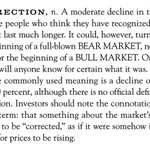
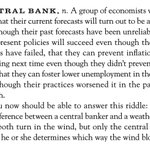
A definition for today from THE DEVIL'S FINANCIAL DICTIONARY:
amzn.to/3UzpTvO

(I reviewed Moore's book briefly here: wsj.com/arts-culture/books/a… )


In this Long View podcast, @christine_benz and @AmyCArnott1 interview historian Joseph Moore about his book "How to Get Rich in American History."
I defy you to listen without laughing or learning something that startles you.