

Dream big, work hard, stay humble. Enquiries: [email protected] or @dundascomms
London
Joined March 2013
- Tweets93.7K
- Following399
- Followers533K
- Likes38.9K




There are journeys that stay with you long after you’ve returned home, and our visit to Elmina Castle on Ghana’s Atlantic coast will certainly be one of them.
We set off from the port of Takoradi for what turned out to be a very long, very bumpy drive along roads that, in places, barely deserved the description. Potholes that even Gloucestershire County Council would wince at. Uneven surfaces and seemingly endless traffic made progress dusty and painfully slow, although it did offer a fascinating glimpse of everyday life in Ghana.
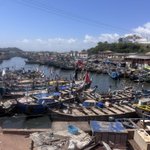
Eventually we arrived at Elmina, where the colourful, if smelly, fishing harbour provided an extraordinary contrast to the grim history waiting for us just a short distance away.
Fishing boats covered the water, fishermen tended their nets and the market bustled with vocal traders selling the day’s catch. It was noisy, vibrant and full of life.
Then there was the castle.
Built by the Portuguese in 1482 and subsequently captured by the Dutch, Elmina Castle became one of the most notorious centres of the transatlantic slave trade.
Walking through its dungeons was a profoundly disturbing experience.
Hundreds of enslaved Africans were crammed into dark, airless spaces, deprived of sanitation, adequate food and water, and held in conditions almost impossible to comprehend.
The treatment of the women was particularly horrifying. Some were kept in cramped dungeons for months, while the governor could select women to be brought to his quarters. Those who resisted could face punishment, including being left exposed to the blistering sun without food or water.
The Door of No Return.
A narrow opening through which enslaved men, women and children were forced towards the ships that would carry them across the ocean, many never to see their homeland or families again.
Standing there, looking out towards the sea, it was impossible not to reflect on the unimaginable suffering of those who had passed through before us.
The Portuguese built the castle, the Dutch controlled it for centuries, and Britain played its own enormous and shameful role in the wider transatlantic slave trade. History demands accuracy, but it also demands remembrance.
The journey back to Takoradi was every bit as uncomfortable as the outward trip. Yet after what we had witnessed, complaining about potholes seemed rather beside the point.
Some places you visit for pleasure. Others you visit because their stories must never be forgotten.


Kay Burley retweeted

MAJOR BREAKING: NBC News has just CALLED the SENATE for DEMOCRATS!
There will now be Epstein investigations in BOTH chambers of Congress.
MAGA IS OVER!
This post aged well


Kay Burley retweeted

Reform UK councillor George Madgwick charged with 35 offences, including 12 counts of rape
bbc.in/4izAAXe


Guess again.

I’m sure he would be super ashamed that his daughter is an uneducated cunt and publicly told the world
nitter.gq/kayburley/status/21165…
😂😂😂😂😂
I’d rather kiss the fish

Educate yourself Kay.
Your lefty virtue-signalling about how bad our country’s history was may have been welcome on Sky News and at your Covid parties.
But the truth is that slavery- indefensible as it was- was the norm many centuries ago. The Romans, the Egyptians, the Dutch and even the Africans themselves all took part in the brutal trade.
And you should know that Brits were enslaved too. By the Romans, Irish, Anglo-Saxons, Vikings and the Barbary cosairs.
Your ignorance wouldn’t be much comfort for the women imprisoned for months in freezing, brutal conditions, taken from their families by raiders on the British Isles in the 11th century.
If you need some help learning more, read my book, ‘Patriot: Empire, betrayal and hope’.


I’m sure your words would have been of great comfort to the women imprisoned for months in those stinking, cramped dungeons, taken out at the governor’s pleasure or left in the blistering sun without food or water if they resisted his advances, before being marched through the Door of No Return.
Sister
Africans fully participated in the slave trade at Elmina, Ghana.
Trade records from the Dutch West India Company, Royal African Company, and Danish ledgers from Elmina, Cape Coast show African rulers and merchants negotiating prices, quantities, and terms with European factors.
African brokers and rulers controlled who could trade and where.
African-authored testimony, for example, Ottobah Cugoano, a Fante man enslaved around 1770, wrote that he was kidnapped by fellow Africans and sold into slavery.
In fact the Asante expansion in modern-day Ghana involved conquering neighbours like Denkyira, Akyem, and Gonja. The prisoners taken in those wars- by Africans- supplied both the coastal trade and domestic labour.
The fort archaeology from excavations at Elmina, Cape Coast, and inland Asante sites back all of this up.
On your logic, the government of Ghana should be apologising for their involvement in slavery.

Having just left Elmina Castle in Ghana, where enslaved Africans were imprisoned before being shipped across the Atlantic, I think Europeans should never tire of acknowledging the horrors of our shared history and asking forgiveness from our African friends.
Britain played its own shameful part in that history.

Slavery was abhorrent. Fact.
But to issue a formal apology today is dangerous virtue-signalling that could expose Britain to reparations costing us millions or even billions of pounds. This is very much how the Chagos disaster started under the Tories.
There is no good reason why people living in 21st Britain should pay for the wrongdoings of centuries ago.
And let’s also not forget the role that Britain played in ending slavery- often overlooked in our schools, museums and by the BBC.
And then there are the clear benefits of the British Empire. Investment, infrastructure, legal systems, education, healthcare- there was also much that was good. I write a lot about this in my best-selling book, ‘Patriot: Empire, betrayal and hope’.
Let’s teach history in a balanced and truthful way; not through the lens of political ideology.
And Burnham should stand up for 21st century Brits, not pay for the wrongs of 18th century slave-traders.
Readers added context they thought people might want to know
Elmina Castle was built by the Portuguese in 1482, seized by the Dutch in 1637 and acquired by Britain only in 1872—after Britain abolished the slave trade in 1807. Africans captured in wars and raids supplied most enslaved people sold to Europeans at such coastal forts.
britannica.com/place/Elmina-C…
en.wikipedia.org/wiki/Elmina_Ca…
britannica.com/topic/transatl…
rmg.co.uk/stories/mariti…
Kay Burley retweeted

Just want to tell you about an amazing colleague I met last week. Victoria joined us 3 years ago when she was still in prison, via our Max Spielmann training academy inside HMP Downview. She started to go out on day release, and has now worked her way up to shop manager, and now has become a member of the area team!


