







Pinned Tweet
What Monad has so far:
- High quality open-source C++/rust codebase with many HFT-style optimizations and architectural changes
- Public audits and clear docs that put the technology first. Transparency -- no hand-waving, no unsubstantiated claims
- High-performance system focused on true decentralization, running continuously in testnet with 186 globally distributed validators at 5000-10000 tps
- MonadBFT, a frontier consensus mechanism featuring 400ms block times, 800ms finality, large globally-distributed validator set, and tail-fork resistance
- Async Execution (while supporting EIP-7702 through the Reserve Balance mechanism)
- MonadDb for efficient merkle trie storage
- Native code compiler for frequently used contracts
- Interconnected community of smart, thoughtful crypto-natives who will grow in influence over the next few years
- Ecosystem of promising young startup founders, ready to take their shot
- Over $100m in ecosystem funding pre-mainnet
- Founder support through DeltaV, the Monad Founder Residency, Monad Madness, and more
- Monad Momentum, an incentives program focused on efficient UA and repeatable growth loops to help decentralized apps acquire normie users
- A north star of making open-source, decentralized systems more powerful
But there's still so much more to do. Are you excited?
correct

Addiction to signals creates Burj Khalifas
since we got ‘retail’ to participate in various ways, they have no way of knowing what to bet on (with their time and money)
so they look for signals like: a bug VC or a chain tweeting about a product or a KOL
this pumps resources into wrong projects. and it also encourages founders (many times good founders) to bait CT
this creates burj khalifas of attention and token charts alike
Monad will win if we solve this alone
how?
by NOT paying attention/$ to projects unless they show the only unfakeable signals: Shipping and Retention
only then you support a project
that motivates founders to think about their ICP, a Delta 4 product, and a core loop that keeps users coming back
Quantum-Resistance is hard because PQ signatures are much larger (25x larger) and quorum certificates on PQ signatures are much much larger (2500x larger)
So, @category_xyz solved this problem with Quantum Cadence, a new version of Cadence that eliminates quorum certificates altogether. The new protocol actually scales better with more proposers.
Incredibly exciting developments in the Monad world. Monad will simply run faster as quantum takes center stage

Today we are releasing Quantum Cadence, a post-quantum version of Cadence, our consensus protocol with multiple concurrent proposers. Quantum Cadence uses no quorum certificates, and its safety and liveness do not depend on signatures.
Most modern consensus protocols, Cadence included, rely heavily on signatures and quorum certificates, which a large-scale quantum computer could forge. Simply replacing today's signatures with post-quantum ones would make certificates too large for every validator to send around in a high-performance blockchain. Quantum Cadence instead draws on Forget-IT, a recent signature-free consensus protocol co-developed by researchers at Category Labs.
Quantum Cadence still keeps the overall architecture and core guarantees of Cadence, so our Cadence prototype was easy to carry over: an AI was able to adapt it to Quantum Cadence in a few hours, and an early prototype now runs on an internal test network.
We designed Quantum Cadence to be practical for a high-performance blockchain. In our simulations, its latency is similar to Cadence's, and it scales better with the number of proposers.
Interactive explainer: category.xyz/quantum-cadence.
Full paper: arxiv.org/abs/2610.32803.
Joint work by @MohammadMJalal1, @TobiasKlenze, and @komasito55
Congrats @userocket_app on the launch of beta!
I must hit a 71.30x

Monad is now on the Pumpfun app!
You can now find and trade Monad assets on the Pumpfun app
Thanks to the Pumpfun team for the support, and catch you on chain


I am a technology optimist. I believe:
1. decentralization and censorship-resistance (real versions of these properties, not larps) matter to human freedom in the coming age of AI
2. self-sovereign money, implemented by code and maintained through decentralized consensus, is the final form of money. But it needs to be truly decentralized -- cut out every possible weakness, trust assumption, keeper, etc. Of course there will be connectors to the real world - harden those maximally
3. AI will write most smart contract code. Spec-driven development with Formal Verification will be how new contracts are written rigorously. FV will also be crucial to securing all the infra including the blockchain itself
4. AI will harden our surfaces, with some unfortunate hacks in the process, but ultimately the crypto and financial industries will come out stronger
5. properly-constructed and properly-indexed data lakes will enable agents to build software far more productively
6. governments will move to restrict AI usage in the future, causing true decentralization and CR to matter in dramatic fashion
7. quantum security will be a must for any ledger where people trust their assets. And specifically, blockchains will need to deliver quantum-resistance while retaining programmability and performance. Again, no larping
8. ZK will be an important part of the puzzle too, as it'll be increasingly important to prove off-chain computation and utilize the result on chain. But again, performance and effortlessness for users will be the differentiator
9. pragmatic and composable privacy will be the missing piece for real adoption. People will use apps that stack together stablecoins, DeFi, blockchain settlement, passkey or MPC authentication, and friction-free onramps, but the part that gets fintechs over the line is knowing that user balances will remain private while still being able to tap into shared liquidity
10. blockchain will serve as the global, universal marketplace, for anyone anywhere to get the best opportunities. For that we will need guarantees of fair execution, protection from frontrunning, and a convergence of all of the best assets
At @category_xyz and the @monad Foundation, we are assembling all of these missing pieces in parallel with extreme urgency, and I hope this is clear from our actions. See you in the future
Decentralization doesn't matter until it does. Blockchain, and more specifically a blockchain with real decentralization, censorship-resistance, and pre-finalization privacy, will be a defining part of the next era

in a couple years (at most) governments will do everything they can to regulate (limit / restrict) AI inference
- AI will be considered a weapon (already seen)
- commercial rights will be violated (already seen)
- massive job loss (lack of future hiring and layoffs)
- taxation / wealth distribution (see #3)
this will be blockchain's moment - (historically) regulatory arbitrage
AI is a powerful tool for hardening your smart contract codebases. @aviggiano from the Monad Foundation Security Team is sharing some more tips here:


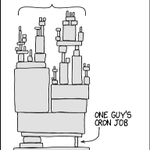
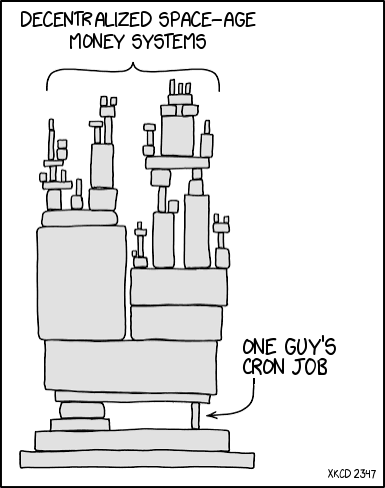
Yesterday's Railway issues, and an increasing stream of cloud provider incidents, highlight a major issue: decentralized apps have no way of scheduling or automating smart contract calls. Someone needs to run that cron on a server, which are becoming increasingly unreliable in the age of AI.
The point of decentralized systems is that we shouldn't need to rely on a single server to maintain an invariant that protects the correctness and solvency of self-sovereign money protocols. Automation needs to move to the blockchain, where a network of distributed nodes brings fault-tolerance and checks-and-balances.
Scheduled Transactions are how we accomplish that.
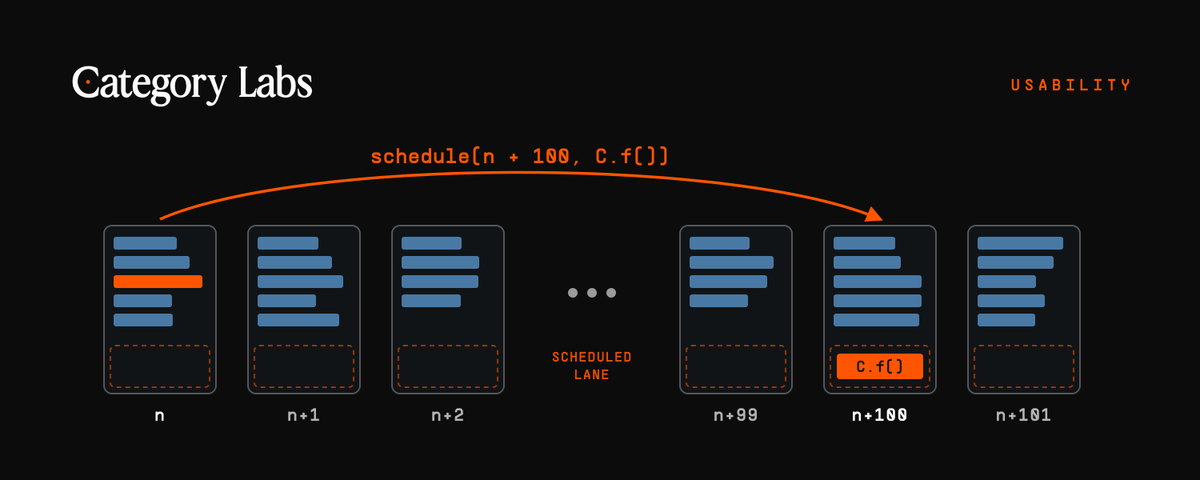
Scheduled Transactions are far more than a replacement for keepers. They let users and applications alike set up interactions that recur on a cadence, happen once at a chosen moment, or follow from something that happened earlier.
Check out the details below, as well as a few examples of what you can build with Scheduled Transactions, such as on-chain keepers, recurring payments, long-running (asynchronous) computations, automatic refunds in atomic swaps, and order-book cleanup.
Keone Hon retweeted

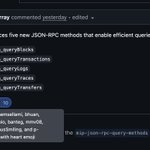
Blockchain has long been missing a native crontab. Check out this design for scheduled transactions on Monad by Category researchers @CAndrei1998 and @liobaheimbach.
Automatic compounding, recurring payments… What use cases are most interesting to you?
More info about the Formal Verification effort on Monad: category.xyz/blogs/finding-b…

Wow, here is a substantial advancement in theoretical consensus research from @komasito55 (of @category_xyz), @ElodinStorm and Ling Ren!
It resolves a long-standing open question and improves on the previous-best O(n^3) communication complexity of the Dolev-Strong algorithm published in 1983. The new algorithm is near-quadratic while tolerating any number of faulty participants below the total
Category Labs is making fundamental research progress as they continue to improve Monad through exceptional pragmatic algorithm engineering
Dolev–Strong is arguably the best-known consensus protocol, and for roughly 45 years, no deterministic protocol improved on its O(n³) communication.
A new paper by @komasito55, Yuval Efron and Ling Ren improves that bound to O(n² log⁴ n) for Byzantine Broadcast, tolerating t < n faults in O(t) rounds.
After thinking about the problem on and off for years, they started leveraging AI models. The paper is the result of a month of human experts digesting and simplifying the discourse with AI.
The result introduces some interesting new protocol techniques.
Dolev–Strong makes each newly convinced participant send its full evidence to everyone. In the expensive case, many participants send large, redundant sets of signatures.
The new protocol changes who does the work:
- A convinced participant announces acceptance with its own signature
- Unconvinced participants retrieve the missing evidence from multiple sources
- A procedure called Bisect assigns distinct missing signatures to sources, which limits duplicate data
- Ladder increases request sizes gradually. This limits how much communication a malicious source can waste
Commitments to sender lists, combined with graph-based checks, stop a malicious receiver from telling many sources that each must supply all the evidence.
The important difficulty is controlling costs when either side of the retrieval is malicious. The paper supplies a novel method that addresses both sides.
The cryptographic requirements are also relatively modest: signatures, a public-key infrastructure, and vector commitments that can use Merkle trees. The result does not require SNARKs or threshold signatures.
It's a major research result resolving a longstanding question in Byzantine broadcast. Super cool!
Dirol = Esports!

Introducing Dirol Esports, the first matchmaking platform for crypto trading.
Esports has been part of gaming for years, from CS to Dota and Fortnite. We believe traders are the new esports players.
Invite friends to your lobby, play trading matches, earn DRM, climb the leaderboard and prove your skill.
Preparatory work for post-quantum encrypted mempool. Not in the short path but an important building block for a bit later
Category Labs research, best in class
Check out Tree-BTE 🌳, our new tree-based approach to designing batched threshold encryption (BTE), the cryptographic tool for encrypted mempools.
Tree-BTE can be instantiated with different cryptographic hardness assumptions to yield different properties. For example, with a lattice-based hardness assumption, we get a post-quantum secure BTE scheme with >100x faster decryption than prior lattice-based schemes.
Instantiations based on other assumptions (such as DDH, DCR, LWR) are also possible. Check out our paper on eprint.