🇺🇲✝️ Christian, Constitutional Conservative, Pro-Life, Mom, Grandmother
Joined July 2009
- Tweets204K
- Following7.5K
- Followers5.6K
- Likes205K











Leslie Gleisner retweeted
In 2013, a work of art was created on a beach in Normandy as a tribute to the roughly 9000 people who lost their lives there on D-Day.
Designed by the British sand artists Jamie Wardley and Andy Moss, it was made of 9000 human silhouettes raked into the sand at Arromanches, one for every soldier and civilian who died during the landings, and it was completed on 21 September, the International Day of Peace, with the help of hundreds of volunteers.
About 60 volunteers had signed up in advance, far too few for such a huge task, but on the day, people simply started turning up. Locals, tourists and strangers from around the world picked up rakes and stencils and joined in, racing the incoming tide. The artists made one decision that gave the whole work its meaning: there are no flags, no uniforms and no sides. The 9000 figures stand for Allied servicemen, German soldiers and French civilians alike, and in the sand they all look the same.
As the artists put it, they would be known only as "The Fallen."
D-Day remains the largest seaborne invasion in history: on 6 June 1944, after a day’s delay caused by bad weather, American, British, Canadian and other Allied troops landed on five beaches along the heavily fortified coast of Normandy, codenamed Utah, Omaha, Gold, Juno and Sword. They stormed ashore under relentless German fire, and Omaha Beach became the deadliest of them all.
The exact number of those who died that day will never be known. The artists explained that 9000 is a conservative, rounded figure: around 3000 French civilians, 2000 German soldiers and 4414 Allied servicemen.
A few hours after the last silhouette was drawn, the tide rolled in and erased them all, exactly as the artists intended: a reminder of how quickly lives can be swept away, and how easily they can be forgotten. In Jamie Wardley’s words, the work was “a sobering reminder of what happens when peace is not present.”

Leslie Gleisner retweeted
If your idea of Picasso is faces split into pieces and eyes in the wrong place, this one might surprise you: it was painted by him at just 24, a few years before Cubism…
It’s called Family of Saltimbanques, and it was made in 1905, when Picasso was young, poor and lonely in Paris. Saltimbanques were wandering circus performers, the lowest rung of the profession, and Picasso and his friends often went to watch them at a circus near his studio.
Here, a small troupe stands in an empty, sunbaked landscape: a harlequin in his diamond-patterned costume, a heavy clown in red, two boys, a little girl holding the harlequin’s hand, and, sitting apart from them all, a young woman in a straw hat, lost in her own thoughts. None of them looks at the others. They are together, and yet each of them seems completely alone.
It’s the masterpiece of what we now call his Rose Period, when the cold blues of his earlier work gave way to warmer pinks and ochres, and it’s huge, more than two metres wide.
Many believe the harlequin is Picasso himself, an outsider among outsiders.
Ten years later, the painting found its way into the life of one of the greatest poets of the 20th century. In 1915, Rainer Maria Rilke stayed for several months in a house in Munich where it hung on the wall, and he said there was so much Paris in it that, for moments, he forgot where he was. Years later, the painting became the heart of the fifth of his Duino Elegies, which begins with a question to the figures in the canvas, and to all of us:
“But tell me, who are they, these wanderers, even a little more fleeting than we ourselves…”

Leslie Gleisner retweeted
108 years ago today, the day after the Armistice, Claude Monet wrote to his friend Georges Clemenceau offering two water lily panels to France to celebrate the victory.
The gift grew into the eight monumental Water Lilies that have hung in the Musée de l’Orangerie since 1927.

Leslie Gleisner retweeted
The Long Room at Trinity College Dublin.
"We shape our buildings and afterwards our buildings shape us."


Leslie Gleisner retweeted
Photographer Stefan Draschan captures museum visitors who match the artwork on display


Leslie Gleisner retweeted
There is a particular kind of happiness in watching someone you love do the thing they love most, so lost in it that they don’t even notice you’re looking.
In 1877, a 23 year old painter named Frank Dicksee depicted that feeling so perfectly that it made him famous almost overnight…
A young woman sits at an organ, lost in the music, and beside her a young man leans back and simply watches her, completely absorbed, as if he has forgotten the rest of the world exists. Above them, a great stained-glass window fills the room with light.
Dicksee called it Harmony, and when he sent it to the Royal Academy in London, just a year after his first appearance there, it was such an immediate success that the Academy bought it for the nation, using a special fund for new British art.
It still belongs to Tate today.
He had researched every detail, he had worked alongside a stained-glass designer, and he based that window on a real one in a medieval church in Kent. The girl at the organ was real too: she was Hilda Spencer, a student at the London college where Dicksee taught drawing.
Victorian critics loved it, and one of them understood exactly what the young painter was trying to say: the music in the painting stands for the harmony between the man and the woman, “the two notes in the human chord.”
She plays, he listens, and neither needs to say a word.
If you’ve ever felt this way, you know exactly what it’s like: a love that doesn’t need to be explained...

Leslie Gleisner retweeted
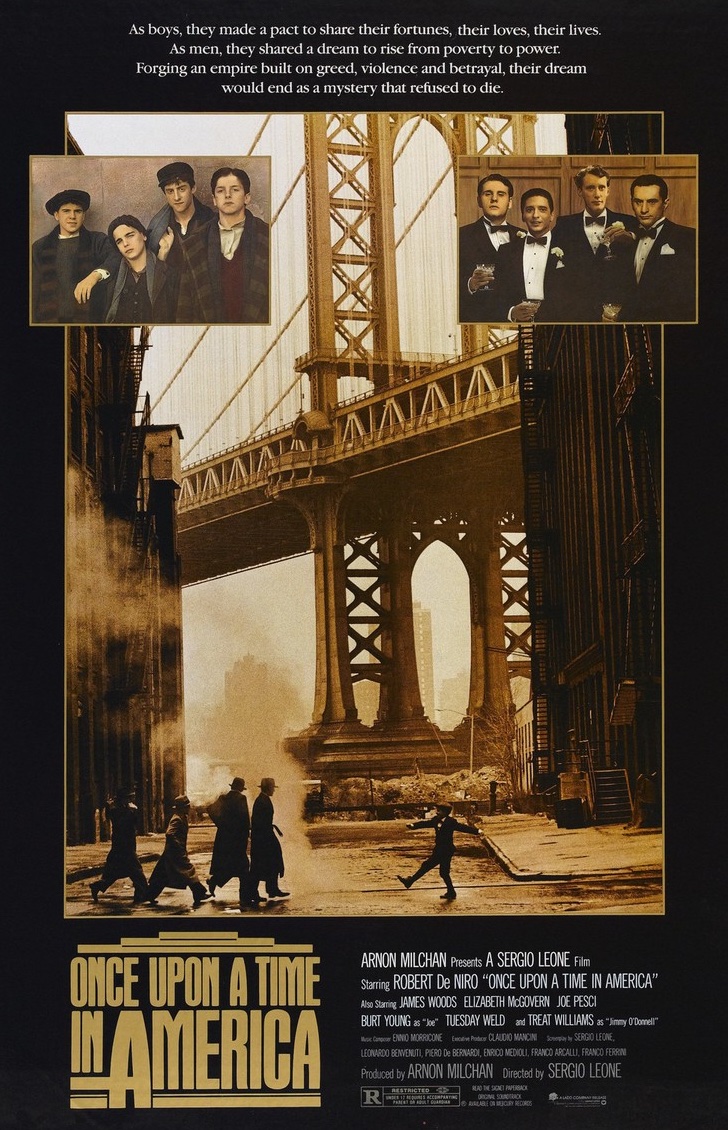
A lot of great movies were inspired by paintings, and a few are built entirely around a piece of art.
Here are some of my favorites:
james-lucas.com/p/a-guide-to…




Leslie Gleisner retweeted
I write about history, art, and culture in my weekly newsletter — join more than 80,000 readers here 👇🏻
James-lucas.com/welcome


Leslie Gleisner retweeted
One of the greatest writers of all time was also an extraordinarily talented artist!
Check out today's article if you're interested in a deeper dive:
james-lucas.com/p/tolkien-pa…


Leslie Gleisner retweeted
"Art is not what you see, but what you make others see."
Each week, I write about the beauty of great art and why it matters now more than ever. If that interests you, feel free to join 83,000+ readers here:
James-lucas.com/welcome