

Official account of MOHELA. Committed to excellent student loan servicing and helping families successfully repay student loans.
- Tweets2.6K
- Following42
- Followers4K
- Likes106


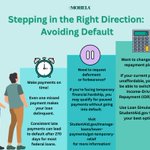




ALT Options To Avoid or Get Out of Default


ALT Student Loan Repayment Plans Fixed Payment Repayment Plans Standard: monthly payments are a fixed amount, and your loans are paid off within 10 years Graduated: monthly payments are lower at first and then increase, and your loans are paid off within 10 years Extended: monthly payments can be fixed or graduated (increase over time), and your loans are paid off within 25 years Income-Driven Repayment Plans Income-Based Repayment (IBR): monthly payments are either 10% or 15% of your discretionary income, and your remaining balance is discharged after 20 or 25 years Income-Contingent Repayment (ICR): monthly payments are 20% of your discretionary income, and your remaining balance is discharged after 25 years Pay As You Earn (PAYE): monthly payments are 10% of your discretionary income, and your remaining balance is discharged after 20 years


ALT How Financial Aid Works Start Planning Early Plan how to pay for college, career school, or trade school before you start your financial aid journey. Ask school counselor and the financial aid office about state, school, and nonprofit grants and scholarships you can apply for. Be sure to meet application deadlines. States have limited funds, so understand your state’s requirements and apply early to be eligible for as much aid as possible.

ALT Fill Out the FAFSA® Form Before each year of college, career school, or trade school, apply for federal student grants, work-study funds, and student loans with the FAFSA form. Your school uses your FAFSA info to determine your federal student aid eligibility. Many states and schools use FAFSA data to award their own aid. After you submit your FAFSA form, you’ll receive your FAFSA Submission Summary, which has the information you included in your form. Review it and make corrections if needed.

ALT Aid Offer If you’re accepted to a school you listed on your FAFSA form, the school will send you an aid offer. Your aid offer will explain any federal student grants, loans, and work-study funds a school offers you. The offer might also contain state and institutional aid. If you receive aid offers from multiple colleges, career schools, or trade schools, you should compare them and decide which school is best for you. Grants are funds that don’t have to be repaid. A loan is money you borrow and must pay back with interest. A work-study job gives you an opportunity to earn money to pay your educational expenses.

ALT Receiving Aid Every year, each school sets its own schedule for disbursing (paying out) aid, partially determined by when you submitted all required paperwork. Your college or career school has a financial aid office to help guide you along the way. Graduate and Start Repayment As you prepare to graduate, get ready to repay your student loans. Choose a repayment plan that’s best for your goals. Income-driven repayment plans base your monthly payment amount on your income and family size. If you start falling behind on your payments, contact your loan servicer to discuss repayment options.


ALT What To Know About Income-Based Repayment (IBR) Plan Changes The One Big Beautiful Bill Act (OBBA) expands access to the Income-Based Repayment (IBR) Plan. You could now be eligible to enroll in this plan.

ALT IBR is one of three income-driven repayment (IDR) plans available to federal student loan borrowers. IDR plans, including IBR, often provide a lower monthly payment compared to fixed payment repayment plans because they are based on your income and family size rather than your loan amount.

ALT See how switching to IBR affects your monthly student loan payment(s) and total amount you'd pay over time. Get a personalized estimate with Loan Simulator. Get started at StudentAid.gov/loan-simulator If IBR works best for you and your financial situation, you can apply online at StudentAid.gov/idr

ALT Resources Reach out to your student loan servicer if you have questions or need help. For more information and updates, visit StudentAid.gov/bigupdates


ALT New to Repayment: What You Need To Know Your monthly payment amount is dependent on your repayment plan, so use Loan Simulator (StudentAid.gov/loan-simulator) to explore your options. You will automatically be placed on a Standard Repayment Plan unless you enroll in a different repayment plan. You’ll receive your monthly payment amount and due date at least 30 days before your first payment is due. Directions on how to make your first payment will come from your loan servicer. Enrolling in auto pay can help keep your payments on time each month. Missing your student loan payment by just one day will result in your loan becoming past due, or delinquent.