
Creating a general-purpose, high-bandwidth interface to the brain
California, USA
Joined August 2017
- Tweets227
- Following1
- Followers1.8M
- Likes13




Thanks for coming by @cleoabram!

Watch the HUGE* If True episode on @neuralink's new tech and the future of brain chips here: youtu.be/Vna0hkq7U1g?si=nJVE…

Our engineers recently visited one of our speech restoration study participants for a 72-hour hackathon.
The goal: rapidly prototype as many features as possible to enhance the experience of using Neuralink to communicate with thought.
Here are some of the things we built 🧵
If you’re interested in learning more about the hackathon experience, check out our blog:
neuralink.com/updates/72-hou…

Presented today at the 2026 Annual NEALS Meeting by Dr. Nader Pouratian.
Full abstract:
onlinelibrary.wiley.com/doi/…

Dr. Nader Pouratian is the principal investigator for the VOICE study (NCT07224256), an early feasibility study of Neuralink’s precise robotically implanted brain-computer interface for communication restoration.
Visit our trials page to learn more about the study and join our Patient Registry:
neuralink.com/trials/speech-…
Neuralink devices are investigational and have not been approved by the FDA or other regulatory authorities.

Our clinical trial participants have now used their Neuralink implants for over 50,000 hours, building one of the largest datasets of intracortical neural activity ever.
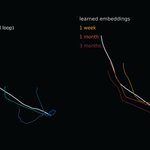
We used it to pretrain a foundation model for BCI: self-supervised neural encoders that turn noisy, drifting spikes into stable representations.
Some initial results:
• Decoders that keep working for weeks instead of days. For some users, calibration dropped from 10 min/day to 10 min/week
• Teleporting cursors that jump straight to the intended target
• A new cursor-control record of 11.32 bits per second (exceeding the performance of most able-bodied people)
We’re just getting started. Future directions include pooling data across participants, one-shot (or zero-shot) calibration, and an API for the motor cortex.
Read more:
neuralink.com/updates/pretra…

Through the VOICE trial, Terry is using his Neuralink implant to help fine-tune a brain-to-voice interface for himself and others who can’t speak. He trained the algorithm first by miming speech as best he could, then by simply thinking the words and hearing them come out in his own natural voice.
Powered by Grok Voice from @spacexai