

Creating a general-purpose, high-bandwidth interface to the brain
California, USA
Joined August 2017
- Tweets212
- Following1
- Followers1.8M
- Likes13
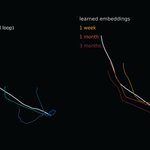


Our clinical trial participants have now used their Neuralink implants for over 50,000 hours, building one of the largest datasets of intracortical neural activity ever.
We used it to pretrain a foundation model for BCI: self-supervised neural encoders that turn noisy, drifting spikes into stable representations.
Some initial results:
• Decoders that keep working for weeks instead of days. For some users, calibration dropped from 10 min/day to 10 min/week
• Teleporting cursors that jump straight to the intended target
• A new cursor-control record of 11.32 bits per second (exceeding the performance of most able-bodied people)
We’re just getting started. Future directions include pooling data across participants, one-shot (or zero-shot) calibration, and an API for the motor cortex.
Read more:
neuralink.com/updates/pretra…

Through the VOICE trial, Terry is using his Neuralink implant to help fine-tune a brain-to-voice interface for himself and others who can’t speak. He trained the algorithm first by miming speech as best he could, then by simply thinking the words and hearing them come out in his own natural voice.
Powered by Grok Voice from @spacexai
Learn more about Neuralink’s clinical trials: neuralink.com/trials/
Neuralink devices are investigational and have not been approved by the FDA or other regulatory authorities. This video features voluntary clinical trial participants sharing their personal experiences, which may not reflect all participants or future outcomes.

The dura is the brain's armor: a membrane so tough that a surgeon normally cuts through it with a scalpel. For the first time in our clinical trials, we inserted the electrode threads of our implant straight through the dura and into the cortex, keeping the dura intact.
Here's how we did it 🧵
This first-of-its-kind procedure was performed at @UHN Toronto Western Hospital as part of our clinical trials. The participant was controlling a cursor with their thoughts within an hour of surgery, and recovery is progressing as expected.
Neuralink devices are investigational and have not been approved by the FDA or other regulatory authorities. This video features voluntary clinical trial participants sharing their personal experiences, which may not reflect all participants or future outcomes.