

Co-founder & MD of neuroConn GmbH (part of neurocare group AG) - in the market for neuroscience, non-invasive brain stimulation and neuromodulation for 26 years
Ilmenau, Deutschland
Joined May 2011
- Tweets2.2K
- Following233
- Followers1.2K
- Likes655






Klaus Schellhorn retweeted

A noninvasive brain stimulation technique called tTIS can modulate reward learning circuits in the brain and safely relieves symptoms of subclinical #depression in adults, according to new results from a clinical trial. @CAS__Science scim.ag/4zwO5gO

ALT A brain scan image illustrates activity areas, with color grading indicating t-value differences. Two highlighted brain regions, VS_L and VS_R, are linked with arrows to the vmPFC, showing inhibitory effects. Arrows are red and gray, pointing out online effects and null online effects respectively, as noted in the legend.
Wenn gegen Depression nichts hilft. Vielleicht hilft das?
Hirnstimulation, Therapie als Rollenspiel oder Nasenspray mit Esketamin: Wir haben drei Patienten begleitet, die auf neuen Wegen behandelt werden.
zeit.de/2026/50/depression-b…

42
Learning during the last days at #SfN2026 in #Washington
Recent tRNS results reinforce the value of stimulation-assisted neuroplasticity.
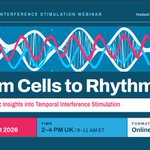
Temporal Interference Stimulation introduces a distinct adaptation-based mechanism that differs fundamentally from tDCS, tACS, and tRNS.


75
Klaus Schellhorn retweeted

New preprint: we found that the anterior human hippocampus toggles between two network states, one coupled to the default mode network (DMN) and one to somatomotor (SM) cortex. doi.org/10.64898/2026.10.11.…
We see it in three densely sampled healthy cohorts (WCM multi-echo, Euskalibur, NSD 7T) and in patients with depression, where the DMN state dominates and tracks symptoms. ECT shifts the balance back. Intracranial recordings support the link to mood.
Let Gamma boast of memory regained, Let Alpha soothe the passions overstrained; Yet Theta now invites a closer gaze, And lights a path through neuroscience's maze …
A novel theta-frequency tACS approach for #MDD initial fjndings
by E. Gotsis et al
sciencedirect.com/science/ar…
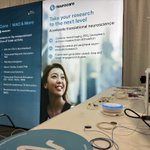
Shaping the future of brain health. 🧠 At #SfN2026, neurocare brings together AI, neuromodulation, EEG, neuronavigation, and closed-loop technologies in one platform. From TMS to Temporal Interference, we accelerate translational research and clinical innovation. #Neurotechnology


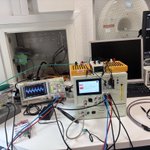
Proudly presenting LOOP-IT at the Temporal Interference Workshop ahead of #SfN2026 Exploring the latest advances in TI & its potential for targeted, non-invasive modulation of deep brain networks. Great discussions, hands-on sessions & opportunities for translational neuroscience


Klaus Schellhorn retweeted

@SBeniczky and Scherg review scalp EEG biophysics, stressing that EEG signals are not isolated points of negativity, but are due to complex dipolar sources in the brain. They show the utility of voltage mapping, particularly for tangentially-oriented sources. 🗺️⚡🧠 ow.ly/byk350ZGhRa

Klaus Schellhorn retweeted

📍 SfN 2026 | Washington, DC (14–18 Nov)
Explore Closed‑Loop neuromodulation, tES, Target Engagement & multimodal brain stimulation at #SfN2026.
See you in Washington, DC! 🔗 hubs.li/Q048htWS0
#Neuroscience #Neuromodulation #BrainStimulation

Klaus Schellhorn retweeted

[Editor's Choice] Ma J, Li R, Yang D, Pan C, Yuan X, Li F, Yang H, Bie Z, Li Y. Resting-state EEG biomarkers predict serotonin-norepinephrine reuptake inhibitor response in depression. Clin Neurophysiol 2026;191:2112326. sciencedirect.com/science/ar…
Editor's commentary: Antidepressant medications is the primary treatment for depression but there is considerable variation in the patients’ response. Many patients did not respond to initial treatment and it often take weeks to months to assess the response. In this volume of Clinical Neurophysiology, Ma et al. measured baseline resting state EEG in 92 patients with depression and showed that key EEG features such as power spectral density, cross-frequency coupling and microstate patterns differentiated responders from non-responders to serotonin-norepinephrine reuptake inhibitors. EEG based analysis can be further developed as a novel tool for antidepressant selection to improve treatment outcome.
By Robert Chen
Editor-in-Chief, Clinical Neurophysiology

Klaus Schellhorn retweeted

Did your brain stimulation effect disappear, or did task demands hide it?
Int-Veen & Ehlis show heavy post-stimulation cognitive load can mask neural TMS changes in fNIRS, urging accounting for post-stim task demands.
doi.org/10.1016/j.brs.2026.1…
@brainstimj #TMS #fNIRS

UNIVERSITÄT GREIFSWALD
Prof. Dr. habil. Dipl.-Psych. Daria Antonenko on temporal interference stimulation using neuroConn’s LOOP-IT platform for her future research
instagram.com/reel/DfC62GLkm…

Supporting Göttingen workshops on non-invasive brain stimulation since 2003
The next three days we do it again
3rd edition of the ESBS Certification Course
Transcranial Magnetic & Electrical Stimulation - From neuronal mechanisms to clinical practice
brain-stimulation.eu/events-…


Klaus Schellhorn retweeted
Is the seizure onset zone hyperconnected or disconnected?
LaRocque et al. show it is both: strongly wired to itself, yet functionally isolated from the rest of the brain.
brainstimjrnl.com/article/S1…
@brainstimj #Epilepsy #BrainStimulation #Neurology

The protocol was feasible and safe, but active #tDCS was not superior to the control condition for improving #depression symptoms
#HometDCS with gamified cognitive control training for #depression A randomised clinical trial
by Dechantsreiter E et al
jamanetwork.com/journals/jam…

Klaus Schellhorn retweeted

Using Heart-Brain Coupling as a prefrontal grid search procedure for TMS yielded HBC in 90% of subjects, most often a non-BeamF3 site.
Beyond Beam-F3: A Grid-Based Frontal Mapping Approach using Heart-Brain Coupling to Guide Personalized Non-Invasive Brain Stimulation
sciencedirect.com/science/ar…
Congrats Jessica Jacobs, great work!
Klaus Schellhorn retweeted

Looking forward to speaking Oct 17th at the 7th European Conference on Brain Stimulation (Naples) on "What was once impossible: How better electrode technology transforms outcome" slides: static1.squarespace.com/stat…
