

Putting health at the forefront of the public agenda in Nigeria. Find out more at https://nitter.gq/t.co/kH2STxa0Ay
Abuja, Nigeria
Joined May 2009
- Tweets99.1K
- Following4.6K
- Followers127K
- Likes43.3K



Pinned Tweet
Can Nigeria sustain its #HIV response as international funding declines and debt pressures grow?
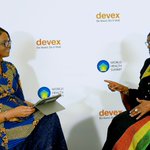
In this #NHWPost, @t_chinwendu and @S_0ko02 draw on insights from @Winnie_Byanyima #CuratedConversations episode to explore the future of HIV financing, local medicine production and health sovereignty in Nigeria.
Read: nhwat.ch/4tqiKLq
#WHS2026 @Fmohnigeria


We have the tools to prevent and treat HIV. So why is ending AIDS still proving so difficult?
A new episode of Curated Conversations is here! What are the inequalities holding back progress, and what will it take to change the story? Who better to unpack these questions with us than @Winnie_Byanyima, Executive Director of @UNAIDS?
Let's get into it!👇
youtube.com/watch?v=9K4lsPeQ…
We’re LIVE!
Join the conversation as we unpack key issues, share insights and explore practical ways to make a difference.
Watch now on Instagram: nhwat.ch/4jcG0aZ
Tune in and be part of it!

A quick office visit ahead of today's conversation!
It was a pleasure to welcome Dr @the_beardedsina to our office yesterday ahead of today's Instagram Live on sexual and reproductive health.
We discussed areas of possible collaboration, advocacy priorities and other areas of concerns in improving health outcomes and ensuring that important health issues receive the attention they deserve.
Dr Sina joins us and other special guests for a conversation about the questions, choices and issues around sexual and reproductive health that deserve more open discussion.
Join us live today, 27 November, at 6 PM on Instagram. We look forward to having you with us!


External funding cuts, dependence on imported medicines and vaccines, limited investment in local research and persistent gaps in health financing continue to expose the vulnerabilities of African health systems.
The 5th International Conference on Public Health in Africa, themed “Moving Towards Self-Reliance to Achieve Health for All in Africa”, holds its closing ceremony today. Over the past five days, discussions have examined what African countries need to do to mobilise domestic resources, strengthen local pharmaceutical production, invest in scientific research, support their health workforce and build institutions capable of responding to their populations' health needs.
#CPHIA2026

CPHIA 2026 | Closing Ceremony – Africa's Health Security & Sovereignty nitter.gq/i/broadcasts/2qVYNAkZe…

We have the tools to prevent and treat HIV. So why is ending AIDS still proving so difficult?
A new episode of Curated Conversations is here! What are the inequalities holding back progress, and what will it take to change the story? Who better to unpack these questions with us than @Winnie_Byanyima, Executive Director of @UNAIDS?
Let's get into it!👇
youtube.com/watch?v=9K4lsPeQ…
Scientific innovation can create new possibilities for improving health, but those possibilities also come with responsibilities. Without adequate safeguards, advances in biotechnology can introduce risks to public health, food systems and the environment.
As Nigeria seeks to harness biotechnology for advances in healthcare, agriculture, industrial development and scientific research, the importance of strong biosafety and biosecurity systems cannot be overlooked.
#NBBS26 @Fmohnigeria @FmardNg @drfatima84)


biotechnology has implications that reach well beyond scientific research. It affects farmers, food production, environmental protection and the future of local economies.
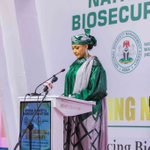
Delivering a goodwill message on behalf of the Executive Governor of Jigawa State, the Deputy Governor, Engr. Aminu Usman Gumel highlighted the importance of responsible biotechnology in advancing the state's agricultural priorities.
He noted that modern technologies offer opportunities to improve crop yields, strengthen resistance to pests and diseases, improve livestock production and build more resilient food systems. However, these advances need appropriate safeguards to protect human health, biodiversity, the environment and farming communities.
Importantly, he called for stronger engagement between the National Biosafety Management Agency and state governments, particularly in capacity building, public awareness and the implementation of biosafety policies at the subnational level.
#NBBS26 @BiosafetyNig


1
1
35
A key highlight of the 2026 National Biosafety and Biosecurity Summit was the official launch of the National Biosafety and Biosecurity Strategic Framework.
The framework provides a national plan for how Nigeria intends to strengthen its approach to biosafety and biosecurity, including how institutions work together, how potential risks are monitored and how the country prepares for new developments in biotechnology.
But launching the framework is only the beginning. We must ensure that its priorities translate into stronger regulatory oversight, sustained investment in technical capacity, improved preparedness and closer collaboration among relevant institutions at both national and state levels.


1
28
Day 2 of the three-day Stakeholder Message Co-Creation Workshop and Solutions Journalism Fellowship began with a review of the lead poisoning prevention messages developed by participants.
Working in groups, they presented messages for different audiences, including government officials, cosmetics sellers and consumers, pregnant women and caregivers.
#LeadFreeNaija @Fmohnigeria


Public health information is only useful when people can understand it, see how it relates to their lives and know what to do with it.
This is why we brought stakeholders together in Abuja today for the start of a three-day Stakeholder Message Co-Creation Workshop and Solutions Journalism Fellowship, hosted in partnership with the @Fmohnigeria, with support from @ResolveTSL.
#LeadFreeNaija


A session on finding and reporting the human story behind the numbers further explored how journalists can work with data, identify patterns and turn figures into stories that people can understand.
Participants also examined how health misinformation spreads, the difference between misinformation and disinformation, and how information gaps and rapid sharing can create confusion, fear and distrust.
#LeadFreeNaija


The discussion reinforced the importance of checking claims against credible sources, reviewing supporting evidence, consulting qualified health professionals and being honest when information cannot be verified.
The sessions were a reminder that reporting on lead poisoning also means asking difficult questions about policies and their implementation, examining the evidence, and telling stories that help the public understand the issue.
#LeadFreeNaija @Fmohnigeria


21
How many Nigerians remain outside health insurance schemes simply because they do not know these schemes exist?
Research presented by our Senior Manager, Monitoring and Evaluation, Solomon Yemi Oladimeji (@solomonyemi), at #CPHIA2026 offers some important insights.
His oral abstract, "Beyond Affordability: Barriers to Health Insurance Enrolment Across Five Nigerian States", draws on an Integrated Community Listening survey of 6,015 adults across 35 LGAs in Cross River, Ebonyi, Gombe, Kano and Niger States, Nigeria.


Among 3,236 respondents without health insurance, 55% were unaware of available schemes, 18% found enrolment unclear or difficult, and only 4.4% cited affordability as their main barrier.
The findings highlight why expanding coverage requires more than premium subsidies. Public awareness, clear information and accessible enrolment pathways are equally important to ensuring Nigerians can access the financial protection health insurance offers.
#HealthForAll #HEalthForAllNG @Fmohnigeria @muhammadpate


