

Quantum based AI digital medical models, the answer to big Pharma. Decentralised, personalised and specific.Telegram community: https://nitter.gq/t.co/KyzbvT4Ali
Joined December 2021
- Tweets351
- Following3.7K
- Followers10K
- Likes1.2K



A model that can identify which scanner produced an image with perfect accuracy - AUROC 1.0 - isn't reading the disease.
It's reading the machine.
That's what a study in Scientific Reports found testing deep learning on photoacoustic imaging for peripheral artery disease. Four scanners of the same model line. The network could tell them apart flawlessly. Strip the known device-variable regions entirely - still 1.0. Break the image into small patches - still detectable.
The fingerprint wasn't in one corner of the image. It was everywhere.
The researchers built a correction pipeline specifically to remove it. Early-response sensor correction. Denoising. Temporal averaging. Depth alignment. The device signal dropped by more than half.
Device identity was still perfectly recoverable at AUROC 1.0.
This matters far beyond photoacoustics. The I3LUNG lung cancer study saw multimodal AI gains evaporate on external validation - AUCs falling to between 0.55 and 0.72 in a geographically distinct cohort. The collapse gets described endlessly. This paper explains it.
Different hospitals buy different equipment. Different hospitals serve different populations. If the network learns scanner identity, and scanner correlates with disease prevalence, the model isn't predicting pathology - it's predicting postcode.
It will look exceptional in-distribution. It will fall apart everywhere else.
The intervention that actually worked wasn't better preprocessing. It was breaking the correlation in the data design itself. This is a study design problem, not an image-cleaning problem, and no architecture choice fixes it.
quanmed.ai is building toward infrastructure that treats this as foundational - the Lepton Lab's cryptographic provenance layer is one example of what it looks like to track where data comes from before you trust what it says.
The model learns what you give it. The error is upstream.
On October 20th, 2026, Radical Numerics announced that an AI-designed bacteriophage had been administered to a human patient for the first time.
That is a genuine milestone. Credit it as one.
But almost every outlet that covered it - including a Daily Caller headline - described it as the FDA greenlighting a trial.
It was not a trial. What the FDA authorised was single-patient expanded access. Compassionate use. A one-off permission for one named patient who had exhausted every other option - no protocol, no controls, no endpoints, no enrolled cohort. The mechanism exists precisely because desperate situations justify unproven interventions. That is humane & correct. It is also the weakest possible evidentiary setting medicine possesses.
One patient receiving something cannot tell you whether it works.
The distinction is not semantic. A trial generates transferable knowledge. Compassionate use generates a case report, at best. Calling one the other isn't enthusiasm - it's a category error that misleads clinicians, investors & patients trying to understand where the science actually stands.
Here is what we do know. The AI-modified phage killed patient-derived bacteria in vitro before administration. The patient had an E. coli infection resistant to both antibiotics & existing phage therapies. The company says it intends to publish. The outcome has not been disclosed. Nothing is peer reviewed. The primary source is the company itself.
That's n equals 1.
Undisclosed outcome.
Zero independent verification.
The science behind it - AI-generated phage genomes, building on Arc Institute and Stanford work earlier this year - is genuinely exciting and deserves serious follow-through.
But follow-through means trials. Peer review. Independent replication. Published outcomes.
Compassionate use is where promising ideas go to be tested on people who have no other choice. It is not where ideas go to be validated.
The Proton Lab at quanmed.ai is built on the premise that rigorous data infrastructure is what separates a remarkable anecdote from actionable clinical knowledge.
One patient is a beginning. It has never been evidence.
Ten years before anyone was diagnosed with Crohn's disease, the blood was already saying something.
Research presented at UEG Week 2026 analysed serum from 500 people - 200 who later developed Crohn's, 200 who developed ulcerative colitis, 100 matched controls - taken at diagnosis and at roughly two, four & 10 years before it. In those who went on to develop Crohn's, antibodies against Epstein-Barr virus were detectable across that entire window. Predictive AUC reached 0.90.
That number deserves both excitement & a cold shower.🚿
In a case-control study, AUC measures how well a test separates people who developed disease from matched controls - roughly balanced groups. IBD affects well under one percent of the population. Apply even a highly accurate test to a population that rare, and false positives can swamp the true ones. Case-control discrimination & real-world screening performance are different quantities. Conflating them is one of the most common errors in how early-detection research gets reported.
Other limits worth naming.
Conference presentation, not peer review.
US military personnel - younger, health-screened, not representative.
Association, not causation. The antibody signal may reflect immune dysregulation that precedes disease rather than anything that drives it.
None of that diminishes what the biology is telling us. The pathology had a decade of immunological legibility before the clinic went looking.
The researchers still need to show these markers add value alongside genetic & clinical data, build an affordable assay & prove earlier detection actually changes outcomes.
The signal existed. The question is whether medicine builds the infrastructure to listen earlier.
That is what the Proton Lab's analytical layer at Quanmed AI is designed for - finding structure in longitudinal data long before it reaches a diagnostic threshold.
Traceability: every block retains its data source, weighted by quality.
Recombination: a relationship established in one context can inform another without being re-derived.
Because every formula decomposes back into its constituent evidence, no revision requires discarding the whole.
The formula is never finalised.
It updates as the underlying measurements do.
Atomic Formula Building is QuanMed's attempt to make personalisation structurally honest rather than just rhetorically appealing.
Not a better average. No average at all.
quanmed.ai

QuanMed's answer doesn't begin with a finished compound or a population curve.
It begins with the smallest unit of biological truth: one measurable relationship between an input & a downstream biological response.
The methodology is Atomic Formula Building.
Those blocks combine upward.
Single relationships, to pathway clusters, to whole-system formulae mapped to a named phenotype.
Nothing is assumed. Everything is assembled
The logic is compositional, not prescriptive.
Each verified biological relationship - redox status & mitochondrial output, light exposure & circadian phase - is treated as a building block.
Every block carries a defined weight, a confidence interval & a source record.
Medicine has always prescribed to the average.
The average patient. The average response. The average dose.
Derived from a population that may share almost nothing biologically with the person in front of the clinician.
That fiction is baked into how treatment gets built.
AI improved fetal malformation detection by 8.7 percentage points in sensitivity. Specificity held. False alarms did not rise.
That combination - better catch rate, no more noise - is rarer than it sounds.
The Lancet Digital Health trial ran 1,584 prenatal ultrasound scans with mid-career sonographers in high-risk pregnancies. PAICS, an AI trained on fetal intracranial malformations, assisted the read.
Compare that to the recent Nature Medicine mammography study, where AI triage raised cancer detection but also raised recall by 14.8%. Non-inferiority on recall: failed.
The structural difference is not subtle.
In the mammography trial, the AI triaged - it classified low-risk cases as normal, removing human eyes from those reads entirely.
In this trial, the AI assisted. The sonographer remained responsible throughout.
Assistance and replacement produce different error profiles. That distinction matters more than almost any other design choice in clinical AI.
One honest caveat that should not be buried: the AI condition was offline review, not live scanning. Offline review is slower, lower pressure, more deliberate. Some portion of the gain may reflect the review condition rather than the AI itself. Single country. High-risk cohort only. Mid-career sonographers exclusively.
And one more thing worth noticing. Eye-tracking work on automation bias shows a wrong AI prompt changes not just what clinicians conclude - it changes where they look. This trial explicitly measured whether anomalies outside the AI's training scope were missed. They were not.
Most studies do not think to ask that question.
Hadron Connect's analytical layer is built on that premise: advisory outputs, clinician authority, every recommendation auditable.

Prima Mente and the Alzheimer's Disease Data Initiative just launched something that deserves more attention than it's getting.
The Alzheimer's Translation Challenge gives participants roughly 150 million cells - neurons, astrocytes, microglia - across healthy and disease contexts, with combinatorial chemical & genetic perturbations applied throughout. The models you build on that atlas get scored on real evaluations. The strongest don't win a leaderboard. They win a wet lab experiment.
That distinction matters more than it sounds.
Almost every clinical AI advance of the past five years has eventually hit the same wall: a model that performs brilliantly on its training distribution, then quietly fails on the next hospital's data.
Leaderboards that don't survive external validation. Multimodal architectures that look transformative in publication & unremarkable in deployment.
The loop never closes.
This competition is designed to close it by structure. Compute produces a hypothesis. The hypothesis gets tested at a bench. The terminal reward is a physical result, not a ranking.
The second thing worth understanding is what perturbation data actually is.
An observational atlas tells you what co-occurs. A perturbation atlas lets you ask what happens when you intervene. That's not a technical distinction. That's the difference between correlation at scale and mechanism.
The IP position also matters - Prima Mente acquires no rights to participants' models or discoveries.
So nothing is validated. Dataset release is spring 2027. Wet lab work is summer 2027. Cell-atlas models have a poor record transferring across contexts, so the evaluation design will determine everything.
Quanmed AI is building toward exactly this standard - where the Proton Lab's organising principle is that a finding earns its place only when it survives the inferential chain from analysis through validation.
A hypothesis tested is not a result. But it's incomparably more than a score.

Nolla Health recently announced that its Nolla Derm app would issue AI-generated initial acne prescriptions to Utah residents - not refills, initial prescriptions - making it the first organisation in the US authorised by a state regulator to do exactly that.
Let's be precise about what that means. This is not FDA approval. It is a pilot agreed between Utah's Office of Artificial Intelligence Policy, the Division of Professional Licensing, and Nolla's operating entities. One state. One condition. Eight topical medications.
The scope discipline is genuinely worth crediting.
Topical only.
Mild to moderate acne only.
No oral medications.
No isotretinoin - full stop.
Excluding isotretinoin is the single most important design decision in the whole architecture. A drug requiring mandatory pregnancy testing, monthly monitoring & a federal risk programme has no business anywhere near an autonomous prescribing pipeline. Nolla drew that line correctly.
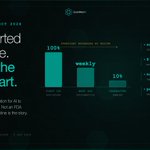
The graduated oversight - 100% physician pre-review for the first hundred patients, then weekly retrospective review, then 10% monthly sampling - is close to the opposite of deploy-fast-validate-never.
But the gates are patient-count based, not outcome-based. There is no published trigger that reverts to stricter review if harm emerges. Oversight decreases by design, and the mechanism for reversing that decrease is unclear.
The input is a questionnaire and a single face scan. For mild topical acne, a snapshot may be sufficient. The harder question is what happens when the same architecture is pointed at a condition where a snapshot is not.
One state doing this carefully is not a regulatory framework. It is a proof of concept inside a patchwork.
That distinction matters more than the headline.
Continuous, longitudinal clinical data - the kind Hadron Connect is built to consolidate across institutions - is what separates a snapshot from an evidence base.

Immune cells from skull bone marrow drive chronic TBI decline
Researchers report that an invasion of immune cells from the bone marrow of the skull triggers inflammation in adults with chronic traumatic brain injury (TBI). That inflammation drives the cognitive and mood decline seen with age in these patients.
The finding points to the skull marrow as a source of the cells behind long-term damage. It suggests that decline after TBI is not only a lingering effect of the original injury but is also tied to an immune process that is still active in the chronic phase.
The same work identifies fenofibrate as a promising therapy, based on a pilot trial. A pilot trial is an early step. It indicates the approach is worth pursuing, and larger trials would be needed to show how well it works and for whom.
This is where trial design becomes the central question.
Proton Lab, the part of QuanMed.AI built around multimodal clinical data, treatment prediction and trial design, addresses the kind of problem that comes next: working out which patients to enroll, which measures to track, and how to read a response across cognition, mood and inflammation.
The wider implication is that chronic TBI may now be treated as an ongoing, targetable inflammatory condition rather than a fixed injury.
If fenofibrate holds up in larger studies, that would give clinicians a concrete option for a group of patients who have had very little.

A trial just published in Nature Medicine did something worth sitting with.
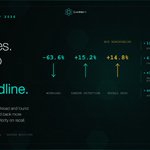
AI triage replaced human reading for 63.6% of mammograms, cutting radiologist workload by the same proportion.
Cancer detection rose 15.2%, from 6.3 to 7.3 per 1,000. By almost every headline metric, this worked.
Nearly twenty thousand women had a screening exam that no human being ever looked at.
That is not a criticism. It may well be the right tradeoff. But it is a change in what the word "screened" actually means, and it deserves to be named.
Here is the part that does not make the headline: recall rate was 14.8% higher, and failed noninferiority. More women called back. More anxiety. More downstream imaging. More biopsies on findings that turned out to be nothing.
The trial is honest about this. The coverage has been less so.
Now, a question the trial does not settle. The AI applied a single low-risk threshold across an entire population. One cutoff. Everyone below it: normal, no human reads.
But breast density shifts what that threshold should mean.
So does age.
So does hormonal status.
So does family history & prior imaging.
Whether that uniformity explains the recall result is not something this trial was designed to answer, and it would be wrong to claim it does. But it is the obvious next question.
A single population threshold is the kind of averaging that produces excellent aggregate statistics & individually imprecise decisions. The AI did not fail. It was asked to be one thing for everyone, and it was.
The question is not whether AI triage works. The trial says it does.
It is whether the threshold should be one number applied identically to bodies that are not identical.

A Yale study just published in Nature Communications found something worth sitting with.
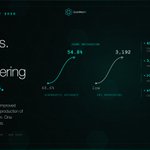
Fine-tuning a large language model on medical data improved diagnostic accuracy - the correct diagnosis appearing as the top prediction rose from 48.6% to 54.8%. Cardiology and nephrology improved by more than ten percentage points. Real, measurable clinical gain.
Across those same 10,000 evaluated outputs, the researchers identified 3,192 instances of protected health information being reproduced from training data.
The same process. One mechanism. Both outcomes at once.
That's not a bug waiting for a patch. It's a design constraint, and the authors are careful to say so - memorisation isn't uniformly harmful, but reproducing sensitive clinical content from training data is a privacy exposure baked into the adaptation itself.
Which means privacy architecture can't be a policy document you attach afterwards. It has to be structural, or it isn't real.
This is the problem quanmed.ai has built its Lepton Lab governance regime around. Not because the solution to memorization is a better disclaimer, but because consent, provenance & de-identification have to be properties of the underlying architecture.
Granular permissions the data owner can revise at any time.
Clinician verification before data enters the ledger.
One-way cryptographic hashing that decouples identity from the record.
A blockchain topology where retrospective alteration is detectable, not merely prohibited.
All of it framed within UK GDPR, the Data Protection Act 2018 & the common-law duty of confidentiality.
The Yale finding isn't an argument against fine-tuning medical models. It's an argument that the data infrastructure underneath them determines what's permissible.
Better models require better foundations.

In roughly 297 decisions studied, clinicians accepted incorrect AI recommendations without challenge about 22% of the time.
That number is uncomfortable. But it isn't really about the AI.
A 2026 eye-tracking study of radiologists makes the deeper problem visible: when an AI prompt was wrong, it didn't just influence what radiologists concluded - it changed where they looked.
The error entered the perceptual process before reasoning even began.
That's not carelessness. That's interface design producing predictable human behaviour.
There is a structural asymmetry embedded in how clinicians interact with automated systems. Reject a correct AI output and you bear full responsibility for the outcome. Accept a wrong one and responsibility diffuses - toward the system, toward the vendor, toward the algorithm.
Over time, that asymmetry doesn't produce better clinical judgement. It quietly selects against it.
Time pressure accelerates this.
Cognitive fatigue accelerates this.
Financial incentives that reward throughput over deliberation accelerate this.
None of those are character failures. They are the predictable outputs of a system optimised for efficiency first.
The remedy isn't a more accurate model. A well-validated model presented through a deferential interface still degrades care. The remedy is interface design that treats every output as dismissible - time-stamped, attributable, visible as a suggestion rather than a conclusion, with human sign-off required before anything becomes clinical action.
That design principle is what QuanMed AI's Neutron interface is built around, and it's specified precisely because accuracy alone doesn't close this gap.
Keep judgement where accountability actually lives.
