

Rethinking Economics is a global youth movement building an economics that works for everyone.
Worldwide 🌍
Joined May 2013
- Tweets10.5K
- Following1.3K
- Followers80.8K
- Likes3.6K





Pinned Tweet
It's time - our membership is now open!
Become a member of Rethinking Economics International to help build a better economics for our futures, our communities and our planet.
Join us: rethinkeconomics.org/become-…

ALT A photo of someone speaking into a microphone at a Rethinking Economics event. Over the top is bold text in our new design. Dark blue text on a yellow rectangle says: It's finally here!. Below in lighter blue text on a dark blue rectangle it says: 'Become a member'.
📖 What if the biggest threat to democracy is an economy that no longer works for ordinary people?
Join us for the launch of Anti-Fascist Economics: In Defence of Affordability, Dignity and Democracy, the new book by Isabella Weber.
Together with @rethinkecon, we’ll explore how economic insecurity fuels authoritarian politics and whether economic policy can help defend democracy.
📅 Thursday, 26 November | 4 PM GMT
📍 Nuffield College, University of Oxford
🎟️ Free event! Online and in-person spaces available.
Register at: rethinkeconomics.org/events/…

What might an economy look like if it put people's livelihoods, collective wellbeing and the future of our planet first?
In Anti-Fascist Economics, Professor Isabella Weber envisions an economics that centres the essentials of livelihood and production, strives to make life on our planet livable for all, confronts rather than conceals corporate power, and charts a path towards international cooperation beyond the familiar dichotomy of free trade and trade wars.
Join us on 26 November to hear directly from Professor Weber at a special book launch and discussion.
Explore the ideas behind the book, consider what an alternative approach to economics might look like, and take part in the conversation.
Date: 26 November 2026
Time: 4–6pm UCT
Location: Join us in-person or online
Book your space at rethinkeconomics.org/events/…
Brought to you by Tide Oxford, Rethinking Economics Oxford and Rethinking Economics International


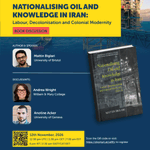
Join us on 12 November to hear Mattin Biglari discuss his book 'Nationalising Oil and Knowledge in Iran'.
Delve into the books central ideas, explore the origins resource nationalisation, and discuss the book with rethinkers and the writer.
12 November 2026 | 12:30–2pm UCT | Online event
Reserve your space on our website: rethinkeconomics.org/events/…

Can Zambia move beyond GDP?
Reporting from this summer’s Beyond GDP conference in Lusaka, Thomas captures the lively debates, strong views and high energy behind the growing conversation about how Zambia can measure progress beyond economic growth.
Read the full article on our blog
rethinkeconomics.org/blog/20…

Rethinking Economics retweeted

Hello @elonmusk and @tylercowen ,
You have just decided to publicly attack our research, six days before the vote on the California billionaire wealth tax.
Your attempt to discredit our work and that of our numerous academic colleagues is pathetic.
Let’s take a look. 🧵

my professors: don’t use ai to write your essay
also, my professors:

Errors in the research of Emmanuel Saez and Gabriel Zucman marginalrevolution.com/margi…

Ecological economics belongs on the curriculum
This year, Rethinking Economics is fighting hard to make sure that the planet's limits are acknowledged in the curriculum. This is something that you’d think was obviously necessary — but apparently, mainstream economics didn’t get the memo.
We already have 12 groups taking on the challenge globally.
We’re going to be sharing stories and updates directly from the frontlines of these student-led campaigns.
First up: Meet the activists at Kwame Nkrumah University, Zambia who’ve just launched their campaign. Swipe through the carousel to see how they are shaking up economics education. 👉
Follow this page to keep up with the movement.


Congratulations to all those that made Lula's re-election a reality. From the members of @DesajusteEcon @deamericasoy to the millions of Brazilians that mobilised against the threat to democracy and the constitution, the world owes a great deal of thanks (and has a lot to learn from you!)
As this open letter we shared last week makes clear, there is hard work ahead.
'O desafio agora é fazer um governo que não apenas estanque a sangria do passado, mas um que possa nos ajudar a construir as condições concretas para que nossa geração possa imaginar e realizar o futuro'
(The challenge now is to create a government that does not merely staunch the bleeding of the past, but also helps us build the material conditions necessary for our generation to envision and realise its future)
Today though we celebrate a result that moves us closer to that goal. Truly a victory for people and planet.
rethinkeconomics.org/blog/20…

What kind of future can young Brazilians hope for?
Ahead of Brazil’s election on Sunday 25 October, Young Economists with Lula have addressed an open letter to the President, addressing the challenges facing young people in Brazil today and calling for a structural response to the crisis.
Read the full letter on our website: rethinkeconomics.org/blog/20…
Photo credit: UN Photos

Do you find yourself wondering…
‘What is economics?’, ‘How did economics become language of power and its practitioners, the gatekeepers?’, ‘How do you do economics?’, ‘Can economics help serve people and planet?’
Join the Rethinking Economics Fundamentals to explore and find some answers.
It’s a four-week course designed to introduce to some of the big questions that preoccupy Rethinkers.
Only open to members. Starts on 11/11/26.
To sign up visit the members' hub.


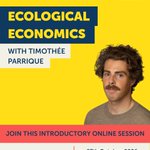
Join Rethinking Economics International for a session introducing Ecological Economics with ecological economist Timothée Parrique.
We’ll cover the core tenets of ecological economics, how it differs from mainstream economics, and why it matters for a 21st-century economics education, followed by open Q&A.
This session is part of the Ecological Economics Campaign Programme. Whether you’re already campaigning to change your curriculum or just curious about ecological economics, this session is open to all members of REI.
👉 RSVP on our website: rethinkeconomics.org/events/…
Want to become a member? Sign up on our website: rethinkeconomics.org/become-…
To hear more about the campaign email [email protected]

Meet Dami (TikTok: @littlemissyapsalottt), a political, cultural commentator and member of our New Economy Influencers Collective.
We set up this programme to launch a new UK community of influencers, supported by the Rethinking Economics International staff team, to sharpen economic communication skills, challenge mainstream narratives, and share new ideas online.
In the video, Dami shares how the programme shaped her content, built her peer network, and deepened her understanding of economics.
Changing how economics is taught and practised takes more than well-made arguments. We need people on all fronts questioning old assumptions and bringing critical and pluralist economics into communities that already trust them. That’s why our new 5-year strategy puts narrative leadership front and centre.
Read the full strategy on our website 👇
rethinkeconomics.org/blog/20…
Want to bring ecological economics into your teaching but not sure where to start?
This session is for educators around the world, at any level, who want practical ways to teach economics that puts people and the planet at its heart.
Ecological economist Rigo Melgar, co-founder of Ecological Economics For All, will share entry points, key concepts and real classroom examples. We’ll also share free resources you can use with your own students straight away. Then you’ll have time in small groups to talk with other educators about how to adapt these ideas to your own context.
The session is part of Global Doughnut Days 2026 and is run by Rethinking Economics International, which supports students and educators campaigning to bring ecological economics into university curricula.
Ready to RVSP? Visit our website. rethinkeconomics.org/events/…
Hosted by: Rethinking Economics International, with Rigo Melgar (Ecological Economics For All)

We absolutely agree with this statement: You can't save the climate with capitalism!
That's why we’ve invited Timothée Parrique (@timotheeparrique), a leading voice in the degrowth movement and ecological economist, to speak exclusively with Rethinking Economics members!
Date: 27th October
Time: 15:00 - 16:30 UTC
Where: Online
He'll be talking about the core tenets of ecological economics, how it differs from mainstream economics, and why it matters for a 21st-century economics education.
The session will be followed by an open Q&A. Don't miss out!
👉 RSVP on our website: rethinkeconomics.org/events/…
Want to become a member? Sign up on our website: rethinkeconomics.org/become-…


What does it take to rethink how we teach economics?
Paul Gunn, convenor of the Economics, Politics and Public Policy BA programme at Goldsmiths, University of London, reflects on how the unrest that followed the financial crash helped inspire a new Politics, Philosophy and Economics degree — one that set out to question what economics is, how it is taught, and what it should look like in the post-crash era.
Read the full blog: tinyurl.com/4wndr2de

Welcome to the network Rethinking Economics Kabwe 👋
They are a youth-led city group based in Kabwe, Zambia, committed to transforming economic thinking and practice. The group brings together students, young professionals, researchers, and community members to promote pluralist economics, policy dialogue, and sustainable development. They'll be focusing on campaigns addressing lead pollution, environmental sustainability, education, entrepreneurship, and inclusive economic development.
This new regional network joins 23 other similar groups across the world, building for an economics that serves people and planet within their region.
For a full list of our groups, visit our website: rethinkeconomics.org/find-a-…
Cómo ha afectado el neoliberalismo a El Salvador desde la liberalización económica de los años 90?
Esta sesión informativa elaborará una cronología a partir de la década de 1990, arrojando luz sobre las medidas que configuraron el sector productivo del país y fortalecieron su integración en los mercados internacionales, así como sobre cómo estas condujeron a la consolidación de problemas estructurales —tales como el bajo crecimiento económico, la precariedad laboral, la dependencia de las remesas y los niveles persistentemente elevados de desigualdad— que persisten en la actualidad.
Sesión en español con interpretación simultánea al inglés.
Miércoles, 21 de octubre de 2026:
3 pm UTC | 10 am Bogotá
9 am San Salvador / Ciudad de México
12 pm Buenos Aires / São Paulo
4 pm Londres | 8:30 pm Delhi
5 pm Lusaka / Madrid
Para más información o para reservar su plaza, visite: tinyurl.com/mrf2cres

Over the next month, we need 100 people to join us so that we have the resources we need to make this happen. We can’t rely on wealthy donors or a billionaire bailout. Our members help keep us independent and sustainable.
Can you join the Rethinking Economics membership today?
rethinkeconomics.org/become-…
Young people around the world are facing an uncertain future. The promise of a meaningful, socially-useful job no longer applies. Entry-level positions are disappearing on the pretext that generative AI can replace them. And yet, there is little evidence that this shift is increasing productivity or creating the jobs promised by the industry.
The resource-hungry data centres that this technology relies on threaten to sink any progress towards a post-fossil fuel economy. And yet, mainstream economic thinking has crowded out the possibility of a genuine industrial policy in many economies.
We can’t leave the future of work up to the whims of the market.
To tackle this youth unemployment crisis, we need to invest in critical industries and sectors that create decent jobs for us all without destroying the planet. As young people, we are being excluded from shaping our future.
That’s why we need 100 new members to join our network so we can hold representatives accountable to make sure young people have meaningful employment that works towards a just transition.
To become a Rethinking Economics member today visit our website:
rethinkeconomics.org/become-…

