

Next-Gen Carbon Neutral Blockchain powered by Green Energy♻️ TG: https://nitter.gq/t.co/KklAVnU6a1
Web3
Joined March 2022
- Tweets5.6K
- Following206
- Followers2.7K
- Likes7.4K



Pinned Tweet
The global supply chain loses $4.5 trillion every year to counterfeiting, fraud and mislabelling.
That is larger than the GDP of Germany.
And most brands cannot tell you in real time where their products are or whether what's in the box matches the label.
Here is why. 🧵

Customer journey analytics doesn’t always show what actually happened.
Often, it shows what most likely happened.
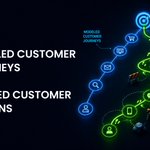
Modern analytics platforms combine recorded interactions with predictive models to reconstruct customer journeys across fragmented channels and devices.
That makes modeled journeys useful, but they’re different from verified customer actions.
A modeled journey estimates customer behaviour.
A verified action records behavior that actually occurred.
As enterprises rely more on customer intelligence, knowing the difference between prediction and verification becomes increasingly important.
How does your organization separate modeled behavior from verified customer activity?


Today’s analytics platforms often lack complete records of every customer touchpoint.
Instead, they build models that predict behavior based on patterns in existing data.
Predictive scores and behavioral forecasts are not direct observations.
They are inferred signals generated by statistical models and algorithms.
Gaps in tracking across channels and systems force analytics tools to connect dots through assumptions.
As a result, decisions are driven more by what models predict customers will do than what they actually did.
What challenges have you faced when analytics relied on inferred behavior rather than verified actions?

Most people assume the food they buy has been verified every step of the way.
The reality is more complicated.
Food products often pass through multiple countries, suppliers, processors, distributors, and logistics providers before reaching a supermarket shelf. Each party keeps its own records, few of those records are connected.
When something goes wrong, tracing the source becomes an investigation.
In 2018, an E. coli outbreak linked to romaine lettuce affected 210 people across 36 US states. It took 11 days to identify the source region, and regulators advised consumers across the country to avoid all romaine lettuce while the investigation continued.
In 2024, illnesses linked to contaminated cucumbers began in March. The recall wasn't issued until the end of May, people were still falling ill in July.
The response in both cases wasn't slow because nobody cared.
It was slow because the supply chain could not isolate the problem quickly enough.
The food industry doesn't have a shortage of data.
It has a shortage of connected, verifiable records that allow everyone to see the same chain of events.
And when traceability breaks down, the consequences don't show up on a balance sheet first.
They show up in hospitals.

Fashion is one of the world’s most complex supply chains.
A single garment can pass through 8–12 different tiers before reaching a customer, with each company keeping its own records.
What rarely exists is one verified record that follows the product from origin to retail.
That creates three major challenges:
• Counterfeit products are harder to identify.
• Sustainability claims are difficult to verify.
• Brands have limited visibility into lower-tier suppliers, making labour issues harder to detect.
The EU’s Digital Product Passport changes this.
From 2027, textile products sold in the EU must carry a verified digital record with information such as material composition, country of manufacture, repairability, and recycling guidance.
Not a marketing claim, but a record that can be verified.
For many fashion brands, the biggest challenge isn’t the regulation, it’s building the product-level infrastructure needed to support it across a global supply chain.
How prepared do you think the fashion industry is for product-level transparency?


Today’s analytics platforms often lack complete records of every customer touchpoint.
Instead, they build models that predict behavior based on patterns in existing data.
Predictive scores and behavioral forecasts are not direct observations.
They are inferred signals generated by statistical models and algorithms.
Gaps in tracking across channels and systems force analytics tools to connect dots through assumptions.
As a result, decisions are driven more by what models predict customers will do than what they actually did.
What challenges have you faced when analytics relied on inferred behavior rather than verified actions?
Analytics should give clarity, too often it just gives confusion.
When customer analytics systems chew on inconsistent or poor data, the output becomes unreliable, not insightful.
Analytics is only as good as the data feeding it.
Without data that’s accurate, complete, and consistent, dashboards and models can amplify errors instead of reducing uncertainty.
Fragmented data sources, mismatched definitions, and disconnected pipelines make it hard for analytics tools to unify a single view of the customer.
When data lacks coherence, predictions and patterns can mislead rather than inform.
This isn’t just a technical issue.
It affects trust.
It slows decisions.
It forces teams to spend more time fixing the inputs than acting on the outputs.
Even advanced systems struggle if their inputs are partial or conflicting. In that case, analytics produces confidence, but not clarity.
What’s one example where analytics reports disagree in your organization, and how do you deal with those contradictions?

Fashion’s biggest supply chain problems often look unrelated.
Counterfeiting, greenwashing, hidden labour violations.
But they all come from the same structural issue:
No single verified record follows the product from raw material to retail.
When every company keeps its own version of events, trust becomes marketing instead of verification.
Fashion is one of the world’s most complex supply chains.
A single garment can pass through 8–12 different tiers before reaching a customer, with each company keeping its own records.
What rarely exists is one verified record that follows the product from origin to retail.
That creates three major challenges:
• Counterfeit products are harder to identify.
• Sustainability claims are difficult to verify.
• Brands have limited visibility into lower-tier suppliers, making labour issues harder to detect.
The EU’s Digital Product Passport changes this.
From 2027, textile products sold in the EU must carry a verified digital record with information such as material composition, country of manufacture, repairability, and recycling guidance.
Not a marketing claim, but a record that can be verified.
For many fashion brands, the biggest challenge isn’t the regulation, it’s building the product-level infrastructure needed to support it across a global supply chain.
How prepared do you think the fashion industry is for product-level transparency?
Most supply chains still track products at the batch level.
That works fine until something goes wrong.
If contamination is found in a batch of 50,000 units, batch-level tracking can tell you where the batch went. It can't tell you which specific units were affected, which have been sold, or which are still in transit.
So the response becomes simple: recall everything.
The 2018 romaine lettuce outbreak is a good example. Tracking systems couldn't narrow the affected products enough, leading to a nationwide warning and more than $400 million in losses.
Product-level tracking changes that.
Every item gets a unique identifier, every production, shipping, storage, and retail event is linked to that specific product.
Instead of recalling 50,000 units, you can identify the exact 3,200 that passed through the affected process.
Smaller recalls, faster investigations, lower costs.
That's the difference between knowing something went wrong and knowing exactly what went wrong.
Does your organisation track products at batch level or product level?

Gm gm 🌳🌳
Let’s have a productive week. Learn, build, connect, and keep moving forward.
Wishing everyone a great week ahead!
Roburna Update 🌳
To provide additional clarity on recent progress and current priorities, this is an update covering the latest developments across the project.
Read the full update here below
Roburna Update: Progress and Current Priorities → roburna.com/updates

Roburna Community Update: Audits, Builders, Partners, and Launch Readiness 🌳
Roburna’s latest community update is now live.
Inside this update, we shared progress on our audit reports, blockchain management, the pegged token wrapper system, partner ecosystem growth, an upcoming Builders Program, and the work being done to improve our technical documentation ahead of launch.
This update gives a clear look at what we have been building behind the scenes and how we are preparing Roburna for its next phase.
Click the link below to read the full update:
roburna.com/updates

The goal of customer analytics isn’t to create more dashboards.
It’s to help people make better decisions.
When teams spend more time debating which report is correct than deciding what to do next, analytics has become part of the problem instead of the solution.
Analytics should give clarity, too often it just gives confusion.
When customer analytics systems chew on inconsistent or poor data, the output becomes unreliable, not insightful.
Analytics is only as good as the data feeding it.
Without data that’s accurate, complete, and consistent, dashboards and models can amplify errors instead of reducing uncertainty.
Fragmented data sources, mismatched definitions, and disconnected pipelines make it hard for analytics tools to unify a single view of the customer.
When data lacks coherence, predictions and patterns can mislead rather than inform.
This isn’t just a technical issue.
It affects trust.
It slows decisions.
It forces teams to spend more time fixing the inputs than acting on the outputs.
Even advanced systems struggle if their inputs are partial or conflicting. In that case, analytics produces confidence, but not clarity.
What’s one example where analytics reports disagree in your organization, and how do you deal with those contradictions?
More customer data doesn’t automatically improve decisions.
When volume grows faster than clarity, teams face information overload, making decisions harder, not easier.
Having endless dashboards and huge datasets means analysts spend more time filtering noise than generating insight.
Quality matters more than quantity. Data that is accurate, complete, and consistent gives decision‑makers something trustworthy to act on.
Too much unfiltered data hides patterns and increases conflicting signals. That makes leaders second‑guess findings and slows action.
More data without alignment to strategic questions creates analysis paralysis, where teams keep searching for answers instead of making them.
In short, unlimited data is not the same as usable insight. Decisions get better when relevance and trust replace sheer volume.
What’s one example where more data made decisions harder for your team?

Batch-level tracking tells you a group of products moved through the same system.
Product-level tracking tells you exactly which individual items passed through which event, facility, or processing step.
That distinction seems small during normal operations.
During a recall, it determines whether you remove 3,000 units or 50,000.
Most supply chains still track products at the batch level.
That works fine until something goes wrong.
If contamination is found in a batch of 50,000 units, batch-level tracking can tell you where the batch went. It can't tell you which specific units were affected, which have been sold, or which are still in transit.
So the response becomes simple: recall everything.
The 2018 romaine lettuce outbreak is a good example. Tracking systems couldn't narrow the affected products enough, leading to a nationwide warning and more than $400 million in losses.
Product-level tracking changes that.
Every item gets a unique identifier, every production, shipping, storage, and retail event is linked to that specific product.
Instead of recalling 50,000 units, you can identify the exact 3,200 that passed through the affected process.
Smaller recalls, faster investigations, lower costs.
That's the difference between knowing something went wrong and knowing exactly what went wrong.
Does your organisation track products at batch level or product level?
Blockchain has spent so long being associated with tokens, exchanges, and speculation that many people have forgotten what it actually does.
At its core, blockchain is simply a shared record, multiple parties can write to it, no single party can rewrite it after the fact and every entry is linked to the one before it, making any attempt to alter history immediately visible.
That may not sound revolutionary until you compare it to how most supply chains operate today.
A manufacturer has its records, a logistics provider has its records, a warehouse has its records, a retailer has its records.
Each system describes the same journey from a different perspective, but no one holds a complete, trusted version of events.
That has been the structural problem behind everything we've covered in this series:
• Counterfeit products entering legitimate supply chains
• Product recalls that take weeks or months to trace
• Inventory distortion costing trillions
• Food contamination discovered long after consumers become ill
• Digital systems that moved records from paper into databases without solving the trust problem
In our previous post, we outlined four requirements for real end-to-end supply chain visibility:
Event-based.
Multi-party.
Tamper-resistant.
Product-level.
Blockchain is one of the few architectures that delivers all four simultaneously.
Events can be recorded as they happen, every participant can contribute to the same record, no party can alter confirmed history and individual products can carry their own digital identity from manufacture to consumer.
This is why blockchain's role in supply chains has nothing to do with speculation.
It's about creating a record that multiple parties can trust without requiring any one party to trust the others.
The technology was never the difficult part.
The challenge has always been implementation, adoption, and creating infrastructure that works at enterprise scale.


Big datasets don’t automatically create better decisions.
Research consistently shows that accuracy, completeness, and consistency matter more than volume alone.
Trustworthy data beats abundant data.
More customer data doesn’t automatically improve decisions.
When volume grows faster than clarity, teams face information overload, making decisions harder, not easier.
Having endless dashboards and huge datasets means analysts spend more time filtering noise than generating insight.
Quality matters more than quantity. Data that is accurate, complete, and consistent gives decision‑makers something trustworthy to act on.
Too much unfiltered data hides patterns and increases conflicting signals. That makes leaders second‑guess findings and slows action.
More data without alignment to strategic questions creates analysis paralysis, where teams keep searching for answers instead of making them.
In short, unlimited data is not the same as usable insight. Decisions get better when relevance and trust replace sheer volume.
What’s one example where more data made decisions harder for your team?
The problem blockchain solves in supply chains is not speed.
It is trust between parties that do not fully trust each other.
Most people rejected blockchain in supply chains because they associated it with speculation.
Tokens. Crashes. Hype cycles.
But supply chains do not need speculation.
They need a shared record that multiple parties can trust without relying on one company to control the data.
That is the actual role blockchain plays:
A tamper-resistant record shared across every participant in the chain.
More customer data doesn’t automatically improve decisions.
When volume grows faster than clarity, teams face information overload, making decisions harder, not easier.
Having endless dashboards and huge datasets means analysts spend more time filtering noise than generating insight.
Quality matters more than quantity. Data that is accurate, complete, and consistent gives decision‑makers something trustworthy to act on.
Too much unfiltered data hides patterns and increases conflicting signals. That makes leaders second‑guess findings and slows action.
More data without alignment to strategic questions creates analysis paralysis, where teams keep searching for answers instead of making them.
In short, unlimited data is not the same as usable insight. Decisions get better when relevance and trust replace sheer volume.
What’s one example where more data made decisions harder for your team?
Poor customer data quality isn’t just a reporting problem.
It’s a multimillion‑dollar business issue.
Over a quarter of enterprises estimate losing more than $5 million per year due to poor data quality. Some report losses of $25 million or more.
Incomplete, inconsistent, or inaccurate data leaks value across the business:
It slows decision‑making.
It wastes time on cleanup instead of insight.
It undermines campaigns and customer experiences.
It creates operational drag and missed opportunities.
Bad data doesn’t show up as a line item on the P&L.
It shows up where it matters most, decisions, strategy, and execution.
When teams act on incomplete records, the impact ripples across revenue, operations, and customer trust.
What’s one area in your business where poor data quality has cost you time or money?

Most people rejected blockchain in supply chains because they associated it with speculation.
Tokens. Crashes. Hype cycles.
But supply chains do not need speculation.
They need a shared record that multiple parties can trust without relying on one company to control the data.
That is the actual role blockchain plays:
A tamper-resistant record shared across every participant in the chain.
Blockchain has spent so long being associated with tokens, exchanges, and speculation that many people have forgotten what it actually does.
At its core, blockchain is simply a shared record, multiple parties can write to it, no single party can rewrite it after the fact and every entry is linked to the one before it, making any attempt to alter history immediately visible.
That may not sound revolutionary until you compare it to how most supply chains operate today.
A manufacturer has its records, a logistics provider has its records, a warehouse has its records, a retailer has its records.
Each system describes the same journey from a different perspective, but no one holds a complete, trusted version of events.
That has been the structural problem behind everything we've covered in this series:
• Counterfeit products entering legitimate supply chains
• Product recalls that take weeks or months to trace
• Inventory distortion costing trillions
• Food contamination discovered long after consumers become ill
• Digital systems that moved records from paper into databases without solving the trust problem
In our previous post, we outlined four requirements for real end-to-end supply chain visibility:
Event-based.
Multi-party.
Tamper-resistant.
Product-level.
Blockchain is one of the few architectures that delivers all four simultaneously.
Events can be recorded as they happen, every participant can contribute to the same record, no party can alter confirmed history and individual products can carry their own digital identity from manufacture to consumer.
This is why blockchain's role in supply chains has nothing to do with speculation.
It's about creating a record that multiple parties can trust without requiring any one party to trust the others.
The technology was never the difficult part.
The challenge has always been implementation, adoption, and creating infrastructure that works at enterprise scale.