

Official account Substance Abuse & Mental Health Services Administration. In crisis? Call/text 988 or chat https://nitter.gq/t.co/ElGKYJfS2c. https://nitter.gq/t.co/uaUN4oKBGe
- Tweets32.3K
- Following523
- Followers166K
- Likes8.7K



ALT Green-toned illustration with abstract human figure. Text reads "Mental Health Conditions: Early Warning Signs and Symptoms." SAMHSA logo is in the top right corner. An arrow points to "samhsa.gov/mental-health.

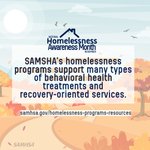
ALT A promotional graphic for National Homelessness Awareness Month in November. It includes text stating that SAMHSA's homelessness programs support various behavioral health treatments and recovery-oriented services, with a URL for more resources. The background features an autumn landscape with trees and falling leaves.

ALT The image contains text stating, "Know the risks and side effects of marijuana" on a green and white abstract background. The bottom right corner displays the SAMHSA logo.

ALT A digital illustration shows three people sitting in a room. One person is sitting on a chair on the left, and the other two are sitting on a couch. A child is between the two adults. There is a potted plant on the right. The image includes the SAMHSA logo in the top left corner.

ALT This image contains a list of symptoms associated with Seasonal Affective Disorder, such as sadness, sleep difficulties, and appetite changes, on a green background decorated with autumn leaves and pumpkins. The SAMHSA logo is at the bottom right.

ALT Purple puzzle piece shaped like a house being connected with another puzzle piece, next to text reading "When communities connect, people thrive." The background is light blue. SAMHSA logo is on the bottom right. #RecoveryMonth2026


ALT Graphic for the SAMHSA Communities Talk About Prevention Podcast, Episode 3 The graphic includes the Communities Talk logo, a podcast microphone icon, and SAMHSA branding.

ALT The image features a totem pole in a natural setting with mountains and trees, presented by SAMHSA. Text reads: "Now Available Advisory: Expanding Behavioral Health Care Access for Alaska Native Communities."

ALT A red tractor is parked on a lush, green field. An American flag is mounted on the back, flapping in the breeze against a backdrop of dense, green trees. The acronym "SAMHSA" is visible in the lower left corner.

ALT Image promoting suicide prevention by SAMHSA. Text reads "We can be the difference. We can all prevent suicide." Includes a heart held by hands, contact methods: call 988, chat 988, and visit 988Lifeline.org.


ALT An informational graphic about Attention Deficit Hyperactivity Disorder (ADHD) listing symptoms such as not being able to focus, being extremely active, and having difficulties controlling impulsivity. The source is SAMHSA.

ALT A hand holding a pen is drawing on a textured surface. The image features a purple outline map of the United States above a colorful bar graph.

ALT A pair of feet wearing blue canvas sneakers standing on a bed of colorful autumn leaves.

ALT The image is a promotional graphic for a webinar series titled "What Works in Primary Prevention." It includes the date December 2 and time 2–3 PM. The logo for SAMHSA, the Substance Abuse and Mental Health Services Administration, is in the top right corner. The background features a blue and green gear design.