

Missa retweeted

I think we've discovered another critical vulnerability:
CVE-2026-BURNOUT: AppSec Professional Exhaustion
Severity: Critical (CVSS 10.0)
Description: A vulnerability affecting security professionals exposed to a continuous stream of critical RCEs, zero-days, emergency patches, and Friday afternoon disclosures.
Impact: Sleep deprivation, excessive caffeine consumption, and an inability to enjoy weekends.
Attack vector: Reading security advisories.
Affected versions: All AppSec professionals, regardless of experience.
Mitigation: No known patch. Air-gapping may delay the inevitable. Total system collapse remains a possibility. 🔥
Missa retweeted

Sorry folks, we have a confirmed PHP compromise with post-exploit activity. Still not the widespread outbreak we all braced for, but it’s actively exploited in the wild. Updated threat brief:
unit42.paloaltonetworks.com/…


I’m not saying I’m responsible but this level of dumpster fire does always seem to happen the first day I go on PTO.

So basically, today PHP got two critical bugs that let anyone run code on your server without even logging in, which is bad, and then the details leaked before the patch was even out, which is worse, and it works on WordPress and MediaWiki and Magento and Joomla and Laravel, and Censys says like 1.5 million servers are running a version with no fix, so the NSA was like "take your system offline," and the FBI was like "take your system offline," and CISA and the UK and CERT-EU were all like "take your system offline," and then the Prime Minister of Japan, the actual Prime Minister, posted at 5:55 in the morning telling 48.8 million people to take their system offline, so everyone took their system offline, like the Dutch cybersecurity agency took its own website offline, and the Dutch parliament went offline, and the Port of Rotterdam went offline, and Finland and France and Denmark started pulling government sites, and Wikipedia went down, and Archive.org went down, and Asana and GOG and Something Awful went down, and the University of Vienna's webmail went down for some reason, and that's just PHP. Because GitLab also dropped a CVSS 10.0, which is the highest score they give out, for a bug that's been there since 2014, so that's every self-hosted GitLab for twelve years, and then LiteLLM 1.107.0 got hijacked and shipped a credential stealer and a remote access trojan in every single wheel and the Docker images, including latest, and you didn't even have to import it, just installing it was enough, and it's the second time this year, and then Railway paused every deployment on the entire platform because someone got into the environment variables, so now everyone has to rotate every secret they've ever stored there, and TiDB Cloud said someone was walking around inside with stolen credentials for basically a month and an extortion group says they took 10.6 terabytes, and Zeabur got breached for the second time in two months and is just shutting down, like the whole company, and Node.js patched remote code execution and a TLS bypass, and CISA says Plex is being actively exploited, and someone took over 300 Tor exit relays to steal SSH passwords, and SafePay ransomware has hit over 600 critical infrastructure orgs, and India's biggest bank filed a data loss incident, and Japan has been in an official state of emergency in cyberspace since October 9, which honestly explains the 5:55 AM post. Oh, and eMudhra, a certificate authority that's issued over 60 million certificates, whose entire job is proving websites are who they say they are, was supposed to be using private keys that are random numbers over a hundred digits long, and one of them was 4. Just 4. And the others were like 66 and 237. Anyway, it's Wednesday.
Missa retweeted

Security called me at 6:12 AM today.
"Patch every PHP server immediately."
I asked what happened.
"Two critical vulnerabilities. Remote code execution. No authentication required."
Cool.
How many PHP servers do we have?
According to inventory: 12
According to reality:
Nobody knows.
We found one running WordPress.
Three running old internal tools.
One under someone's desk.
Two inside vendor appliances.
A forgotten employee directory from 2016.
And a server named:
PHP-OLD-DO-NOT-TOUCH
Naturally, that one runs payroll exports.
Then we found a PHP 5.6 box.
I asked who owned it.
The documentation said:
BRIAN.
Brian left in 2019.
We called Brian.
He said:
"Oh wow, that's still running?"
Excellent.
By 8 AM, leadership joined the incident call.
CEO:
"Can hackers actually get in?"
Security:
"Potentially yes."
CEO:
"Without a password?"
Security:
"Yes."
CEO:
"Then why do WE need passwords?"
Not the lesson.
Finance asked if we could wait until the weekend to patch because downtime affects revenue.
Security explained that the alternative was letting strangers execute code on our servers.
Finance asked for a cost comparison.
At 9:17, someone suggested temporarily taking the vulnerable websites offline.
Marketing refused.
"Our campaign is live."
So for the next hour, the company officially decided maintaining a landing page for 20% off webinar registration was more important than preventing remote server takeover.
We finally patched everything we could find.
Then our scanner discovered another PHP server.
Hostname:
TEMP-PHP-2014
Uptime:
4,512 days.
Nobody knows what it does.
Nobody owns it.
Nobody can shut it down.
But every time we block network access, the warehouse stops printing shipping labels.
Security has classified it as critical infrastructure.
It is running PHP 5.4.
The vulnerability has existed longer than half our employees.
The emergency patch took four hours.
Finding out what PHP actually runs took eleven.
The internet isn't held together with code.
It's held together with servers everyone is afraid to turn off.
Missa retweeted

Sorry everyone... We're announcing a 0-Day vuln in QUIC that allows anyone to remotely turn off a server running these libraries. I swear we didn't plan this.
foxio.io/blog/header-accordi…

Missa retweeted

Full details of a remotely exploitable vulnerability in the core engine of *all* PHP versions will be released tomorrow, October 21st. If your organization has internet facing PHP applications then you need to be ready to patch the minute the update is released or *strongly* consider taking the application offline until you can:
php.net/index.php#2026-10-20…


🚨 PHP warns of two critical vulnerabilities as emergency patches arrive tomorrow
The PHP security team will release updates on October 21 at 14:00 UTC for two vulnerabilities, each rated 9.2 under CVSS v4.0.
⠀
Security researchers identified the flaws as CVE-2026-109618 and CVE-2026-109619 and described them as remote code execution vulnerabilities reportedly affecting PHP versions 5 through 8.
PHP has not yet confirmed the affected versions, exploitation requirements or fixed releases.
⠀
The vulnerabilities were reportedly leaked before their planned disclosure. Researchers said they have not observed active exploitation, while PHP warned it may release the patches early if technical details become public or exploitation is detected.
⠀
Administrators should identify PHP installations now and prepare to apply the updates as soon as they become available.


We’re playing the game where I see how close to departure time I can get before I start packing for an international trip.
A fam of 5 w/ 3 kids under grade school age, a bag of Panda Express, and children who can’t seem to not touch literally everything within their line of sight is taking up the rest of row 18. I don’t think Air Pods noise cancelling is ready for what I need for the next 5 hours…
My previous company had a standard issue 16" MacBook for devs, and it drove me nuts because no cute bag accommodates that beast.
Most underrated perk of new job? Custom ordering exactly the laptop I want. All the power, AND it fits in my cute bags. :-P
Missa retweeted
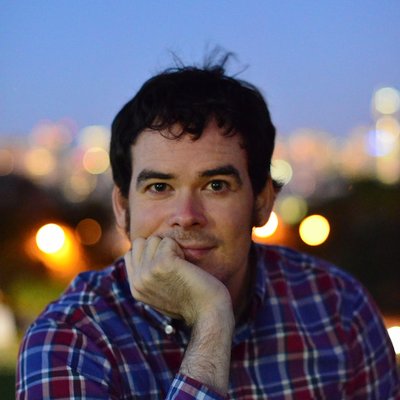
Career update: I’ve joined @OpenAI to lead Cyber with @michaelaiello.
Why I joined, and what we’ll be building:
It’s clear that AI is fundamentally changing how software is being written and secured.
Coding agents are writing the majority of code for many developers, software is getting shipped more quickly, and vulnerabilities that were latent for 20 years are being discovered at a rapid pace. The time to bug discovery, and exploitation once discovered, are trending down (H/T @EppSecurity and @gadievron).
I believe we have an unparalleled opportunity to fundamentally 𝘪𝘮𝘱𝘳𝘰𝘷𝘦 cybersecurity in ways that were previously impossible. (H/T @bubblewire’ BSidesSF keynote on reasons for optimism)
Over 6 years at @Semgrep, I had the privilege of working with an amazing team building what has become the most popular open source security code scanning tool in the world, that many companies have built their application security program around.
Now, at @OpenAI, I’m thrilled to be a part of a company helping shape how software is written, and how security work gets done. It is a massive opportunity, and responsibility, and I don’t take that lightly.
Here are my current thoughts about where things are headed:
𝐑𝐞𝐬𝐢𝐥𝐢𝐞𝐧𝐭 𝐛𝐲 𝐝𝐞𝐬𝐢𝐠𝐧. Defenders are not going to win playing bug whack-a-mole. We need to systematically eliminate classes of vulnerabilities, via generating secure code and streamlining the detect → validate → fix process.
𝐀𝐮𝐠𝐦𝐞𝐧𝐭 𝐚𝐧𝐝 𝐞𝐦𝐩𝐨𝐰𝐞𝐫 𝐩𝐞𝐨𝐩𝐥𝐞. We should build models and tools that give defenders “superpowers,” enabling them to be more ambitious in the scope they tackle, shift from being reactive to proactive, and allow them to automate the drudgery so they can focus on the highest leverage work.
𝐒𝐞𝐜𝐮𝐫𝐞 𝐭𝐡𝐞 𝐜𝐨𝐦𝐦𝐨𝐧𝐬. The world runs on open source software. OpenAI has already spent $Ms finding and patching vulnerabilities in the most popular and widely run software, including browsers, operating systems, and core libraries. More on this soon. We’re also working on helping secure critical infrastructure.
𝐂𝐨𝐦𝐦𝐮𝐧𝐢𝐭𝐲 𝐚𝐧𝐝 𝐩𝐚𝐫𝐭𝐧𝐞𝐫𝐬. Securing the world is a community effort. I’m looking forward to partnering with cybersecurity vendors, researchers, practitioners, governments, and more to do together what we can’t do alone.
𝐓𝐢𝐦𝐞 𝐭𝐨 𝐛𝐮𝐢𝐥𝐝. Tactically, here are some domains I’m excited about:
- Finding, validating, and reliably patching software vulnerabilities at scale.
- Eliminating classes of vulnerabilities and making software resilient by design.
- Giving broad access to the best cyber models to empower defenders, not just to a select few.
- Creating and sharing Skills and playbooks that help in many security domains.
- Building platforms that enable defenders to easily orchestrate security work.
- Making enterprise agents safe and reliable.
Time to build 😎
—
What would help you most? What should we build?
Let me know.


Missa retweeted

🛩️ This is so cool: A Redditor living under SFO's takeoff path built a ceiling projection that maps every plane flying over their house in real time, using ADS-B, the open radio signal aircraft broadcast on 1090 MHz. Same feed as FlightRadar24, picked up with a cheap SDR dongle and beamed onto the ceiling.
Missa retweeted

Holding cybersecurity vendors accountable for their claims is a critical part of improving security.
I'm not a troll. I'm not lying. And I'm not harassing you. But since that's your response: Here we go again.
Missa retweeted

Launching oauthsentry.github.io
Look up any OAuth app ID and find out what it actually is across thousands of legitimate, risky, and malicious apps (Entra, Google, GitHub).
Multiple feeds, API, detection ideas and remediation guidance. Still improving the detections a bit 🦾

ALT oauthsentry.github.io
Missa retweeted

"I remind you that this present you're so concerned about losing, you hated it in the first place." @juanandres_gs on why security practitioners should stop clinging to the broken thing and start imagining what the fixed thing looks like.
New episode is live 👇
open.spotify.com/episode/7K6…
