

CBR Chair of Politics, Censorship, and Free Speech @UAustinOrg :: Dao Prize Winner :: Author, "The Left's War On Reality," "San Fransicko," "Apocalypse Never"
Austin, Texas
Joined May 2014
- Tweets33.8K
- Following1.7K
- Followers1.4M
- Likes40K






Pinned Tweet
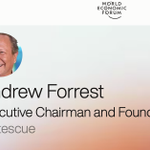
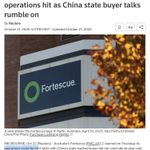
Australia bet big on hydrogen made from renewables and lost billions. Now, one of Australia's largest miners may soon cut production and jobs. The cause was a set of catastrophic decisions by Labor leaders and Fortescue's founder, Andrew "Twiggy" Forrest.

Taxpayers gave mining titan Twiggy Forrest's Fortescu A$308M in energy subsidies in 2025 alone, plus A$99M for an H2 project he abandoned. In exchange, Forrest gave millions for propaganda to pass @AlboMP government's censorship bill. It's a transparent, sinister quid pro quo.


Twiggy Forrest claims to care about the people of Australia, but he paid investors US$1 billion in third quarter of 2026 even though Fortescu is in the middle of an epic price dispute with China that may force it to scale back mining operations within a matter of weeks.

Michael Shellenberger retweeted

It was the most constructive call with Putin since 2021. Why was it misreported by @FT so badly? Euro diplos often want to derail initiatives they don’t like or simply blabber 3nd hand gossip. Putin doesn’t need to lecture @alexstubb Stubb on Russian history. Stubb in particular and Finnish leaders in general know that history.
The key deliverable from the call was Baltic deescalation and a new, functional channel run by competent people, for a change, to support the Ukraine talks. Kyiv and DC were on board and involved. EU rightfully wasn’t.
Two postures emerge in Europe: in Britain, Denmark and Poland some think that the longer the war lasts the more Russia is drained.
Elsewhere there’s another view: the longer the war lasts the greater the potential for conflict with Russia, whose armaments industry grows by the month.

For my English-speaking followers, let's get the facts straight about the Stubb–Støre call with Putin.
New reporting from Finland provides important details missing from much of the international debate. Some of the initial accusations now look rather premature.
First, why did the call happen?
According to President Stubb, Ukraine's peace negotiations were close to collapsing last week, with relations between Kyiv and Washington in serious trouble. Finnish sources suggest there was even a risk of the US disengaging from the process.
At Zelenskyy's request, Finland and Norway organised the Oslo talks with American negotiators Steve Witkoff and Jared Kushner, alongside other European representatives.
The subsequent call to Putin was prepared with Ukraine and the US. According to Finnish sources, key allies were informed beforehand and briefed afterwards. Helsinki also wanted Ukraine to publicly confirm its support for the initiative.
Zelenskyy has since explicitly defended the call and praised its transparency.
Second, the controversy surrounding European coordination deserves clarification.
Danish Prime Minister Mette Frederiksen accused Finland and Norway of acting independently and failing to coordinate with other European countries.
But Stubb and Støre have both stated that allies were informed in advance and received detailed briefings afterwards. New reporting from Finnish news agency STT supports their account.
There is an important distinction between not being informed, not being consulted on the decision, and fundamentally disagreeing with that decision.
Frederiksen's criticism increasingly appears to reflect a disagreement over whether direct contact with Putin should happen at all, rather than simply a lack of notification. Her initial framing therefore risks creating a misleading impression of an uncoordinated diplomatic operation.
Political disagreement should not be confused with evidence that Finland and Norway acted behind their allies' backs.
Third, what actually happened during the call?
Finnish broadcaster Yle and news agency STT have challenged the Financial Times' account of Putin delivering a lengthy history lecture to passive Nordic listeners.
Their sources describe a substantive exchange in which Stubb and Støre questioned Putin about the upcoming Abu Dhabi negotiations and stressed that prolonging the war would not diminish European support for Ukraine.
Freedom of navigation in the Baltic Sea, keeping maritime routes open and Russia's shadow fleet were also discussed.
Finnish-Russian bilateral relations reportedly were not discussed at all. The parties agreed to keep the communication channel available.
Fourth, the risks were understood from the beginning.
Finnish sources say criticism and possible Russian propaganda exploitation were anticipated. One source described the initiative as values-based realism, which sometimes requires accepting political risks and their consequences.
This was a calculated decision, not an improvised attempt to normalise relations with Moscow.
Zelenskyy has also reminded critics that Putin's diplomatic isolation effectively ended with Trump's Alaska summit in 2025. Other European governments have maintained contacts with Russia, sometimes without comparable transparency towards Ukraine.
Ukraine requested diplomatic assistance, and Finland and Norway responded in coordination with Kyiv and Washington.
Supporting Ukraine for as long as necessary must also mean supporting it in the ways Ukraine actually asks for. That includes diplomacy.
Europe needs military strength, economic pressure and diplomatic influence. These are complementary instruments, not competing alternatives.


Michael Shellenberger retweeted

One more amazing thing about Brazil and Lula's campaign:
The NYT today has a gushing profile of a Congressman named @AndreJanonesMG, who became the face of Lula's campaign, its chief communication strategist. and -- as a result of admittedly innovative though extremely creepy digital strategies -- the greatest hero of the Brazilian left. But listen to what the article doesn't mention:
Just 2 years ago -- not 20 years ago or 10 years ago, but 2 years ago -- Janones got caught committing one of the most despicable crimes imaginable: he forced his Congressional staff employees to transfer a portion of their (quite low) monthly public salary to him as a condition for keeping their jobs. The money he stole from his workers didn't go to his campaign: it just went to enrich himself, into his pocket,.
He got caught when the employees secretly taped him angrily telling them they should stop complaining. When all this emerged, the left-wing members of Congress loyal to Lula -- who, remember, claims to lead a movement of workers! The name of Lula's party is the Workers Party -- protected him from all consequences from stealing the salary of his workers.
The pro-Lula judiciary let Janones confess guilt and simply pay back the money that he stole. And yet this doesn't bother anyone on the Brazilian left. Janones has become a beloved figure overnight among left-wing celebrities and is now one of Lula's closest allies. The NYT profile doesn't even mention this in their gushing profile.
In the scheme of Brazil's authoritarianism, it's not the biggest issue, but to me it's one of the most revealing about what frauds these people are:

Michael Shellenberger retweeted
Online misogyny causes sexual violence, say governments. But the science doesn't support such claims. Now, a new investigation reveals that mining titan Twiggy Forrest, who receives millions in subsidies, spent millions to pass censorship legislation.
Online misogyny causes sexual violence, say governments. But the science doesn't support such claims. Now, a new investigation reveals that mining titan Twiggy Forrest, who receives millions in subsidies, spent millions to pass censorship legislation.
Michael Shellenberger retweeted

UATX's CBR Chair of Politics, Censorship, and Free Speech Michael Shellenberger (@shellenberger) on his fight against Australia's radical new censorship legislation.

When UATX professor Michael Shellenberger (@shellenberger) traveled to Australia to warn against censorship legislation, he never expected his opposition to go viral on social media and then be broadcasted by mainstream media.
Michael is CBR Chair of Politics, Censorship, and Free Speech at UATX, where he teaches journalism and politics.
00:00 — Michael Shellenberger on censorship in Australia
00:33 — Australia's 2024 misinformation bill
01:24 — The "Digital Duty of Care" bill
01:35 — Harm reduction and effective altruism
02:17 — Sam Bankman-Fried and the ends justifying the means
03:02 — Speaking at CPAC Australia
03:29 — Censoring anything that "may cause serious harm"
04:27 — A frustrating meeting with staffers
04:53 — Government sock puppets
06:05 — The iPhone video that went viral
07:09 — How a viral video moved the mainstream media
08:24 — Front page of The Australian
08:40 — A tragic attack and new calls for censorship
09:40 — Does media violence cause real violence?
11:04 — John Hinckley Jr. and Taxi Driver
12:33 — What really motivates censorship
13:31 — The Left's War on Reality
14:01 — UATX's free speech mission
14:32 — A University of Austin for Australia?
15:11 — Higher education's unfinished reform
16:08 — Why Australia matters
16:37 — The Censorship Industrial Complex
17:53 — Bringing the lessons back to the classroom
Recorded: October 23, 2026 at UATX.
Michael Shellenberger retweeted
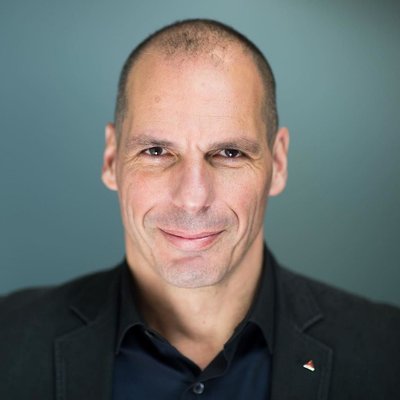
I am going to write something below that should be seen as the musings of one who celebrated – and still celebrates – Lula’s victory over Bolsonaro Jr. Here it goes:
I cannot for the life of me justify why o why Brazil’s courts had to demand of Bolsonaro that he hands over his passport the moment he lost the election. That he disputed the veracity of the election result is a sign of a faulty character, evidence that he is a bad loser. BUT, he had every right to being a bad loser; to dispute, rightly or wrongly, any result.
As for the argument that he was being investigated for other misdemeanours or crimes, that doesn’t wash either: What would have happened if Bolsonaro had won the election? Would the judges also prevent him from travelling abroad, as President-elect? I very much doubt that – which means that the judges were conflating executive and judicial powers.
To those who tell me that the Bolsonaro clan is a fascistic, criminal family, my reply is: You and I may very well think that. Alas, the judiciary has no right to use its powers to indict and to pursue someone because – or immediately after – they lost an election. It is shameful, to be precise. And it is also dangerous for those of us on the left who know what it means to be banned and hounded by rogue judges and police commissioners.
But I also have a message to Bolsonaro supporters, or those sitting on the fence, who assume that Lula is somehow behind the judges. He is not! This is the same court that imprisoned, falsely, Lula himself. What we have in Brazil is a judiciary that overreaches and habitually crosses the line that ought to separate judicial from political power.
It is such a shame that a judge took it upon himself to go after Bolsonaro on the eve of his defeat and, in doing so, to sully Lula’s stupendous victory.
One last point that my comrades in Brazil should note: If Bolsonaro and Rubio wanted to mount a campaign against Lula and Brazilian democracy they could never have been aided better than by that judge’s reckless writ.

WHAT LULA’S RE-ELECTION TELLS US: The Class War Need Not End in Fascism
On Sunday, Brazilians did something that the commentariat had told us was a lost cause. On the eve of his eighty-first birthday, Luiz Inácio Lula da Silva, a former metalworker, turned the Trumpist, evangelical, neofascist, Zionist tide in Latin America to get re-elected President of Brazil.
Three weeks earlier, he had come second in the first round, behind Flávio Bolsonaro, son and political heir of the man who trumpeted the merits of fascism, who had embraced Trump as his lord and master, who plotted a cynical coup against Brazilian democracy – moreover, the main candidates that were eliminated were rightists whose voters were meant to move to Bolsonaro. Yesterday, Lula overturned this deficit and won with a margin of nearly four and a half million votes.
I want to use Lula’s victory to tell a broader story. A story about a war, the class war that the few are waging against the many across the Western world. And a story about how that war need not end, as so many now fear, in a neofascist revival.
THE HIDDEN CLASS WAR
“There’s class warfare, all right,” Warren Buffett once said, “but it’s my class, the rich class, that’s making war, and we’re winning.” Mr Buffett was not exaggerating. For almost four decades, Western governments and central banks have pulled every policy lever in the same direction: to make the assets of the few burgeon at the expense of the incomes of the many.
Consider the numbers. Between 1952 and 1988, economic growth explained nearly all the gains of the West’s stock market. From 1989 onwards, growth explains only about a quarter. The largest share, around 40 per cent, came from income diverted from workers to shareholders. Another third came from cheaper money and lower perceived risk. That is not wealth creation. It is wealth extraction: a transfer from those who work to those who own, inflated by cheap money and paraded on the evening news as “a strong economy”.
Then look at the rescues. 2001, 2008, 2020, the British gilt crisis of 2022, Silicon Valley Bank in 2023: each time, the state rushed in to save the asset holders. Together they reveal the rule: to save the economy, you must save the wealth of those who own it – not those who produce stuff, not even productive companies. In the United States, the top tenth own almost 90 per cent of all shares. The Fed and the US federal government insure it for them, doing ‘whatever it takes’ to prop them up whenever their prices tank. The rest of us in the West pay the premium, in the form of the austerity that always follows the bailout.
And the owners need never sell. Why do billionaires pay so little tax? Because they do not earn incomes - they accumulate capital gains, taxed only when sold. So they borrow against their soaring assets at 1 or 2 per cent and live on the loan. Then they die and pay no tax on their capital gains, passing on the loot to their kids at ridiculously low inheritance taxes. Meanwhile, to pay bills and put food on the table, the worker borrows on a credit card at 20 per cent, her debts the mirror image of their fortunes.
Then, a large chunk of these accumulating assets seek even higher rents in places like Brazil where the US government intervenes to ensure that the local governments will also place the defence of these assets’ values above all else.
CAPITAL IS NOT A THING, NOT MERELY AN ASSET
Why does austerity keep returning, even though it is economically self-defeating? Marx tells the story of Thomas Peel, who in 1829 sailed to Western Australia’s Swan River with £50,000 of provisions and three hundred working-class men, women and children. On arrival, his workers walked off into the bush and worked for themselves. Peel had brought money, tools and labour, but he could not bring capitalism along, because his workers had an alternative.
Capital, Marx concluded, is not a thing but a social relation: the power of those who own to get those who don’t own to do things they’d rather did not do. Austerity is not an economic policy. It is a disciplinary device, keeping the many sufficiently insecure and indebted to accept whatever is on offer. The ruling class’s deepest fear is not inflation or debt. It is to end up like Peel: rich, but without the power to compel.
IS FASCISM INEVITABLE?
Here is the part of the story that keeps so many of us awake at night. When centre-left politicians, from Bill Clinton, Barack Obama and Tony Blair to Gerhard Schröder, Francois Hollande and Andy Burnham abandoned the language of class, a void opened up in the working-class heartlands of the West. Into that void stepped a venomous storyteller with a century of experience in filling such voids: the recalcitrant far right, the rebranded fascists. They offer left-behind workers a story of dignity, then redirect their fury away from the owner who shipped their factory abroad or sold their council house to some fund and towards the migrant next door. It does not end the class war. It merely divides one side – the workers – to rule over them. It camouflages it.
From the red suburbs of Paris to south Piraeus, from England’s red wall to Italy’s rust belt in Taranto, from the American rust belt to eastern Germany, the pattern seems relentless. And so, a fatalism has set in: the class war waged from above, we are told, must inevitably end in a neofascist, racist, misogynist revival.
Brazil has just refuted this fatalism. Brazil knows the monster intimately. It lived through four years of Jair Bolsonaro, with his nostalgia for the military dictatorship. On 8 January 2023, his followers stormed the Congress, the Supreme Court and the presidential palace. Brazil’s far right is not a fringe. Unlike Trump’s rag tag storm troopers, they had years of running a dictatorship. It won the first round of this election. They had the White House fully behind them, while the US Democrats, once again demonstrating their irrelevance, stayed mute. And yet, yesterday, they were defeated.
How? Not by hand-wringing about “populism”, nor by a centrist promise to manage the status quo more efficiently. Lula won because he did what the Western centre-left forgot how to do: he spoke the language of class, and backed it with policies that shifted power, however modestly, from the few to the many. His government exempted those earning up to five thousand reals a month from income tax and paid for it with a minimum tax on the very richest. During Brazil’s G20 presidency, it proposed a global minimum tax on billionaires. When Lula tells Brazilian workers that the elites have rigged the game, he points his finger upwards, at the rentier and the speculator, not sideways, at the migrant or the poor.
PIX – AN EXAMPLE OF AN ANTI-OLIGARCHY DIGITAL TOOL
But the most innovative weapon in Brazil’s arsenal is one that few outside Latin America have heard of. It is called Pix.
Every time you tap a card to pay for a coffee, a toll is levied. Visa, Mastercard and the banks take a cut, often 2 or 3 per cent, from every transaction. Multiply this by billions of purchases a day and you grasp one of the most lucrative rent-extraction machines ever devised. These are not profits made in competitive markets but rent extracted by those who own the digital rails on which our economic lives now run. It is part of what I call technofeudalism.
Unlike Britain, Europe or, of course, America, Brazil’s central bank moved to limit this rabid exploitation. It launched an alternative: a public, instant payment system, free for individuals and with capped fees for merchants. A Brazilian pays a street vendor in Salvador or sends money to her mother in Recife, instantly, using Pix from her phone, with no card company or bank taking its slice. Brazilians took to it with astonishing enthusiasm. Last year, Pix processed almost 80 billion transactions and overtook credit cards as the most popular way to pay online.
Pix is, in effect, the Swan River of the digital age. It gave tens of millions of Brazilians, including the poorest, who had never had a bank card, an alternative to the toll booths of Big Finance. And, like Peel, the toll collectors did not take it lying down. This summer, Washington imposed 25 per cent tariffs on most Brazilian exports, and its trade representative explicitly named Pix as a grievance, complaining that it “unfairly disadvantaged” American payment companies! The most powerful government on Earth deployed its trade arsenal against a free public service for being too successful at denying rents to Visa and Mastercard.
Lula did not blink. He defended Pix as a Brazilian public good, and Brazilians rewarded him for it. Here, at last, is a concrete example of limiting the power of Big Business, Big Finance and Big Tech: not with slogans, but by building public digital infrastructure that removes the opportunity to extract rent in the first place.
NOT A REVOLUTION, BUT AN AUSPICIOUS PORTENT
Let me not romanticise. Lula is no revolutionary. His margin was narrow. Brazil’s Congress remains in the grip of agribusiness and evangelical blocs. Its central bank still keeps interest rates punishingly high, a weapon of the class war if ever there was one. Lula himself has compromised much too much with these vested interests, and lost support as a result.
But Brazil has shown three things the rest of us must learn. First, the class war waged against the many does not have to end in fascism. Fascism wins only when the left vacates the battlefield of class. Second, a progressive government can win by pointing upwards, at those who extract rent, rather than downwards, at those who suffer. And third, Big Business can be defeated, at least forced to lose some battles, by building public alternatives to its rent-extracting machines.
So, here is the challenge to Britain, to Europe, to the people of the United States.
-Build your own Pix: public payment rails that end the tolls of Visa and Mastercard.
-Tax capital gains, ill-gotten wealth that is, not just income.
-Make every rescue conditional, with the public receiving real, permanent equity in return.
-Create a public investment bank as an alternative to the bond markets. Restore the bargaining power of the workforce. And give working people what Peel’s workers found at Swan River: an alternative, and the freedom to say no.
Buffett was right. There is a class war, and his class has been winning hands down. But yesterday, in Brazil, it lost a battle though not the war. It lost because a working-class president dared to name the war and fight it using weapons fashioned to defend the many.
unherd.com/2026/10/why-lula-…
