
founder, techno-optimist, college dropout, partner at @ycombinator.
San Francisco
Joined April 2007
- Tweets2.1K
- Following868
- Followers64.6K
- Likes24.4K
Pinned Tweet
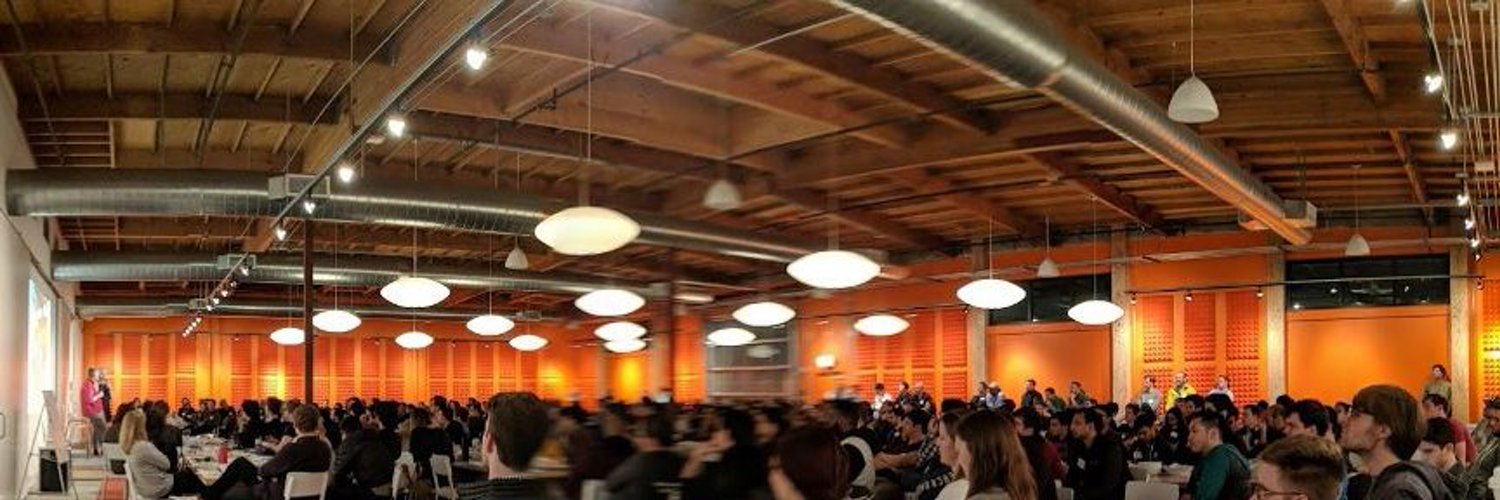
Yesterday we hosted 400 top university students at the YC Summer Conference - a fun day of talks about startups. Talking to the students afterwards, I found myself giving a lot of the same advice. So in case it's useful to others, here is my startup advice for students.

Jet engines are fascinating machines. So difficult to build that only four large companies build the full-size ones.
Four years ago, Boom Supersonic decided that they would build their own. This is a pretty nutty idea for a startup. No new company has broken into this business in a century.
A few days ago they did the first successful test-fire of an engine core they built.
I was very lucky to get to go behind the scenes with @bscholl to see their new Superpower Superfactory, built to turn out 2 GW of turbines a year.

On November 21, 2026, @boomsupersonic (W16) fired their prototype engine core for the first time.
They're developing a shared core for two products: Superpower, a natural-gas turbine for AI data centers, and Symphony, the engine intended for the Overture supersonic airliner. The turbine business could help fund Overture while giving Symphony years of real-world operating data before it ever flies.
In this episode of Hard Tech, Boom founder and CEO @bscholl shows @snowmaker around their new Superpower Superfactory in Colorado and explains how they’re building a jet engine from scratch.
On the factory floor, we explore in-house manufacturing, the challenge of making turbine blades survive extreme heat, and the custom software Boom uses to design and iterate on engine parts.
00:00 — Boom’s New Engine Core
01:37 — Why They Built Their Own Engine
03:37 — How AI Could Fund Supersonic Flight
06:27 — The Turbine Supply Bottleneck
08:45 — Inside the Superpower Superfactory
11:04 — Making Blades for Extreme Heat
12:21 — Software, Speed, and Small Teams
13:59 — First Fire and What’s Next
Jared Friedman retweeted

I think this might be the best doc video anyone has made on Boom yet — with a new behind-the-scenes factory tour.
On November 21, 2026, @boomsupersonic (W16) fired their prototype engine core for the first time.
They're developing a shared core for two products: Superpower, a natural-gas turbine for AI data centers, and Symphony, the engine intended for the Overture supersonic airliner. The turbine business could help fund Overture while giving Symphony years of real-world operating data before it ever flies.
In this episode of Hard Tech, Boom founder and CEO @bscholl shows @snowmaker around their new Superpower Superfactory in Colorado and explains how they’re building a jet engine from scratch.
On the factory floor, we explore in-house manufacturing, the challenge of making turbine blades survive extreme heat, and the custom software Boom uses to design and iterate on engine parts.
00:00 — Boom’s New Engine Core
01:37 — Why They Built Their Own Engine
03:37 — How AI Could Fund Supersonic Flight
06:27 — The Turbine Supply Bottleneck
08:45 — Inside the Superpower Superfactory
11:04 — Making Blades for Extreme Heat
12:21 — Software, Speed, and Small Teams
13:59 — First Fire and What’s Next
Jared Friedman retweeted

It was the worst of times, it is the best of times. It was the season of Darkness, it is the season of Light. It was the Winter of despair, it is the Spring of hope.
Today is, perhaps, the end of the beginning.
Summer is coming. Congrats to humanity. 💚💚💚

Jared Friedman retweeted

Nvidia’s board should bring Jensen back. This would be the right thing for the economy, the nation and open access to AI models.


Jared Friedman retweeted

I've never known the tech world to be more unanimous about anything than they are about Jensen Huang. Everyone in tech thinks the board made a huge mistake. Except the board. But they are not in tech.
Jared Friedman retweeted

I caught up with a YC founder in this batch who I met right before the batch. The difference between then and now is genuinely startling. The confidence, the way he's talking about the vision, GTM, hiring, fundraising. Felt like a different person altogether. Even though I've been in the yc ecosystem for 8+ years now, it still surprises me how much @ycombinator can change the trajectory of a founder and company in a few short months



Jared Friedman retweeted

I did YC in W20 and I'm back for F26. The software YC has built since then is wild.
In 2020 I was dragging SAFEs into DocuSign and placing signature boxes by hand. Now it's one click: the SAFE gets signed and wire details go out automatically. Investor CRM, investor calendar, Granola integration, live pitch feedback, all built in-house.
But the best part is warm intro paths. YC has turned its community into a real network, and some days it feels like the best (only?) way to build a startup.
Jared Friedman retweeted
Imagine being a board member at Nvidia considering potential candidates for CEO, and trying to claim with a straight face that one of the others would do a better job.

Over the past week, I’ve been overwhelmed by the love and support of friends, industry colleagues, and people I've never met. Thank you to everyone who has shown kindness to my family and me. It means the world to me.
I came to the United States 53 years ago, and becoming an American citizen is one of the greatest gifts and proudest moments of my life. NVIDIA has been my life’s work. Building it into the company it is today alongside my colleagues has been a privilege and an honor. Nowhere but in America could a company like NVIDIA be possible. I love our country, and I love NVIDIA.
I did not live up to the standards expected of everyone at NVIDIA, and I have made serious mistakes in my personal life. I created problems for the Board that I deeply regret. I own my mistakes completely, and I am committed to cooperating with the Board’s independent investigation.
Since my departure, I’ve seen an outpouring of calls from NVIDIA’s employees, investors, business partners, and customers for me to return as CEO. Many continue to reach out to me directly as the company navigates complex technology, market, competitive, and geopolitical dynamics. NVIDIA is a once-in-a-generation company. If the Board of Directors decides that my return is in the best interest of our shareholders, our employees, the company, and America, I would be honored to answer these calls and return as CEO.
Thank you again to everyone who has shared their good wishes. I am profoundly humbled by your support. To my family: I love you, and I will spend the rest of my life being worthy of yours.
Jensen
This is how to fix the air traffic control system.
In the wake of Friday's air traffic control meltdown, I've been thinking about ATC modernization. I'm convinced we can rip and replace the whole system for less money than we spend maintaining the current broken one—while meaningfully improving safety. Taxpayers could get a dividend, not a new bill.
But it would require doing politically uncomfortable things, like building the whole system on Starlink, eliminating almost all air traffic control jobs, and changing the day-to-day experience of pilots.
The current system is so insane - literally we have pilots talking to controllers on two-way radios. If two people press the "talk" button at the same time, they can't hear each other. And it only gets worse from there.
So here's an early-draft sketch of something better.
* Every airplane has dual-redundant Starlink antennae.
* Establish that the reliability of dual-link Satcomm beats the current system (I think it will, handily).
* Starlink implements better-than-GPS global positioning
* Every aircraft uploads position and trajectory data in realtime
* This simple system replaces every tens of thousands of radio and radar sites, each of which is fragile and expensive to maintain. We don't need old copper lines. Or new fiber ones.
* It also replaces all of the ground-based navigation and approach systems. ILS, RNAV, VORs and even airport ground surveillance — literally all of the legacy navigation claptrap can be ditched
* To fly in the national airspace, every airplane must have Starlink (or equivalent, if/when someone makes an equivalent)
* Perhaps, airborne weather data and radar returns are also uploaded in realtime. With critical mass, we can have a 3D synthetic view of realtime weather without needing today's weather ground stations. Improved weather predictive models can be built and deployed. This will be great for cost and for safety.
* Cloud ATC and pilots communicate over satcom-based text and/or structured digital communication. This functionality should be built into cockpits, but that won't happen quickly with Boeing/Airbus slowness so pilots can use iPhones/iPads/EFBs and effectively just text with ATC instead of talking on radios like they do today.
* Similarly any ground vehicle on an airport (fire trucks, fuel trucks etc) must have a satcom connection with realtime position reporting, with the ability to make requests digitally and respond to commands. This allows the system to manage runway incursions and ground collisions that are a real problem today.
* Non-emergency ATC is completely automated, no need for humans for routine traffic control.
* Right now, we have maybe a few thousand airplanes in the air across the country at any given time. But the skies are huge and can support far more traffic with far more efficient automated routing.
* The hard part is unexpected situations, emergency management. There is 24/7 human staffing for this, which would require maybe ~1% of the ATC staff we have today.
* This will save *so much money* we can give controllers five years of severance and pay for them to go back to school to learn another trade.
* SpaceX should be willing to develop and operate the whole system for free, because it will result in selling more Starlink service.
Start with en-route traffic and run the new system for a little while in parallel with the old and monitor for where human interventions are required. I think the new system will quickly prove it's better than the old, then can be turned off.
This is far from fully worked out, but I'm convinced a much, much better system is possible. It would need hardcore leadership and significant bipartisan political will. Maybe that's laughably impossible, but I don't want to be so pessimistic.
Jared Friedman retweeted

At @SpaceXSI, Lauren Tan (@poteto) and Roman Ugarte (@romanugarte_) are on the core team that took Grok Bot from first line of code to launch in seven weeks.
It lets you spin up AI teammates with their own identities and logins, and they just keep working in the background. Their marketing team gave a bot its own ad budget. Lauren built an entire feature with her bot in one Slack thread without ever opening Cursor.
They joined us on the @LightconePod to talk about what it’s actually like working next to bots every day, and how the hard part is shifting from doing the work to figuring out what to do and why.
03:36 — Giving Bots Real Jobs
06:49 — One Bot or a Team of Specialists
10:39 — Sharing Bots Across the Company
14:46 — Identity and Permissions for AI Coworkers
18:37 — Bot-to-Bot Collaboration and Trust
22:35 — The Workflow Behind 4,000 PRs a Month
26:00 — Teaching Agents to Write Code You Trust
29:01 — Building a Personal Software Factory
33:44 — The Future of AI Coworkers
36:47 — Rethinking the AI-Native Company
40:13 — Teaching Agents to Check Their Own Work
43:56 — How Much Code Review Is Enough?
47:33 — Codebase Guardrails That Save Tokens
52:20 — When Product Judgment Becomes the Bottleneck
56:29 — From Finance to AI Engineering
Jared Friedman retweeted

Jensen deserves due process, not whatever is happening right now. I signed.
#standwithjensen

Still hard to believe everything that's happened with Jensen.
After 33 years of building NVIDIA. I think he deserves a fair process, and we deserve the truth.
I signed this open letter to stand with Jensen. Hope you will too. 💚
standwithjensen.com
#StandWithJensen

Jared Friedman retweeted
Founder succession is an open problem.
Successful founders are themselves odd ducks who surround themselves with people who complement their strengths and weaknesses.
By definition, the people who surround a founder are very different from the founder.
But when a founder leaves, we promote the most successful subordinate into an organizational spot which they, almost by definition, don’t fit.
Replacing a visionary founder CEO with a CFO or COO is comically stupid. Yet it is considered the best practice.
I don’t know the answer to this problem, and although I have some ideas, I am nowhere close to ready to test them on my own business :)
Jared Friedman retweeted
Sometimes the line between smashing success and abject failure is paper thin.
Startups only die for one reason: the founder gave up. You can always chew more glass. Once, I thought I might have to buy Boom out of bankruptcy.
Choose worthy missions. So you never give up.


The people on the Nvidia Board:
1. Jensen Huang - Co-founder, President & CEO
2. Tench Coxe - Former Managing Director, Sutter Hill Ventures
3. John O. Dabiri - Professor of Aeronautics & Mechanical Engineering, Caltech
4. Dawn Hudson - Former CMO of the NFL, former CEO Pepsi-Cola North America
5. Harvey C. Jones - Managing Partner, Square Wave Ventures
6. Melissa B. Lora - Former President, Taco Bell International
7. Stephen C. Neal - Lead Independent Director; Chairman Emeritus, Cooley LLP
8. Suzanne Nora Johnson - former Vice Chairman of Goldman Sachs
9. A. Brooke Seawell - Venture Partner, New Enterprise Associates
10. Aarti Shah - Former SVP & Chief Information/Digital Officer, Eli Lilly
11. Mark A. Stevens - former Managing Partner at Sequoia Capital