

Terrapass is a mission-driven environmental company that funds clean energy and greenhouse gas emission reduction projects throughout the US.
Houston, TX
Joined July 2007
- Tweets6.8K
- Following1.1K
- Followers2.6K
- Likes597






October is a good time to close the loop on what you learned.
Look at what changed, note which reductions are realistic, and identify the information you still need before making the next decision. Progress is easier to manage when the next step is specific.
What will you carry into November?
#ClimatePlanning #ClimateAction #Terrapass
World Sustainability Day is a reminder that different environmental goals call for different tools.
Reducing emissions, supporting verified carbon projects, purchasing Renewable Energy Certificates, and supporting water restoration are not interchangeable actions. A stronger sustainability approach starts with understanding the goal, then choosing the tool that aligns with it.
Which environmental goal is your organization focused on most right now?
#WorldSustainabilityDay #Sustainability #Terrapass

Home and business footprints use different records, but the same principle applies: start with what you can document.
At home, that might include energy, transportation, travel, and lifestyle inputs. For a business, it may include facility energy, fleet, travel, shipping, and other operational records.
Which side of the comparison would be more useful to see broken down further?
#CarbonFootprint #ClimateEducation #Terrapass
International Day of Climate Action is tomorrow.
Climate action is not one purchase or one perfect decision. It is an ongoing process of understanding impact, reducing emissions where possible, and using credible tools as part of a broader strategy.
What is one climate action you want to keep working on after the day is over?
#ClimateActionDay #ClimateAction #Terrapass
A climate goal is easier to use when the starting point is clear.
Before setting a target, define what you are measuring, choose a consistent baseline period, identify where direct reductions may be possible, and note any gaps in the data. A clear review process makes it easier to revisit the plan and explain what changed over time.
Which question would your team need to answer first?
#ClimatePlanning #CarbonFootprint #Terrapass


Seasonal routines can change where emissions show up.
As temperatures shift and travel patterns change, home energy use, transportation, and other daily activities may not look the same as they did a few months ago. Rechecking the inputs can help keep an estimate grounded in current behavior.
What changes most for you in the fall?
#CarbonFootprint #ClimateEducation #Terrapass
Operational reductions and carbon credit decisions are related, but they are not the same step.
For businesses, a clearer sequence is to measure the footprint, identify realistic opportunities to reduce emissions, and then evaluate verified projects as part of a broader climate strategy. Keeping those decisions separate can make the process easier to explain and review.
Which part of that process creates the most internal questions?
#BusinessClimateAction #CarbonCredits #Terrapass

A project page should give you more than a headline.
Our project pages can include the location, project summary, methodology or protocol details, monitoring data, calculations, site inspections, independent third party verification, and other documentation when available.
When you compare projects, which detail do you look for first?
terrapass.com/projects/susta…
#Terrapass #ProjectTransparency #CarbonCredits
Industrial emissions projects are very different from forest projects.
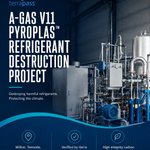
A-Gas V11 in Bowling Green, Ohio, recovers used HFC refrigerants from refrigeration and air conditioning equipment, then reclaims and repurposes them for reuse. Credit revenue helps support recovery, transport, and processing to virgin purity levels.
The project is third-party verified and registered with the American Carbon Registry as ACR827.
What about this project would you want explained next?
terrapass.com/project/a-gas-…
#Terrapass #VerifiedCarbonProjects #IndustrialEmissions


Efficiency starts with the systems you already use.
A quick review of controls, schedules, maintenance, and equipment can help reveal where energy is being used when it does not need to be. The next step is choosing one realistic change and tracking what happens.
Which system would you review first?
#EnergyEfficiency #ClimateAction #Terrapass
Energy Efficiency Day is about using less energy to perform the same task.
For homes and businesses, practical reviews can start with lighting, heating and cooling, equipment schedules, and maintenance. The goal is not a perfect overhaul in one day. It is finding opportunities to reduce energy use without losing the function you need.
What is one system you would check first?
#EEDay #EnergyEfficiency #Terrapass

In forest conservation, the project area, pressures, and strategy must be clearly defined.
The Tahuamanu Amazon REDD Project is located in the Madre de Dios region of Peru and covers 172,584 hectares of lowland Amazon rainforest. The project addresses deforestation pressure associated primarily with small-scale agriculture.
The project activity includes forest monitoring, field assessments, and community support for sustainable livelihood initiatives, partnerships, outreach and training. The project is third-party verified and registered under Verra as VCS2502, with monitoring and validation reports available for review.
Which part of the project would you want to explore first?
terrapass.com/project/tahuam…
#Terrapass #VerifiedCarbonProjects #ForestConservation


Carbon footprint comparisons are more useful when the inputs are consistent.
If you are comparing one period with another, use the same categories where possible, keep the time period clear, and note any missing records instead of filling gaps with assumptions.
What is the hardest category for you to keep consistent?
terrapass.com/carbon-footpri…
#CarbonFootprint #ClimateEducation #Terrapass

An annual carbon footprint review does not need to solve everything. Bring the operational records together, review the estimate, and choose your carbon reduction priorities for the next year.
If your team picked one operational priority, what would it be?
#Terrapass #BusinessPlanning #ClimateAction
Water credit projects can focus on restoring flows, restoring natural systems, or improving water efficiency.
One example in Terrapass’s guide is the Middle Deschutes River Flow Restoration project in Oregon. It helps make the category more tangible by connecting water restoration work to a specific place and project type.
Which water project type would you like to learn more about?
Read the guide: terrapass.com/blog/the-2026-…
#Terrapass #WaterCredits #WaterEducation

Carbon credits, renewable energy certificates, and water credits are different tools connected to different environmental project types. Comparing them starts with the details: what the instrument represents, which project it supports, and how the activity is documented.
Which one would you like us to break down next? Read the guide: terrapass.com/blog/beyond-ca…
#Terrapass #EnvironmentalCredits #ClimateEducation
Changing every trip at once is not realistic for most people. Start with one recurring route and compare what actually works: walking, biking, public transit, or sharing the ride.
Which option could fit into one trip in your week?
#Terrapass #TransportationChoices #CarbonFootprint

A useful cleanup plan starts before anyone puts on gloves: choose one specific area, check local guidance, pack the right supplies, and plan for sorting and disposal based on local requirements.
What would you add to a community cleanup checklist? Share the practical item people often forget.
#WorldCleanupDay #CommunityAction #Terrapass


The ozone layer sits roughly 9–22 miles above Earth, where it absorbs much of the Sun’s harmful ultraviolet radiation.
In the mid-1970s, scientists warned that chemicals used in aerosols, foams, refrigerators, and air conditioners were damaging this protective layer. When the Antarctic ozone hole was confirmed in 1985, the evidence made the threat impossible to ignore.
Countries responded by signing the Montreal Protocol in 1987 and committing to phase out ozone-depleting substances. Nearly 99% of those controlled substances have since been eliminated, and the ozone layer is now on a path toward recovery.
It is a reminder that science, long-term policy, and international cooperation can make measurable progress on a global environmental problem.
What does this history teach us about addressing today’s climate challenges?
#OzoneDay #Terrapass #ClimateEducation

Forest restoration becomes easier to understand when you look at the practices being implemented on the ground.
Restauración Forestal supports community-owned forests across the Yucatán Peninsula, Mexico. Local Ejidos plan and carry out reforestation, fire prevention and control, monitoring, brigade training, and measures to help prevent pests, disease, logging, and illegal hunting. Funds from carbon credit sales support this work and locally planned socioeconomic improvements.
The project credits only incremental forest growth and includes a 100-year commitment to maintain forest stock, a reversal buffer pool, and permanent protection zoning. Restauracion Forestal X-pichil is listed with Climate Action Reserve as CAR1739, with monitoring and verification documentation available for review.
Explore the project: terrapass.com/pro.../restaur…
