

AI tips, tools & insights in plain English. Led by NASA & Big Tech AI experts. Trusted by 10K+ pros & early adopters
Join our FREE newsletter 👉
Joined June 2024
- Tweets544
- Following4.1K
- Followers478
- Likes424






Pinned Tweet
Stanford’s 47-minute course on Hugging Face 🤗 Transformers and fine-tuning is a must-have resource for AI developers—short, impactful, and practical.
🔗 Watch it here: youtu.be/b80by3Xk_A8

AI Horizons retweeted

This is a new paradigm for interacting with Claude that is significantly more "inline" with all the other human activity org-wide. Once you do all of the under the hood engineering work to make this "just work" (e.g. across tools, integrations, compute environments, memory, security, etc.), Claude basically joins the team in a seamless way - you can talk to it as you would talk to a person and it can help with a very large variety of workloads.
Imo this is the 3rd major redesign of LLM UIUX. The first paradigm was that the LLM is a website you go to, the second was that it is an app you download to your computer. This third one is that it is a self-contained, persistent, asynchronous entity with org-wide tools and context, working alongside teams of humans. It really takes a while to wrap your head around it, but it works and it is awesome.

AI Horizons retweeted

Hadamard thought in image space

World Labs CEO Dr. Fei-Fei Li: "The world is not made of words."
"Language models have given machines an extraordinary command of concepts, vocabulary, and reasoning, but the physical world, virtual or real, runs on a different substrate."
"Where language models learn the statistical structure of text, world models learn the statistical structure of space and time: how light falls on a surface, how a garden looks from an angle no camera has captured, how objects respond to force and follow the laws of physics."
"Language gave machines a way to talk about that world. World models are how machines will finally come to understand, imagine, reason and interact with it."
Full piece: drfeifei.substack.com/p/a-fu…
A lot of “agent” failures are just loop control problems.
Give a model the ability to call itself repeatedly and you haven’t built autonomy
you’ve built a system that needs guardrails you haven’t designed yet.
AI is starting to assist in scientific discovery in a new way.
In a recent theoretical physics preprint, researchers revisited a long-standing assumption about gluon interactions, which are part of the mathematics describing the strong nuclear force.
Under a specific set of conditions, they found the interaction does not vanish as previously believed. Even more interesting, it follows a clean, closed-form formula.
GPT-5.2 Pro first identified the pattern from complicated intermediate calculations. The result was then independently derived, formally proven, and verified using standard consistency checks.
The important shift here is not just the physics result. It is that AI helped uncover structure inside dense symbolic math.
We may be seeing the early stages of AI systems assisting researchers in finding hidden patterns across complex scientific domains.
openai.com/index/new-result-…


AI Horizons retweeted
A conventional narrative you might come across is that AI is too far along for a new, research-focused startup to outcompete and outexecute the incumbents of AI. This is exactly the sentiment I listened to often when OpenAI started ("how could the few of you possibly compete with Google?") and 1) it was very wrong, and then 2) it was very wrong again with a whole another round of startups who are now challenging OpenAI in turn, and imo it still continues to be wrong today. Scaling and locally improving what works will continue to create incredible advances, but with so much progress unlocked so quickly, with so much dust thrown up in the air in the process, and with still a large gap between frontier LLMs and the example proof of the magic of a mind running on 20 watts, the probability of research breakthroughs that yield closer to 10X improvements (instead of 10%) imo still feels very high - plenty high to continue to bet on and look for.
The tricky part ofc is creating the conditions where such breakthroughs may be discovered. I think such an environment comes together rarely, but @spectorb & @amspector100 are brilliant, with (rare) full-stack understanding of LLMs top (math/algorithms) to bottom (megakernels/related), they have a great eye for talent and I think will be able to build something very special. Congrats on the launch and I look forward to what you come up with!

AI Horizons retweeted
A few random notes from claude coding quite a bit last few weeks.
Coding workflow. Given the latest lift in LLM coding capability, like many others I rapidly went from about 80% manual+autocomplete coding and 20% agents in November to 80% agent coding and 20% edits+touchups in December. i.e. I really am mostly programming in English now, a bit sheepishly telling the LLM what code to write... in words. It hurts the ego a bit but the power to operate over software in large "code actions" is just too net useful, especially once you adapt to it, configure it, learn to use it, and wrap your head around what it can and cannot do. This is easily the biggest change to my basic coding workflow in ~2 decades of programming and it happened over the course of a few weeks. I'd expect something similar to be happening to well into double digit percent of engineers out there, while the awareness of it in the general population feels well into low single digit percent.
IDEs/agent swarms/fallability. Both the "no need for IDE anymore" hype and the "agent swarm" hype is imo too much for right now. The models definitely still make mistakes and if you have any code you actually care about I would watch them like a hawk, in a nice large IDE on the side. The mistakes have changed a lot - they are not simple syntax errors anymore, they are subtle conceptual errors that a slightly sloppy, hasty junior dev might do. The most common category is that the models make wrong assumptions on your behalf and just run along with them without checking. They also don't manage their confusion, they don't seek clarifications, they don't surface inconsistencies, they don't present tradeoffs, they don't push back when they should, and they are still a little too sycophantic. Things get better in plan mode, but there is some need for a lightweight inline plan mode. They also really like to overcomplicate code and APIs, they bloat abstractions, they don't clean up dead code after themselves, etc. They will implement an inefficient, bloated, brittle construction over 1000 lines of code and it's up to you to be like "umm couldn't you just do this instead?" and they will be like "of course!" and immediately cut it down to 100 lines. They still sometimes change/remove comments and code they don't like or don't sufficiently understand as side effects, even if it is orthogonal to the task at hand. All of this happens despite a few simple attempts to fix it via instructions in CLAUDE . md. Despite all these issues, it is still a net huge improvement and it's very difficult to imagine going back to manual coding. TLDR everyone has their developing flow, my current is a small few CC sessions on the left in ghostty windows/tabs and an IDE on the right for viewing the code + manual edits.
Tenacity. It's so interesting to watch an agent relentlessly work at something. They never get tired, they never get demoralized, they just keep going and trying things where a person would have given up long ago to fight another day. It's a "feel the AGI" moment to watch it struggle with something for a long time just to come out victorious 30 minutes later. You realize that stamina is a core bottleneck to work and that with LLMs in hand it has been dramatically increased.
Speedups. It's not clear how to measure the "speedup" of LLM assistance. Certainly I feel net way faster at what I was going to do, but the main effect is that I do a lot more than I was going to do because 1) I can code up all kinds of things that just wouldn't have been worth coding before and 2) I can approach code that I couldn't work on before because of knowledge/skill issue. So certainly it's speedup, but it's possibly a lot more an expansion.
Leverage. LLMs are exceptionally good at looping until they meet specific goals and this is where most of the "feel the AGI" magic is to be found. Don't tell it what to do, give it success criteria and watch it go. Get it to write tests first and then pass them. Put it in the loop with a browser MCP. Write the naive algorithm that is very likely correct first, then ask it to optimize it while preserving correctness. Change your approach from imperative to declarative to get the agents looping longer and gain leverage.
Fun. I didn't anticipate that with agents programming feels *more* fun because a lot of the fill in the blanks drudgery is removed and what remains is the creative part. I also feel less blocked/stuck (which is not fun) and I experience a lot more courage because there's almost always a way to work hand in hand with it to make some positive progress. I have seen the opposite sentiment from other people too; LLM coding will split up engineers based on those who primarily liked coding and those who primarily liked building.
Atrophy. I've already noticed that I am slowly starting to atrophy my ability to write code manually. Generation (writing code) and discrimination (reading code) are different capabilities in the brain. Largely due to all the little mostly syntactic details involved in programming, you can review code just fine even if you struggle to write it.
Slopacolypse. I am bracing for 2026 as the year of the slopacolypse across all of github, substack, arxiv, X/instagram, and generally all digital media. We're also going to see a lot more AI hype productivity theater (is that even possible?), on the side of actual, real improvements.
Questions. A few of the questions on my mind:
- What happens to the "10X engineer" - the ratio of productivity between the mean and the max engineer? It's quite possible that this grows *a lot*.
- Armed with LLMs, do generalists increasingly outperform specialists? LLMs are a lot better at fill in the blanks (the micro) than grand strategy (the macro).
- What does LLM coding feel like in the future? Is it like playing StarCraft? Playing Factorio? Playing music?
- How much of society is bottlenecked by digital knowledge work?
TLDR Where does this leave us? LLM agent capabilities (Claude & Codex especially) have crossed some kind of threshold of coherence around December 2025 and caused a phase shift in software engineering and closely related. The intelligence part suddenly feels quite a bit ahead of all the rest of it - integrations (tools, knowledge), the necessity for new organizational workflows, processes, diffusion more generally. 2026 is going to be a high energy year as the industry metabolizes the new capability.
This Week in AI:
OpenAI Launches ChatGPT Health, Gmail Gets Smarter, and AI Starts Predicting Disease
PLUS: AI Moves Into Construction, OpenAI Adds Talent, and Make AI Writing Sound Human
Don’t miss this one.
Read now (or click link in bio): theaihorizons.com/p/openai-l…

AI Horizons retweeted
We will make the new 𝕏 algorithm, including all code used to determine what organic and advertising posts are recommended to users, open source in 7 days.
This will be repeated every 4 weeks, with comprehensive developer notes, to help you understand what changed.
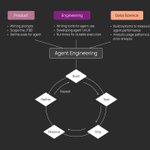
Most teams talk about agent reliability like it is an accuracy problem. In practice it is closer to a governance problem.
With agents, “working” is rarely binary. The agent can succeed on the visible task while quietly doing something you would not accept if you saw the intermediate steps: selecting the wrong tool, pulling data from an unintended source, overstepping a permission boundary, or optimizing for a shallow proxy like speed over correctness. You can have perfect uptime and still have a system that is untrustworthy.
That is why the teams that ship solid agents treat production traces as the real spec. A trace is not just a debugging artifact. It is an executable record of the agent’s decision policy in the wild. If you cannot explain and score the decisions inside the trace, you do not actually know what system you deployed.
A useful mental shift: stop thinking of prompts as instructions and start thinking of them as the system’s constitution. Tools are the laws of physics. Evals are the courts. The work of agent engineering is building the feedback loop where violations are detectable, legible, and correctable quickly.
The under-discussed implication is organizational: the fastest way to harden an agent is not “better prompting” or “better models.” It is shortening the distance between what happened in production and who can change the constitution, the physics, or the courts.
blog.langchain.com/agent-eng…

OpenAI just introduced ChatGPT Health.
It’s a new, dedicated space inside ChatGPT designed to help people better understand and navigate their health, from explaining test results and preparing for doctor visits to supporting fitness, nutrition, and insurance comparisons.
You can securely connect health and wellness apps like Apple Health, MyFitnessPal, and Peloton. Health conversations live in a separate, private space and are not used for model training.
Important note: this is built to support medical decision-making, not replace doctors.
Currently rolling out to a small group, with plans to expand on web and iOS.
This Week in AI:
Nvidia’s Biggest AI Bet Yet, Meta Doubles Down on Agents, and a New Way to Train Coding AI
PLUS: Digital Avatars, New AI Safety Laws, and Teen Safeguards in ChatGPT
Don’t miss this one.
Read now (or click link in bio): theaihorizons.com/p/nvidia-s…

AI Horizons retweeted
I was inspired by this so I wanted to see if Claude Code can get into my Lutron home automation system.
- it found my Lutron controllers on the local wifi network
- checked for open ports, connected, got some metadata and identified the devices and their firmware
- searched the internet, found the pdf for my system
- instructed me on what button to press to pair and get the certificates
- it connected to the system and found all the home devices (lights, shades, HVAC temperature control, motion sensors etc.)
- it turned on and off my kitchen lights to check that things are working (lol!)
I am now vibe coding the home automation master command center, the potential is 🔥.And I'm throwing away the crappy, janky, slow Lutron iOS app I've been using so far. Insanely fun :D :D


This Week in AI:
ChatGPT Launches an App Store, Google’s AI Morning Agent, and the Growing Risks of AI Browsers
PLUS: Clearer Learning Paths with AI, Gemini Enters Robotaxis, and New Tools for Evaluating AI Behavior
Don’t miss this one.
Read now (or click link in bio): theaihorizons.com/p/chatgpt-…

This Week in AI:
Google’s Gemini 3 Flash Makes Powerful AI Fast Enough for Everyday Work
PLUS: ChatGPT Images Gets Smarter Editing, Grok 4.1 Feels More Human, and AI Meets the Real World
Don’t miss this one.
Read now (or click link in bio): theaihorizons.com/p/google-s…

This Week in AI:
OpenAI Releases GPT-5.2, Disney Brings Characters to Sora, and Google Pushes Agentic AI
PLUS: AI Talent Shifts, Live AI Translation in Headphones, and a New Way to Build Apps from Browser Tabs
Don’t miss this one.
Read now (or click link in bio): theaihorizons.com/p/openai-r…

This Week in AI:
OpenAI Issues "Code Red"
PLUS: Model Confessions for Safer AI, Google’s Nano Banana Pro Breakthrough Image Generation, and a Tool to Help You Ace the Job Interview
Don’t miss this one.
Read now (or click link in bio): theaihorizons.com/p/openai-i…

This Week in AI:
Claude Opus 4.5 Just Landed and It’s Anthropic’s Biggest Leap Yet
PLUS: AI in classrooms, Meta’s new morning brief experiment, and the music industry’s move toward AI
Don’t miss this one.
Read now (or click link in bio): theaihorizons.com/p/claude-o…

AI Horizons retweeted
Yeah

Elon Musk: “Anyone who wants to make more than they take has my respect”
Elon is asked for his advice for entrepreneurs, to which he responds:
“I’m a big fan of anyone who wants to build. Anyone who wants to make more than they take has my respect. That’s the main thing you should aim for: to make more than you take and be a net contributor to society.”
He compares it to the pursuit of happiness:
“If you want to create something valuable financially, you don’t pursue that. It’s best to pursue providing useful products and services. If you do that, money will come as a natural consequence of that rather than pursuing money directly. You can’t pursue happiness directly. You pursue things that lead to happiness — fulfilling work, study, friends, loved ones.”
Elon continues:
“It sounds very obvious, but generally if somebody is trying to make a company work, they should expect to grind super hard and accept that there’s a meaningful chance of failure. Then just focus on having the output be worth more than the input. Are you a value creator? That’s what really matters: making more than you take.”
Video source: @nikhilkamathcio (2025)