

Non-profit & editorially independent. Exploring science as a frequently wondrous, sometimes contentious, and occasionally troubling byproduct of human culture.
Cambridge, MA
Joined October 2015
- Tweets47.5K
- Following899
- Followers55.9K
- Likes779



Pinned Tweet
💉 Vaccines have transformed public health, but their journey is far from over.
Join us for a 4-week deep dive into the past, present, and future of immunization, curated from our extensive archive.
Subscribe for free ⬇️
Schools are spending millions on AI systems designed to spot weapons.
Evidence that these tools actually prevent shootings remains thin, while false alarms can carry serious consequences for students.
🔗: undark.org/2026/02/13/as-mor…
The search for alien life can begin surprisingly close to home.
Across Italy, scientists are studying some of Earth’s harshest environments to understand what life might look like on Mars or elsewhere in the universe.
🔗: undark.org/2026/09/25/italy-…
Science gets interesting when the answer refuses to settle down.
Entanglements: The Undark Podcast follows the questions that remain open even after the research has piled up.
Catch up on the latest conversations from Undark!
🔊 Available on Apple Podcasts, Spotify, Pandora, and SoundCloud.
🔗: undark.org/podcast/

Undark’s November 2026 issue is here! 🗞️
Our cover story looks at life after cancer treatment, where being cancer-free can still leave survivors managing long-term health effects and a medical system that does not always know what comes next.
This month, Undark also explores how AI is changing migratory bird tracking, how virtual reality is entering difficult conversations in medicine, why engineers sometimes have to push things to the breaking point to keep people safe, and more.
🔎 See what’s inside the November issue: undark.org/

Prediction markets have become increasingly visible in political coverage, especially after the 2024 election.
Their rise has fueled questions about whether they could eventually rival traditional polling.
Experts caution that the two tools measure fundamentally different things.
🔗 Learn more: undark.org/2026/05/05/predic…
Could a pig someday grow a human kidney or pancreas?
Scientists studying human-animal chimeras are working toward that possibility as roughly 100,000 people in the U.S. wait for organ transplants.
Researchers still face major biological obstacles before the idea could become a clinical reality.
Read the full story in Undark. undark.org/2026/09/25/brain-…

The November issue of Undark is here.
Our cover story looks at the complicated reality of life after cancer, when being cancer-free can still mean years of medical consequences.
Across the rest of the issue, Undark follows the questions that surface when science meets the institutions and people expected to live with its effects.
🔬 Explore the November issue! undark.org/

This weekend, most Americans will turn their clocks back an hour.
The ritual has survived decades of debate over whether we should keep changing the clocks at all.
What does the science say about how we mark time? 🕰️
🔗 Read more: undark.org/2024/03/11/time-z…
Genomic databases hold an extraordinary amount of information. Some records, however, no longer carry enough context to show exactly where the data came from or how reliable they are.
As those archives become training material for AI, Jonathan Jacobs and Patrick Boyle argue that this old problem deserves new attention.
🔗: undark.org/2026/09/25/opinio…

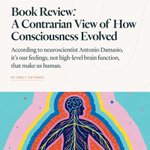
Antonio Damasio argues that consciousness may have begun with something much more basic than abstract thought: the body’s need to stay alive.
In Natural Intelligence & the Logic of Consciousness, the neuroscientist traces consciousness back to homeostatic feelings and explores what that theory could mean for artificial intelligence.
Read Emily Cataneo’s review in Undark.
🔗: undark.org/2026/09/25/book-r…

Sweden was once a frontrunner in digital education. Now, its schools are rethinking when technology actually helps students learn.
The shift has opened a broader debate over foundational skills and what evidence should guide classroom technology.
🔗 Read the full story: undark.org/2026/04/01/sweden…
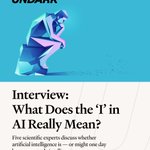
Is AI truly intelligent?
Undark asked five experts in linguistics, computer science, cognitive science, and psychology.
Their answers differ sharply, beginning with disagreement over what the word “intelligence” should mean at all.
🔗: undark.org/2026/09/25/interv…

A poll says a candidate has 48% support, with a margin of error of ±3 points. How much uncertainty does that actually capture?
Less than many readers might assume.
As Americans head toward the 2026 midterm elections, we’re revisiting Michael Schulson’s 2020 look at the statistical shorthand that accompanies nearly every election poll, and the debate over whether it communicates uncertainty well at all.
🔗: undark.org/2020/11/23/polls-…

Human-animal chimera research is advancing unevenly across countries, with scientists still navigating biological barriers, funding restrictions, oversight, and ethical considerations.
Undark looks at where the science stands, and how far researchers think it could go.
🔗: undark.org/2026/09/25/brain-…
What exactly is the “self”?
In an excerpt from Alive: The Hidden Intelligence of the Living World, writer and natural philosopher Melanie Challenger starts with the roots of “consciousness,” once meaning “knowing with.”
She suggests consciousness may be understood as “knowledge of the knowledge of the body.”
All organisms, she writes, have some minimal knowledge of the body, while humans also appear able to discuss that knowledge with ourselves.
🔗: undark.org/2026/09/25/excerp…

Human embryo research has long been shaped by the 14-day rule. Embryo models grown from stem cells can be studied longer.
Some scientists are now proposing a tiered system with later cutoffs tied to developmental milestones, including Days 28 and 56.
As the models become more complex, the debate over where to draw the line is getting harder to avoid.
Read Frieda Klotz’s story in Undark.
🔗: undark.org/2026/09/25/brain-…

To search for life beyond Earth, scientists first study the strangest places on our own planet.
Across Italy, researchers are exploring Mars-like mines, growing cyanobacteria under simulated starlight, examining some of Earth’s oldest fossils, and sampling microbes in geothermal springs.
Andrea De Giovanni documents the work in a photo essay for Undark.
🔗: undark.org/2026/09/25/italy-…

The Ship of Theseus asks a deceptively simple question: If every plank of a ship is eventually replaced, is it still the same ship?
C. Brandon Ogbunu sees a version of that problem emerging in science as AI takes over more of the research process, one task at a time.
How much can be automated before something essential changes?
🔗: undark.org/2026/09/25/opinio…

Human-animal chimeras could eventually help scientists grow organs for transplantation.
They also raise thornier questions: Could human cells end up in an animal’s brain? Could they become reproductive cells? What safeguards would be enough?
Scientists say they are working on ways to prevent those outcomes. Critics argue the technology could still be pushed much further.
Read Charles Schmidt’s report.
🔗: undark.org/2026/09/25/brain-…

Stem cell-based embryo models can mimic some of the earliest stages of human development, giving scientists access to a period of pregnancy that is otherwise difficult to study.
Researchers hope the models could improve understanding of fertility, miscarriage, congenital anomalies, and maternal health.
Their growing sophistication is also raising new ethical questions.
🔗: undark.org/2026/09/25/brain-…
