

Official Twitter account of the United Nations Development Programme (UNDP) in Nepal. We help empower lives and build resilient nations world-wide.
Nepal
Joined February 2012
- Tweets11.9K
- Following387
- Followers63.2K
- Likes5.8K




Pinned Tweet
🧵 Thread 1/4
Today, we paused at our metaphorical Chautari to reflect on a remarkable journey.
@UNDPNepal proudly celebrated 60 years of steadfast partnership with the Government and the people of Nepal, honoring six decades of shared progress and resilience.
We were privileged to be joined by the Hon’ble Minister of Finance (@mofnepal), Dr. @SwarnimWagle, who shared a deeply personal connection as a @UNDP alumnus, having contributed to the Nepal Human Development Report in the 1990s and the Global Human Development Report in 2012.
In his keynote address, Hon’ble Minister Dr. Wagle highlighted UNDP’s critical role in seeding vital investments and delivering on both global and regional public goods. He commended our ongoing engagement in climate action and democratic governance, encouraging us to build on these foundations to foster even stronger cross-border collaboration.


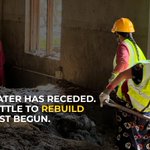
For Nani Maya KC from Ward 7 of Bidur Municipality, returning home is still a dream. The floods have buried her house in debris and river sediments.
Although the debris within her house is cleared, heaps of boulders and sediment on the road is still blocking access.
She broke down in tears while sharing her experience during a community consultation.
Nani Maya’s story reflects the challenges families across flood-affected communities in Nuwakot still face, where many have lost their homes, livelihoods, and sense of security.
Through cash-for-work, @UNDP with support from UN Nepal and the Government of Switzerland, is working with local governments and communities to support debris clearance, engaging local residents in recovery efforts while providing opportunities to earn an income.
For families like Nani Maya’s, clearing debris is not simply about removing mud and stones. It is about restoring access to their homes and taking another step towards rebuilding their lives.
#FloodRecovery #EarlyRecovery


This Tihar, while homes across #Nepal celebrate wealth and prosperity, thousands of families are facing the difficult task of rebuilding what they lost.
Laxmi lost 15 years of hard work in a matter of minutes. Pramod lost his family and home. Padam and Sita lost their home and farmland.
Behind the estimated US$4.7 billion in flood recovery and reconstruction needs are thousands of deeply personal stories of loss, survival and the difficult journey towards recovery.
Meet four people whose lives changed forever: undpnepal.exposure.co/nepal-…


Belkotgadi Municipality in Nuwakot district was among the hardest-hit areas during the 2026 Bhotekoshi floods. Families lost loved ones, homes, and livelihoods. Many remain displaced, facing the daunting task of rebuilding their lives.
Through a Cash-for-Work approach, @UNDP with support from 🇺🇳 @UN_Nepal and the 🇨🇭 Government of Switzerland, and in partnership with local governments and community institutions, is supporting flood-affected communities to restore their surroundings and rebuild their livelihoods.
Beyond clearing debris, this work is helping families recover valuable belongings buried beneath the rubble, restoring a sense of dignity, hope, and control over their lives.
This initiative is helping people restore their livelihoods and find the strength to rebuild their future.


For communities in Galchhi, Dhading, Amleshwor Temple is more than a place of cultural and religious significance. It is what brings people together and holds a special place in community life.
After the floods left the temple covered in mud and debris, restoring this important space became a priority for local authorities and residents.
Working with the local government and partners, @UNDP with support from 🇺🇳 UN Nepal and the 🇨🇭 Government of Switzerland is supporting debris clearance at the temple to help communities reclaim their shared spaces and move forward with recovery.
Through a cash-for-work approach, the initiative also creates opportunities for local residents to earn an income while taking part in rebuilding their own communities.
Because recovery is not just about clearing debris, we are also restoring the places that bring communities together and supporting the people who call them home.
#FloodRecovery #EarlyRecovery #CashForWork


Agriculture contributes nearly 25% to Nepal’s GDP and provides employment to 65% of its population. Yet, only 7.5% of total bank credit goes to the sector, with women farmers and agri-entrepreneurs facing additional barriers due to lack of collateral.
UNDP is working to bridge this financing gap through the Individual Agriculture Credit Guarantee Scheme (Agri-CGS), a first-of-its-kind mechanism that provides a 70% guarantee on loans extended by participating financial institutions, helping farmers and agri-entrepreneurs access finance for up to seven years.
In collaboration with the Deposit and Credit Guarantee Fund (@DCGFNEPAL) and Dhangadhi Sub-Metropolitan City, UNDP organized an interaction programme in Dhangadhi to connect local governments, banks and aspiring agri-entrepreneurs with the scheme.
Speaking at the event, UNDP Assistant Resident Representative Dharma Swarnakar highlighted that Agri-CGS offers a market-based financing solution rather than a simple interest subsidy, backed by a dedicated USD 2 million guarantee fund.
Similarly, Mayor Gopal Hamal urged local representatives to connect residents with viable business plans to participating banks and help them make use of the scheme.
By reducing collateral barriers and connecting viable agricultural enterprises with finance, Agri-CGS aims to unlock opportunities for farmers, particularly women, and strengthen climate-resilient and environmentally friendly agricultural livelihoods.


The Conference of the Parties to the Convention on Biological Diversity (CBD COP17) in Yerevan, Armenia, called the global community to turn biodiversity commitments into measurable action.
For Nepal, this is an opportunity to advance the implementation of its National Biodiversity Strategy and Action Plan (NBSAP), strengthen international cooperation, and call for grant-based financing, access to technology, and capacity-building support to achieve the goals of the Kunming-Montreal Global Biodiversity Framework (KMGBF).
Nepal’s mission is to pursue development within ecological limits, ensure that conservation delivers social and economic benefits, and promote inclusive decision-making and leave no one behind.
@UNDP | @COP17_Arm2026 | @MOFENepal |
Public services have become simpler, faster and more accessible for citizens in Dakshinkali Municipality.
The pilot initiative was observed by Madan Bhujel, Secretary at the Ministry of Land Management, Cooperatives, Federal Affairs and General Administration (MoLCFAGA), alongside Joint Secretary Dila Ram Panthi, Joint Secretary and National Programme Director, PLGSP, Prakash Dahal.
Initially introduced in Ward No 1, the system will be reviewed before its gradual expansion to other wards. It builds on earlier experiences with OSSD in the country and demonstrates how digital technology, institutional coordination and local government leadership can work together to improve public services.
Developed under the Provincial and Local Governance Strengthening Programme (PLGSP), the digital system allows citizens to access different municipal services without having to visit multiple sections or offices. It also enables them to track their service requests, while digital processes strengthen coordination between wards, municipalities and other government agencies, improving transparency and accountability.
The initiative is being implemented under PLGSP, led by MoLCFAGA, with support from the Government of Nepal, the @EUinNepal, @NorwayinNepal and the @SwissAmbNepal, and technical assistance from @UNDP.
@mofaganepal


In a matter of minutes, lives changed forever.
The August 2026 floods claimed lives, destroyed homes and livelihoods, and left thousands struggling to rebuild.
We met four people whose stories reflect the devastating human toll of the disaster, but also the courage to face what comes next.
Read their stories: undpnepal.exposure.co/nepal-…


TB champions and affected communities are now taking a more active role in making tuberculosis (TB) services accessible, accountable and responsive to people’s needs.
Through the launch of Community-Led Monitoring TB (TB CLM) initiative activity, TB champions and those from affected communities across seven districts will build the skills to assess the Accessibility, Acceptability, Availability, Affordability and Appropriateness of the TB services, identify gaps in service delivery, and work with the government to improve services and strengthen accountability.
Additionally, they will also provide support as an integrated approach to active case finding and contact tracing, helping identify people who may have TB and connect them to diagnosis and care, while gathering community feedback to understand what is working, what needs to improve and how services can better respond to people’s needs.
Implemented by the JANTRA and SPARSHA Nepal consortium, the initiative is supported by @UNDP's @GlobalFund programme and the Ministry of Health and Food Safety (@mohpnep). Working alongside the National Tuberculosis Control Centre (NTCC), local governments and civil society, TB CLM aims to ensure that no one is left behind in accessing quality TB services.
The United Nations Development Programme (UNDP), in partnership with the Global Fund to Fight AIDS, Tuberculosis and Malaria, serves as a co-Principal Recipient (co-PR) of the Global Fund programme in Nepal. In partnership with the Ministry of Health and Food Safety and its Sub-Recipients (SRs), UNDP supports Nepal’s national response to HIV, tuberculosis (TB) and malaria.


♻️ RU FEST is back! 2nd Edition – Re-Think 2026
Organised by @pokharamun, with support from @KOICA_ICC and @UNDP Nepal.
What if the things we throw away could become valuable resources, create green jobs, and spark new ideas?
Through recycling, upcycling, creativity, and innovation, everyday waste can be transformed into valuable products and new opportunities for a greener, more sustainable future.
Whether you’re a student, entrepreneur, local resident, or visitor, RU FEST’s 2nd Edition – Re-Think 2026 invites you to rethink waste, explore circular solutions, and celebrate the people turning waste into resources and ideas into action.
What can you experience at RU FEST?
♻️ Explore the RU Marketplace and discover innovative recycled and upcycled products.
💡 Witness creativity and problem-solving through the Circular Innovation Challenge.
🛠️ Experience live recycling and upcycling demonstrations.
🤝 Meet green entrepreneurs and connect with sustainability champions.
🌍 Discover how small changes and collective action can help build a cleaner, greener Pokhara.
📅 Dates: 18–19 November 2026 (Mangsir 2–3)
⏰ Time: 10:00 AM–5:00 PM
📍 Venue: Pokhara Event Centre, Pokhara
🎟️ Entry: Free for all!
Join us at RU FEST 2026 and be part of the movement towards a circular economy—where waste becomes a resource, innovation creates green jobs, and sustainability becomes everyone’s responsibility.
@mesanjog
Candid moments from the ground in Jumla.
Today, Norway’s delegation, alongside UNDP staff, visited Pancheshwor Multipurpose Cooperative in Tatopani, where 149 apple farmers and 4 producer groups are connected to improved agricultural marketing.
They also visited Hiyankhola Tarkari Utpadan Samuha, where women farmers are adopting climate-resilient agriculture and earning additional income . The visit further included the Giri Khola Mini Hydropower Project, which supports local electricity access and powers three lift irrigation systems serving 36 hectares of land, mainly apple orchards.
Through the Renewable Energy for Resilient Agri-Food Systems (RERAS) project, supported by Norway and Finland, UNDP is working with partners and communities to strengthen climate-resilient agriculture, expand market opportunities, and promote productive uses of renewable energy.


Building on Nepal’s evolving carbon market landscape, including the National Carbon Trading Regulation, 2082, and the establishment of the National Carbon Registry, two complementary reports—the Carbon Finance Handbookand the National Scoping Study on Sectoral Opportunities for Carbon Projects in Nepal—were unveiled at the National Climate Summit 2026, ahead of COP31 in Antalya, Türkiye.
Nepal’s proactive deployment of its national carbon registry, Carbon Finance Handbook, and sectoral scoping study directly aligns with the COP31 theme of shifting global climate architecture from policy pledges to high-integrity, bankable capital implementation.
The reports were jointly unveiled by Hon. Gita Chaudhary, Minister of Agriculture, Forests and Environment, and Hon. Shisir Khanal, Minister of Foreign Affairs, marking an important step towards strengthening Nepal’s capacity to mobilise carbon finance and advance sectoral opportunities for carbon projects.


Home Grown School Feeding Program strengthens a sustainable, community-led solution to school nutrition!
An all-women-led cooperative of 500 farmers is supplying fresh produce directly to the four schools in ward number two of Barahtal municipality in Surkhet district. With WFP support, these schools are using the local food supplies to cook nutritious mid-day meal to students.
Funded by @NorwayinNepal and @finlandinnepal, the Renewable Energy for Resilient Agri Food Systems (RERAS) project has been expanding this Home-Grown School Feeding (HGSF) initiative in Gurvakot, Panchapuri and Barahtal local governments.
The project supports local governments in institutionalizing this initiative by building their capacity, supporting the construction and renovation of school kitchens, providing electric cooking appliances and agro-processing equipment, and helping localize weekly school meal menus. Local governments are also stepping up by formalizing school meal management procedures and investing in Home-Grown School Feeding (HGSF) initiatives.
Swipe through to see highlights from the recent Norwegian and Finnish delegation's visit to Barahatal Rural Municipality, Surkhet, and learn how the local government, @WFP, @UNDP, and partners are collaborating under the RERAS project to empower communities from the ground up.


At CBD @COP17_Arm2026, @UNDP joined government representatives, youth, Indigenous Peoples and local communities, and development partners for a dialogue on translating Nepal’s National Biodiversity Strategy and Action Plan (NBSAP) into tangible results.
The discussion highlighted the importance of inclusive governance, sustainable biodiversity financing, meaningful participation, and strong partnerships to advance Nepal’s 36 national biodiversity targets and contribute to the Kunming–Montreal Global Biodiversity Framework.


More than 23,500 Community Forest User Groups manage approximately 2.5 million hectares of forest in Nepal, protecting habitats and sustaining local livelihoods. The community members contributing their time, knowledge, and collective effort to conservation need greater recognition, stronger representation in decision-making, and fair access to finance.
As Nepal advances its National Biodiversity Strategy and Action Plan (NBSAP) 2026–2030, investing in community-led, biodiversity-friendly forest management is essential for nature resilient livelihoods and future generations.
Through the Ministry of Agriculture, Forests and Environment (@MOFENepal) and @UNDP’s Biodiversity Finance Initiative (BIOFIN), Nepal is working to integrate biodiversity considerations and leverage resources for sustainable forest management, including in critical wildlife corridors and to support rural livelihoods.
Conservation must not rest on communities alone. Recognize their stewardship. Invest in their leadership. Share the responsibility.
@theGEF | @UNDPplanet | @UNDPClimate |
Nepal’s Biodiversity Vision: Turning Ambition to Action | #COP17
At the 17th Conference of the Parties to the Convention on Biological Diversity (CBD COP17) in Armenia, the Government of Nepal in collaboration with @UNDP is convening a panel discussion at the UN Pavilion to explore pathways for implementing Nepal’s National Biodiversity Strategy and Action Plan (NBSAP) 2026–2030.
Bringing together perspectives from government, Indigenous Peoples and local communities, youth, and conservation and development partners, the discussion will focus on results-based planning, sustainable biodiversity finance, recognition of Indigenous knowledge and rights, youth engagement, and responses to emerging risks.
Guided by the vision “Biodiversity for Resilience and Prosperity,” Nepal’s NBSAP calls for a whole-of-government and whole-of-society approach to safeguarding biodiversity and advancing human well-being.
📍 UN Pavilion, Blue Zone, Yerevan, Armenia
📅 27 October 2026 | 18:15–20:00


A historic milestone for climate justice and solidarity with Nepal
At its first-ever extraordinary board meeting, the Fund for Responding to Loss and Damage (#FRLD) has taken a landmark decision to provisionally allocate USD $21.6 million to support Nepal’s recovery and reconstruction following the devastating Bhote Koshi–Trishuli flash floods of 26 August 2026.
This approval represents the very first time the Fund has moved to support a country facing a sudden-onset climate disaster since its operationalization at COP28. By piloting an agile response under the Barbados Implementation Modalities, the Board has set a powerful precedent for rapid, compassionate multilateral action.
Led by the Government of Nepal, with the Ministry of Forests and Environment and Ministry of Finance spearheading the effort, this decision will help mobilize vital resources for recovery, reconstruction and resilient livelihoods in communities affected across the Bhotekoshi–Trishuli basin.
For the communities rebuilding their lives along the Bhote Koshi corridor, this decision offers tangible hope and critical resources for resilient recovery. Beyond Nepal, it sends an unequivocal message to vulnerable nations worldwide: multilateral cooperation can and must deliver climate justice when disaster strikes.
UNDP Nepal remains steadfast in supporting national and local partners to turn this solidarity into inclusive, climate-resilient recovery on the ground.
#LossAndDamage #ClimateJustice #NepalFloods #FRLD #Multilateralism #ClimateAction #BuildBackBetter


No kites in Nepal’s skies this Dashain
For many families across Nepal, Dashain is a time of marigolds in bloom, clear skies, kites in the air, and homes filled with family.
But in parts of Nuwakot, Rasuwa, and Dhading, this Dashain feels very different.
As Nepal celebrates Dashain, we remember those facing the long road to recovery and the need to rebuild not just homes, but lives, livelihoods, safety, and hope.
Read more in this blog by @UNDP's @monicaupadhyay: go.undp.org/No-Kites-In-Nepa…

As #COP17Armenia begins under the theme “Taking Action for Nature,” Nepal calls for stronger international cooperation to turn global biodiversity commitments into tangible results.
In her message to the global community, the Hon’ble Minister Gita Chaudhary, Ministry of Agriculture, Forests and Environment underscores that no country can succeed in biodiversity conservation alone. Building a future where people and nature thrive together requires sharing knowledge, technology, financial resources and good practices across countries.
As Nepal advances its National Biodiversity Strategy and Action Plan (NBSAP) 2026–2030, collective action, inclusive partnerships and adequate resources are essential to halt and reverse biodiversity loss.
May #COP17 renew global solidarity and accelerate action for nature, people and future generations.
@MOFENepal | @theGEF | @UNBiodiversity | @COP17_Arm2026 |