

STORIES| TRUTH| MYSTERY| HUMANITY | KINDNESS| NATURE
Joined March 2013
- Tweets13.3K
- Following94
- Followers143K
- Likes3.2K




Pinned Tweet
Truman Capote was a sneaky little bastard with total recall.
He was eloquent, he was witty, and he seemed harmless… at first. Traveling to Japan with the famous British photographer Cecil Beaton, Capote had his eye set on an interview with the world’s most reclusive moviestar of the era — Marlon Brando. The director of the film Brando was shooting, aware of Capote’s reputation, refused to allow the diminutive author on set.
Capote, undeterred, invited himself to interview Marlon Brando by calling up the star himself. Brando was warned by literally everyone around him not to, but he figured having dinner with the writer wouldn’t harm anyone? Just dinner! Not too many drinks. No tape recorder. And he’d have a friend call him up every hour or so just so he could mumble something impossible to understand in the phone and seem important, and busy — and to have an excuse to kick out Capote should the evening prove in any way unpleasant.
 Capote was tiny, 5′3″ and very slight of build. He had a high-pitched voice, spoke with a heavy Southern drawl and he was effeminate to the point of caricature. To Brando, he was entirely unthreatening, and he had a thing for society’s underdogs, anyway — a tiny little gay man was exactly the sort of fellow he’d have punched a guy on the nose for if he saw him get bullied or harrassed. Capote, however, had a tactic. An angle:
"The secret art of interviewing—and it is an art—is to let the other person think he’s interviewing you. You tell him everything about yourself, and slowly you spin your web so that he tells you everything. That’s how I trapped Marlon."
The writer brought no notebook, no pen, no recording device. But he did bring vodka, and share personal details about his life, past trauma, sad reflections. The type of things men bond over. Brando, felt a connection, felt he could trust Capote. And despite the fact that Brando was twice Capote’s weight and a much more physically powerful presence, the tiny interviewer could drink like a fish — alcohol barely affected him at all. Soon, Brando began to spill his guts. All of his intimate secrets, worries, trauma, his troubled relationship with his unwell and alcoholic mother…
When the interview, called “The Duke in His Domain” was published in The New Yorker in 1957, it devastated Marlon Brando. He felt deeply betrayed on a personal level, exposed, his carefully designed mystique pierced and his secrets spilled. He also had to admit, to his annoyance, that Capote did have perfect recall and had remembered it all with painfully brutal accuracy. He never trusted a journalist ever again.

Paul Newman and his wife Joanne Woodward. The loving couple was married from 1958 until 2008. Quite happily, too. Now Joanne was a looker, without a doubt, but Newman himself was fabulously rich and devilishly handsome.
People always asked them for “the secret” of their relationship. Of how stable it always was, of how they always managed to ‘be there’ for their children and for each other. They were amazed Newman, one of Hollywood’s most handsome men, never cheated on his wife and stayed loyal to her for sixty years until his death.
His famous reply: “If you’re hungry, why go out for a burger when you have a prize winning steak waiting for you at home?”

They go to a magical place called… the house of John Travolta. See there are celebrities with villas, a swimming pool, relative privacy provided to them by tall grass or some trees. And then there’s Travolta who takes everything just a little further. His house is an enormous compound, far away from the world. It looks like a mini-airport.
In it he has several airplanes, large and small, parked. He has many cars, too, and a massive runway for his own private use. Due to the amount of space the runway takes up, Travolta’s house is remote. It has to be remote. He owns the fields, the lands, the trees and nature surrounding his house, too. The house itself, however, is relatively humble
Inside the house lives Travolta, with his son and daughter whom he now raises alone after his wife, Kelly Preston, tragically passed away due to cancer. He loves cooking, and when a star has to “bulk up” and get fat for a role, they often stay in the Travolta home for a while as he cooks up massive Italian-style meals with lots of chicken and proteins. The Grease star is, reportedly, quite a dedicated cook and very hospitable. It is not unheard of for him to allow guests to stay at his place for weeks at a time, then personally fly them home in one of his many planes — any excuse for a flight will do, as the man loves flying about as much as he loves cooking.
Celebrities all have their own little hideouts. But a famous one in Hollywood is the Travolta family home where there is space, nature, airplanes and Italian food aplenty and the generous host will let you stay as long as you need, no questions asked. A magical place of wonder, for sure

When I got to the final scene of Four Weddings and a Funeral (1994), I went, “Seriously?”
I watched it for the first time on VHS. On screen, Hugh Grant’s character professed his love to Andie McDowell’s character. The rain was coming down. They were both soaking wet. They muttered a long, dramatic exchange.
Then McDowell said, “Is it still raining? I hadn’t noticed.”
I remembered yelling at the screen, “Seriously! Girl, get inside and dry off!” Except I didn’t say “Girl.”
Being a practical person, that last scene of the movie aggravated me.
The “loving couple in the rain” as a romantic storytelling tool was incomprehensible. Who shows up saturated in water at someone’s place? And what British person wouldn’t invite a wet guest in to dry off? Who in their right mind steps out in the rain to talk? It is insanity. I would have said, “Come back when the rain stops, and you are dry.”
The recognition that my life in a rom-com would be miserable was solidified by yet another rain scene in The Notebook (2004). And when it rains, it pours. It happened again in Pride and Prejudice (2005).
I suppose the only one with any common sense is Meryl Streep in The Bridges of Madison County (1995). She sat in the truck watching Clint Eastwood standing in the pouring rain. I found myself telepathically coaching her, “Let go of the door handle. Don’t you get out. Don’t do it. Don’t.”
But perhaps it was a mistake to be practical. Meryl Streep did not win the Oscar for her role that year. The Academy handed the award to Susan Sarandon and rained on Streep’s parade.


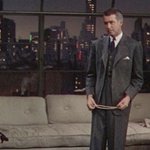
Was Alfred Hitchcock's film "The Rope" really shot in one go, with only one shot from start to finish? Or is it a trick?
The rope was actually presented upon its release as a film in a single sequence shot, which was unprecedented at the time and greatly contributed to the publicity surrounding the film.
However, Hitchcock was well placed to know that it was not technically possible in 1948 to shoot a 1h21 film in one go, with a single camera and without changing shots.
The capacity of a 35mm camera magazine at the time was around 330 meters of film, or around 10 minutes of footage.
Hitchcock therefore had to divide his film into 12 parts, finding at the end of each part a trick to be able to conclude a plan without the public noticing.
He will mainly use camera movements which will place the lens in front of a dark surface for a short moment, like when the camera sketches a tracking shot which passes behind the back of an actor. The film is then interrupted, the reel is replaced, and the camera resumes its journey where it left off. During editing, we paste the two shots and the illusion is perfect (except when we watch the film looking for possible cuts and we are surprised that a master like Hitchcock let his camera pass roughly behind the back of an actor!).
In the end, The rope is still a remarkable feat and a virtuoso film, because it only includes 11 different shots in total. And if Hitchcock had had the technical means, it goes without saying that he would have made the film in a single shot...

Phyllis Latour was born in April 1921 in South Africa. Her father was a French doctor, and her mother, Louise, was a British citizen living there.
In 1941, she moved to England and later joined the Special Operations Executive (SOE), a group created during World War II to gather secret information and disrupt enemy plans in areas controlled by the Axis powers, especially Nazi Germany.
On May 1, 1944, Phyllis parachuted into Normandy, France, as part of a secret group called the Scientist circuit. She spoke French fluently and pretended to be a teenage girl whose family had moved to the area to escape Allied bombing. She rode around on a bicycle, selling soap and chatting with German soldiers to collect information.
Phyllis had a clever way of hiding the codes she used to send messages. She had a piece of silk with one-time codes printed on it, which she wrapped around a knitting needle and tucked into a flat shoelace she used as a hair tie. She then used Morse code equipment to send the secret messages.
Even though German soldiers searched her and questioned her a few times, they never realized her hair tie was hiding secret codes, so they let her go. In total, she sent 135 coded messages, which helped guide bombing missions to important enemy targets.
Today, Phyllis Latour passed away on 7 October 2023, aged 102, in New Zealand

One night in 1934, Clark Gable gave his Oscar to a child who admired it. He told the child that winning the Oscar was what mattered, not owning it. After Clark passed away, the child returned the Oscar to his family.
Before making Gone with the Wind (1939), Clark was already good friends with Hattie McDaniel. He wanted her to play the role of "Mammy," but it was her powerful performance, when she showed up fully dressed and nailed the part, that got her the role. When it was time for the premiere on December 15, 1939, producer David O. Selznick tried to bring Hattie along. But MGM advised against it due to Georgia’s strict segregation laws, which wouldn’t allow her to attend the same event as white people. Clark was so upset by this that he told MGM he wouldn’t go unless they let Hattie attend too. In the end, Hattie convinced him to go without her.
Clark was also the head of the actors’ division of the Hollywood Victory Committee. In January 1942, he sent his wife, Carole Lombard, on a tour to her home state of Indiana, where she sold $2 million worth of bonds for the war effort. Tragically, on their way back to Hollywood, the plane they were on crashed, killing Carole and her mother. Clark was devastated and drank heavily for six months. Eventually, he enlisted in the Army Air Corps as a private. He worked as a combat cameraman in Britain, eventually rising to the rank of major. Later, he was furloughed to work at Hal Roach Studios, where the headquarters became known as "Fort Roach." His discharge papers were signed by Captain Ronald Reagan.

Tom Hanks has an innately sincere disposition. It’s essentially his calling card as an actor; much like how Denzel Washington’s fierce screen presence is his defining attribute.
Hanks is always believable, always. Whatever part he plays, he can convince the audience of the trials and tribulations of his character, he can make them sympathise, he can make them believe. That is a powerful tool.

What that ultimately means is that few actors can do ‘sympathetic leading man’ better than he can – Philadelphia, Forrest Gump, Cast Away, The Terminaland Captain Phillips are some touchstone Tom Hanks performances and they all rely on his signature sincerity.
That quality is front and centre in Philadelphia, which I consider his finest performance.
He’s not limited to playing variations of that archetype. I bring it up because he can play these types of parts better than pretty much anyone else.
He can make the audience root for him in a deep and meaningful way; it’s one of his many gifts as an actor. And he can showcase vulnerability like few others can.
A lot of that carries over from his real-life persona. By all accounts, Tom Hanks appears to be a genuinely nice man – warm, kind, funny and compassionate, Hanks is the world’s sweet uncle.
That standing certainly helps when he plays the archetypal ‘Tom Hanks’ part.
Then there is the question of range. I have seen some answers on here that claim Tom Hanks essentially plays the same character again and again.
Now, I disagree and I will elaborate, but I have another point to make first – what is our obsession with range?
We have unanimously anointed a Gary Oldman as a truly extraordinary actor primarily because of his chameleon-esque nature.
But if you pit Oldman’s five best performances against Tom Hanks’ five best, it’s a tight call. I would go with Hanks.
Gary Oldman is a great actor. But not just because of his range. Versatility is just one factor. He would still be a great actor even if he didn’t play the breadth of roles he has.
Also, to claim that Tom Hanks doesn’t have range simply because he hasn’t essayed many villainous turns is befuddling to say the least.
You take one look at his filmography and the range is there for all to see – whether it is modulating accents, looks or personalities, over his long and illustrious career, Hanks has played a variety of parts.
Then there is the minor fact of him being one of only two actors to win back to back Best Actor Oscars, the other being Spencer Tracy.
Tom Hanks is incredible and has a truly awe-worthy filmography. One of the great actors of our times.
On an unrelated note, take a look at this
[1] climactic scene from Captain Phillips and marvel at the talent of the man. That is one of the finest acted scenes I have ever seen.
He is phenomenal. He has been for over three decades.

Steven Seagal always starred in cheap action flicks that were cool to me as a kid. But if you rewatch them as an adult, they are mostly super tacky.
It didn’t help that Seagal is infamously arrogant and full of himself. He was allegedly difficult to work with on set.
He still makes movies these days but the rumor is that they are done as a front for money laundering. They are often funded by Russian and foreign entities. The films are laughably bad.

Who knows, maybe Putin loves his martial arts skills.
Seagal also didn’t really take care of himself and stay in shape to remain a leading man. But the short answer is that he lacked the acting chops to do different types of roles, and that he treated people in the industry like crap. Segal is the pinnacle of washed up actor.

Brett — played by the fine character actor Frank Whaley — and his friends weren't “gangsters”, at least there's nothing to suggest that they were. Marsellus was the gangster, and they double crossed him somehow.
We're not really intended to speculate too deeply about Brett and his pals. Who they are doesn't really matter; they mostly exist as a plot device, to show us how cold and brutal Jules and Vincent can be, and what happens to people who cross Marsellus.
I always felt they were probably dumb college kids who got in over their heads, but maybe that's just because of Whaley's fresh-scrubbed appearance as Brett (even if he was actually 30 when it was filmed).
They're dressed casually because they're not sophisticated mobsters, they're a bunch of dumb kids who crossed the wrong guy — and ultimately paid the price.

Pacino or Deniro are both absolutely amazing actors. They are both intense. They have this ‘force of nature’ thing going on. I especially love Al Pacino personally. How in a movie like Scarface he manages to play a young Cuban immigrant so flawlessly you forget completely the fact that he is Italian, not Cuban, and in his forties, not a young criminal trying to make it. He just takes you along for the ride.
Not to say that De Niro isn’t also great — he is! — but Pacino, to me, is a man of near mythological proportions nice and compactly wrapped into a tan 5′7″ package. He’s a criminal, a thief, a murderer, a crime syndicate leader, a devilish lawyer or even the Devil himself… and you believe it, each and every time. He is it. He embodies it. Becomes it.
Above is Pacino as Roy Cohn — an incredibly corrupt laywer. Also incredibly gay, and incredibly in the closet to the point where he outright refuses to accept he has AIDS. No, not him! He has clout. He cannot be touched. See, he does menacing incredibly well. But he does vulnerable like no other, too. And pathetic — he can nail it beautifully.
You cannot typecast Al Pacino. De Niro, great as he is, will always be Vito, he’ll be Mr. Goodfellas, a gangster, the quintessential Italian-American goombah. He can play other things, too — a pirate who is secretly a crossdresser. Or a stern father-in-law. A mean talkshow host. A boxer. He plays his parts and he plays them well. But what I feel defines him, is his roles as crime figures. Whereas Pacino, to me, often plays similar parts but plays them differently. With somehow more depth. More diversity?
I see Al Pacino only when he does interviews. When he’s in front of a camera, Al Pacino disappears completely. Ceases to exist. There is only the character. But when I see De Niro, I know two things. One, this will be a great movie. And two, that’s Robert De Niro.


A few years ago Sam was a pretty handsome bloke who just sang some songs and that’s… it. The songs were solid, too. Beautiful songs. Real emotions being conveyed. I felt it, those songs. The pain, longing, sadness, heartbreak. It was all there, and it did something to the listener.
And something just sort of changed, over the years. I don’t know what it is. But now I feel like Mr. Smith just likes to… provoke for the sake of provoking. Shock, for the sake of shocking. On the one hand its kind of funny how people overreact to him — Ozzie Osbourne has done way worse back in the day and he never got “cancelled” for it, as did many other rockstars of yore. Nowadays it often feels as if the stage performance overshadows the actual songs and artistry and the views, clicks and controversy it generates makes “shocking” acts outshine more ‘behaved’ stars who, while perhaps lacking the showmanship, actually create more beautiful music
But with Smith it all feels… forced, if that makes sense?Like his heart isn’t really into it, but somehow he figured controversy sells. To some degree, I get it. We all have to make bank at the end of the day, the career of an artist depends on it. But he doesn’t… really need it, you know? Because as I said — Sam Smith was a fine singer before. He had fame, recognition, some songs that were straight-up bangers that a lot of people loved.
And then he decided to just, cosplay as the devil at the Grammy’s or something. How odd. Sam Smith went from a handsome bloke who looked like a moviestar to some sort of creepy 2020s throwback of Boy George that fell in with a bad crowd of Satanists. Could have just, sang your songs, bro.

Young Harrison Ford had his first part as a bellhop, in 1966.
It wasn’t a credited role, and it didn’t really lead anywhere… the main reason for this is that Ford was on the bottom of the hiring list, having offended a powerful producer named Jerry Tokofsky.
Mr. Tokofsky told young Harrison Ford: “First time Tony Curtis was ever in a movie … he delivered a bag of groceries, a bag of groceries, kid. And you took one look at that guy, and you knew that was a movie star.” Ford fired back: “Well I thought that was supposed to be a delivery boy!” Tokofsky, offended by the young upstart’s attitude, never gave Harrison Ford priority anymore…
After this, Harrison Ford spent his time working with hands. Good, honest work without any ego-driven producers, stars with bad attitudes and pretentious reviewers… he went on to work on moviesets as a carpenter, which kept him close to the industry while not necessarily landing him many parts.
Eventually he caught the eye of George Lucas, and this kickstarted Harrison Ford’s career. Star Wars made him a star. It allowed him to pick the parts he liked and do his own thing without having to kiss people’s ass — he really didn’t have the temperament for the entertainment industry, and still does not suffer fools

When Wes Anderson first approached Gene Hackman to play the ne'er-do-well, absentee patriarch in The Royal Tenenbaums — a role he had written specifically for Hackman — he was turned down not once, but three times.
Hackman was apparently piqued that Anderson thought he knew him well enough to write a part for him, meaning how he would play it. He was also uncomfortable with the theme of the absentee father, which made him look back at when his own three children were young, and whether he, busy with his career, was not there for them when they needed him.
Hackman talked to his now-grown kids — Christopher, Elizabeth, and Leslie — about it, and they, along with his agent, urged him to take the role. So finally, he told Anderson he'd do it, and he turned in an iconic performance that won him the Golden Globe as Best Actor.

Brad Dourif and John Hawkes prove that true artistry often hides in plain sight, unrecognized yet unforgettable.
Brad Dourif made his screen debut at 24 as sensitive, stuttering Billy Bibbitt in Milos Forman's adaptation of One Flew Over the Cuckoo's Nest, garnering an Oscar nomination as Best Supporting Actor (and winning the BAFTA), and since then has worked steadily in a vast array of roles. He was the voice of demonic doll Chucky in the Child's Play movies, brutal deputy Clinton Pell in Mississippi Burning, the treasonous Grima Wormtongue in Peter Jackson's Lord of the Rings films, and Dr. Amos “Doc” Cochran in “Deadwood” (for which he was nominated for an Emmy).
Did you know that all of those roles were played by the same guy? Most people don't, because he slips so completely into each character that the actor ceases to exist
John Hawkes Like Dourif, he starred in “Deadwood”, as Jewish merchant Sol Star. He also received an Oscar nomination for his brilliant performance as Jennifer Lawrence's menacing, meth-addicted uncle in Winter's Bone, then won major accolades two years later as polio-stricken poet Mark O'Brien in The Sessions. In between, he mesmerized as a creepy-yet-magnetic cult leader in Martha Marcy May Marlene, and later he played Frances McDormand's abusive ex in Three Billboards Outside Ebbing, Missouri. And that's only a minor sampling of what he has done.
Yet most people don't even know his name. In fairness, Hawkes likes it that way; he's a self-professed shy guy who has always shunned fame, and thinks that the less people know about him, the better he is able to do his job. But he's just too good an actor for me not to mention. I've been a fan since the mid-90s, and was so happy when he started getting higher-profile roles.


The young Swedish actor rose to stardom at age 15, playing Tadzio in Death in Venice. People went crazy for Andrésen’s looks, labeling him the “most beautiful boy in the world” in 1971.
After the film, Andrésen tried to escape his fame by hiding out in Japan… big mistake. People there went even more crazy for his looks — the Bishōnen or “beautiful boy” genre saw a massive revival due to him inspiring Japanese artists, several of them designing characters to look like him.
Andrésen tried desperately to escape his fame. As he had to play a homosexual character in his first role, he was assumed to be gay, even though he wasn’t. This limited the type of roles he could play and ultimately hindered his career, as he refused to play any more gay characters ever again.
Directors, both male and female, treated Andrésen very creepily and did not seem to understand that he was still very much a kid and uncomfortable with the attention. One older male director even took him to a gay club, an experience he described as “hell”…
In later life, Björn Andrésen grew a huge viking beard and adopted a more rugged appearance, allowing him the anonimity he so badly craved. Having lost his only son as an infant, he said his only wish was “to hold his son again in Heaven”. On October 25, 2025, Andrésen died at the age of 70 in his native Sweden.


Glover has frequently played quirky or eccentric characters — George McFly was probably the most normal of the lot — and in real life, he's also a seriously odd dude.
Take his writing. He's written a number of books, such as Rat Catching — his own surreal reworking of a 19th century guide to, you guessed it, catching rats.
Or how about his music? In 1989 he released an album, The Big Problem Does Not Equal the Solution, The Solution Equals Let It Be. The album features a cover of Charles Manson's song “Never Say Never to Always” — sung in falsetto — covers of “These Boots Were Made for Walking” and “The Daring Young Man on the Flying Trapeze”, and originals such as “Clowny Clown Clown”.
How about the surreal 2005 art film What Is It?, written and directed by Glover, featuring a cast of actors with Down syndrome playing characters without Down syndrome, its main character obsessed with snails and haunted by his racist inner psyche?
All this said, Glover is said to be quite charming and pleasant in person (I actually spoke to him on the phone once and he was very polite), and maybe a guy whose middle name is legit “Hellion” was destined from birth to be quirky.

English actor Julian Sands — who did indeed star in the cult classic film Warlock, although he played memorable roles in a lot of films, including A Room with a View, Arachnophobia, Naked Lunch, and Leaving Las Vegas— went missing in January while hiking in the San Gabriel mountains in California, outside Los Angeles.
Sands, who had just turned 65, was an experienced and avid hiker, but the area he was last known to be hiking in — Mount San Antonio, also called Mount Baldy — was hit by severe weather shortly after he was last heard from, which impeded the initial search for him (a search his three children took part in), and avalanches were reported in the region.
Sands' cell phone last pinged on January 15, two days after he disappeared. While his wife and children have made no statement since the initial search, and may continue to hold out hope that he will be found alive, his brother, Nick, was quoted as saying that he's come to terms with the fact that his brother is “gone". Sands' best friend, fellow actor John Malkovich, also appears to believe his friend is gone, and said he is glad that “Jules" was at least doing something he loved when he disappeared.
I understand that as long as no body has been found, we don't know for sure that Sands is dead, but it's been nearly three months since his disappearance, and the odds that he's somehow still alive are almost nil. So while I've enjoyed a lot of his work, and I'd love a miracle, I'm pretty sure that Julian Sands is dead, and I feel terrible for his family and friends. I hope they get closure one way or the other.

Russell Crowe isn’t a narcissist. The man had a drinking problem for a while, during this time he got into a lot of fist fights. South Park made a hilarious parody of Crowe’s dark days, in which they gave him a fictional cartoon, called “Fightin’ Round The World”.
In South Park’s mock-cartoon, Crowe would go around the world in a sort of Steve Irwin impression — you know, the late great Crocodile Hunter. Crowe would lurk on his knees in bushes and behind trees and discuss the people he was about to beat up as if they were creatures in Irwin’s show. He’d then proceed to pummel the everlasting shit out of them.
Russell Crowe was asked, years later, what he thought of his South Park parody, during an interview. Crowe said he found his depiction absolutely hilarious, and that it was good for him to see how he was perceived by two American comic writers who’d never met him… it gave him an opportunity to reflect on himself.
Soon after, Russell Crowe went to rehab and kicked his drinking habit. He also kicked his ‘beating people up’ habit simultaneously. He took mockery in stride, and bettered himself — I won’t call this man a narcissist. Just a human being, who admits to his failings and fixed what was wrong

If you see a guy called Mark Sinclair walking around in his early twenties, chances are you won’t look twice. He’s not an ugly dude, mind you, but he’s not catching the attention of the crowd either. Just another fellow. The sort of smile that screams “I tell corny jokes but I’m a good dude at heart”.
But at some point Mark Sinclair decided he didn’t want to be Mark Sinclair anymore. He wanted, instead, to be Vin Diesel. It was his alter ego and he adopted it, at first, because he wanted to work as a bouncer and “Mark” doesn’t sound anywhere near as menacing as “Vin Diesel”. He liked being Vin Diesel. So he became the alter ego. Shaved his head bald and worked out religiously for years until he was chiseled to the bones.
He continued working part-time as a bouncer as he tried to get into Hollywood. And he managed to do exactly that. In high school, Vin used to pretend to be the father of his classmates to trick the school into believing they were sick… it was only in his twenties, after his name change, that his appearance and behavior began to match that deep voice.
Mark Sinclair was just another dude doing his thing. He was into theater and far from a badass. Vin Diesel was a bouncer, a bodybuilder, he was Riddick, the Fast and Furious dude, Triple X, an action hero.

Joanna Moore’s downfall showed how fame and addiction can shatter motherhood’s most basic duties.
Moore was a popular television actress in the 1950s and 60s, who appeared in scads of TV series, including Alfred Hitchcock Presents, Maverick, Perry Mason, Gunsmoke, The Fugitive, and The Rifleman; she also appeared in a number of films, and had a notable recurring role on
The Andy Griffith Show as Andy's love interest, Peggy McMillan.
As Peggy (with Andy Griffith) 1
Moore married fellow actor Ryan O'Neal in 1963; they had two children, Tatum and Griffin, before separating in 1966. The dissolution of her marriage led Moore to begin abusing substances (mainly alcohol and amphetamines) heavily, which in turn led her to be incredibly neglectful of her kids, who were 2 and 3, respectively, when the divorce became final in 1967.
Moore would routinely leave her children home alone, often with no food, for days at a time when on a bender; Tatum recalled at least one time when she and Griffin ate dog food out of the pantry because there was nothing else to eat. The children also were never enrolled in school, were not bathed regularly or given clean clothes, and were never taken to the doctor or dentist.
In 1971, when Tatum was 7 and Griffin, 6, Moore was arrested for DUI, and the extent of the neglect was soon discovered by the authorities, who removed them from her home and awarded custody to Ryan.
The irony, of course, is that Ryan himself was an addict and a terrible father, who abused his children physically and emotionally, and got both addicted to drugs (he would later get his youngest son, Redmond, whose mother was O'Neal's longtime partner Farrah Fawcett, hooked on drugs as well).
Moore's substance abuse derailed her acting career, and she would be arrested for additional DUIs multiple times throughout the 1970s and 80s. By that time, she was being fully financially supported by Tatum — who may have felt some sympathy for her mother due to her own addiction problems — and Tatum would continue to support her mother until Joanna's death from lung cancer in 1997 at age 63.
With Ryan, Tatum, and Griffin in 1965, before things went off the rails 2

