
Organizational psychologist @stanford and NYT bestselling author. 8 books including The No Asshole Rule, Scaling Up Excellence, and The Friction Project.
Stanford
Joined March 2010
- Tweets21.5K
- Following1.4K
- Followers73.3K
- Likes52.7K


Pinned Tweet
"The Friction Project" has been my focus for 8 years
Key lesson from my book with Huggy Rao:
The best leaders are TRUSTEES OF OTHERS TIME, friction fixers with the will and skill to make the right things easier and the wrong things harder for others
amazon.com/dp/1250284414?tag…

Bob Sutton retweeted

Have you had to endure a bad boss?
What makes them so difficult, how can you spot them a mile off, and how can you avoid hiring them in the first place?
New research argues that it's far more important to avoid bad leaders than try and find the best ones. The damage they do can be terrible and they tend to encourage bad leadership traits in others as well.
I was on this show with @work_matters to discuss how to avoid horrible bosses and what to you can do if you're stuck with one.
abc.net.au/listen/programs/t…

Bob Sutton retweeted
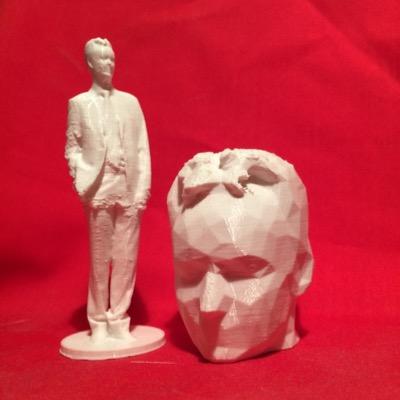
🍾 It’s publication day for my new book, Take Note: A Nimble History of Shorthand, available NOW from Profile Books!
📝 To celebrate, here are SIX little known facts about shorthand, the world’s oldest speech-recording technology 🧵
profilebooks.com/work/take-n…

Bob Sutton retweeted
The forgotten virtues of "note-taking" and the lesson of the QWERTY keyboard. Nice shout-out for my new book, Take Note, from @massimosideri @Corriere (buy the book for more about notes, typewriters & Churchill) corriere.it/cronache/26_nove… #TakeNoteBook #shorthand #stenography

Bob Sutton retweeted
Beware aggressive consultants, selling technology on efficiency grounds. One lesson from the rise and fall of shorthand and typing. My analysis for the FT, based on my new book, Take Note (£):
ft.com/content/8f337275-71d9…
#TakeNoteBook

Bob Sutton retweeted

How To Live launches TODAY - it's now on sale everywhere (digital/print/audio). If you've followed my work I hope you'll check it out.
It's the wisest lessons I've learned about living well and philosophy in just 100 pages. It's my 10th and best book by far. #howtolive
link.amazon/B092lwXCV

The late Karl Weick captured this beautifully: “Argue as if you are right. Listen as if you are wrong.”

When someone disagrees with us, our first instinct is often to prove that we are right and they are wrong.
Unfortunately, this instinct can get in the way of learning.
One of the most useful habits I have tried to develop is making positive assumptions about other people. Unless proven otherwise, I try to assume that they mean well. I try to assume they are intelligent. I try to assume that their perspective comes from experiences that may be different from my own. Sometimes I fail, if I remember I try.
People do not have to be wrong simply because they are different.
When we stop focusing on winning the argument, we create an opportunity to understand. We begin to see the world through another person's eyes. Sometimes we learn something new. Sometimes we discover common ground. Occasionally, we even change our minds.
Listening does not mean agreeing. Respect does not require surrendering our beliefs.
It simply means being open to the possibility that another person may see something we do not.
And who knows? We may end up agreeing with them after all.
Life is good.
Marshall

Sigh. Perhaps this is finally true. But every few years—going back to Mary Parker Follett in 1920s and Peter Drucker in 1950s— same assertion has been made. Meanwhile, note how Zuck, Elon, Ellison lead—and Walmart and Amazon. Then there is the rise of authoritarian governments!

Command and control management is on its way out, and bosses who practice empathy and make an effort to connect are in. s.hbr.org/41ZUpza

Fantastic opportunity to have a year to think and hang out with varied fascinating colleagues. AND it is beautiful peaceful place with best view on the Stanford campus.
I spent three years there early in my career--learned so much, wrote so much. Now, not just for professors!

APPLY TO BE A 2027-28 CASBS PRACTITIONER FELLOW
Deadline: Dec 11, 2026
Learn about practitioner fellowships, the community practitioner fellows join, frequently asked questions & the application process, & access the practitioner fellowship application:
bit.ly/4i0vpRf

Bob Sutton retweeted

NPR might just be magic. I dont know how they did it, but they packed a ridiculous number of topics and tips into this 22-minute segment we recorded for @NPRLifeKit!
npr.org/2026/10/22/nx-s1-601…

Please read Ed’s article for a nice summary of research—as of 2020–on all the ways open offices undermine employees and organizations. To paraphrase Jimmy Buffett, some things in life are a mystery, others are much too clear. Open offices are in the latter category.

<taps the sign>
edbatista.com/2020/01/the-un…

The pile of evidence that open offices undermines productivity, satisfaction, and well-being keeps growing. They undermine collaboration too because talking to your neighbors disturbs others!
Why do they persist? Management likes the low cost, architects like the asthetics.


The Italians get this—courtesy of AI —but this ain’t slop:
•Word: Dolce far niente (pronounced dōl-chē-ˌfär-nē-ˈen-tē)
•Literal Translation: "The sweetness of doing nothing"

Wise words. I nearly always decline “quick” 15 minute calls, especially with people I don’t know or don’t know well. You can’t learn much about a new person or idea in 15 minutes.

8
1,715
Well, @stanford's football team sucks. But our faculty did win two Nobel prizes this year! With all due respect to our football fans, I believe the academic excellence is far more important--and Stanford's athletic excellence in many other sports adds so much to the place.
1
12
1,952
Bob Sutton retweeted
Grateful to see my new book Incorruptible in the #1 Best Seller in Business Management slot on Amazon!
Amazon US has the Kindle at $1.99 and hardcover 21% off right now for Prime Day if you've been meaning to pick up a copy for yourself or a friend.
Kindle: geni.us/4yjqS
Hardcover: buff.ly/8w7ImXn


Bob Sutton retweeted

The AI labor market shift we are witnessing will be the most consequential of our lifetimes.
For now, the impact is hitting entry-level and white-collar roles the hardest, but over time it will be felt across all industries and experience levels.
I had the opportunity to represent @dearcchq on @60Minutes to discuss this transition. We're taking a startup approach, because we will need to try many things before we find what works.
The future hasn’t been written. We can still choose a better ending.
Bob Sutton retweeted
Today, grads are navigating one of the toughest hiring environments in decades. Staring down 500 unanswered applications in isolation isn't a rite of passage. It's a broken system.
Today, alongside our incredible team at the @dearcc_official, I’m proud to announce the launch of dearCC: a free platform designed to give Gen Z job seekers the roadmap and the network they need to break through.
Supported by an anchor partnership with @SchultzFamilyFd @TheBGInstitute , dearCC replaces guesswork with an actionable playbook.
We are giving young professionals:
📊 Field Report: AI-powered labor intelligence to see which roles are growing and which are flatlining.
🗺️Game Plan: A personalized, step-by-step sprint to build AI capabilities and execute a targeted search.
🤝Community: Real mentorship from industry leaders and peer Crews to provide accountability.
AI changed the rules of the job hunt. We built the new playbook. If you know a recent grad navigating this market or experienced professional who wants to mentor a young person, send them our way. All resources are completely free and live today at dearcc.org.
#FutureOfWork #GenZ #ArtificialIntelligence #CareerDevelopment #dearCC
Bob Sutton retweeted
Does ingroup love lead to outgroup hate? NO!
I often try to explain to people that identifying with ingroups does not necessarily lead to outgroup discrimination. I call this the "Myth of tribalism". A new paper provides strong and robust evidence for a positive relationship between ingroup and outgroup prosociality.!
Across six datasets that span multiple domains of prosociality and group distinctions with 743,402 individuals in 121 societies, finds that people who are prosocial toward the ingroup also tend to be prosocial toward the outgroup.
"The results offer an optimistic message for prosociality across group boundaries. When people are not made to choose between the ingroup and outgroup, they are generally prosocial toward both."
Here is the new research: pnas.org/doi/10.1073/pnas.25…
Here is an article I co-authored for The Atlantic on the Myth of Tribalism in 2022: theatlantic.com/ideas/archiv…

I read an advanced copy—in one sitting. I was transfixed. I don’t know how to categorize it, but loved Scott’s wisdom, vulnerability, and damn fine writing and storytelling.
It took a lifetime to write this book. You can read the first chapters for free here in minutes. #howtolive
scottberkun.com/howtolive-ex…


