





Pinned Tweet
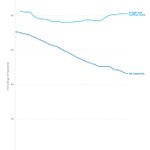
The world's income map has shifted since 1987.
Low-income countries went from 30% to 11%
High-income economies went from 25% to 41%
Learn more with the recently launched 2026-2027 @WorldBankGroup Country Income Classifications: blogs.worldbank.org/en/opend…

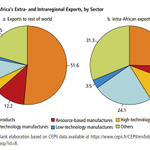
60%+ of intra-African trade is manufactured goods.
Yet Africa's exports to the world remain dominated by raw commodities.
Trading more within #Africa = retaining more economic value within Africa.
📘 Integrating Africa: From Threads to Hubs: openknowledge.worldbank.org/…

Girls outperform boys on health and education in 101 of 145 countries with sex-disaggregated HCI+ data.
Yet men have higher overall human capital once employment and work experience are counted.
The gap opens after school: blogs.worldbank.org/en/opend…

A chatbot that answers one prompt correctly can still fail by turn 4.
Context drift. Missing citations. Wrong tool selection.
Using DeepEval, we built a reusable framework to test LLM assistants across realistic multi-turn conversations.
How it works: blogs.worldbank.org/en/opend…

In 2024, 38.9% of people in economies impacted by fragility, conflict, and violence (FCV) lived on <US$3 a day, compared with 10.1% globally.
Progress has been made—but much more slowly.
Five takeaways from the 2026 World Bank Group Scorecard update: blogs.worldbank.org/en/opend…

Food insecurity remains a major concern in Eastern and Southern Africa, where an estimated 62 million people are in need of assistance.
Conditions are especially critical in Somalia, South Sudan, and Sudan, where credible risks of famine persist: worldbank.org/en/brief/2023/…

Global disaster databases can miss smaller, frequent shocks.
Across the same countries and years, survey data captured US$5.1 billion more in drought and flood damage—and +4x people affected.
Why household surveys matter for measuring crop losses: blogs.worldbank.org/en/opend…

Despite having a Gini coefficient of around 50, poverty in #LAC has from 50% to 30%, but progress has stagnated.
Explore the data in our Regional Poverty & Inequality Update—summarized in our blog post: wrld.bg/1SeA50SFgYB
También en español: wrld.bg/762W50SFhas

Too much data, not enough insight? The @WorldBankGroup’s #Data360 consolidates global development data into one powerful, easy-to-use platform, helping governments, researchers, and partners around the world turn complex data into meaningful outcomes.
data.worldbank.org/

World Bank Data retweeted

The Global AI & Digital Summit 2026 is underway in Seoul!
Leaders and innovators are exploring how AI and digital technology can boost productivity, expand opportunity, and create better jobs in developing countries.
Follow along and watch live: bit.ly/47IF34U


71% of surveyed frontier firms in emerging markets now use #AI.
And half of adopters say they started in 2025.
But adoption does not always mean transformation. Many firms are still experimenting or deploying AI on a limited scale.
New @IFC_org survey: blogs.worldbank.org/en/opend…

What if you could discover the world’s development data with one click? Now you can! #Data360, the @WorldBankGroup's flagship data hub is live!
Discover 10,000+ indicators and get the insights you need: data.worldbank.org/ | #DataMeetsDevelopment

We asked AI to read building energy laws in 119 cities. Not summarize them, but answer 60 legal questions per city, cite the exact provision and say “insufficient evidence” when needed.
Then another model—and humans—checked every answer.
See what worked: blogs.worldbank.org/en/opend…

Review what happened in our #WBGMeetings in Bangkok here! 👇

Weekly Update: #WBGMeetings recap
➡️ Jobs, Capital, Technology: The Plenary Playbook
➡️ Local Jobs, Smarter Tools: Small AI in Action
➡️ Ajay Banga Takes Civil Society's Questions
➡️ Data Is the New Collateral
➡️ $112 Billion Mobilized. What Comes Next?
🔗 bit.ly/4825PFz 🔗

September commodity prices, in numbers:
Energy: +25.7%
Crude oil: +21.2%
Natural gas: +15.3%
Food: +3.8%
Precious metals: −1.9%
Gold: −2.1%
The latest @WorldBankGroup Pink Sheet: blogs.worldbank.org/en/opend…

Only about half of women ages 15–64 are engaged in income-generating work—around 30 percentage points below men.
That gap has barely changed since 1990.
The Atlas of Global Development 2026 looks beyond the global average: blogs.worldbank.org/en/opend… #WBGAtlas

Watch Ajay at #WBGMeetings on how digitalization is opening new pathways to finance for Micro, Small and Medium-sized Enterprises (MSMEs). Full replay: live.worldbank.org/en/event/…
The geography of poverty has shifted: Once centered in East Asia, now 2/3 of the global poor live in Sub-Saharan Africa.
Take a closer look at how inequality and fragility impact progress in three insightful charts: wrld.bg/NLpH50Z5z43 #EndPoverty

Should the world replace the extreme poverty line with a much higher threshold?
Doing so would change not just how poverty is measured, but whose deprivation receives the most attention.
Three reasons to retain an extreme poverty benchmark: blogs.worldbank.org/en/opend… #EndPoverty

Our latest @WorldBankGroup poverty update revises the 2024 global extreme poverty rate down by 0.3 pp—from 10.4% to 10.1%.
That equals about 22.5 million fewer people than previously estimated.
What changed and why in our new PIP update: blogs.worldbank.org/en/opend… #EndPoverty

Caribbean statistical systems are improving, but the region still trails its income peers.
Across eight Caribbean countries, the average Statistical Performance Indicator score rose from 42.8 in 2016 to 60.1 in 2024.
What needs to happen next: blogs.worldbank.org/en/opend…
