

Atlantic Canadian seafood exporter delivering premium, traceable, sustainably sourced products to customers worldwide.
Popes Harbour, Nova Scotia
Joined March 2026
- Tweets269
- Following565
- Followers250
- Likes650




Pinned Tweet
Every wharf in the Atlantic has this
conversation.
Two guys in a truck watching one fella work...
And somehow the whole conversation turns into how hard that guy works.
You don't hear enough of this anymore.
PETIT-DE-GRAT WHARF TO BE REBUILT
Harvesters in Petit-de-Grat on Isle Madame are getting a rebuilt wharf. On November 23, Fisheries and Oceans Canada announced funding to reconstruct wharf 401 at the community's small craft harbour. A call for tenders is expected in 2027. The dollar amount was not made public.
The project comes from the federal pledge of nearly $1 billion over five years to repair and modernize small craft harbours, first announced in the 2026 Spring Economic Update.
In fishing communities across Cape Breton and the rest of Atlantic Canada, a safe, working wharf is where every season starts. Rebuilding aging harbour structures means boats can land their catch safely and seafood keeps reaching market.
Source: Fisheries and Oceans Canada, November 23, 2026

3
94
IS MARK CARNEY DOING ENOUGH FOR CANADA’S FISHING INDUSTRY?
Prime Minister Mark Carney’s government has made progress on seafood trade, securing tariff relief from China on lobster, crab, shrimp and Greenland halibut, while renewing more than $300 million in Atlantic Fisheries Fund investments.
But significant challenges remain.
Rising fuel costs, unpredictable shore prices, illegal fishing, quota concerns and growing operating expenses continue to put pressure on fishermen and processors throughout Atlantic Canada.
Ottawa could do more through stronger fisheries enforcement, better infrastructure, improved access to financing and greater efforts to develop markets in Europe and Asia.
Trade agreements are important, but their benefits need to reach the fishermen, processors and coastal communities that keep this industry alive.
Carney has taken steps to support the industry, but are those measures enough to address the challenges fishermen face every day?
What do you think?

CANADIAN LOBSTER WORKS TO WIN BACK CHINA
Canadian lobster exporters are slowly regaining ground in China since Beijing lowered its tariffs in March. While Canadian product faced a combined 32 per cent duty, Vietnamese farmed spiny lobster took a large share of the market. Canadian lobster exports to China fell 43 per cent in 2025 to $348 million, while Vietnam's farmed lobster sales more than doubled.
Earlier this month, Canada and China extended the better access for lobster and crab to the end of 2028. Without that extension, the 25 per cent tariff would have come back on January 1. Canadian lobster also now has a tariff edge over American lobster, which still faces 17 per cent.
The timing matters for southwest Nova Scotia, where the country's biggest lobster season opens November 30. About three quarters of lobster is now sold frozen or processed, so steady access to China gives harvesters and plants another market besides the United States.
Source: National Post, November 21, 2026

6
158
CALLS GROW FOR STRONGER ACTION ON ILLEGAL FISHING
The federal Bloc Québécois fisheries critic, MP Alexis Deschênes of Gaspésie–Les-Îles-de-la-Madeleine–Listuguj, is pressing Ottawa to act on recommendations the Standing Committee on Fisheries and Oceans presented on November 4 in its Fisheries Act review. A union representative joined the call on Parliament Hill.
The committee's proposals include a code of conduct for fishery officers that protects their independence from outside pressure, peace officer status, updated powers and training, better pay and working conditions, and much stiffer penalties for unauthorized fishing.
For harvesters who follow the rules, enforcement on the water matters. Illegal catch undercuts legal landings, puts pressure on stocks and erodes trust in how fisheries are managed.
Source: Bloc Québécois news release, November 19, 2026

3
71
CHINA TO LIFT ADDITIONAL TARIFFS ON CANADIAN SHRIMP AND GREENLAND HALIBUT
China’s newly announced tariff relief on certain Canadian shrimp products and Greenland halibut will take effect on January 1, 2027.
Until then, shipments arriving in China will remain subject to the additional 25% tariff.
The expanded trade agreement covers approximately $285 million in Canadian seafood exports, including $96 million in Greenland halibut and $87.5 million in eligible frozen shrimp and prawns, based on 2024 export values.
The tariff relief will remain in place until December 31, 2028, alongside the previously announced extension for Canadian lobster and crab.
The agreement is expected to improve competitiveness for Canadian seafood exporters and create additional opportunities for Atlantic Canadian harvesters and processors.
Source: Prime Minister’s Office
Exporters should confirm Chinese customs clearance requirements before scheduling shipments around the January deadline.


3
102
CHINA TARIFF RELIEF WELCOMED BY ATLANTIC CANADA’S SEAFOOD INDUSTRY
Our Founder and CEO, Nathan Cooke, recently spoke with Adam Huras of the Telegraph-Journal about China’s expanded tariff relief and its significance for Atlantic Canada’s seafood industry amid ongoing trade uncertainty with the United States.
Restoring competitive access to China creates greater opportunities for Canadian seafood exporters, strengthens international demand and has the potential to improve returns throughout the supply chain, from exporters to commercial fishermen.
At Atlantic Canada Seafood Group, we remain committed to expanding international market opportunities, strengthening relationships with global buyers and promoting Atlantic Canadian seafood worldwide.
Thank you to Adam Huras and the Telegraph-Journal for the coverage.
Read the full article: tj.news/new-brunswick/tariff…

1
1
51
DFO MONITORS JUVENILE LOBSTER IN THE BAY OF FUNDY
Fisheries and Oceans Canada scientists recently conducted a juvenile lobster survey in Beaver Harbour, New Brunswick, as part of ongoing stock assessments in Lobster Fishing Area 36 (LFA 36).
DFO has conducted these surveys for more than 30 years, monitoring young lobsters as they settle on the seabed during the early stages of their development.
The research helps scientists understand lobster recruitment and provides valuable insight into the future of the commercial fishery.
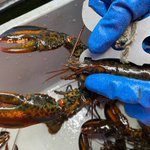
Pictured below are three juvenile lobsters at different stages of growth.
Source: Fisheries and Oceans Canada

2
178
CAPE BRETON LOBSTER CASE HEADS TOWARD TRIAL
A Victoria Mines man has pleaded not guilty to Fisheries Act charges tied to lobster fishing in Sydney harbour on August 19, 2026. The charges include fishing for lobster out of season, unauthorized fishing, and possessing fish taken in violation of the Act. He also pleaded not guilty to a separate charge of unlawful possession of fish at the South Bar wharf in June.
He returns to Sydney provincial court on December 23 for a hearing to set a trial date. A second man charged in the August case did not appear for his pleas, and a warrant is being held for him until the same date.
Out-of-season fishing hurts the harvesters who follow the rules. It also undercuts the conservation measures that keep Nova Scotia's lobster fishery healthy. These charges have not been proven in court.
Source: SaltWire

101
PEI OYSTER GROWERS TAKE THEIR CASE TO THE LEGISLATURE
About a dozen oyster growers and fishers from across Prince Edward Island sat in on question period at the provincial legislature on Wednesday, pressing for faster help as MSX and dermo continue to hit oyster stocks. Neither disease harms people, but both can devastate shellfish, and some growers in western PEI report losing their entire crop this year.
Premier Rob Lantz told the house the province has approved about $21 million in supports, including research and development. He said a report with a long-term recovery strategy for the industry is expected in the very near future. Growers say the money is reaching them too slowly and that program rules make it hard to qualify.
Oysters take three to five years to reach market size, so this year's losses will affect Island supply for several seasons. How quickly support and a recovery plan arrive matters to growers, processors and markets across the region.
Source: CBC News PEI

1
100
LOBSTER PRICES SOFTEN AS NOVA SCOTIA'S BIG WINTER SEASON NEARS
Lobster dock prices are falling as the market softens ahead of the opening of Lobster Fishing Areas 33 and 34, Canada's largest lobster fishery, according to industry reporting this week. The two areas cover southwestern Nova Scotia and the South Shore and are set to open Monday, November 30, weather permitting.
Supply is already growing. The Bay of Fundy's LFA 35 has been fishing since mid-October, and the New Brunswick areas, including Grand Manan, set traps on November 10. Market analysts say the LFA 35 shore price dropped by about a dollar a pound when those areas opened. Maine landings have stayed strong and demand has been subdued.
Harvesters are already dealing with high diesel and operating costs, so the opening price will set the tone for a six-month season. Holiday orders and Chinese New Year demand are the next big tests for the market.
Source: Undercurrent News, Expana

1
5
144
CHINA CUTS TARIFFS ON MORE CANADIAN SEAFOOD, INCLUDING COLD-WATER SHRIMP AND TURBOT
Canada and China agreed in Shenzhen on Tuesday to widen the trade arrangement the two countries reached in January. China will give tariff relief on about $285 million in Canadian fish and seafood exports. The list includes certain frozen cold-water shrimp and prawns, Greenland halibut, sea cucumber and some molluscs. On frozen cold-water shrimp, a 25 per cent Chinese tariff comes off.
Cold-water shrimp, turbot and sea cucumber are all fished and processed in Atlantic Canada. The new relief comes on top of the two-year extension of tariff relief for lobster and crab announced earlier this month, so more of the region's catch now goes into China on better terms.
In return, Ottawa will extend tariff relief on some Chinese steel and aluminum for two more years. A major Canadian trade mission to China is planned for 2027.
Source: Prime Minister of Canada; CBC News

FIRST NATIONS ALLOCATED 50% OF ATLANTIC CANADA’S ELVER QUOTA
Fisheries and Oceans Canada’s 2026 briefing documents confirm that 50% of the total allowable elver catch was reallocated in 2025 to increase First Nations participation in the fishery.
The decision represents a significant redistribution of commercial fishing access in one of Atlantic Canada’s most valuable fisheries per pound.
Source: Fisheries and Oceans Canada

1
122
DFO CLOSES 4RST HALIBUT BYCATCH FOR INSHORE MOBILE-GEAR BOATS
Fisheries and Oceans Canada says inshore mobile-gear vessels less than 65 feet may no longer keep Atlantic halibut as bycatch in NAFO Divisions 4RST. The ban takes effect at 8 p.m. Newfoundland Standard Time today, November 16. The department says the sector's Atlantic halibut bycatch allocation for this season has been taken.
The notice applies to the inshore mobile-gear fleet fishing 4RST, which includes waters off western Newfoundland, southern Labrador and in the Gulf of St. Lawrence. Fixed-gear hook-and-line boats based in western Newfoundland and southern Labrador that elected to fish Period 5 opened at 6 a.m. today and are scheduled to stay open until 8 p.m. on December 6. That opening was announced on November 12.
Harvesters in the mobile-gear sector should not retain Atlantic halibut after the 8 p.m. cutoff for the rest of this season.
Source: Fisheries and Oceans Canada

2
129
PEI LOBSTER HARVESTERS BACK AN EARLIER OPENING AND A SCALLOP-DRAG BAN
Prince Edward Island lobster licence holders in LFA 24 have voted on three management questions, and the Prince Edward Island Fishermen's Association posted the results today. Ballots were counted on November 9 at the Farm Centre in Charlottetown. Of 594 commercial licence holders, 444 questionnaires were returned, a 74.7 percent return rate. One was spoiled.
A majority, 242 votes or 54.6 percent, favoured an April 26 opening to avoid fishing in July, against 199 votes or 45 percent for April 30. A proposed 1 millimetre increase in the minimum carapace size, from 75 mm to 76 mm in 2027, was rejected, with 262 votes or 59.1 percent against and 181 or 40.9 percent in favour. Support was strongest for a ban on scallop dragging from the shore out to the 10-nautical-mile line in LFA 24, which received 378 votes, or 85.3 percent.
The LFA 24 Lobster Advisory Committee said it will move forward with any result that clears 50 percent plus one of the returned ballots. All three questions met that test. The votes will shape next spring's north-side PEI season and the debate over scallop gear on lobster ground.
Source: Prince Edward Island Fishermen's Association

2
144
OTTAWA OPENS TALKS ON CHANGING THE FISHERIES ACT
Fisheries Minister Joanne Thompson said today that she has instructed her department to start discussions with Indigenous Peoples, provinces and territories, industry, stakeholders and Canadians on certain provisions of the Fisheries Act. The talks will include rules tied to hydroelectricity generation and to a nature-positive approach to offsetting, including at least no net loss of habitat.
The statement follows concerns from the hydroelectricity sector and others that the current Act is not aligned with the government's plan to double Canada's electricity grid by 2050. Thompson also said Ottawa has received the House of Commons Standing Committee on Fisheries and Oceans report, Review of the Fisheries Act: Policy and Legislative Considerations and Recommendations, as part of the Act's five-year review. A full government response will be shared later.
This is not a new catch limit or a season opening. It is the start of a review that could change how fish habitat is treated when major projects are built, including in Atlantic Canada.
Source: Fisheries and Oceans Canada

2
165
WINNING BACK CHINA WILL TAKE MORE THAN A TARIFF PAUSE
Canadian lobster exports to China dropped from $521 million in 2024 to $314 million in 2025, according to Statistics Canada figures. China's retaliatory tariff on Canadian seafood is now suspended until 2028. Even so, industry leaders say regaining lost ground is slow going.
Vietnam has become the fastest-growing competitor, selling farmed spiny lobster. Its farms are rebuilding after floods last year. The Lobster Council of Canada wants to lean on what sets our product apart: wild-caught, cold-water, traceable and sustainable. It is seeking Atlantic Fisheries Fund support for marketing in China.
With southwest Nova Scotia's big fall season opening at the end of the month, higher fuel costs and tougher competition point to a challenging winter market for Atlantic lobster.
Source: CBC News, Statistics Canada

1
55
INVERNESS COUNTY, CAPE BRETON ISLAND, NOVA SCOTIA
Some of the finest Atlantic lobster in the world comes from the cold, clean waters along Cape Breton’s western coastline. Known for its sweet, tender meat and exceptional quality, Inverness County lobster is a prized catch, harvested by generations of local fishermen who take pride in bringing some of Nova Scotia’s best seafood to market.


2
137
NEW BRUNSWICK OPENS THE BOOKS ON UNREPORTED LOBSTER SALES
New Brunswick's Department of Agriculture, Aquaculture and Fisheries is reviewing the Seafood Processing Act with one target in mind: lobster that changes hands without being reported. Ideas on the table include licences covering every commercial purchase, making it an offence to buy illegally caught seafood, tougher penalties, more detailed reporting on purchases, sales and dead loss, licensing for tank houses, and a ban on commercial cash sales.
Harvesters, buyers, processors, tank house owners and First Nations are being asked to weigh in. In-person sessions are set for Shediac on November 30 and Shippagan on December 1, with a bilingual Zoom session on January 11. Written feedback is accepted until February 11, 2027.
The province says lobster landings were worth $323 million in 2024 and lobster exports topped $1.2 billion in 2025. Rules that shape how that catch is bought and tracked deserve input from the people who land it.
Source: Government of New Brunswick

1
3
102
DUMPING DAY IS 15 DAYS OUT
Canada’s biggest lobster fishery is getting close. Lobster Fishing Areas 33 and 34, from Halifax County to Digby County, are set to open at 7 a.m. on Monday, November 30. Under the regulations, the season opens on the last Monday in November and runs to May 31.
The start date isn’t certain. Before opening day, DFO holds weather calls with LFA advisory committee members, the Coast Guard and Environment and Climate Change Canada. If the forecast calls for winds over 26 knots, the opening is delayed.
There is a lot riding on it. Preliminary DFO figures for 2024/25 put LFA 33 landings at 7,179 tonnes worth $175 million, and LFA 34 at 14,742 tonnes worth $349 million. The two areas have 1,656 licence holders between them, and traps, bait and fuel are already being bought.
Source: Fisheries and Oceans Canada

1
3
62