

AI+Science, Co-Founder @accelerated_u, Bren Professor @caltech, Time100, Fmr Sr Director of #AI research @nvidia Fmr Principal Scientist @awscloud
Joined May 2021
- Tweets2.8K
- Following2.5K
- Followers46.8K
- Likes7K







Pinned Tweet
Excited to see @Reuters cover the launch of our startup Accelerated Understanding.
We are training large scale AI models that can simulate and understand physics to invent and discover. Our models understand the world directly in 4D (3D + time) and across physical phenomena. Going full 4D requires massive context length, we have pushed it to a Trillion in training and exceeding 5 Trillion at inference.
AI giving you a bigger haystack of ideas doesn’t help. The bottleneck for new inventions and discoveries is shifting from ideas to the ability to test them. With AI that can simulate and understand physics we are directly attacking this bottleneck.
People have been trying to do this for a while now, but usually by taking shortcuts. Narrow surrogates are great if you happen to have enough of precisely the right data and your design loop stays in distribution. Video models look fantastic but sweep physical accuracy under the rug, and some static world models cut out physics altogether. A lot of interesting physics isn’t visual.
What does not cutting corners look like? Space stays 3D and you also have time: so 4D in total. You also need multiple physical modalities in the same model, not just things you can see. That’s what we’ve built.
Scaling is the primary ingredient to make this work. To represent the world you need sufficient context, which in our case grows in 4 dimensions. Individual samples get so big they don’t fit into single accelerators or even full nodes anymore.
We’ve developed architectural tricks to make it work. We’ve pushed our models to 1T parameters during large scale pre-training and are able to train at up to a Trillion context when needed and do inference exceeding 5 Trillion context without any sub-sampling or patching.
Building on prior successes of AI weather forecasting, fusion simulation, design of medical devices, drugs and chips, we wanted to see if scale and universality can benefit AI for physical understanding. With our teams’ experience in large-scale infrastructure and model training we’ve been able to pull it off.
reuters.com/business/ai-foun…
acceleratedunderstanding.com…
@accelerated_u @bjenik

Not many are aware that Arthashastra was discovered in my hometown of Mysuru by my great great grandfather R.Shamasastry. en.wikipedia.org/wiki/R._Sha… The manuscript can be seen in the Oriental Research Institute, where he was the director, along with many other priceless palm leaf manuscripts.

From Mahabharata to Arthashastra, 3 Indian classics earn UNESCO recognition
tribuneindia.com/news/india/…
via NaMo App

Prof. Anima Anandkumar retweeted

Two weeks from today: #SC26 Keynote Speaker Anima Anandkumar takes the stage in Chicago!
Learn more about her work in AI and her special relationship with the SC Conference series: sc26.supercomputing.org/2026…

Inspired by the spinor nature of spin–orbit-coupled electronic states, we introduce eSpinor, an SU(2)-equivariant graph neural network that propagates spinor features to predict spin-orbit coupling (SOC)-dependent magnetic properties.
Magnetic properties such as magnetic anisotropy, excitation energies, and spin dynamics guide the design of single-molecule magnets, MRI probes, and other spin-based technologies. Predicting them often requires CASSCF-SO calculations to capture multireference electronic structure, which can take hours for a single molecular geometry.
SO(3)-equivariance has improved the accuracy of rotation-invariant energy predictions in machine-learning interatomic potentials. Can we take this idea further by imposing SU(2)-equivariance on spinor features as an inductive bias for predicting magnetic properties?
Our main contributions are:
(1) SU(2)-equivariant spinor message passing: Hamiltonian-derived spinors and classified interaction types enable gauge-covariant updates and gauge-invariant predictions
(2) Unseen-ligand generalization: Improved magnetic anisotropy and excitation-energy predictions for cobalt and dysprosium single-molecule magnet candidates
(3) Spin dynamics and solvent transfer: More accurate predictions for a dysprosium MRI probe, with benefits extending from water to methanol without retraining
Our results support SU(2)-equivariant spinor message passing as a useful inductive bias for molecular magnetism, even when the targets are integer-rank tensors or invariant scalars.
With this framework, we’re excited to help accelerate the discovery of new magnetic molecules and deepen our understanding of their spin dynamics!
arxiv.org/abs/2610.29111

Prof. Anima Anandkumar retweeted

Very excited to share GeoWind2Plan 🚀, our NeurIPS 2026 Spotlight paper, and a new interactive demo ✨!
We make high-resolution 3D wind predictions in seconds to guide energy-efficient drone planning.
Wind-aware planners often assume the wind field is already known. But simulating airflow around buildings takes hours of CFD, making it impractical for short drone missions when wind conditions change.
Our approach couples wind prediction with trajectory optimization. By rotating the city layout to align with a fixed reference wind, we turn wind-direction generalization into building-geometry generalization. A localized neural operator uses multi-directional distance features to predict 3D wind within a flight corridor. The planner then optimizes the drone’s path and speed in continuous 3D space to reduce energy use. In our simulations, the drone generally flies higher and faster in tailwinds, lower and slower in headwinds, and shifts sideways to exploit favorable local winds.
Corridor prediction takes about 3 seconds versus roughly 8 hours for full-domain CFD. Compared with wind-agnostic planning, our method reduces average energy use per kilometer by 12.7% in headwinds, 6.9% in tailwinds, and 4.5% in crosswinds in CFD-evaluated simulations. It captures 75–88% of the energy savings achieved with CFD-reference wind fields.
Moving forward, we will focus on turning AI predictions of the physical world into actionable decisions for autonomous systems. Follow our lab for updates: dual.xiongyexiao.com
Explore the demo: move the start 🚩 and goal ⛳, change the wind, and watch the airflow and routes respond.
Demo: geowind2plan.com
Desktop Chrome or Edge recommended.
Paper: arxiv.org/abs/2609.36056
Congratulations to my students Shaoxiang Qin and Yucheng Zhao, and thank you both for your hard work on this project! Many thanks as well to Fuyuan Lyu, Di Zhou, Jiachen Yao, Steve Liu, Anima Anandkumar, and Liangzhu Leon Wang for their valuable contributions and collaboration. We’re also very grateful to the NSF-funded COMPASS: Center for Complex Particle Systems and AI Tennessee for supporting this work!
Proud to be selected for the H2O.ai AI100 list and featured on Nasdaq tower in Times Square!


Prof. Anima Anandkumar retweeted

SkAI and NNCI welcomed @Caltech’s Dr. @AnimaAnandkumar on neural operators & AI for science. From a weather model that beat supercomputers to simulating black holes and fusion reactors, she still emphasizes the human role: "AI isn’t replacing scientists anytime soon."


Prof. Anima Anandkumar retweeted

Introducing our first #MWC27 Barcelona keynote speakers 👏
🔹 @mati, @ElevenLabs
🔹 @amywebb, @FTSG_Consulting
🔹 Yoon Young Park, KT
🔹 @AnimaAnandkumar, @accelerated_u & @Caltech
🔹 Dr Hany Farid, GetReal Security
Pre-register now 👉 gsma.at/47yn7Kq

Prof. Anima Anandkumar retweeted

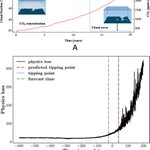
A new Caltech-led paper demonstrates that an AI program can be used to predict when tipping points occur in simple models, including models of a climate-change system and simulations of turbulent airflow over a plane's wing.
caltech.edu/about/news/forec…

Can we predict electronic bands beyond DFT across different systems?
A material’s electronic band structure provides the basis for band gaps, densities of states, and carrier effective masses, while connecting theory with spectroscopy. For quantum materials, getting these bands right can change our understanding of physics. Yet the calculations needed to go beyond standard DFT remain expensive.
We introduce O-krystal, a periodic E(3)-equivariant graph neural network that learns corrections to individual electronic states. It uses orbital information from lower cost PBE calculations in both real and reciprocal space, bringing local electronic interactions and the momentum dependence of the crystal into the same model.
O-kRystal is the first machine learning framework to combine:
1. Scale across chemistry: HSE06 band predictions across nearly 6,000 chemically diverse three dimensional materials
2. Breadth across electronic behavior: metals and insulators, magnetic and nonmagnetic systems, with spin resolution and different numbers of bands
3. Flexibility across theory and dimensionality: the same framework, trained separately, predicts G0W0 quasiparticle energies in two dimensional materials.
Although trained only at high symmetry points, it maintains comparable accuracy at unseen points along band paths and reconstructs densities of states from dense Brillouin zone predictions.
On a separate benchmark of strongly correlated materials, O-kRystal reduces the PBE band energy MAE by 68.7%. As demonstrated for AFM-II MnO, a canonical Mott insulator, it captures distinct corrections to Mn 3d and O 2p states, recovering their relative placement by accounting for the effects of exact exchange.
As electronic structure methods advance, this framework offers a path toward experimental accuracy and large-scale discovery of quantum materials with emergent phases, including superconductivity. @Caltech

Link to the paper: arxiv.org/abs/2610.19919
Prof. Anima Anandkumar retweeted
What if we’re thinking too narrowly about AI?
For #SC26 Keynote speaker Animashree “Anima” Anandkumar, the next frontier goes far beyond large language models. It’s AI that can understand and simulate the physical world.
Read our conversation:
sc26.supercomputing.org/2026…

Prof. Anima Anandkumar retweeted

Why learn everything from scratch when centuries of science have already taught us how the world works?
We’re excited to introduce ReRoute 🔀: bringing what-if reasoning to scientific AI models by combining observational data with partial mechanistic knowledge.
🔥 No controlled intervention data required.
🧵 1/7

Excited to share ReRoute, our new framework for scientific counterfactual prediction: informed by partial physics knowledge for much better generalization. 🌍
AI models can be remarkably accurate on familiar data, yet struggle with scientific ‘what-if’ questions
The key idea: Combine observational data with partial physical knowledge to predict unseen interventions—without requiring new controlled experiments.
Instead of retraining models on expensive new simulations, ReRoute uses known partial physical mechanisms to guide pretrained models through lightweight fine-tuning on existing data.
The results:
🌍 Up to 31.8% lower prediction error under severe CO₂ distribution shifts in climate emulators.
🔬 Up to 89.6% lower counterfactual error in controlled advection–diffusion experiments.
⚡ No new intervention data. No retraining from scratch. Just lightweight fine-tuning.
We also establish a causal identification result under explicit structural assumptions, with a machine-checked proof in Lean.
The bigger picture: Scientific AI doesn't always need more data or bigger models to generalize beyond what it has seen. Sometimes, knowing just a little about how the world works can make a big difference. @Dingling_Yao @kahaan_gandhi @FrancescoLocat8 @Caltech
📄 Paper: arxiv.org/abs/2610.02252
#AIforScience #ScientificML #ClimateAI #CausalInference #PhysicsAI

Prof. Anima Anandkumar retweeted
Prediction asks “what”. Science asks “what if”.
ReRoute is a step toward scientific AI that does more than reproduce what we've observed.
🌍 Climate is just one example. What scientific “what-if” would you explore?
Bring the physics you know. Ask the what-ifs you couldn't. 🔀
📄 arxiv.org/abs/2610.02252
Joint work with amazing @kahaan_gandhi, Valentin Duruisseaux, Boris Bonev, @FrancescoLocat8, @AnimaAnandkumar
🧵 7/7
The importance of tipping points has been extensively studied, including in a recent @UN @ScienceBoard_UN brief for climate modeling.
But it is challenging to detect tipping points before they happen since they can appear suddenly. We address this in our latest paper appearing in @PNASNews
Our recurrent neural operator tracks the history of changes and can predict the probability of tipping points happening in future and when it is likely to occur.
The RNO was able to look more than two years ahead of the expected tipping point in the simulated data and predict its timing with an error of about 11 days.
The RNO was also run on simulations of airflow over a tilting plane wing and it succeeded in predicting the tipping point, suggesting it can potentially help with future aeronautical and aerospace designs.
@Caltech news: caltech.edu/about/news/forec…
@PNASNews paper: pnas.org/doi/10.1073/pnas.26…
@ScienceBoard_UN brief: un.org/scientific-advisory-b…


Prof. Anima Anandkumar retweeted

Verifying ML in Lean and the future :)
Since we released TorchLean in March, quite a lot has changed!! I've finally written up some of the new features we've been working on, and one of the biggest developments is that TorchLean is becoming a more general tensor programming and execution framework inside Lean. We've expanded the tensor API with shape-safe operations, einsum for general tensor contractions, and rearrange, expand, and reduce for manipulating tensor dimensions. You can now express matrix multiplication, multi-head attention, and more complicated tensor computations directly in Lean, with shapes checked during elaboration. Even more exciting, our einsum implementation has a verified lowering path, generating fused index-based computations with Lean-checked proofs connecting them to their mathematical specifications, including the order of arithmetic operations and also matching python einsum speed!!!
We've also been developing a shared intermediate representation (IR) for execution, differentiation, verification, and compiler transformations, including support for importing computation graphs from external ML frameworks. Alongside this, we've expanded CPU/GPU execution, including compiling supported Lean functions to CUDA, and integrated LibTorch for larger-scale training now matching pytorch speed. Other developments include configurable numerical precision through FloatLib (whatever format you desire), higher-order automatic differentiation connected to mathlib, and additional tools for neural-network certification and numerical reasoning. The goal is to let researchers write computations naturally, execute them efficiently, and establish mathematical guarantees about what they actually compute.
It's been an incredibly exciting time for mathematics and lean and I believe the future will be even greater: )! With @leanprover and mathlib, we're seeing what happens when mathematical knowledge becomes something computers can independently check, build on, and extend. I believe something similar can happen in ML and scientific computing, and much of my PhD at @Caltech has been about building the foundations for that. Modern ML systems involve much more than mathematical functions: numerical approximations, automatic differentiation, compiler transformations, optimized GPU kernels, and complex training pipelines. I want us to be able to work with the computations researchers actually use, run experiments, and prove meaningful properties about those same definitions!!
There's still an enormous amount of work ahead, particularly around GPU kernel verification and connecting the existing ML ecosystem to Lean, but I believe now is the right time to start building something analogous to mathlib for ML and scientific computing! Everything is open source, and I'd love for more people to experiment with it and contribute :)!
Over the next few days, I'll also be sharing concrete examples of what we've built, verified, and discovered along the way, from training GPT 2 in Lean to checking transformer computations, finding bugs in major ML libraries to investigating numerical issues in LLM inference, and formalizing results from ML papers. I hope these examples show both what's already possible and how much more there is to explore!
Happy to chat about these topics or just in general about research, my dms are open!
Longer Blog: robertboy18.github.io/TorchL…

Excited to share ReRoute, our new framework for scientific counterfactual prediction: informed by partial physics knowledge for much better generalization. 🌍
AI models can be remarkably accurate on familiar data, yet struggle with scientific ‘what-if’ questions
The key idea: Combine observational data with partial physical knowledge to predict unseen interventions—without requiring new controlled experiments.
Instead of retraining models on expensive new simulations, ReRoute uses known partial physical mechanisms to guide pretrained models through lightweight fine-tuning on existing data.
The results:
🌍 Up to 31.8% lower prediction error under severe CO₂ distribution shifts in climate emulators.
🔬 Up to 89.6% lower counterfactual error in controlled advection–diffusion experiments.
⚡ No new intervention data. No retraining from scratch. Just lightweight fine-tuning.
We also establish a causal identification result under explicit structural assumptions, with a machine-checked proof in Lean.
The bigger picture: Scientific AI doesn't always need more data or bigger models to generalize beyond what it has seen. Sometimes, knowing just a little about how the world works can make a big difference. @Dingling_Yao @kahaan_gandhi @FrancescoLocat8 @Caltech
📄 Paper: arxiv.org/abs/2610.02252
#AIforScience #ScientificML #ClimateAI #CausalInference #PhysicsAI
The latest @UN @ScienceBoard_UN scientific brief on green chemistry is out!
Green chemistry is the design of chemical/biochemical products and processes that reduce or eliminate the use and generation of hazardous substances.
Recent advances in #ai, chemical reactions, and circular material systems are accelerating practical implementation and the possibility of more widespread use in major industries.
As one example, #ai is able to design versatile tryptophan synthases well beyond what directed evolution was able to in the wet lab, in our collaboration with Frances Arnold
There is so much more to come!
un.org/scientific-advisory-b…
My first visit to the @UN HQ for the @ScienceBoard_UN Scientific Advisory Board annual retreat and meeting with the Secretary General António Guterres, the Under-secretary Guy Ryder, and the rest of the team.
We discussed the importance of grounding everything we do in science and factuality, especially with challenges of misinformation we see at large scale today.
We discussed new topics for our scientific briefs, which have been a highlight for me personally. I enjoy a lot to be able to collaborate with the UN team on timely topics like #AI and #climate modeling, tipping points, green #chemistry etc.
I particularly enjoy the diversity of scientific topics covered, and how AI is making an impact in all these areas: AI that is not LLMs, but AI trained on data from the physical world and scientific applications.
This silent revolution of AI in science is often missed by the public and I am very thankful for UN Scientific Advisory Board for shining light on this.


Prof. Anima Anandkumar retweeted
Really excited to share that our work on TorchLean at @Caltech, with @AnimaAnandkumar, has been selected for support through the 2026 AI for Math Fund, run by @RenPhilanthropy and funded by @xtxmarkets.
Since releasing TorchLean, we’ve expanded from verified neural-network execution to autodiff, floating-point semantics, verification, and GPU execution; uncovered bugs and semantic mismatches across major ML stacks; and seen teams at major companies and U.S. national labs begin using it for ML verification.
With this support, we’re excited to push toward formally verified GPU execution and GPU kernel verification—part of a broader goal of making AI and scientific computation trustworthy across the full stack.
TorchLean: leandojo.org/torchlean.html
Congrats to all the winners!

We're delighted to announce the winners of this year’s grants from the AI for Math Fund, powered by founding donor @xtxmarkets:
22 winners, 30+ organizations, selected from 400+ applications across 50 countries.
Backed by a record $17.1M from XTX Markets, bringing their total commitment to $35.1M.
renaissancephilanthropy.org/…
1/2
