

The Genetics Society of America is a professional scientific society representing genetics researchers and educators globally.
Bethesda, MD
Joined June 2009
- Tweets23.5K
- Following6.2K
- Followers26.4K
- Likes10.9K




Pinned Tweet
You told us connection matters, and at #Dros27, great conversations are just steps away (10 minutes max from the venue). Grab a meal at @RdgTerminalMkt, stroll to Philadelphia City Hall, or connect over coffee at local favorites.
Philly locals—where should attendees go next?
New resource for researchers studying speciation
🪰📊 In #G3journal, read about the newly generated population genomics resource for #Drosophila pseudoobscura, consisting of newly sequenced genomes of samples collected across North America.
🔗 buff.ly/h3yb8ba

This isn’t just another scientific conference. What makes #Dros27 unique is the community. Researchers return each year to share their science and connect. Presenting is a great way to introduce yourself to an incredibly welcoming community.
Submit today: buff.ly/XzqFrGG

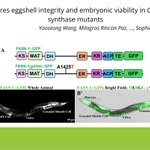
🪱 A study in #G3journal validated the Hedgehog-like signaling molecule ptr-6 as a genetic suppressor of fasn-1 in #Celegans, revealing an unknown connection between fatty acid synthesis and Hedgehog-like signaling during embryonic development.
🔗 buff.ly/XOCHahj

🪰 Latest in #G3journal: A study in #Drosophila simulans suggests that paternal #mitochondrial DNA leakage is genetically controlled, offering new insight into its evolutionary significance and potential role in mitochondrial genome maintenance.
🔗 buff.ly/GNm5EW0

🫂 In #G3journal, David Curtis dives into @uk_biobank whole-genome sequence data from half a million participants to estimate relative mutation rates between transcribed and nontranscribed regions.
🔗 buff.ly/48lrVeb

🍄🟫 The #Fungal26 virtual collection is now available! Explore research presented at the 33rd Fungal Genetics Conference, published in #GENETICS and #G3Journal. Browse the collection: buff.ly/hJBWQS8

📣 Calling all C. elegans researchers! Royal Society Publishing has released a new Theo Murphy Meeting issue of Philosophical Transactions B: ProteostaSys: A Systems View of Proteostasis. All articles are FREE to access!
Read more: buff.ly/gs9HwRZ 🔗
In #G3journal, @MitchFeldmann and colleagues present lower-cost, scalable DNA tools that could make precision strawberry 🍓 #breeding more accessible, helping identify superior plants faster.
🔗 buff.ly/1PnSE4A

In #G3journal, @Owlumeday et al. introduce #deeplearning as a genetic simulation model, showing how genetic trait architectures derived from these models, when sufficiently complex, capture complex interactions that preserve genetic variance.
🔗 buff.ly/1gf3aXm

🍄 🧬 A computational study published in #G3journal analyzes secretion signals across the fungal kingdom, identifying distinct populations of secreted proteins in diverse fungal species.
🔗 buff.ly/jBwiz5Q

Mark your calendars! Join GSA on November 12, 1–2:30 p.m. EST, for "Teaching with Purpose: Implementing the New Genetics Learning Outcomes" to explore updates to the Genetics Learning Framework and how to apply new learning outcomes to your curriculum. 🔗: buff.ly/Kzeshcr

What is an R01 grant? Explore what it takes to get a National Institutes of Health research grant in our latest blog series. Read the blogs now: buff.ly/2yyowws

🪱 New in #G3journal: A large-scale behavior characterization of sensitivity to the aversive odorant 1-octanol in wild strains is the first-ever study at scale that investigates how natural genetic variation shapes #Celegans olfactory behavior.
🔗 buff.ly/suEm15k

🌟 Read the exciting stories highlighting new methods and resources for #genomics and new mechanisms in host-pathogen interactions: Now published in the October issue of #G3journal
🧵

☕️ The fungal pathogen Hemileia vastatrix causes Coffee leaf rust that has affected Arabica coffee production for centuries. A new genome of H. vastatrix identifies a haploid trisomy that may be responsible for the pathogen's changed virulence profile.
🔗 buff.ly/Tf9AoeS

🪱 Identifying connections between genetic and phenotypic variation is important to studying host-parasite interactions. A #transcriptome analysis shows how host plant genes respond differently based on the genetic background of an infecting #nematode.
🔗 buff.ly/TgEeCHE

New in #G3journal: A mutant analysis in #Ecoli reveals that helicase function during severe transcription-replication conflicts is not intrinsically protective or deleterious but is contingent upon the recombination landscape shaped by SOS induction.
🔗 buff.ly/bdhlupH
