






Wdyt retweeted

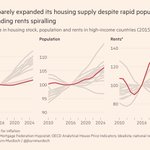
Increíble de ver a los “expertos” en solventar la emergencia de vivienda que vive España! En cada televisión! @telediario_tve @A3Noticias @tele5_noticias @noticias_cuatro La realidad es que tenemos a políticos que intentan crear decretos y soluciones cuando no tienen la preparación ni el conocimiento para idear una solución real al problema que vivimos.
España no tiene un problema de falta de decretos. Tiene un problema de falta de viviendas.
Y mientras el Gobierno siga confundiendo anunciar medidas con resolver problemas, seguiremos pagando las consecuencias de su inacción.
Subvencionar la demanda sin aumentar la oferta presiona los precios. Regular cada vez más un mercado sin construir vivienda nueva no elimina la escasez: la administra. Castigar fiscalmente una modalidad de alquiler puede cambiar incentivos, pero tampoco pone un solo ladrillo.
El Gobierno puede aprobar todas las medidas que quiera y venderlas como grandes soluciones. Puede encadenar decretos, anuncios y campañas de propaganda. Pero hay una pregunta que desmonta cualquier discurso:
¿Cuántas viviendas nuevas crea todo esto?
Porque la vivienda no se abarata repartiendo la escasez. Se abarata acabando con ella.
España necesita construir. Mucho.
Más suelo disponible. Licencias en meses, no en años. Más densidad donde sea posible. Seguridad jurídica. Muchísima más vivienda pública y también privada.
Pero el Gobierno no está haciendo lo necesario. Prefiere intervenir sobre las pocas viviendas que existen antes que crear las condiciones para que haya muchas más. Prefiere presentar parches como soluciones y cargar sobre propietarios, promotores y ciudadanos el coste de su fracaso.
Lo demás puede servir para redistribuir, proteger a determinados colectivos o cambiar incentivos. Pero no confundamos eso con solucionar el problema de fondo.
No se arregla una falta de vivienda repartiendo mejor las pocas casas que existen. Se arregla haciendo que existan muchas más.
Menos propaganda. Menos parches. Menos obsesión por intervenir sobre el mismo piso.
Más oferta. Más construcción. Más casas.



So AP announces an announcement on behalf of a third company?

Paid advertisement from @SpecialIntFilms on behalf of @twilio: Twilio's impact on healthcare engagement for the AI era


Why does he use a double space after every period?

1/2 Thanks Gavin for an especially thoughtful exchange. I don't usually spend much time on social media but I wanted to engage here because it really brings out the heart of an important conversation.
First, on regulation, I think that “either concentrate it in the hands of a chosen few companies and politicians via regulation or distribute it widely” is a false choice. I know that there’s a sort of Silicon Valley shorthand where regulation = regulatory capture = concentration of power, but I’ve always found this to be an overly simplified picture of the world. Many people outside this bubble think of regulation as something that constrains corporate power and benefits ordinary people. I don’t necessarily agree with that perspective either, rather I think it’s complicated and really depends on what the “regulation” consists of. But in particular I think that those in the “regulation = regulatory capture = concentration of power” frame often underrate the decentralizing power of objective and fair institutional processes. A crude analogy is that the formal court system can sometimes feel stuffy and elitist, but it does a much better job of defending the rights of vulnerable individuals than the alternative, mob justice. At their best, institutions can vest power in ideas rather than people, and thereby decentralize that power.
This is why Anthropic has always made its policy proposals very carefully. We try very hard to make proposals that disadvantage (slow down) frontier AI companies while *advantaging* smaller competitors. California’s SB53 (which we supported), and even the much-maligned SB 1047 (which we were ambivalent on), completely exempt any company below a certain amount of revenue or model training costs from being covered at all (it was $500M for SB 53, lower for 1047 but we objected to that). More recently the testing process we’ve advocated for at CAISI and the White House involves more rigorous tests for frontier models than off-frontier models — something that differentially advantages challengers. Similarly, the “Pacing the Frontier” letter envisions (or at least Anthropic’s preferred implementation of it envisions) modulating the pace of the very best models while not constraining those who are catching up. This hurts the business interests of the frontier labs and helps challengers, including open-weights!
Overall my view is that AI is *structurally* a technology that tends to concentrate power, for reasons that have nothing to do with regulation (more to do with the extreme implications of the scaling laws). Open-weights do help some with this but are nowhere near a sufficient solution because they simply shift the concentration somewhat to those with the most compute and chips (which are roughly the frontier labs plus maybe hardware providers). By contrast I think the right “rules of the road” can simultaneously (a) address AI’s cyber/bio/alignment risks, (b) institutionally constrain the power of the frontier AI companies, and (c) leave room for open-weights models while also addressing the specific risks that they bring.
BTW I do not think that the events of the last few months have “failed to result in [my] preferred regulatory path”. The approach that the Trump administration is reported to be taking — pre-deployment testing for frontier models, and also testing of open-weights models when they get closer to the frontier — is one that I am very supportive of, though of course I have to see the details to be sure. I am also supportive of Demis Hassabis’ ideas around a FINRA-like entity. This contrasts with six months ago when most of the industry was still pushing for preemption of all state regulation and no apparent federal approach either.

“Some building”


What has become of you? What would you do if your mother or daughter was being held below ground and the world has turned their back on them and ignoring how they were treated? You wouldn’t blow up some building to expose the tunnels and to try to get them back? Or would you just shrug? If you’re going to accuse Israel tell me what you would have done.
Wdyt retweeted

I declined an invitation to lecture in Morocco. I will wait for a regime change before setting foot in that country.
Wdyt retweeted

Israel and Trump’s folks at State Department encouraged this invasion: they even sought and received this blessing for it from GOP Congress two weeks before it happened.

Don’t fall for the fake Fox/GOP outrage. Two weeks ago the House passed a bill that greenlighted the transfer of Spanish territory to Morocco. Every Republican except me voted for it, but now THEY are acting shocked at the invasion.
congress.gov/119/bills/hr859…
congress.gov/119/bills/hr949…


Wdyt retweeted

Spain are world champions. 🏆
The final turned on a single moment — Ferran Torres, 106th minute, deep in extra time. One goal to decide the World Cup.
Every pass, shot and goal is real match event data from Opta, rebuilt in 3D.
#SPAARG #WorldCup2026 #WorldCupFinal #Campeones #Spain #football #soccer #dataviz


Wdyt retweeted

Dat ik dit shot van mijn bucketlist mag afstrepen had ik niet durven dromen. Prachtig #onweer boven de iconische molenrij van #Kinderdijk. Dit betreft een '' singel shot '', geen bliksemstack. Alle ontladingen vielen gelijktijdig.


Wdyt retweeted

Stadium for 100k spectators in Spain vs.
stadium for 100k spectators in the NYC metro area


Don @perezreverte, una pregunta de un guiri: ¿la H es realmente muda como todos los españoles insistís? Porque juro que noto diferencia entre 'hola' y 'ola', o entre 'ha' y 'a'. ¿Me estoy volviendo loco o hay algo ahí?

