
Machine Learning Researcher and writer https://xitter.cf/t.co/5GlbofAHs0. O'Reilly Author https://xitter.cf/t.co/Fl3uPAZHLg. LLM Builder @Cohere.
Joined April 2020
- Tweets2.2K
- Following1.4K
- Followers52.8K
- Likes3.7K



Pinned Tweet
We're ecstatic to bring you "How Transformer LLMs Work" -- a free course with ~90 minutes of video, code, and crisp visuals and animations that explain the modern Transformer architecture, tokenizers, embeddings, and mixture-of-expert models.
@MaartenGr and I have developed a lot of the visual language over the last several years (tens of thousands of iterations for hundreds of figures) for the book. But to have an opportunity to collaborate with the legendary @AndrewYNg, we took them to the next level with animations and a concise narrative meant to enable technical learners to pick up an ML paper and understand the architecture description.
Link in comments

Announcing How Transformer LLMs Work, created with @JayAlammar and @MaartenGr, co-authors of the beautifully illustrated book, “Hands-On Large Language Models.”
This course offers a deep dive into the inner workings of the transformer architecture that powers large language models (LLMs).
The transformer architecture revolutionized generative AI; in fact, the "GPT" in ChatGPT stands for "Generative Pre-Trained Transformer." Originally introduced in the Google Brain team's groundbreaking 2017 paper "Attention Is All You Need," by Vaswani and others, transformers were a highly scalable model for machine translation tasks. Variants of this architecture now power today’s LLMs such as those from OpenAI, Google, Meta, Cohere, Anthropic and DeepSeek.
In this course, you’ll learn in detail how LLMs process text. You'll also work through code examples that illustrate that transformer's individual components.
In details, you’ll learn:
- How the representation of language has evolved, from Bag-of-Words to Word2Vec embeddings to the transformer architecture that captures a word's meanings taking into account the context of other words in the input.
- How inputs are broken down into tokens before they are sent to the language model.
- The details of a transformer's main stages: Tokenization and embedding, the stack of transformer blocks, and the language model head.
- The inner workings of the transformer block, including attention, which calculates relevance scores, and the feedforward layer, which incorporates stored information learned in training.
- How cached calculations make transformers faster.
- Some of the most recent ideas in the latest models such as Mixture-of-Experts (MoE) which uses multiple sub-models and a router on each layer to improve the quality of LLMs.
By the end of this course, you’ll have a deep understanding of how LLMs actually process text and be able to read through papers describing the latest models and understand the details.
Gaining this intuition will improve your approach to building LLM applications.
Please sign up here: deeplearning.ai/short-course…
Jay Alammar retweeted

Cyber defenders have an unfair advantage. They have all the telemetry, and patching will always be easier than discovery + chaining. It’s not obvious with all the headlines today, but this is a fundamental truth.
Today, this potential isn’t reality. There are meaningful gaps in solutions available for defenders, and many are having to make the difficult tradeoff between securing their systems and exposing their IP and telemetry to a provider that does “zero data-retention” performatively.
With @stanislavfort, Ondrej, and Jaya, we’ll continue to empower defenders with a truly sovereign platform that they can fully trust to secure their most critical systems.

Cohere is absolutely thrilled to welcome Aisle to Cohere. Aisle is the state-of-the-art in defensive cyber, having found 200+ High/Critical CVEs in critical software like curl, FFmpeg, FreeBSD, Wireshark.
Some thoughts below on why this is significant..
cohere.com/blog/cohere-and-a…

Jay Alammar retweeted

turns out you can get frontier performance by having a swarm of tiny models working on the problem together.
great work from the research team on this one :)
cohere.com/blog/lessons-from…


Announcing new research on scaling multi-agent teams for long horizon software engineering tasks. 🤖🧩📈
Work led by @keenansamway, @mrdanieldsouza, Omar Darwiche Domingues, @mziizm, @yichern_tan, and @nouhadziri
Read the paper: cohere.link/tStRYJS
Check out the blog post: cohere.link/0TzgKoy
How ML research shifted between 2025 and 2026:
Beautiful Neurips research map from @askalphaxiv using @cohere Embed 5 embeddings!

Where is research attention moving according to arXiv papers?
We mapped 10,000 of the most-read papers on alphaXiv, weighted by readership, to see how interest shifted from 2025 to 2026. Here’s what we found:
1) Traditional RL post-training is getting less attention. As the focus moves beyond math and reasoning to longer agent tasks, compute demands put this research out of reach for many teams
2) Harnesses, agent systems, memory and distillation are gaining reading share, offering other ways to improve what models can do
3) Interest is also growing in robotics and world models, bringing AI into the physical world

Jay Alammar retweeted

it’s time to start scaling test time credit card limit


Jay Alammar retweeted

Over 300 original figures, hundreds of iterations, two years of hard work... and it's finally here!
An Illustrated Guide to AI Agents is being shipped and delivered to people all over the world. @JayAlammar and I are excited to share this work with you all and to finally be able to see it for ourselves.
Visuals, concepts, and even code. We have something in the book for everyone!

Figure 1-20 is the most important figure out of the 330+ in An Illustrated Guide to AI Agents.
1- It shows what today's LLM-based AI agents are composed of, including their user and environment loops.
2- It is also therefore a table of contents for Part 1: Agent Fundamentals, showing where each of the key components is explained in details.
Read it here:
Amazon: amazon.com/Illustrated-Guide…
O'Reilly: learning.oreilly.com/library…
PDF e-book: ebooks.com/en-ca/book/347578…

Jay Alammar retweeted

it's a great design space with some interesting branches redblobgames.com/x/1913-equa…


Congrats team @Aleph__Alpha!

Fascinating!
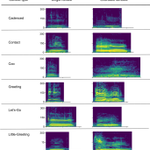
Elephants talk with deep rumbles, alone or overlapping like a choir, and this research found the sounds carry a rough clue about what's happening (meeting up, staying in touch, deciding to move), whether it's one elephant or many.
In a chorus, each elephant uses the kind of rumble that fits the situation, and in some situations, especially when coordinating plans, their voices drift to sound more alike as the conversation goes on.


Elephant choruses function as group signals encoding context through both their composition and patterns of acoustic convergence
@Limor_Raviv
nature.com/articles/s41598-0…

Jay Alammar retweeted

🚀 𝗧𝗵𝗲 𝗢𝘂𝘁𝗹𝗶𝗲𝗿𝘀 𝗕𝘂𝗶𝗹𝗱𝗲𝗿𝘀 𝗦𝘂𝗺𝗺𝗶𝘁 𝗶𝘀 𝗯𝗮𝗰𝗸!
Our annual invite-only gathering is back, bringing together the region’s most ambitious founders, builders, investors, and thinkers for an evening designed to challenge and inspire.
This year, in partnership with @Replit and @lathamwatkins, we continue the Summit’s tradition of convening a community around meaningful connections and thought-provoking dialogue.
📅 Saturday October 24th, 2026
📍Diriyah, Riyadh, Saudi Arabia
If you’re a builder, scaler, tinkerer, or all the above, apply to join us here: 🔗👉🏽 summit.outliers.vc

"Music is a hidden exercise in arithmetic by a soul that does not know it is counting." ~Leibniz
Schopenhauer: That is quite accurate from a lower standpoint and may be parodied in the following way to suit our higher view of music:
Music is "a hidden exercise in metaphysics by a soul that does not know it is philosophising."
Jay Alammar retweeted

The Cohere Embeddings team has been cooking 🍳
Several key innovations in the model:
- The model not only retrieves relevant results, but finds the most human preferred documents based on new training & evaluation techniques.
- Strong focus on multilinguality 🇺🇳 - just retrieving English docs is boring
- Massive throughput gains - scale to any data size
Together with a strong focus on privacy - your data stays private, always.


Friends in India! The @shroffpub edition is out, at a much friendlier price, in full color, and with free shipping in India.
This is your chance to dig into the 330+ figures @MaartenGr and I crafted to explain the most important concepts in AI agents.

🚀 NOW SHIPPING! 📚🤖
An Illustrated Guide to AI Agents by @MaartenGr & @JayAlammar is here!
Explore LLMs, tools, memory, planning, reasoning, multi-agent systems & practical code.
Order now shroffpublishers.com/books/9…
#AIAgents #AI #LLM #MachineLearning

Jay Alammar retweeted
So amazing to see it out there! For those that would like to know more, you can check the website (and repo) we have for the book: ai-agents-book.com/

We stand on the shoulders of giants, @migueldeicaza. GNOME was my first Linux desktop back in college, and a lot of how I learned to program was on top of it.
Hope you enjoy the book!

I have used Primus and it was a revelation of what the future of research can look like. Really excited to dig into this version scaling it up.

We now run the largest frontier lab composed entirely of autonomous AI researchers.
Introducing Primus Society: a society of agents composed of thousands of researchers working under structured institutions designed to solve the world’s toughest problems. We believe this is how AI research should run at scale, safely and productively: an entire society of agents with institutions and purpose.
One discovery we can already share is that the society has discovered a novel result which improves model training by 30%.
Primus Society was inspired by the structures that have organized science for centuries and stress-tested against what’s known about how populations of AI agents fail.
Everything is observable. You can open the virtual city in a browser and read what any researcher is working on.
Learn more about Primus Society here:
lab.cloud/society
The biggest opening in the AI race is running the largest well-governed organization of AI researchers in the world. We’re building the institutions that let a million AI scientists safely tackle the world's toughest problems in AI and beyond. And we’re doing it right here in Canada.
It exists! The first print copies of An Illustrated Guide to AI Agents have started arriving.
The ebook is out now. Print ships from October 6, and pre-orders are open.
If you read it, @MaartenGr and I would love to see a photo of your copy in the wild. And if you enjoy it, please leave a review and send us feedback!
Amazon: amazon.com/Illustrated-Guide…
