

Nonpartisan, nonprofit, operating foundation rooted in the American tradition of inventive research focused on the needs of democracy worldwide.
Dayton, OH, Washington DC, NY
Joined July 2011
- Tweets5.6K
- Following814
- Followers4.5K
- Likes1.8K





Pinned Tweet
Press access is not just about who gets into the room. It shapes what the public can know about its government.
KF Fanning Fellow @JudyWoodruff and Senior Fellow @RuthBenGhiat bring decades of expertise in journalism and authoritarianism to the latest episode of #TheStakes with @bradrourke. Together, they analyze President Trump's decision to exclude @CNN, @MSNOWNews, and @politico from the White House press pool. bit.ly/3TtREFK
Join us for the third annual Dayton Democracy Summit!
Building on the energy, relationships, and conversations of previous summits, the gathering has expanded to two days and will create even more opportunities to connect, learn, collaborate, and explore meaningful pathways for strengthening community voices and civic engagement.
Please save the date and plan to join us March 19–20, 2027, for two days of connection, conversation, and collective action at Sinclair College! #DaytonDemocracySummit!


KF Senior Fellow @BillKristol speaks with historian Anne Applebaum about the implications of President Trump’s foreign policy for Ukraine, Europe, and America’s relationships with its allies: bit.ly/4yTzv2w


🇺🇸 Not registered to vote yet, Washington DC? There's still time!
Eligible residents can register and vote today at any Election Day Vote Center. Just bring proof of DC residency.
Polls are open until 8 p.m.
Find your voting location and learn more: vote.org/polling-place-locat…

Ohio, make your voice heard today! 🗳️
Polls are open until 7:30 p.m. Remember to bring an accepted photo ID, double-check your polling location, and if you are in line by 7:30 p.m., stay in line.

"These elections are not going to be fair, but they are imminently winnable.”
KF Senior Fellow @TimothyDSnyder is a renowned historian of authoritarianism who knows the power of people coming together to overcome seemingly impossible odds. From the civil rights movement to women's suffrage, history shows that progress doesn't always begin on a level playing field.
As you head to the polls today, remember the power of your participation.
Hear more from Snyder on the latest episode of #TheContext: bit.ly/GetTheContext
Happy Election Day! 🗳️
KF Senior Fellow Steven Levitsky joins Erica Chenoweth on The Breakdown to connect recent political developments with lessons from history—and what this may signal for American democracy: bit.ly/4zhgHLb

KF Senior Fellow @JudgeLuttig argues that preserving democracy depends not only on our institutions, but also on the character of the people entrusted to lead them.
Read America’s Crisis of Conscience and Character: bit.ly/4jUEDzV
We have important choices to make today—one of them can include picking a tune from the #JinglesForDemocracy playlist on your way to the polls. 🎶🗳️ #ArtInAction
Remember to vote.
Happy Election Day!
jinglesfordemocracy.com/kett…

“Trump is their boss, but the Constitution is their true master.”
KF Senior Fellow @DavidAFrench looks at recent Justice Department cases to examine what happens when presidential power collides with the department’s duty to uphold the law: nyti.ms/3V548UW

This Election Day, we celebrate the power of everyday people to make their voices heard and have a say in the decisions that affect their lives.
Your voice matters. Make it count.
Find out where and when you can vote today at vote.org/polling-place-locat…. 🗳️

Check out KF Senior Fellow @RuthBenGhiat’s new op-comic with artist @ivanehlers for the Los Angeles Times, showing how people can use their voices and their votes to shape what comes next: bit.ly/4f9dNk6

Gerrymandering has helped politicians preserve power since the 18th century. Today, its impact is still felt by voters.
On America at a Crossroads, KF Fanning Fellow @JudyWoodruff visits a North Carolina community where redistricting has diluted voters’ electoral influence, leaving many feeling unheard: to.pbs.org/3X1b2uW

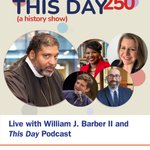
Tomorrow is Election Day. But what happens after the votes are counted?
In a special live episode of #TheContext, host Alex Lovit joins the This Day podcast team and KF Senior Fellow @RevDrBarber, founder of the #MoralMondays movement, to explore what history can teach us about political turning points and the power people have to shape what comes next.
Listen now: bit.ly/GetTheContext

Election lawsuits are already piling up ahead of the midterms.
KF Senior Fellow @DavidAFrench and Sarah Isgur break down where those legal fights are headed and what they could mean for the voting process: bit.ly/4iqJOFe

Kettering Foundation retweeted

I do some of my favorite work with @OfTheBraveUSA. We’re collaborating with the Dropkick Murphys to elevate voices defending American democracy. Recently we went backstage at the Power to the People festival to talk to a bunch of the artists. Here’s our conversation with @springsteen.

Kettering Foundation retweeted
I hung out with Bruce Springsteen and had a chat about loving America and defending Democracy. The Dropkick Murphys were there too. And Michael Fanone. It was like a fever dream. youtu.be/-5DUZ_RFF90?si=PK91…

“She [Harjo] tells the truth in a way that makes you stop and you recognize, within yourself, something you may have forgotten.”
KF Ruth Yellowhawk Fellow @JoyHarjo brought her signature mix of poetry and music to Yale: bit.ly/4sCkSiA

How much history is still standing near you?
Rosenwald Schools were part of an effort that began in 1912 when Julius Rosenwald, Booker T. Washington, and nearly 5,000 Black communities across the South worked together to expand access to education.
Check out the new interactive map and searchable database that lets you explore the 592 surviving Rosenwald Schools, with records, images, and locations that bring their stories into view 👇

John Lewis. Maya Angelou. Nina Simone. Eugene Robinson.
Each became a consequential voice in American democracy. Each was also educated in a Rosenwald School, part of an effort that began in 1912 when Julius Rosenwald, Booker T. Washington, and nearly 5,000 Black communities across the South worked together to expand access to education.
Only 592 of those school structures remain today.
I was honored to join a panel in Washington, DC, marking the launch of a new interactive map and searchable database documenting these surviving schools and the communities that sustained them.
As a board member, I’m grateful to see this history preserved in one place and made more accessible to descendants, educators, researchers, and preservationists.
