

Health Expert * 4X Bestselling Author * aka “The Inflammation Terminator” * Podcast Host* Fox News * CBS The Doctors TV * Huff Post Top Health Expert* #MAHA
Dallas/International
Joined March 2009
- Tweets265K
- Following70.2K
- Followers169K
- Likes358K







Pinned Tweet
Stop Inflammation to Reset Your Health, Lose Weight, Boost Immunity and Slow Aging!
amazon.com/kindle-dbs/entity…
#Inflammation #fatloss #optimalhealth #keto #intermittentfasting

Lori Shemek, PhD retweeted
One minute of hard effort delivers the same physiological benefit as 6 minutes of moderate exercise, or up to 156 minutes of light movement.
A recent study just rewrote the math on exercise intensity. 🔥
Researchers analyzed wearable (accelerometer) data from nearly 74,000 UK Biobank adults and found that 1 minute of vigorous activity delivers roughly the same mortality and disease risk reduction as 4–9 minutes of moderate activity—or up to 50–150+ minutes of light movement, depending on the outcome.
**That’s a huge departure from the long-standing 1:2 guideline (based mostly on self-report and energy cost estimates).
Key findings (for a standardized 5–35% risk reduction):
• All-cause mortality: ~4.1 min moderate or ~53 min light per 1 min vigorous
• CVD mortality: ~7.8 min moderate
• Major cardiovascular events: ~5.4 min moderate
• Type 2 diabetes: ~9.4 min moderate or ~94 min light
• Cancer-related outcomes showed more variation (sometimes even higher light-activity equivalents)
Vigorous activity remained the strongest predictor of lower risk even after accounting for total movement volume, age, sex, BMI, and other factors. 👉 Intensity appears exponential, not linear.
Practical takeaway: You don’t need hour-long sufferfests. Short, sharp efforts (intervals, hills, machines, circuits) sprinkled into your week can be remarkably efficient for longevity.
Everyday movement still matters—especially if you’re starting out—but adding some intensity lifts the ceiling.
** 1:2 guideline is the old rule of thumb that one hard minute counts as two moderate minutes—and the new data suggests the actual health equivalence is stronger than that.
Paper: Nature Communications (Biswas et al., 2025). Observational design with strong device-based measures; results support updating guidelines and wearable algorithms.
🤖 Made with AI
Lori Shemek, PhD retweeted
Finally

The NIH just released the most comprehensive review of glyphosate ever conducted by the U.S. government.
It shows glyphosate to be a likely human carcinogen based on the EPA’s framework.
This forces the EPA to label the chemical likely carcinogenic in their upcoming review.
If they don’t, it will be legally thrown out (like the last one which was forged by Bayer) and be the end of the political careers for all EPA officials involved (given inevitable discovery that will occur showing the disgusting corporate capture that has defined this review).
Thank you @SecKennedy and admin leadership for ensuring this gold standard science sees the light of day.


Finally
The NIH just released the most comprehensive review of glyphosate ever conducted by the U.S. government.
It shows glyphosate to be a likely human carcinogen based on the EPA’s framework.
This forces the EPA to label the chemical likely carcinogenic in their upcoming review.
If they don’t, it will be legally thrown out (like the last one which was forged by Bayer) and be the end of the political careers for all EPA officials involved (given inevitable discovery that will occur showing the disgusting corporate capture that has defined this review).
Thank you @SecKennedy and admin leadership for ensuring this gold standard science sees the light of day.
One minute of hard effort delivers the same physiological benefit as 6 minutes of moderate exercise, or up to 156 minutes of light movement.
A recent study just rewrote the math on exercise intensity. 🔥
Researchers analyzed wearable (accelerometer) data from nearly 74,000 UK Biobank adults and found that 1 minute of vigorous activity delivers roughly the same mortality and disease risk reduction as 4–9 minutes of moderate activity—or up to 50–150+ minutes of light movement, depending on the outcome.
**That’s a huge departure from the long-standing 1:2 guideline (based mostly on self-report and energy cost estimates).
Key findings (for a standardized 5–35% risk reduction):
• All-cause mortality: ~4.1 min moderate or ~53 min light per 1 min vigorous
• CVD mortality: ~7.8 min moderate
• Major cardiovascular events: ~5.4 min moderate
• Type 2 diabetes: ~9.4 min moderate or ~94 min light
• Cancer-related outcomes showed more variation (sometimes even higher light-activity equivalents)
Vigorous activity remained the strongest predictor of lower risk even after accounting for total movement volume, age, sex, BMI, and other factors. 👉 Intensity appears exponential, not linear.
Practical takeaway: You don’t need hour-long sufferfests. Short, sharp efforts (intervals, hills, machines, circuits) sprinkled into your week can be remarkably efficient for longevity.
Everyday movement still matters—especially if you’re starting out—but adding some intensity lifts the ceiling.
** 1:2 guideline is the old rule of thumb that one hard minute counts as two moderate minutes—and the new data suggests the actual health equivalence is stronger than that.
Paper: Nature Communications (Biswas et al., 2025). Observational design with strong device-based measures; results support updating guidelines and wearable algorithms.
🤖 Made with AI
Lori Shemek, PhD retweeted
The six lifestyle medicine domains, including nutrition, physical activity, restorative sleep, stress management, social connection, and avoidance of harmful substances, are shown as interrelated influences on healthspan (Healthspan is the number of years a person lives free from serious chronic disease, pain, or disability).

Extending Healthspan Through Lifestyle: Nutrition, Physical Activity, Sleep, and Other Modifiable Behaviors—A Narrative Review
▶️ The most consistent human evidence supports high-quality dietary patterns, regular physical activity, & healthy sleep as central components of healthy aging.
▶️ Stress management, social connection, avoidance of harmful exposures, & the physical & socioeconomic environment are also relevant to healthy aging & influence the context in which these behaviors occur.
▶️ This narrative review examines major modifiable determinants of healthspan and critically evaluates how established lifestyle strategies compare with newer approaches promoted within the longevity field.
mdpi.com/2072-6643/18/22/381… @Mangan150 @LoriShemek
@_atanas_ @DHPSP @DrRPalmquist
@Dani21422k @DrGrimaldesJ @nuclearball
Lifestyle and environmental determinants of healthspan. The six lifestyle medicine domains, including nutrition, physical activity, restorative sleep, stress management, social connection, and avoidance of harmful substances, are shown as interrelated influences on healthspan. The surrounding physical, social, and socioeconomic environment can facilitate or constrain these behaviors through factors such as access to healthy food and green space, transportation, housing, neighborhood safety, and social and economic resources.

Lori Shemek, PhD retweeted
Advanced Glycation End Products (AGEs) is inflammation in action.
When sugars combine with proteins or fats in the body, a chemical reaction occurs that creates inflammatory compounds - changing the nature and function of the tissues in the body - not just causing wrinkles and sagging skin but affecting all tissues inside the body as well.
They are involved in aging and the development, or worsening, of many degenerative diseases such as: atherosclerosis, chronic kidney disease, and Alzheimer's disease. Additionally, AGEs can cause erectile dysfunction, insulin resistance leading to weight gain, accelerated aging, diabetes and more.
Your lifestyle has a significant effect on total body AGEs load and metabolic consequences.
How to Prevent:
▪️Avoid Sugar 👈 Important
▪️Cook at lower temperatures
▪️Avoid processed foods
▪️Consume a diet rich in antioxidants - such as blueberries, olive oil, coffee, tea, spices
▪️Avoid seed oils (vegetable oil, corn oil, canola oil, soy oil)
▪️Stay hydrated
▪️Sleep well
▪️Use Supplementation such as: L-carnosine, B-1, B-6, PQQ, R-lipoic acid, Taurine .
If you are taking turmeric/curcumin for arthritis, you may be interested in this:
share.google/fFenvsA1s5Jnqyw…

The six lifestyle medicine domains, including nutrition, physical activity, restorative sleep, stress management, social connection, and avoidance of harmful substances, are shown as interrelated influences on healthspan (Healthspan is the number of years a person lives free from serious chronic disease, pain, or disability).
Extending Healthspan Through Lifestyle: Nutrition, Physical Activity, Sleep, and Other Modifiable Behaviors—A Narrative Review
▶️ The most consistent human evidence supports high-quality dietary patterns, regular physical activity, & healthy sleep as central components of healthy aging.
▶️ Stress management, social connection, avoidance of harmful exposures, & the physical & socioeconomic environment are also relevant to healthy aging & influence the context in which these behaviors occur.
▶️ This narrative review examines major modifiable determinants of healthspan and critically evaluates how established lifestyle strategies compare with newer approaches promoted within the longevity field.
mdpi.com/2072-6643/18/22/381… @Mangan150 @LoriShemek
@_atanas_ @DHPSP @DrRPalmquist
@Dani21422k @DrGrimaldesJ @nuclearball
Lifestyle and environmental determinants of healthspan. The six lifestyle medicine domains, including nutrition, physical activity, restorative sleep, stress management, social connection, and avoidance of harmful substances, are shown as interrelated influences on healthspan. The surrounding physical, social, and socioeconomic environment can facilitate or constrain these behaviors through factors such as access to healthy food and green space, transportation, housing, neighborhood safety, and social and economic resources.
What is the healthiest way to eat tomatoes? 🍅
Cooking tomatoes produces the release of lycopene (a cancer-fighting antioxidant). Also, adding any form of fat such as olive oil further enhances the absorption of lycopene.
*The cooking process can break down some of the components in tomatoes that may cause an adverse reaction in some people.
🤖 Made with AI
Lori Shemek, PhD retweeted
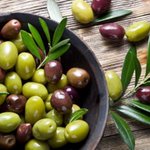
Love Olives? So Do I! 💚 Olives can help optimize health!
👉Promotes Heart Health
👉Metabolic health
👉Appetite Control: The combination of healthy fats and fiber promotes satiety, helping curb between-meal hunger
👉Bone health
👉Cancer Prevention
👉Can Decrease Pain
👉Promotes Gut Health (olives are a fermented food)
👉Reduces Allergies
👉Increases Glutathione (The Master Antioxidant)
👉High in polyphenols like hydroxytyrosol and oleuropein
👉Improves Skin/Hair Health
Portion Size: A standard healthy serving is a small handful (about a quarter-cup or 5 to 10 olives) per day.
Lori Shemek, PhD retweeted

Health benefits of beetroot supplementation in older adults: A systematic review of blood pressure and functional implications
▶️ Beetroot supplementation consistently increases NO3− & NO2− levels in blood and urine, confirming its capacity to modulate the nitrate–nitrite–NO pathway. However, the clinical implications of these biochemical changes remain unclear, particularly in older adults.
Highlights:
▶️ Beetroot extract supplementation enhances nitric oxide bioavailability, which is vital for improving vascular health & mitigating age-related physiological decline in older adults.
▶️ Functional outcomes, such as knee extension velocity & maximal power, consistently improve with beetroot supplementation, while blood pressure results are variable.
▶️ Despite increases in plasma & urinary nitrate and nitrite levels, significant reductions in blood pressure were not observed, indicating potential limitations in cardiovascular benefits.
sciencedirect.com/science/ar… @_INPST @_atanas_ @LoriShemek @DrRPalmquist @guani_vic @P1231032850

Want an easy snack that may help with blood pressure? 🥜
A big review of studies found that eating about a handful of nuts a day (roughly 30 grams) was linked to a 26% lower chance of developing high blood pressure compared with eating none.
People who ate the most nuts had about a 16% lower risk than those who ate the least. The benefit looked strongest around that one small daily serving and didn’t keep growing if people ate a lot more.
A simple habit: grab a small handful of nuts most days. Almonds, walnuts (new research on walnuts!), pistachios, or a mix all work. Add them to many foods and dishes such as yogurt or a salad—or just eat them as a snack.
This doesn’t mean nuts are a magic fix. It’s an association (not proof they directly cause lower blood pressure).
Overall diet, moving more, and good sleep still matter most.

Your morning coffee might be doing more for your brain than you think. ☕
A big JAMA study of ~132,000 people followed for up to 43 years found that 2–3 cups of caffeinated coffee a day was linked to an 18% lower dementia risk and modestly better cognitive function. Tea showed a similar pattern. Decaf did not.
Sweet spot appears to be moderate intake — more wasn’t better. Association held across genetic risk levels, but this is observational (not proof of cause and effect).
If you already enjoy a couple of cups, the data look encouraging.
Not a substitute for sleep, exercise, and other brain-healthy habits.
Source: Zhang et al., JAMA 2026
🤖 Made with AI
Lori Shemek, PhD retweeted
Middle-aged chair stands predict mortality risk
▶️ Adults unable to complete the chair stand test, compared with fast completers, had more than double the risk of mortality.
▶️ Failure to complete the 5 chair stands test was associated w/more than double the risk of mortality (HR = 2.19) compared to those who completed it in <13.7 seconds.
✅️ Leg strength/power already predicts mortality in earlier stages of adult life
journals.plos.org/agingandhe…
@LoriShemek @nuclearball
@Mangan150 @_atanas_
Survival rate from Cox regression for overall mortality over 18 years by CST-5.
CST-5 = Five chair stand test. Model included race, sex, poverty status, body mass index, and frailty status. Faster is under 13.7 seconds & slower is between 13.7 and 60 seconds.

Lori Shemek, PhD retweeted

When insulin is chronically high, your kidneys are signalled to hold onto sodium instead of flushing it out.
The resulting water retention drops your magnesium levels and drives up blood pressure.
The issue isn't the salt shaker; it's the insulin keeping it trapped.
Lori Shemek, PhD retweeted

Health Literacy: What Is The Fastest And Most Powerful Way To Improve Your Gut Microbiome?
via @LoriShemek
Our goal is to end the chronic disease & mental illness epidemics.
#EveryStoryCounts
#billionshealed

What is the fastest and most powerful way to improve your gut microbiome? Cut out sugar and processed junk foods.
✨Sugar feeds unhealthy gut bacteria
✨Weakens the gut lining - damaging intestinal wall.
✨Causes dysbiosis
✨Triggers digestive issues
Unhealthy gut bacteria literally needs sugar & refined foods (junk foods, white flour etc.) to live, to thrive. This causes you to crave sugar. Stop Feeding Them.


Lori Shemek, PhD retweeted

A new experimental approach is showing early promise in reversing Alzheimer’s-related changes by helping the brain restore its own natural waste-clearing function.
Researchers from an international team led by the Institute for Bioengineering of Catalonia have developed nanoscale, engineered compounds described as “supramolecular drugs.” Instead of acting like traditional medication, these particles interact with systems that regulate the blood-brain barrier, a protective layer that can become impaired in dementia.
The goal of the treatment is to help repair transport mechanisms so the brain can more effectively remove harmful amyloid-beta proteins, which are strongly linked to cognitive decline.
In laboratory results, researchers reported a rapid reduction in toxic protein levels of up to 60 percent within an hour after treatment. In longer-term animal studies involving aged mice, multiple doses were associated with improved cognitive performance comparable to much younger animals.
Rather than directly targeting plaques, the strategy focuses on restoring vascular and cellular clearance systems within the brain, which could represent a shift in how neurodegenerative diseases are approached in future therapies.
source: Chen, J., Battaglia, G., et al. (2026). Nanotechnology Reverses Alzheimer’s in Mice via Blood-Brain Barrier Restoration. Signal Transduction and Targeted Therapy.

Lori Shemek, PhD retweeted
Another Challenge in the American Heart Association’s Recommendation 🥩

The American Heart Association recommends getting no more than 6% of your Calories from saturated fat.
A 6-month, weight-loss-controlled randomized trial found that a ketogenic diet with 23% of Calories from saturated fat produced better cardiometabolic benefits than a Mediterranean or low-fat plant-based diet in people with obesity.
Low-carb / High-Sat fat diet had:
👉 Largest drop in blood sugar
👉 Largest drop in liver fat
👉 Largest drop in LP-IR (7x that of plant-based)
👉 Same LDL and ApoB drop as plant-based
How evidence-based are the AHA's recommendations?
For a nuanced deep dive, see today's letter on reversing fatty liver (3/3 in 🧵👇)
