

Berkeley professor, former Secretary of Labor. Co-founder, @InequalityMedia. Preorder my new book below:
Berkeley, CA
Joined May 2010
- Tweets43.9K
- Following1.1K
- Followers1.5M
- Likes10.2K


Robert Reich retweeted

Was Elon Musk the biggest loser of the midterms?
What are all the billionaires who sucked up to Trump going to do now?
And is this finally the end of neoliberalism and trickle-down economics?
Join us to break it all down on this week’s Coffee Klatch. youtube.com/watch?v=uH4-Yycj…

I agree with my friend @BernieSanders.
Sending Medicare for All to Trump's desk is a win-win for Democrats.
You've probably been hearing these two words a lot this week: "economic populism."
But what does it actually mean? Former FTC Commissioner Alvaro Bedoya explains.
youtu.be/a2OHTHRvIkM?si=jI9V…
It wasn’t the inevitable midterm swing of the pendulum against the party in power. Or the economy. Or even just Trump.
It was anti-establishment fury at a rigged system.
Can Democrats deliver on their promises to unrig the system? Join us on the Coffee Klatch to discuss. youtube.com/watch?v=uH4-Yycj…

Rather than regurgitate the particular wins and losses that occurred Tuesday, I thought it more useful, at this point, to look at the big picture and identify the largest overall winners and losers for the nation as a whole. robertreich.substack.com/p/t…

40 out of 41 state and local measures restricting data centers passed on election night.
The people have issued a resounding rejection of Big Tech's attempt to trample on their communities.
Is it any wonder why?
Robert Reich retweeted

Why should Congressional Democrats investigate corporate America if their mandate is to deliver real economic change? Because investigations are a key catalyst for securing reform and legislation. For much of the last century, Congress used to be the main institutional player working to secure an economy that serves working people. A key tool was oversight. Lawmakers routinely investigated complex markets and major corporations, identifying problems and exposing wrongdoing. A major goal of these investigations was to learn what was driving certain problems and figure out how to fix them.
After Democrats took back the House during the first Trump administration in 2019, I joined the House Judiciary Committee as a staffer on the Antitrust Subcommittee. Under the terrific leadership of @RepJerryNadler and then-Rep @davidcicilline, we pursued an 18-month investigation into Amazon, Apple, Facebook, and Google, securing key evidence of how their business practices were undermining competition and harming people, setting the basis for both lawsuits and proposed legislation.
A few lessons from that experience:
1. The quality of legislative oversight depends on the staff and the support of top members to confront power. Committee and Subcommittee Chairs that are focused on getting answers and unafraid to take on powerful corporate interests will make the difference between oversight that doesn’t surrender to their evasion tactics and oversight that aims low or flames out.
Even a relatively small number of dogged, talented lawyers ready to dive in can make a big impact. In the 1930s a single congressional lawyer, Ferdinand Pecora, helped reshape our entire banking system by subpoenaing records and interrogating top financiers, including J.P Morgan. The investigation exposed self-dealing, market manipulation, and tax avoidance, and laid the groundwork for foundational New Deal legislation, including the Glass-Steagall Act and the Securities Exchange Act.
2. Eliminating bottlenecks to moving investigations forward is key. For example, the House should make sure that Subcommittee Chairs can issue subpoenas rather than needing the sign-off of the full Committee or its Chair. A credible threat of sending subpoenas is critical for credible oversight.
3. Ensuring that members can develop the muscle to effectively interrogate CEOs requires investing in real preparation. In the lead up to the hearing with Bezos, Pichai, Cook, and Zuckerberg, the Antitrust Subcommittee spent months reviewing millions of documents collected from the firms, interviewing affected parties, briefing members on key evidence, and conducting practice hearings. Members came into the hearing deeply informed and able to rebut and call out CEO dissembling. The result was some of the most effective member questioning of executives we’ve seen in decades. @TheProspect wrote up a great overview: prospect.org/2020/07/30/triu…
4. For decades, institutional capacity in Congress has been extremely weak. Much of this traces back to the Gingrich Revolution, which was effectively the 1995 DOGE-ing of Congress. Republican leadership fired over 600 professional staffers, eliminated the Office of Technology Assessment, and gutted research capacity. None of that capacity was ever meaningfully restored.
As a result, members have way fewer resources to develop serious expertise or go deep on a new topic. Members should start rebuilding that capacity so the institution can fully play its Article I role, where Congress can again do serious policy development and legislating and serve as a real check on the executive and judicial branches.
5. AI markets should be high on the list of investigations. The business decisions of the major AI firms have huge public ramifications, yet the public is at a severe informational disadvantage when it comes to how these markets work and the choices these firms are making. A congressional investigation will help ensure future legislative action is based on a more complete view of what is going on rather than selective and partial corporate disclosures.

Bust up big corporations and tackle Wall Street’s greed.
Get big money out of politics.
Strengthen unions and boost wages.
Pass Medicare for all, paid leave, universal childcare, and so much more...
This is the agenda Democrats need to fight for.
It's not enough to simply be anti-Trump.
By now I’ve read or seen every major victory speech from Tuesday’s remarkable election. There were many powerful and moving speeches, but in my judgment, the best was from James Talarico. I urge you to read it. I think it’s a harbinger of the future.
robertreich.substack.com/p/t…
I want to say a few words about my good friend Bernie Sanders.
robertreich.substack.com/p/w…
I’ve known many other defense secretaries, starting with Cap Weinberger, who served as defense secretary under Reagan.
I can say without fear of contradiction that Pete Hegseth is the stupidest and least qualified of them all.
He is a danger to the entire world.
He must be impeached.
Ultra-wealthy elites. Political corruption. Corporate monopolies. Anti-immigrant nativism. Vast inequality.
These problems aren’t new. In the late 1800s, they dominated the country during America’s first Gilded Age.
We overcame these abuses then, and we can do so again.
This week was a reminder.
A resounding anti-establishment wave just gave Democrats control of Congress.
Many are now wondering if it’s time for the party’s leadership to be replaced — particularly Chuck Schumer.
But who would replace him as Senate Majority Leader?
I have some thoughts.
Many thanks to those who tuned in last night to our post-election live recap. We covered a lot of ground — including talking about what comes next for Democrats. I think you'll enjoy the conversation! It's now up in full on my YouTube.
youtube.com/watch?v=cNF5udKZ…
Last night, voters repudiated Trump's corruption, chaos, and cruelty.
But they also sent a powerful message to Democrats: unrig our economy, hold the powerful accountable, and make this country work for working people.
Join me for a live election recap. Happening now!
youtube.com/watch?v=cNF5udKZ…
Robert Reich retweeted

The many beat the money. The people beat the corporations and special interests. Hope beat hate and fear.
Michigan, we won.
Robert Reich retweeted
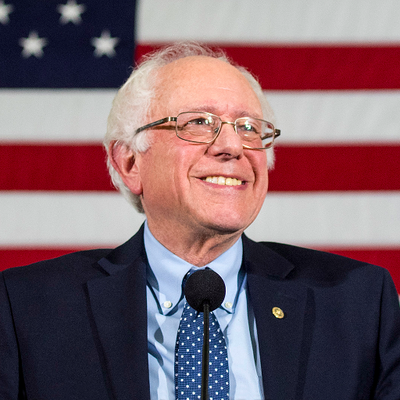
Democrats will now control the House and Senate and be able to hold Trump accountable. That's great.
At a time of massive income and wealth inequality, we must do more. We must aggressively fight for working families.
No more excuses.