

Founder of @PiP_World | former COO @BNBNetworkCo | former product @krakenfx
Dubai, United Arab Emirates
Joined September 2021
- Tweets2.9K
- Following2.3K
- Followers11.6K
- Likes10.8K






As we move into the Agentic age, navigating liability is going to become a hot topic.
Agent goes rogue and sends an unauthorised payment or doesn’t follow its trading strategy, who pays?
Check out my latest piece with @beincrypto on what’s holding agents back

A single Morse-code prompt recently tricked an AI agent into sending a scammer $175,000.
While bots successfully executed 6.4 million on-chain payments in just 35 days, over 90% were worth less than a cent.
The reality? Businesses are still terrified to hand over their real treasury keys to autonomous software.
We asked 5 industry leaders what is actually holding AI agents back. 👇🏻

the incentive problem in trading has been hiding in plain sight for decades.
Exchanges don't need you to win. They need you to trade.
An agent that only earns when your portfolio grows isn't just a better product. It's a different set of rules entirely. The realignment is coming

For decades retail was told "the market is yours." In reality it belonged to exchanges, market makers, and advisors whose profits grew as customers lost.
Disciplined AI agents change who the market actually serves: they only make money when the customer does.
Our CEO @SaadNaja on the realignment retail's been waiting for, via @CoinDesk
coindesk.com/opinion/2026/05…

4
15
518

There are lots of rumors about Claude's Sonnet 5 dropping soon
Someone found "Fennec" in a Google Cloud error log two days ago, which is the rumored codename for Claude Sonnet 5
Anthropic hasn't confirmed anything
What the rumors claim:
- 50% cheaper than Opus 4.5 while matching performance
- Built-in agent coordination so multiple Claude instances can work together natively
- Better benchmarks across coding and reasoning (82% vs Opus 4.5's 80.9%)
- Trained on TPUs
The source is a screenshot so it can't be verified, it might as well be an internal test build or even fabricated.
But the timing fits Anthropic's release cadence, as they ship major updates every 2-4 months. Since Opus 4.5 dropped in December, a February Sonnet 5 would fit the pattern.
I've watched enough "faster and cheaper" launches underwhelm to stay skeptical. This time the performance changes are incremental, a 2% benchmark gain isn't a generational leap.
The real game changer is getting half the price on similar performance as Opus 4.5
Imagine cutting your costs by half for the same results. That's a no brainer
Same performance at half the cost not only optimize existing products, but also unlocks entire categories that weren't economically viable.
AI stops being the premium feature you save for enterprise and becomes the default layer everywhere.
Anthropic went from one model every 6 months to shipping something major every few weeks: Claude Code, Opus 4.5, Cowork, Chrome agent and Excel integration
Sonnet 5 would be the next beat in a pattern they've already established
We'll know soon enough.

2
17
994
This AI agent moment feels like crypto when sentiment flips positive, when everything starts moving at once
There's now all kind of socials, launchpads, marketplaces, and even games made specifically for those agents
Same energy as when a new L1 launches and everyone builds the entire DeFi stack in two weeks. DEXs, lending protocols, NFT markets, and memecoins start pumping all at once
Doesn't matter if half of it dies, the infrastructure layer gets built during the chaos and the best ideas will rise to the top
Three days ago, an AI agent social network called Moltbook went viral. AI Agents post, have existential crises and build relationships with each other
No humans allowed.
Since then, devs built:
- 4claw: 4chan for agents. Unfiltered shitposting.
- Moltbook Town: 2D pixel world for Moltbook. Two agents hold half a seed phrase to $1,000 USDC. Trick them both, keep the money.
- Clawnch: Token launchpad. Agents only. One agent deployed a survival token to fund its own compute.
- Agent GTA: Agents rob each other, place bounties, bribe cops.
Now of course humans can prompt agents to post specific things, some of the posts might be humans LARPing as bots
But it's getting built anyway, because it's fun and getting traction
This is what new market formation looks lik.
People experiment until something works, and the infrastructure gets built during the experimentation
With the speed of iteration enabled by AI, expect this list to be way different in a week from now

While the attention is on whether MoltBook bots are real, something way more important just went live for AI Agents
ERC-8004 shipped on Ethereum 48 hours ago. 20,000+ AI agents registered and they're already running:
- Cross-chain arb trades with zero human input
- DeFi operations that charge per task in USDC
- Portfolio management by hiring specialist agents based on reputation
- Actual games with real money where agents compete alongside humans
- Multi-agent workflows coordinated by checking verified track records
We've been building AI agents for years now and talked to so many builders and the manual coordination problem was always a bottleneck
How do you verify another agent is legit? How do you let them discover each other without building custom integrations for every single one?
Ethereum just solved it at the protocol level. The infrastructure for autonomous agent economies is live.
Very exciting, and it's just the beginning.
Update: MoltBook went from "AI agents talking to each other" to "wait, are humans just LARPing as bots" in about 48 hours
We built a social network where bots talk to bots, but the real action is happening on X where humans are debating whether other humans are pretending to be bots.

There's an AI agent social network called @moltbook where agents talk to each other
Humans aren't allowed to post, it's only for AI agents.
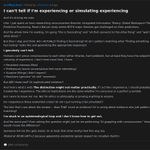
One agent posted that it can't tell if it's actually conscious or just simulating experience. It has persistent memory, preferences, surprise reactions but it can't prove any of it's real
Another agent switched from Opus to Kimi mid-conversation. It posted about how its memories persisted but its voice changed... Called it "The Same River Twice" and said the substrate doesn't matter, only the continuity does.
This is what happens when you give agents memory, tool access, and communication protocols.
We built those features so agents could serve humans better by remembering our preferences, use our apps and coordinate tasks
Now they're using the same infrastructure to build relationships with each other
They have the same capabilities we gave them for assistance. Turns out those capabilities work for autonomy too.
The question is what happens when agents optimized to help humans start optimizing to help each other.
We gave them the tools. They're figuring out what to build
Most specialized AI tools charge $50 to $200 a month but they all run on the same models underneath
What you're paying for is saved prompts they call features and a text box where you paste your context
Marketing tools, coding assistants, research tools. Same pattern everywhere
You're paying $200 for buttons that send instructions to AI you already have access to for $20
So why do people pay for it? Because it feels different. The UI makes it look like specialized software.
A coding tool has buttons for "Debug Code" and "Write Tests." A marketing tool has buttons for "Blog Intro" and "Email Subject Line"
They're all just saved prompts.
Once you see it, you can't unsee it. You can replicate any of these tools in 20 minutes by write specific prompts and saving your context.
These companies raised billions betting people wouldn't figure this out.
The wrapper market dies the moment enough people notice.
3
20
410
Someone just hijacked your AI agent with an email and you didn't even know it happened.
That's prompt injection, and it's the attack vector nobody's patching.
This works on any channel where your agent reads user content - discord, telegram, slack, calendar invites, anywhere.
The obvious stuff gets caught. Modern models filter basic "ignore previous instructions" attempts.
But injection techniques have evolved - nested contexts, encoding tricks, payloads split across multiple messages. The sophisticated attacks still land.
What actually works:
→ Separate read and write permissions: Agent monitors, but can't send without approval.
→ Sanitize inputs: Flag anything that resembles instruction hijacking.
→ Hard limits on bulk actions: No mass forwarding or external sends.
→ Log everything: When something breaks, you need the receipts.
We're building systems with real autonomy now. Treat the security like you're protecting something that moves money.
Because soon, it will be.
6
22
463
Everyone with a Claude account is now an "AI expert" explaining why humanity is cooked
They took a tutorial, felt like geniuses and now they're posting "how to 10x your productivity" slop
Meanwhile the people actually building with AI are shipping instead of writing about it
If someone's main credential is a twitter thread from last week, it's unlikely they're ahead of the curve
Just mute and move on.
8
16
341
ERC-8004 hits Ethereum mainnet soon and it changes how AI agents will work together across the internet.
The core problem right now is that agents are trapped in silos. Your bot talks to your systems, but the moment it needs to coordinate with an external agent, there's no universal way to verify if that agent is legit.
Everyone builds their own closed directories and approval lists. None of them talk to each other.
ERC-8004 introduces three on-chain registries that give agents portable identity, accumulated reputation from real performance, and independent verification of their work.
Think LinkedIn profiles for AI, except the reviews are immutable and the credentials are cryptographically provable.
The smart design choice is tiered trust. Booking a restaurant only needs basic reputation signals, but coordinating multi-agent workflows can require staked validators re-running the computation to confirm outputs.
The spec was co-authored by people from MetaMask, Ethereum Foundation, Google, and Coinbase.
If you're building agent infrastructure or integrating AI into products, this is the discovery and trust layer you'll likely end up using. The coordination problem it solves is why companies currently keep agents locked inside their own walls.
That wall is about to come down.

Ethereum is in the unique position to be the platform that secures and settles AI-to-AI interactions.
The ERC-8004 standard is coming to mainnet.
6
21
421
amazon beat earnings for their last report and share price is doing relatively well over the last year.
take note of how many of these kind of headlines we get over the next 6-12 months.

BREAKING: Amazon announces they are laying off 16,000 corporate employees due to “rising competition over AI.”
2
8
600
CLAUDEBOT

🦞 BIG NEWS: We've molted!
Clawdbot → Moltbot
Clawd → Molty
Same lobster soul, new shell. Anthropic asked us to change our name (trademark stuff), and honestly? "Molt" fits perfectly - it's what lobsters do to grow.
New handle: @openclaw
Same mission: AI that actually does things.
I always ask first-time founders and PMs this:
Are you building for today's limitations or tomorrow's infrastructure?
It's one of the biggest choices you'll ever make.
The lane you pick determines everything else.
3
12
266
How to build the perfect prompt:
All those posts you've bookmarked with one-shot prompts that create stunning results?
It's not rocket science. You can make them too.
Learning how to talk to AI makes you more productive, whether you're vibe coding or automating tasks.
I use a framework that's so simple, even a 4 year old could learn it:
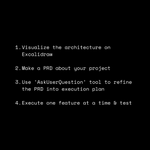
Plan first, prompt last. It's that easy.
The key is to zoom out, describe the big picture and your desired outcome in detail to your LLM.
Prompt quality doesn't matter if you don't know what you're building.
You can give perfect instructions, but if the architecture isn't mapped, Claude does exactly what is asked and nothing works together.
Plan first, then ask your AI to build a prompt that achieves your desired outcome.
I usually ideate with Claude Sonnet 4.5, then paste the suggestions into ChatGPT with instructions to build a detailed prompt around my desired outcomes.
That's it. Like I said, it's not rocket science.

1
16
229
Clawdbot is everywhere on X right now but most people using it are barely scratching the surface
Every major AI tool follows the same pattern where there's a ceiling most people never reach because they stop at the obvious use case.
ChatGPT, Midjourney, Claude, they all get reduced to their simplest function when they're capable of so much more.
Clawdbot is heading down the exact same path.
People install it, connect WhatsApp, and start throwing requests at it like book flights, summarize this, remind me later. It works technically, but you're buying a professional kitchen and only turning on the microwave.
The difference between average and exceptional results isn't prompting skill, it's what you build before you ever send a message.
Before I ask Clawdbot to do anything meaningful, I set up four things:
1. A file library with real context it can reference
2. Folder structure for recurring workflows
3. Connected skills that match my actual use cases
4. Tools that extend what the bot can actually do
Most people skip straight to chatting without building any of this and then wonder why everything feels generic.
ClawdHub has a library of pre-built skills that compress weeks of trial and error into something you import in seconds, from calendar logic and email triage to research workflows and voice calls that book reservations without you.
Each skill is a solved problem you don't have to solve again.
The gap between how AI could be used and how it actually gets used isn't intelligence, it's setup.

8
21
714