

Science we can do together. Supported by @NSF @NASA @ASU @IMLS @Verizon ++ | Tweets by @CHNickerson @jillfnugent @FutureDrGiles @ElMounRo
Global
Joined November 2009
- Tweets26.2K
- Following7.9K
- Followers12.9K
- Likes46.5K


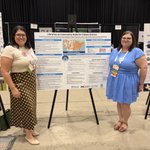

Day 2 at the Arizona Library Association Conference! If you are attending and haven't stopped by our booth yet, we will be back again tomorrow!
Close out your conference experience with our session tomorrow on our collaboration with ASU's Osher Lifelong Learning Institute: "Lifelong Learning Meets Citizen Science in Libraries with SciStarter" from 3:10 p.m. to 4:10 p.m. 😄
#AZLA @olliatasu

👻🦇 Science is getting spooky in SciStarter's latest newsletter! 🎃🔬
Bats flying at dusk, creepy-crawly roommates, ghostly forests, and mysterious sounds… Halloween is full of science!
Our latest newsletter features citizen science projects that turn spooky encounters into real discoveries. Here's how to get involved:
🦇 Bats Count! Watch a live bat camera and help researchers track bats emerging at sunset.
🔊 Horrible and Heavenly Sounds: Listen to eerie and delightful recordings to help scientists understand how sounds make us feel.
🦅 Who Eats Whom? Photograph animals eating in the wild to help scientists understand food webs. @bradleyallf
🕷️ Never Home Alone: Discover the tiny creatures living alongside us and contribute to research on indoor biodiversity. @inaturalist
🌲 Ghosts of the Coast: Document eerie ghost forests and help researchers understand how rising seas are changing coastal landscapes.
Plus, learn how to earn a free citizen science training badge, watch a SciStarter Classic about cemetery history, and register for an upcoming NASA science event!
No tricks, just treats (and real science)! 🍬
👻 Explore SciStarter's latest newsletter: conta.cc/4irU7tN
The SciStarter team is growing at ASU! ☀️
We're excited to have more of our team on campus, connecting students, faculty, staff, visitors, and local residents with fun, meaningful ways to contribute to real scientific research.
Through ASU's School for the Future of Innovation in Society and Global Futures Laboratory, we're helping people turn their curiosity and community concerns into action through citizen and community science.
Whether you're interested in wildlife, space, climate, health, or the environment, there's a place in science for everyone, at any age, anytime, anywhere. No prior experience needed!
We're looking forward to bringing more opportunities to get involved in citizen science to ASU and the surrounding community!
@SciStarter @ASU_SFIS @ASUGlobalFuture @ASUEmbeddedness
#SciStarter #ASU #CitizenScience #ActsOfScience

🎤 The 1st Türkiye Science Communication Summit kicks off with an opening keynote from Darlene Cavalier.
The Summit is organized and hosted by the Scientific and Technological Research Council of Turkey @bilimgenc and the Middle East Technical University @METU_ODTU under the leadership of the Turkish Ministry of Industry and Technology @TCSanayi .
Follow @SciStarter for live updates from #Ankara by @ElMounRo of SciStarter!
#TürkiyeBilimİletişimiZirvesi
#Bilimİletişimi
#Türkiye
#TÜBİTAK
#ScienceCommunication #SciComm #CitizenScience #ParticipatoryScience #CivicScience
#Orta Doğu Teknik Üniversitesi
#Middle East Technical University


SciStarter is heading to Ankara, Türkiye!
Founder Darlene Cavalier will deliver a keynote on citizen science, and Roland Moundalak will guide participation on local projects.
bilimgenc.tubitak.gov.tr/bil…
#ScienceCommunication #CitizenScience #Bilimİletişimi @bilimgenc

The 5th Annual Joro Spider Spotting Contest starts today and runs through Sunday, Oct. 18.
Joro spiders are large yellow-and-black orb-weavers native to East Asia. They were first found in Georgia in 2014 and have been spreading across the Southeast ever since. Fall is when their big golden webs show up on trees, homes and power lines, so this is a good week to look.
If you spot one, take a photo and report it with the free EDDMapS app. Every verified report helps @Bugwood track where the species is moving.
Last year, 2,986 people sent in 3,602 verified reports from 112 counties in five states. Can this year top that?
Get started on SciStarter: scistarter.org/joro-watch

🍄 The latest SciStarter newsletter is all about fungi!
Fungi are a kingdom of life that includes mushrooms, molds, yeasts, and many organisms that live mostly out of sight in soil, wood, plants, and other habitats.
Scientists are still uncovering fascinating facts about fungi — did you know that some can break down plastics in weeks? — and just how much fungal diversity exists. You can help, too!
Featured projects include:
🍄 Mushroom Observer — Photograph mushrooms and share observations with a global community that can help identify them and track where fungi are found.
🌿 NatureSpots — Document fungi alongside plants and animals to help build open biodiversity data and track changes in ecosystems over time.
🏙️ NovelEco Project — Explore vacant lots, roadsides, and other overlooked urban spaces to record the fungi and other nature thriving in cities.
🔬 @FungalDivSurvey — Upload fungal observations to iNaturalist to help scientists map North American fungi and identify species that may need protection.
🇦🇺 Fungimap Australia — Record fungi from backyards, parks, neighborhoods, and wild spaces to help fill major gaps in knowledge about Australia’s fungal diversity.
Photograph a mushroom, record fungi in your neighborhood, or share observations from wherever you are. And if you’re looking for an excuse to participate, Mushroom Day is October 15!
Read the latest SciStarter newsletter: conta.cc/4jFKWqC
Extreme weather is hitting communities around the world right now. When conditions change fast, reports from people on the ground help forecasters see what radar and satellites can miss.
Our latest SciStarter newsletter features weather projects you can join safely:
🌧️Measure rain where you live with @CoCoRaHS
🌧️Report rain, snow, hail, or fog from your phone with mPING from @NOAANSSL
🌧️Clear a clogged storm drain before rain arrives with Cleanlet
🌧️Train as a severe weather spotter with SKYWARN from the @NWS
🌧️Stay indoors and help @DoNASAScience @NASA scientists study weather on Mars @CloudspottingM
Safety comes first. Never go out in a storm to collect data. Clear drains only before rain and only when they are safe to reach, and stay out of floodwater. Report from a safe location, follow each project's training, and always follow official warnings.
Read the newsletter: conta.cc/3Tbj1UI
#CitizenScience #WeatherSafety #FlashFloods
SciStarter retweeted

It is not too late. Calling #CommunityScience Mark your calanders and register events for @WeDigBio! Visit wedigbio.org/content/regist… to register events and receive swag! Register by Sept 21 (outside US) or Sept 30 (inside the US). @the_zooniverse @TranscribeSI @GBIF @SciStarter @AMDigiVol ** @wedigbio happens between October 8-11**

We’re so grateful to our amazing library partners representing SciStarter at #ARSL2026! 🎉
A big thank you to Tara Cox, Amanda Arrington, and Elisabeth Gullett for sharing citizen science with the library community and spreading the word about SciStarter resources. If you're at ARSL this week, come say hello at our exhibitor booth!
Interested in representing SciStarter at a conference near you? We can help with proposals, presentations, posters, exhibit materials, and conference registration for accepted presenters!
#CitizenScience #Libraries #SciStarter #ARSL


This fall, billions of birds are about to migrate, mostly at night, when artificial light pulls them off course toward deadly window collisions. You don't have to be a birder or a scientist to help.
A few ways to get involved:
🐦Log the birds you see or hear with @Team_eBird
🐦Not sure what it is? ID the bird from a photo or sound with Merlin Bird ID (@CornellBirds)
🐦Sharpen your IDs on your local species with BurdyGurdy
🐦Found a bird that hit a window? Report it in under two minutes with dBird (@nycbirdalliance)
🐦Monitor your night sky brightness with @GLOBEatNight (@NOIRLabAstro)
🐦Check the migration forecast with BirdCast, then dim nonessential outdoor lights
Mark your calendar:
🐦October Big Day & World Migratory Bird Day (October 10): a global push to get outside and record every bird you see, all on the same day
🐦Birdability Week (October 19-25): a celebration of accessible birding, making the outdoors welcoming for birders of all abilities
Step outside, look up, and help scientists track and protect migrating birds.
Read our latest newsletter to learn how you can get involved:
conta.cc/4i963kD
From Our Backyard to Space: How One Brazilian Family Discovered Citizen Science pages.scistarter.org/from-ou…

August 26 is National Dog Day! 🐾 Your dog can be more than your best friend. They can be your research partner.
The featured projects in our latest newsletter help scientists learn how dogs think and age right alongside us. Pick one or a few and start contributing:
@darwinsarkfnd: Answer surveys about your dog's behavior and, if you want, send in a DNA sample to add to one of the largest open databases on canine genetics and personality.
C-BARQ and Fe-BARQ: Take a quick survey about your dog's or cat's temperament to help researchers improve pet welfare and strengthen the human-animal bond.
@DogAgingProject: Fill out a health and lifestyle survey about you and your dog to join a nationwide study on how dogs age and how both of you can live longer, healthier lives.
Canine Brains: Share your pup's history in two short surveys to help researchers understand how life experiences shape canine personality.
Our Outdoors: Record how parks, beaches, and other public spaces make you feel, feeding a national database that rates and improves outdoor spaces. Great project for walking the dog!
Grab your favorite "lab" partner and do some science today: conta.cc/4xVMG34
Back to school is a chance to do more than learn science. It's a chance to take part in it. 🔬
This season, we invite students to contribute to real research, make discoveries, and see how their curiosity can make a difference. And when projects are designed with learning outcomes in mind, the scientific outcomes can be more robust, too.
This special back-to-school edition of our newsletter features projects with ready-to-use classroom materials. Each is a SciStarter affiliate project, so educators can add projects to a List, share them with students, and track participation in one place.
Here's the lineup, with educator materials built into every one:
🌿 Seek by @inaturalist (PreK-2 and up): Point a phone camera and ID plants, animals, insects, and fungi in real time. No account or personal data required.
🍞 Sourdough for Science (Grades 3-5 and up): Grow a starter from flour and water, then track its rise and acidity over 14 days. Your data helps scientists study how flour shapes bread.
🧠 Stall Catchers (Human Computation Institute) (Grades 6-8 and up): Score short mouse-brain videos and help Cornell researchers speed up Alzheimer's research.
🔊 Sound Around Town (Grades 9-12 and up): Lead a 5-minute listening session, log what you hear, and get a visualization of your soundscape.
🧬 @eternagame (College and beyond): Solve RNA design puzzles that get built and tested in real university labs.
Want more support? Our BRAND NEW, free K-12 educator training and Teaching in Higher Education with Citizen Science training make it easy to bring citizen science into your teaching, and each comes with a digital badge upon completion.
Students can also earn a free, LinkedIn-ready Foundations of Citizen Science badge in about an hour. It's self-paced and entirely online, and teachers can run it as an interactive class session so student accounts connect to your school for easy progress tracking.
Here's to a school year filled with curiosity, discovery, and real-world impact.
Read the full newsletter to learn more: conta.cc/4w9yCln
NEW on SciStarter! Kelp Quest from the Seattle Aquarium is now a SciStarter Affiliate Project!
Help identify algae, 🪸 seafloor habitats, and 🦑 marine animals in underwater images from Washington's kelp forests. Your classifications improve machine learning models and help scientists better understand what keeps kelp forests healthy.
Get credit for your classifications: Earn SciStarter credit for every classification by adding your Zooniverse username to your SciStarter account settings.
@SeattleAquarium


🦈 Shark Week starts TODAY! But you don’t need a wetsuit to get closer to shark science.
The latest SciStarter newsletter features ways to turn beach walks, time on the water, wildlife sightings and even clicks from home into data that helps researchers better understand marine life and protect our oceans.
🥚 Search the shoreline for shark, skate and ray eggcases with @SharkTrustUK.
🌊 Report sharks, rays and other marine life, including days when you see none, with eOceans
🔨 Share hammerhead sightings from Australia with the Hammerhead Hub (Marine Futures Lab - SBS at the University of Western Australia).
🐋 Help protect whales and mariners by reporting whale locations through @Whalealert.
🌿 Review underwater images and help train artificial intelligence to recognize kelp forests with Kelp Quest (@seattleaquarium).
Dive into the newsletter and find a project: conta.cc/4fxmAf3
It's Moth Week! Turn on a porch light, hang a white sheet, and see who shows up after dark.
SciStarter's special @moth_week newsletter rounds up projects for every kind of insect fan:
🦋 @inaturalist: Photograph moths and get an ID in seconds with the free app (Global)
🦋 Butterflies & Moths of North America: Upload your photos and expert volunteers verify every record (North America)
🦋 Great Southeast Pollinator Census (Southeast Pollinator Census Community): Count pollinators if you live in GA, FL, NC, SC, or MS
🪲 Bugs Matter (@buzz_dont_tweet): Count the bugs on your license plate after a drive to help track insect decline (UK & France)
💻 @AMdigivol (@CitSciOz): Transcribe museum specimen labels and field journals from your couch (Online)
Read the full newsletter: conta.cc/4wOmrea
New to citizen science? Start with SciStarter's free trainings at SciStarter.org/training and earn digital credentials.
Happy mothing!
A total solar eclipse will cross parts of Europe and the Arctic on August 12, 2026, and you don’t need to be a professional scientist to help study it. ☀️🌑
A new article from SciStarter partner @newscientist highlights five ways to contribute to eclipse and solar research, from recording shadow bands and photographing the sun with your smartphone to tracking changes in sky brightness and searching for sun-grazing comets.
Wherever you are, there may be a way to take part. Remember to protect your eyes by using certified eclipse glasses or a proper solar filter when viewing the sun.
Read “2026 eclipse: 5 citizen science projects you can contribute to” by Leah Crane in New Scientist:
newscientist.com/article/253…
Credit: New Scientist

SciStarter retweeted

Whether you are enjoying fireworks for Independence Day in the U.S. or spending time with friends and family between World Cup games, keep up with your @SciStarter Citizen Science calendar and help GLOBE collect environmental data where the world plays soccer (football) during the GLOBE Cup Challenge!
Your land cover, air temperature, or surface temperature observations can help us explore how playing environments differ across regions, climates, and field surfaces.
Get started today: tinyurl.com/globe-cup-challe…
