

You have the vision; we have the engine. Thrive Themes gives you conversion-focused landing pages, funnels, courses and more! No coding or vibe-coding required.
Joined April 2013
- Tweets9K
- Following201
- Followers4.7K
- Likes459





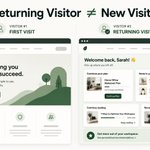
Sell your course on SamCart, Zapier, Make or a store on another site? With Incoming Webhooks in Thrive Apprentice 11.1, every sale now creates the student's account and opens their course, so buyers go straight from paying to learning.
Full announcement here: thrivethemes.com/incoming-we…
No need for a Link In Bio app when you have @thrivethemes on your site.

Your link-in-bio ALWAYS needed to simply be a page on your own website that you link to. Here’s how to quickly make one with @ThriveThemes and WPVibe.ai.
Thrive Themes retweeted
Updating WordPress won't fix the PHP flaws announced today. 🚨
The PHP security team released emergency fixes on October 21, 2026, for two critical vulnerabilities in PHP itself.
These flaws let attackers run code on your web server without logging in. Details leaked before the fix was ready, so attackers may already know how to use them.
PHP runs on your hosting server, so the update has to happen there, not in your WordPress dashboard.
We put together a quick guide on what to do right now.
(Link is in the thread below)


Oh this is going to be good.
Tomorrow (Friday) at 1PM ET, I'm redesigning my personal blog LIVE using @claudeai and @ThriveThemes. Join me to see how well Thrive Architect works with AI even WITHOUT a dedicated MCP. The Architect API and core WP APIs do the heavy lifting. Join me at facebook.com/share/1DDmNFswZ…
The most common support email in drip-fed courses: "when does my next lesson unlock?" Thrive Apprentice just made it obsolete. Locked lessons now show their unlock date automatically, and chapter-based courses can drip one chapter at a time.
Announcement post here: thrivethemes.com/thrive-appr…
💁 We've said it before and we'll say it again:
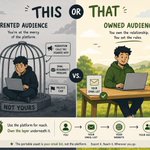
Your website is the only part of your online presence that can't be taken away from you (provided you aren't building on a third-party platform, of course).
Feeds re-rank overnight. Accounts get suspended by mistake. Reach you counted on for years can evaporate in a single algorithm update. Every platform you use, you use on loan.
➡️ A website is different in one important way: it runs on your rules. You decide the layout, the words, the offer, and what a visitor sees, and no third party gets a vote.
That kind of permanence used to feel optional. It doesn't now. Having a website has become the baseline, around 83% of small businesses have one, up from 64% in 2018, so operating without a real home base increasingly reads as a red flag.
And it compounds. Every piece of content you publish there, every subscriber you capture, every bit of trust you earn, accrues to an asset you keep, instead of one you rent by the month.
You can't build something lasting entirely on land you don't own.
None of this means quitting the platforms. It means deciding what's foundation and what's distribution. The website is the foundation. Everything else points to it.
TL;DR: platforms are borrowed and can change or vanish; a website is the one asset that stays exactly as you built it.
Ask one question: if your biggest platform disappeared tomorrow, could people still find and buy from you? Your website is that answer.
🤯 Nearly a thousand creators walked away from Substack in a single quarter last year. It's worth asking why.
They left for a host of other platforms, citing moderation calls they disagreed with, email deliverability problems, and a plain lack of control (Nieman Lab). None of that was in their hands, because the platform was never really theirs.
And this isn't an anti-Substack argument, by the way. Substack is a genuinely good place to get discovered, and the built-in network is real. The problem is treating a rented room as if it were the house.
Because when the platform changes its rules, algorithms, or pricing, everything you built on top of it is suddenly negotiable. You find out how much you owned the day you try to leave.
Here's the line that matters: the portable asset is your email list, not the platform it happens to live on. If you can export your subscribers and reach them elsewhere tomorrow, you own the audience. If you can't, you're renting it.
Use the platform for reach. Own the layer underneath it.
So keep the newsletter, keep the discovery, enjoy the network. Just make sure your list and a website you control travel with you, so a policy change is an inconvenience rather than a catastrophe.
TL;DR: Substack is fine for discovery, but own your email list and a home site so you're never at a platform's mercy.
Export your subscriber list today and confirm you can reach it without the platform. If you can't, that's your first move.

Every year someone declares the website dead, and yet... every year people go check one before they trust you with a dollar. It's the credibility test almost nobody skips. 🤔
The data backs it up: a business with a website reads as about 41% more trustworthy than one without, and 58% of people say they visit the site to verify what they saw on social or from an AI (DreamHost).
Feeds change, platforms pivot, accounts get suspended, and reach you counted on can vanish in a week.
💡But your website is the one piece of your presence that can't be taken from you.
Build the storefront nobody can evict you from first. Then let social, search, and every other channel do their one real job: sending people to it.
And Thrive Suite is the perfect tool to help you build a website that puts your business in the best light: thrivethemes.com/suite?utm_s…
