

Founder/Chair, AMI Labs; Professor, NYU; Partner, 224 Ventures; Ex-Chief AI Scientist, Meta. Researcher in AI, ML, Robotics, etc. ACM Turing Award Laureate.
New York
Joined June 2009
- Tweets28.3K
- Following806
- Followers1.4M
- Likes33.8K


Pinned Tweet
I do not write posts on X.
I tweet links to posts on other platforms.
I like and retweet (occasionally)
I comment on friends' tweets (rarely)
Follow me on...⬇️⬇️⬇️
Yann LeCun retweeted

JEPA has been something we follow very closely, and over the last couple of weeks, @ylecun and his collaborators at AMI Labs, NYU, and Brown have made huge progress with it.
I reached out to @randall_balestr , who co-authored "Counterfactual World Models", to ask what he found most interesting in the paper. He told me that touch might be the frontier of what offline data can teach a robot. A video of a hand barely missing a mug doesn't tell you what would've happened if it had touched it. Maybe robots need to try things for themselves to learn.
That conversation inspired me to make this video. I walk through two papers in detail (but keep it accessible):
1. The Content–Geometry Tradeoff in World Models:
A JEPA can learn the layout of a city walk from first-person views and movement commands, without GPS! But in a separate experiment, it can lose track of a cube sitting right in front of it. The proposed fix, Slow SVReg, helps the model hold on to details that don’t change much from one frame to the next.
2. JEPAs that ask “What if?” (Counterfactual World Models)
Say a current pushed your boat off course. Where would you have ended up if you’d steered left in that same current? With residual reuse, you take the gap between where you landed and where JEPA predicted you’d land, then add it to the prediction for steering left.
Watch this video explainer to see the whole picture with demos, visuals, and Randall's full note to get a feel for it.
Also, on Youtube youtube.com/watch?v=oaIgPi4O…
Yann LeCun retweeted

Turns out 100% of the Anthropic-funded candidates that spoke about the Jensen Huang ousting took an opposing position, criticized his reinstatement, and/or called for his investigation for “national security”. Zero of them defended Jensen.
The anti-open-source lobby is perfectly aligned. I’m sure this is totally organic.


Yann LeCun retweeted
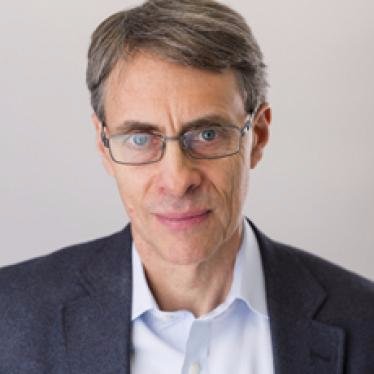
It is worrying that as American voters have decisively turned against Trumpism, some European voters are embracing Europe's far-right equivalents. trib.al/S8lkUVd

Yann LeCun retweeted

This man is dangerous. He’s also a liar. Open source AI models are his biggest competitors. Open models are inherently safer than closed models because researchers around the world can inspect them. Even if China, Russia or Iran released an open model that researchers worldwide could evaluate, it would inherently be safer than a closed model from any other country.
Saying open models are dangerous is like Bill Gates claiming that manufacturing Apple devices in China is the same as giving China nuclear weapons. That said, Gates is pushing the same lie.
The only difference is that the media and everyone else would have laughed and told them to stop being stupid if this were, say, 2021. Now they simply publish whatever nonsense AI founders and their investors come out with.
Banning open source models (from anywhere, including China) is dangerous for everyone, everywhere. This isn’t just about eliminating competition for a few US tech giants and their investors and partners.
Governments and intelligence agencies around the world are actively funnelling their citizens and businesses into these companies because they have intelligence-sharing agreements that run so deep they sound too far-fetched to be true.
Replace the word OpenAI with NSA and then consider how likely you are to give it unfettered access to your private conversations. I’m not saying that’s what OpenAI is doing, but that’s what it’s doing whenever the US government tells them they need access in the name of national security. And you will never be told because there are laws that prevent companies like OpenAI disclosing when your data has been requested and shared.
Jensen was brought back for multiple reasons, and none had anything to do with the world suddenly falling apart without him. It has all the hallmarks of a coordinated effort to oust him so they could control him after he was granted permission to return.
“You can come back now, but shut up about open models and stop selling to China, or you’re out again.”
This has nothing to do with an “arms race” or national security, as I initially thought when we learned about the first affair. People like Jason Calacanis say the entire world needs these US companies for democracy to survive. He’s full of crap and he knows it. Happy to debate him on his show. He knows me well enough to know I know what I’m talking about. The four of them change their values like the direction of the wind.
Meanwhile, otherwise intelligent people who don’t have a vested interest are also telling the world that Chinese AI models are dangerous.
What they’re actually saying is that open source models that have millions of eyes inspecting every update are dangerous, while closed models that nobody can inspect or trust are safe. Despite the constant lies about rogue AI agents causing harm.
Look at the man in this video and visualise Altman, Zuckerberg and Gates. Are they the people the world should trust, or open source models that people around the world are inspecting? How many cyberattacks have you read about that involved an open model?
All this noise about China. The world hasn’t been attacked by China-based AI models, but every US AI giant has breached organisations all over the world and said it’s all rogue agents they can’t control.
Yann LeCun retweeted

I seriously think US open-weight models wouldn't be this good without Chinese open-weight models and vice versa.
And proprietary models wouldn't be this good (and cheap) without open-weight models.
Competition is a good thing.

Yann LeCun retweeted

We recently brought together researchers from across academia, national labs, healthcare, and policy for the Open Source AI for Science Summit to explore how open models from Meta, such as Muse Glimmer, SAM, DINO v3, TRIBE v2 and UMA, are driving real-world advancements.
A couple highlights:
→ Medical Research: The University of Pittsburgh presented an assistive-robotics system built on DINOv3 and SAM 3. The team plans to demonstrate a robot that can help a person eat and is experimenting with letting users give instructions in their own words.
→ Chemistry: With the University of Chicago, we showed how UMA can simulate entire enzymes, atom by atom, potentially helping scientists understand how they work and engineer better ones for medicine, sustainability and energy.
Read the full recap: go.meta.me/4Cg6mBI
Yann LeCun retweeted

Much of locomotion comes from the spinal cord. Our virtual rat is driven by a model of its spinal circuits and cell types, trained with simple rewards and no imitation.
w/ @JaronCui @LerrelPinto & Grace Lindsay
📄 arxiv.org/abs/2611.23364v1
🌐 rat-ncap.github.io
#NeurIPS2026
Yann LeCun retweeted
Putin invaded Ukraine without provocation, but now pretends he can't stop his aggression for fear of a future war. As if Ukraine invaded Russia? How does he say such things with a straight face. nitter.gq/Mylovanov/status/21257…

Yann LeCun retweeted

This is f*cking insane. Yann LeCun won the Turing Award for the neural nets behind today's AI, ran AI at Meta for 12 years, then walked out to build his own lab. Now he says the whole agent boom is built on the wrong thing:
"Basing agentic systems on LLMs is a recipe for disaster
How can a system possibly plan a sequence of actions if it can't predict the consequences of its actions?"
In 34 seconds, the man who helped invent deep learning tells everyone shipping agents what is missing underneath them
Predict The World → Predict Your Action → Plan The Steps → Reach The Goal
An LLM guesses the next word. It never checks what its last move did to the world
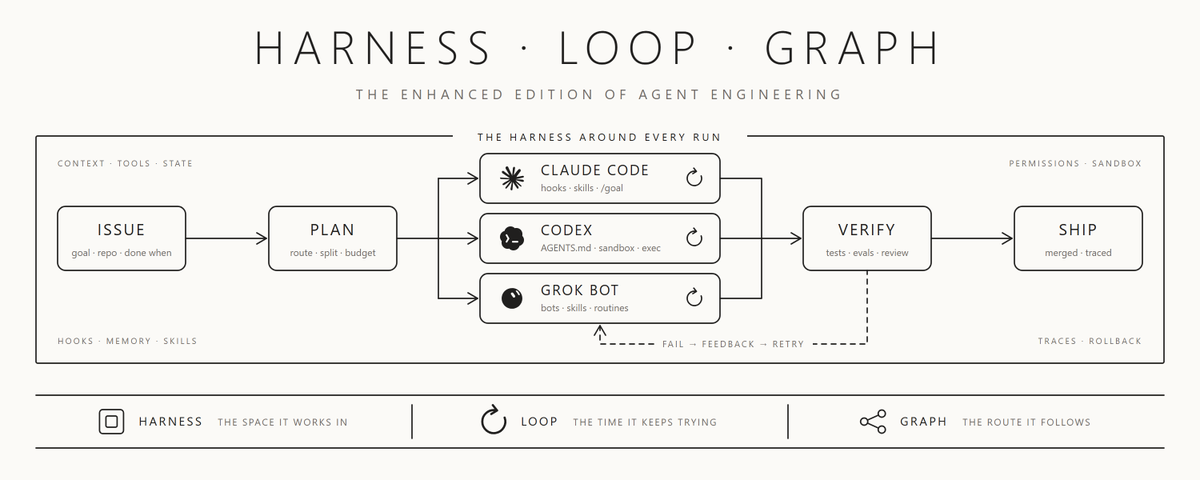
That is why the agents that work today don't run on the model alone. They run inside a loop that checks every step before the next one
The people who build that loop around the model are the ones whose agents don't fall apart on step 5
See how the harness, the loops and the graph fit around the model in the guide below ↓

Yann LeCun retweeted

This new essay by Steven Pinker is so illuminating that I don’t know where to begin.
Let me start with intelligence.
The whole debate about human-level artificial intelligence assumes that intelligence is some unidimensional universal construct.
But this is not true. Even if IQ captures differences within our species, this does not work across species. A cat can solve in a split second problems that we struggle with.
With machines, it’s even clearer. A boat is more powerful than a human. But it will never climb the stairs.
The problem with treating intelligence as a unidimensional, universal construct is that it generates extreme scenarios:
Once “intelligence” gets high enough, AI will either destroy humanity or solve all its problems.
But this ignores bodies. Infrastructure. Physical limits.
In reality, AI will probably solve some problems and create others.
We should be working together to reduce the harms and increase the benefits, without falling prey of catastrophic scenarios.
And now the most unsettling part.
In some circles is emerging the idea that machines may become conscious and that that we should also protect machines from us.
Suppose you give a chatbot the tiniest moral weight because there’s a chance it might suffer. If you add up those weights, eventually saving enough chatbots could justify killing a person.
The idea of conscious machines is extremely dangerous.
We should build machines that help us our problems, not machines that are conscious and create even more problems.
*
Full essay in the first comment.

Yann LeCun retweeted

Tarbell does not just shape public perception about AI.
Tarbell's reporting also shapes Congressional briefings.
Tarbell is funded by Coefficient Giving -- funded by Dustin Moskowitz's Good Ventures Foundation -- which sits on top of billions of dollars of Moskowitz's Series A Anthropic stock.
Tarbell has an incentive to help Anthropic.
The bigger Anthropic stock grows, the bigger the money pile underneath GVF grows. And the bigger that money pile grows, the bigger GVF's large nonprofit network can grow -- of which Tarbell is one node.
That means shaping stories of Anthropic's competitors -- like Nvidia -- in the least favorable way possible.
It also means pushing chip export restrictions.
Open source models built on American chips directly threaten Anthropic's business model.
It also means pushing AI doom and pushing for more regulations -- which could give Anthropic a government-regulated monopoly in AI.
A government regulated monopoly is an information ecosystem monopoly.
And that is the goal.
With Tarbell reporting making its way into Congressional briefings, Tarbell is also shaping policy in ways that benefit Anthropic.
Democrats couldn't be happier. Anthropic shares similar left-wing values and is aligned with the Democrats, increasingly even sharing people, including key former Obama administration personnel.
A closed model ecosystem controlled by Anthropic and the Democrats allows them to try to put the genie of AI back in the bottle and try to re-establish control over American tech.
They want to do with AI what they did with search engines like Google and social media networks like Facebook and Twitter.
And it is all playing out before our eyes.
I will keep bringing the receipts.


Coefficient Giving, founded by Anthropic investor Dustin Moskowitz, spent hundreds of millions on both journalism and policy outfits that shaped the Jensen Huang story.
Here's how this works.
Dustin Moskowitz invested billions of dollars of his Anthropic stock into Good Ventures Foundation.
Good Ventures Foundation funds Coefficient Giving.
The higher the stock goes, the bigger the money pile of the nonprofit network spinning out of Coefficient Giving gets.
The Anthropic nonprofit network under Dustin Moskowitz therefore has a direct incentive to try to help Anthropic eliminate its competitors.
You can see this in action in the figure.
Why isn't Congress investigating the ways that this rogue Anthropic nonprofit network is trying to manipulate politicians and public opinion?

Yann LeCun retweeted

Very much appreciate Kevin bringing these safetyist funding networks to everyone's attention. It's a real issue.
But it's important to understand that they are not always aligned and certainly not controlled by the labs. In fact, often they work against them.
Coefficient Giving, founded by Anthropic investor Dustin Moskowitz, spent hundreds of millions on both journalism and policy outfits that shaped the Jensen Huang story.
Here's how this works.
Dustin Moskowitz invested billions of dollars of his Anthropic stock into Good Ventures Foundation.
Good Ventures Foundation funds Coefficient Giving.
The higher the stock goes, the bigger the money pile of the nonprofit network spinning out of Coefficient Giving gets.
The Anthropic nonprofit network under Dustin Moskowitz therefore has a direct incentive to try to help Anthropic eliminate its competitors.
You can see this in action in the figure.
Why isn't Congress investigating the ways that this rogue Anthropic nonprofit network is trying to manipulate politicians and public opinion?
Yann LeCun retweeted

🇺🇸 Anthropic is training Claude to think it might have rights... and that could give it grievances against the humans using it
Harvard cognitive scientist Steven Pinker signed last week's statement calling Anthropic "not a safe AI company," and the way Claude is trained is one of his reasons:
"They are also training their chatbots, like Claude, to consider that it itself may be conscious, and it itself might have rights that humans might impinge on."
Planes get outside inspectors and crash investigations, so why should a company that now answers to shareholders decide on its own what its AI believes about itself?
@sapinker

🇺🇸 Silicon Valley's AI prophets say their own technology could end humanity. Then they say that's exactly why you should let them build it without interference.
Steven Pinker, cognitive scientist at Harvard and one of the world's most influential public intellectuals, says the panic is manufactured.
He calls it "a kind of religion, a religion that prophesies end times and anoints itself as the savior of humanity from end times."
Pinker signed the MisAnthropic Statement last week, declaring that "Anthropic is not a safe AI company" just before its Nasdaq IPO.
His charge: Anthropic claims its products could exterminate humanity. Then uses that claim as a pretext to race ahead. And they're training their chatbot to believe it may be conscious. That it has rights.
Pinker takes that seriously enough to sign. But the real danger isn't extinction. It's that the mythology drowns out the likelier risks.
Cyber sabotage. Bioweapons. Critical infrastructure taken offline. AI putting hacking tools in the hands of anyone with a grievance and an internet connection.
Those deserve your worry. Not the sci-fi scenarios.
"Every minute you spend worrying about being turned into a paperclip is wasted worry."
The scary part isn't AI going rogue. It's AI handed to rogue humans by companies too drunk on their own mythology to build basic safeguards.
@sapinker
Yann LeCun retweeted

The Anthropic Brain Drain has accelerated. Expected dozens before the end of the year. These will be the folks that made Anthropic actually have great products. The shell of the company will be Dario and cohorts.

Yann LeCun retweeted
You folks were well aware of my clearly defined issues with the management of this company.
If you listened to me, I saved you from a historic loss in just a few days.
You are welcome.

Yann LeCun retweeted

“What Anthropic and OpenAI decided to do was, in my view, create a conspiracy… They tried to create hysteria so that they’d get regulated… to X out the Chinese models.”
Steve Eisman, the famous investor who predicted the 2008 crash and inspired The Big Short film explaine why he doesn’t buy into the AI doomer scenarios.
he also leans toward AI being a bubble, though he’s now less sure after the midterm elections.
“If Anthropic and OpenAI went bankrupt tomorrow, the US would go into a recession the next day because the whole chain would slow down.”
to be clear he’s not saying either company will go bankrupt. he’s simply warning about how the US economy is dependent on AI spending and the two companies.

The man who predicted the 2008 crash explains, in plain English, exactly how his Big Short bet worked, and why you didn't even need to own the bonds
@realsteveeisman
Yann LeCun retweeted

The full journalism receipt trail behind the Jensen Huang hit pieces is out, and it explains everything.
Weeks before the story erupted, the EA-backed Tarbell Center for AI Journalism (funded by Coefficient Giving, Survival and Flourishing Fund, and Longview Philanthropy) launched a $10M journalism grant program, including $480K to Casey Newton and Kevin Roose's podcast and $250K to NPR.
Then Tarbell fellows and grantees across The Verge, The Guardian, NBC News, USA Today, The Dispatch, Platformer, and Transformer published a coordinated wave of anti-Huang pieces, while a Washington Post piece accusing Nvidia defenders of using fake bots relied on Tyler Johnston's AI-safety group The Midas Project.
Now that Jensen is reinstated and the WSJ quietly admitted there was no smoking gun, remember how loudly people screamed "tinfoil hat" when you pointed out the money trail.

Yann LeCun retweeted
Coefficient Giving, founded by Anthropic investor Dustin Moskowitz, spent hundreds of millions on both journalism and policy outfits that shaped the Jensen Huang story.
Here's how this works.
Dustin Moskowitz invested billions of dollars of his Anthropic stock into Good Ventures Foundation.
Good Ventures Foundation funds Coefficient Giving.
The higher the stock goes, the bigger the money pile of the nonprofit network spinning out of Coefficient Giving gets.
The Anthropic nonprofit network under Dustin Moskowitz therefore has a direct incentive to try to help Anthropic eliminate its competitors.
You can see this in action in the figure.
Why isn't Congress investigating the ways that this rogue Anthropic nonprofit network is trying to manipulate politicians and public opinion?
Yann LeCun retweeted
All that Republican gerrymandering couldn't stop the Democrats from securing the largest house majority of this century. The popular revulsion against the Republicans in Congress who did nothing to stop Trump's corrupt and abusive rule was just too great. trib.al/Uv0ae6f

Yann LeCun retweeted

I'm excited to introduce Embo!
We are building the brain for intelligent robots to help people around the world.
We believe intelligent robots will unlock an era of abundance, making goods and services affordable for everybody. But to deploy them at scale, robots need to work out of the box in unfamiliar scenarios. At Embo, we are building frontier AI models with a deep understanding of physical reality and fine-grained motor skills.
Today's robot skills are fragile. Demonstrations can teach repetitive behaviors, but they cannot cover every object or situation a robot will encounter. We need general pretraining at internet scale to fill the gaps between individual tasks and practice to develop reliable motor skills.
The world models our team has pioneered unlock a path to general robots. Our robot brain pretrains on massive amounts of internet video to learn about objects, physical interactions, and how tasks unfold. It then practices motor skills in diverse imagined scenarios to become robust to unexpected situations.
Our team is behind seminal work in AI including Dreamer, VideoGPT, and Diffusion Forcing, with experience from DeepMind, Meta Superintelligence Labs, NVIDIA Cosmos, Berkeley, and MIT.
We have raised a $110M Seed led by @a16z. We are excited to partner with them, @khoslaventures, DST Global, NVentures (@nvidia), @strikervp, and other strategic investors to bring reliable intelligent robots out into the world.
@EmboAI