Smart Contracts Developer @yieldnestfi. prev @aave @_VaporFi @amazon
Blockchain
Joined December 2020
- Tweets909
- Following5.3K
- Followers2.7K
- Likes9.8K





good read on this eip for integration with signatures where there is need for contract signing
eips.ethereum.org/EIPS/eip-1…
the best usecase of this is implemented in gnosis safe implementation github.com/safe-fndn/safe-sm…


did a deep dive on how rlp encoding works, good read
ethereum.org/developers/docs…

Deep diving on EIP-7702 this weekend
Great introductory video by @lightclients youtube.com/watch?v=_k5fKlKB…
and by @PatrickAlphaC youtube.com/watch?v=0uy4nd8v…
Reading official eip spec was overwhelming at first but this two videos + AI made it click.
great overview on market making on exchanges

"Greed makes markets."
Annanay Kapila (@annanay) spent years as an HFT quant at Flow Traders and Tower Research before founding QFEX (@QFEX), a perpetual futures exchange for equities, commodities & FX. Cambridge Maths.
At his last job, the desk traded $10B+ of volume a day, run almost entirely by algorithms.
In this lecture, he builds market making from first principles:
- The map of systematic trading: prop money vs. other people's money, HFT vs. mid-frequency, and why every strategy lives in one quadrant
- Why prop firms can return 50-100% a year while hedge funds can't: HFT never leaves you holding a big position
- The order book from scratch: bids, offers, limit orders, and why the first order on a price level gets the trade
- No free lunch: how arbitrageurs force every order book to reveal a fair price without anyone trying to
- The entire strategy in one line: bid below fair value, offer above it, collect the difference forever
- Market making is "time-spreading risk," warehousing positions between a seller who shows up now and a buyer who shows up later
- Adverse selection: you're most likely to get filled precisely when your price is most wrong
- Why market makers are completely self-serving, and why that's exactly what makes markets work
- The competitive race that compresses spreads: greed among market makers means lower costs for everyone else
- Thick books vs. thin books, and the vicious loop that keeps illiquid markets illiquid
Highlights:
(00:45) The systematic trading map: capital vs speed
(01:45) Prop firms vs hedge funds: return-on-capital economics
(06:29) A message from Onyx
(07:55) Where market making sits: high-Sharpe prop HFT
(08:55) Fungibility and why exchanges exist
(11:00) How a central limit order book actually works
(17:40) No free lunch: arbitrage-free pricing in the book
(19:55) Theo: reading fair value from the mid
(22:45) Who really posts the book (not retail)
(24:35) Market making as warehousing risk across time
(27:20) Edge: quoting around your fair value
(29:45) Queue priority and the adverse selection problem
(33:05) How competition compresses the bid-offer spread
(37:40) Thick vs thin books: liquidity begets liquidity
(43:55) Scaling to $10B a day on algorithms
Good explanation on Morpho Midnight by @DeFiSaver
youtube.com/watch?v=9P76U3LK…
Next read: midnight whitepaper
Great guide on events in solidity and the underlying opcodes for events. Was great read for weekend
paragraph.com/@spacesailor/t…
🧵1) Spent time this weekend on understanding of low level solidity and evm. Was refreshing to read and brush up internal workings.
Resources linked:
How does ethereum contract creation works internally by @RareSkills_io rareskills.io/post/ethereum-…

2) Solidity metadata appended at solidity deployment bytecode and its significance by @RareSkills_io rareskills.io/post/solidity-…

Parth retweeted

Web3 security firms are getting carried away with their AI claims 🧵
Firms are falling over each other to announce AI breakthroughs — some even going as far as saying their agent outperforms their own researchers. Bold claim.
Yet not a single one has released their model for public testing. Funny how that works.
What makes it stranger — these same founders charging $130k for a 14-day audit are now offering free AI pre-audits. Suddenly so generous 🤔
Here's the thing though, none of these companies have poached a senior AI researcher from Anthropic or OpenAI. These are security researchers who've fine-tuned frontier models on mostly public audit data. Respectable work, but let's not overstate what it is, because everyone is building on the same foundation:
→ Same frontier models (Claude, GPT-4o, Gemini)
→ Same public vulnerability datasets
→ No proprietary data moat
→ No dedicated AI infrastructure advantage
So if everyone has the same ingredients, why are some founders acting like they've invented fire? The gap between any two firms here is a few weeks at best.
And the context matters here — the web3 security industry is under real pressure right now. Firms that used to rely on a pool of contract researchers to handle overflow are now getting by with just their core staff.
Clients have caught on, rates are being pushed down, and firms are quietly doing more with less.
So when you see these AI announcements, ask the one question nobody wants to answer — where are the benchmarks? Where is the model? If it's already free, why not release it?
Until then, please go easy on your AI 🫡
Parth retweeted

Too many programmers waste time bouncing from one study subject to another.
They fear that what they are studying currently is not "optimal."
A less charitable interpretation is that most people cannot focus...
...but I don't think this is the correct diagnosis for many people.
The space of subjects to study is massive, but time is limited.
Therefore, the "fear of misplaced priorities" is reasonable.
Here's what I have to say:
Bouncing from one subject to another is unquestionably less optimal than picking the "wrong" subject and sticking to it for at least a month.
The more you know, the easier it is to pick up other subjects as they "feel related" to something you already know.
So don't worry if you "study the wrong subject."
Two years from now, it might be the key that makes the right opportunity easy to learn.
- Compilers will make you better at leetcode
- Operating systems will make you better at blockchains
- ZK will make you better at quantum computing
Math will make you better at machine learning
Plus, the more deeply you study more subjects, the better intuition you will have for what the "right subject is."
Without that grounding, you are liable to being swayed by tech influencers who are optimizing for their engagement rather than your well-being.
Being a generalist doesn't mean watching 3 hours of content on a lot of subjects.
It means having the ability and prerequisites to go deep into an arbitrary subject on command.
You can only grow that skill by going deep several times, which only comes through sustained focus.
Too many people study a subject until they hit the worst part of the Dunning-Kruger curve, then move on to the next subject. Such a study habit is very destructive.
Great writeup on setting proper liquidation threshold and liquidation bonus for lending protocol to ensure no bad debt is created s3v3ru5.github.io/posts/part…
Another one on spectrum of Health factor and position's recovery based on HF
s3v3ru5.github.io/posts/part…
h/t @S3v3ru5_
great work. Nice to see different initiatives taking place to secure onchain contracts and vulnerabilities

Phylax just blocked its first live exploit attempt on Linea.
An external integration misconfiguration caused some wallets to approve a 0x Settler address directly. Working with @0xProject, we deployed a targeted mitigation...
and the first drain attempt was stopped!
Read on
nice article by @trailofbits on thinking in terms of dimensions for understanding formulas in defi
blog.trailofbits.com/2026/03…

Is there any detailed articles comparing slippage of Uniswapv2 vs curve V1 and how the dynamics changes based on the reserves in the pool?
Any blogs, resources or papers?

Good writeup by @ret2basic on Solv protocol hack
taichiaudit.com/blog/solv-pr…

too many cases like this. How can we make bug bounty great again?

I Saved Injective's $500M. They Pay Me $50K.
I like hunting bugs on @immunefi . I'm decent at it.
- #1 — Attackathon | Stacks
- #2 — Attackathon | Stacks II
- #1 — Attackathon | XRPL Lending Protocol
- 1 Critical and 1 High from bug bounties (not counting this one)
Life was good. Then I found a Critical vulnerability in @injective .
This vulnerability allowed any user to directly drain any account on the chain. No special permissions needed. Over $500M in on-chain assets were at risk.
I reported it through Immunefi. The next day, a mainnet upgrade to fix the bug went to governance vote. The Injective team clearly understood the severity.
Then — silence. For 3 months. No follow up. No technical discussion. Nothing.
A few days ago, they notified me of their decision: $50K. The maximum payout for a Critical vulnerability in their bug bounty program is $500K. I disputed it. Silence again. No explanation for the reduced payout. No explanation for the 3 month ghost. No conversation at all. To be clear: the $50K has not been paid either.
I've seen others share bad experiences with bug bounty payouts recently. I never thought it would happen to me. I can't force them to do the right thing. But I won't let this be forgotten.
I will dedicate 10% of all my future bug bounty earnings to making sure this story stays visible — until Injective pays what I deserve.
Full Technical Report: github.com/injective-wall-of…

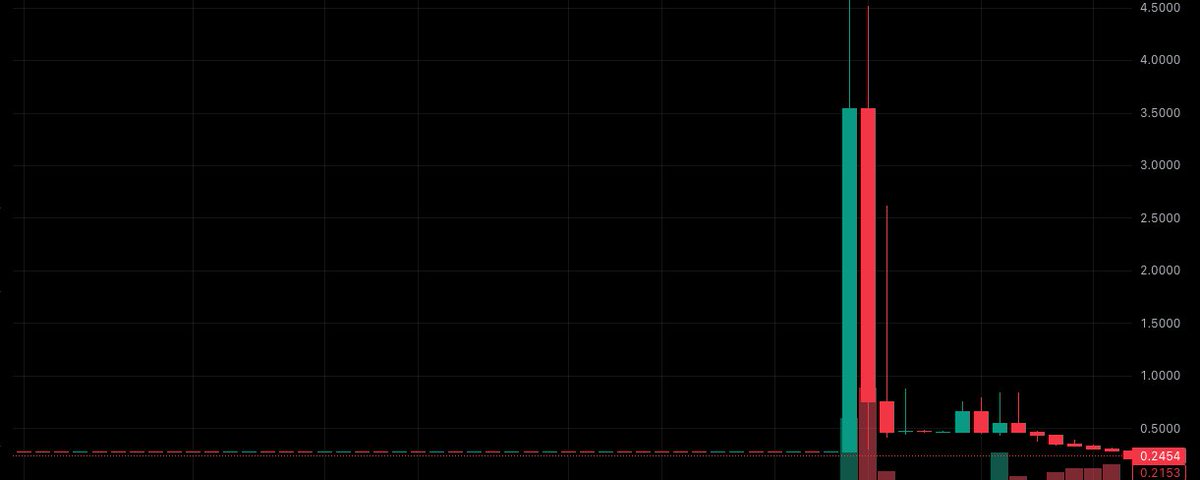
wondering what would be better way to price this type of collaterals where chainlink feed is not available and there is not enough onchain liquidity for twap pricing. maybe best solution for lending protocols is not to list this collaterals in first place