

#Nonprofit #research laboratory providing #disability evaluations, #education, and #resources for #MECFS, #LongCOVID, and other #fatigue related illnesses.
- Tweets648
- Following1.5K
- Followers2.7K
- Likes2.7K

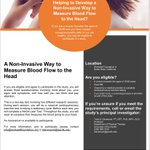


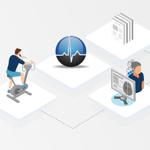


ALT Interested in Helping to Develop a Non-Invasive Way to Measure Blood Flow to the Head? If you are a woman between the ages of 18-65 and you have myalgic encephalomyelitis (ME) or you are healthy, you may be eligible to participate in a study. A Non-Invasive Way to Measure Blood Flow to the Head If you are eligible and agree to participate in the study, you will answer three questionnaires involving more about you, your signs and symptoms, and how well you can think and pay attention. This is a two-day test involving two different research sessions. During each session, you will do a maximal cardiopulmonary exercise test involving a stationary cycle. Before each test, you will complete a NASA Lean Test. Throughout the study, you will wear an earpiece that measures the blood going to your head. An honorarium is available to participants. For more information, and to participate, please contact [email protected] or [email protected]. Location Workwell Foundation in Santa R


ALT Webinar announcement on disability benefits and post-exertional malaise, co-hosted by Kantor & Kantor and Workwell Foundation.


ALT Abstract Myalgic encephalomyelitis/chronic fatigue syndrome (ME/CFS) and Long Covid are characterized by post-exertional malaise (PEM). Similarities in disease presentation suggest important commonalities in bioenergetic impairment, but this hypothesis has not been demonstrated. The metabolic underpinnings of each disease can be elucidated by two cardiopulmonary exercise tests (CPET) administered 24 hours apart. This retrospective study examined physiological responses on two-day CPET in people with ME/CFS (63 females and 21 males), Long Covid (52 females and 27 males), and matched non-disabled control participants (51 females and 20 males). Data were analyzed within sexes using repeated measures analysis of variance. All participants met maximal effort criteria. There were significant reductions in oxygen consumption ( O₂) and workload at the ventilatory anaerobic threshold (VAT) in both patient groups compared to non-disabled controls, with larger effect sizes at VAT than at peak exe


ALT I.age of a pdf describing the time course of PEM. The original pdf document is available at Source: Workwell Foundation https://share.google/Gl1yA2UmJPkhpVgEm


ALT "History Made! The American College of Sports Medicine includes ME/CFS in global exercise guidelines for the first time."


ALT 3:00 PM - 5:00 PM CP-21833 Long Covid Grand Rounds 2025: Case Studies of Emerging Technologies and Practices for Physical Therapy Todd Eldon Davenport, PT, DPT, MPH, Theresa G Dowell, PT, Daniel Lee, Nicole Andre Miranda, PT, DPT, Clayton Daniel Powers, PT, DPT and Staci R Stevens Lanier Grand Ballroom K (Level Four, Hilton Americas)

ALT Screenshot of abstract


ALT Photo of a smartwatch Pacing with a heart rate monitor to minimize post-exertional malaise (PEM) in ME/CFS and long COVID This blog discusses an approach to minimize PEM by pacing activities with a heart rate monitor (HRM). When appropriately executed, pacing with an HRM will interrupt the boom-bust energy cycle and minimize PEM. Heart rate monitoring (HRM) provides direct and instant biofeedback that increases symptom awareness. If a person with ME/CFS can learn to link heart rate with symptoms during and after exertion, the results can significantly improve quality of life. Read more here>>