



Pinned Tweet
🇺🇸 As Democrats, we have every reason to celebrate this electoral breakthrough. We have changed the balance of power in Washington and secured an opportunity to chart a different course. But victory is not an end in itself. It comes with responsibility, expectations and, above all, an obligation to deliver.
We will have the opportunity to shape the legislative agenda, restore congressional oversight and offer a credible alternative to the Trump administration. But winning elections is one thing; turning that victory into effective governance is quite another.
Our immediate task must be to establish clear priorities, rebuild public confidence in Congress and demonstrate that Democratic leadership can make a tangible difference in people’s lives.
We will have to address the cost of living, protect healthcare and voting rights, defend democratic institutions and hold the administration accountable. These objectives must be pursued through a coherent legislative programme rather than a succession of political confrontations.
But what kind of governing majority do we want to be? A Congress focused exclusively on investigating the administration risks missing an opportunity to articulate an alternative vision. Conversely, a legislative strategy that neglects accountability would leave an important part of our mandate unfulfilled.
We will need to find the right balance between oversight, legislation and political positioning. That balance will define the next two years.
The next phase will also test our internal cohesion. Our coalition brings together moderates, progressives, establishment figures and a younger generation seeking a different political direction. Electoral unity does not automatically translate into legislative unity. We will have to manage our differences without losing sight of the common purpose that brought us here.
And then there is 2028.
These midterms will inevitably reshape the presidential succession debate. Potential candidates will begin positioning themselves, alliances will emerge and disagreements over our party’s identity, economic priorities and foreign policy will become more visible. We must begin preparing for that debate without allowing the 2028 race to undermine the work we have to do now.
For Donald Trump, losing congressional control fundamentally changes the political environment of his final two years. Investigations, hearings, subpoenas and budget negotiations could become recurring confrontations. We will have oversight powers, but we will not have the votes to automatically override presidential vetoes or enact our entire programme. We must understand both the opportunities and the limits of our new position.
The immediate political message is clear: voters have entrusted us with a greater share of responsibility. We must rise to that responsibility.
Winning the midterms is the opportunity. Governing through Congress, exercising meaningful oversight and presenting a credible alternative for 2028 is our responsibility.
The blue wave has changed the political landscape. What we do with this mandate will determine whether this victory becomes a lasting political turning point or simply another electoral moment.
@DNC @TheDemocrats @DemSocialists
@DemsAbroad @DemsAbroadCan
@HouseDemocrats @SenateDems

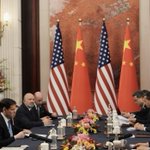
🇨🇳 🇺🇸 | Shenzhen: Trump Meets Xi After Putin, Ahead of a Historic Trilateral Encounter
The diplomatic choreography in Shenzhen is significant. Donald Trump has met Vladimir Putin first and is now holding bilateral talks with Xi Jinping, ahead of the three-way encounter involving all three leaders. The sequence is more than a matter of protocol: it creates a series of diplomatic exchanges in which each bilateral meeting can shape the expectations and calculations surrounding the next.
Having spoken with Putin, Trump now has an opportunity to engage Xi directly, addressing the complex relationship between Washington and Beijing while also testing China’s position on issues where American and Russian interests intersect. Trade, technology, Taiwan, Ukraine, sanctions, energy and global security are all part of a much broader strategic equation.
For Xi, the timing is equally important. He can assess the implications of Trump’s earlier conversation with Putin while making clear that Beijing has its own priorities and is not simply a supporting actor in a Washington–Moscow understanding. China and Russia share important strategic interests, but their relationship is not without differences, particularly when it comes to economic dependencies, regional influence and the long-term international order.
The subsequent trilateral meeting will bring these distinct interests into the same diplomatic space. Its significance will lie less in the prospect of an immediate agreement than in the opportunity to explore common ground, identify red lines and assess the limits of mutual accommodation.
The order of the meetings is therefore revealing: Trump engages Putin, then Xi, before bringing both leaders together. Each conversation provides an opportunity to establish positions and test the other side’s intentions before the more complicated three-way exchange begins.
The real diplomacy may be taking place before the three leaders sit together. The photographs will capture the encounter; the preceding bilateral conversations may determine what is actually possible.


🇨🇳 | 🇺🇸 🇷🇺 | The Trump–Putin bilateral meeting in Shenzhen, ahead of their subsequent encounter with Xi Jinping, may be less about securing an immediate agreement than about establishing the political parameters of their engagement. For Trump, the exchange offers an opportunity to demonstrate that Washington and Moscow can negotiate directly, explore potential diplomatic openings and establish a channel that does not depend on Beijing. For Putin, it provides international visibility, reinforces Russia's status as a major power and allows him to test Trump's willingness to pursue a negotiated approach to Ukraine, sanctions and strategic stability.
Ukraine is likely to remain the most sensitive underlying issue, even if no concrete settlement is discussed. The two presidents may seek to gauge the scope of possible negotiations, the conditions for a ceasefire and the political limits of any concessions, without confusing preliminary discussions with an actual agreement. Nuclear arms control and broader security questions could also offer common ground, particularly as Washington seeks to address China's expanding strategic capabilities.
The bilateral also carries a message for Xi. Trump wants to demonstrate that he can engage both Moscow and Beijing independently, while Putin has an interest in maintaining his partnership with China without becoming entirely dependent on it. Xi, meanwhile, has an opportunity to position China as the indispensable diplomatic centre of the encounter, shaping the broader conversation without necessarily committing to outcomes that conflict with Beijing's interests.
The significance of Shenzhen may therefore lie less in what the three leaders formally agree to than in what they establish privately about the limits of cooperation, the issues they are prepared to negotiate and the balance of leverage each brings to the table. The bilateral sets the tone; the trilateral tests whether their overlapping interests can translate into a broader diplomatic understanding — or whether their strategic differences remain too deep to bridge.

55
🇨🇳 | 🇺🇸 🇷🇺 | The Trump–Putin bilateral meeting in Shenzhen, ahead of their subsequent encounter with Xi Jinping, may be less about securing an immediate agreement than about establishing the political parameters of their engagement. For Trump, the exchange offers an opportunity to demonstrate that Washington and Moscow can negotiate directly, explore potential diplomatic openings and establish a channel that does not depend on Beijing. For Putin, it provides international visibility, reinforces Russia's status as a major power and allows him to test Trump's willingness to pursue a negotiated approach to Ukraine, sanctions and strategic stability.
Ukraine is likely to remain the most sensitive underlying issue, even if no concrete settlement is discussed. The two presidents may seek to gauge the scope of possible negotiations, the conditions for a ceasefire and the political limits of any concessions, without confusing preliminary discussions with an actual agreement. Nuclear arms control and broader security questions could also offer common ground, particularly as Washington seeks to address China's expanding strategic capabilities.
The bilateral also carries a message for Xi. Trump wants to demonstrate that he can engage both Moscow and Beijing independently, while Putin has an interest in maintaining his partnership with China without becoming entirely dependent on it. Xi, meanwhile, has an opportunity to position China as the indispensable diplomatic centre of the encounter, shaping the broader conversation without necessarily committing to outcomes that conflict with Beijing's interests.
The significance of Shenzhen may therefore lie less in what the three leaders formally agree to than in what they establish privately about the limits of cooperation, the issues they are prepared to negotiate and the balance of leverage each brings to the table. The bilateral sets the tone; the trilateral tests whether their overlapping interests can translate into a broader diplomatic understanding — or whether their strategic differences remain too deep to bridge.
🇨🇳 🇺🇸 🇷🇺 | Shenzhen: The Diplomacy of Three — Xi, Trump and Putin at a Strategic Crossroads
Today, November 19, the diplomatic spotlight turns to Shenzhen, where Donald Trump, Xi Jinping and Vladimir Putin are set for the first three-way presidential encounter of its kind, on the sidelines of the APEC summit. The sequencing is itself a statement: Trump meets Xi bilaterally at 12:45 p.m. local time, then joins both leaders for a trilateral at 2:30 p.m. A separate Trump-Putin bilateral is also expected, though its timing has not been officially fixed.
This is more than choreography. It shows a balance of power increasingly negotiated through overlapping relationships among Washington, Beijing and Moscow, and each president arrives with a different agenda. Trump wants to advance trade, strategic competition, arms control, Ukraine and the Russia relationship at once, and he trusts leader-to-leader diplomacy to do it. Xi wants recognition of China as the indispensable interlocutor, a power able to convene the other two. Putin wants direct access to the American president and a seat beside Xi that signals Russia still matters. Three leaders may share a table without sharing an agenda.
The order of meetings matters for that reason. The Trump-Xi bilateral lets Washington and Beijing settle their own file (trade, tariffs, technology controls, AI, investment) without Moscow in the room. The Trump-Putin conversation serves another purpose: Ukraine, nuclear security and US-Russia relations cannot be treated as extensions of the China question. The trilateral will therefore sit atop two distinct relationships, each with its own tensions, leverage and constraints, and should not be mistaken for a common diplomatic position.
Ukraine is the most consequential test. Any Trump-Putin exchange raises the question of a ceasefire and of how far Washington might seek terms directly with Moscow. Xi's presence adds a layer: Beijing keeps its ties with Moscow while presenting itself as an advocate of dialogue, but influence over Russia is not the power to dictate its decisions. For Europe and Kyiv, the concern is whether understandings affecting European security emerge without European participation. Agreements on Ukraine's sovereignty and territorial integrity cannot acquire lasting legitimacy when negotiated only among outside powers.
The nuclear file may prove weightier than the theatre. New START expired in February 2026, leaving no treaty limits on American and Russian strategic arsenals. Trump wants a broader arrangement that includes China, while Beijing refuses a framework built around far larger American and Russian stockpiles. Three powers with different arsenals, doctrines and fears must somehow address strategic stability together. Shenzhen can open a dialogue. It cannot, by itself, deliver arms control.
The venue speaks too. APEC was built for trade, investment and connectivity, and now carries technology and AI. By hosting Trump and Putin beside Xi, China turns an economic forum into a stage for security, which shows how tightly economic power, technological rivalry and diplomacy have fused.
The photograph will carry weight, but symbolism is not substance. The real measure is concrete progress: a steadier US-China economic relationship, serious talk on nuclear risk, a credible process on Ukraine, ways to manage disputes among major powers. A fourth audience is watching all of it, from America's allies to Europe, Ukraine and the Indo-Pacific, and it will judge not only the outcome but a diplomacy increasingly conducted among the great powers themselves.
Three leaders at one table are not three powers moving in one direction. Shenzhen will be measured by what they negotiate, and by what they leave unresolved.
📸 Iori Sagisawa | Reuters

🇨🇳 Shenzhen : la diplomatie des coulisses
On regarde les poignées de main, les photographies de famille, les discours solennels et les banquets du pays hôte. C’est la partie visible d’un sommet, et elle n’en est qu’une partie. Une autre diplomatie travaille en continu, loin des caméras, dans les salons privés, les ambassades et les couloirs d’hôtel où logent les délégations.
Car un sommet n’est pas une succession de cérémonies. C’est un espace temporaire de négociation, de communication stratégique et de gestion des rapports de force. La diplomatie n’y commence pas à l’arrivée des dirigeants : elle a commencé des semaines, parfois des mois plus tôt, dans les ministères et les cabinets qui ont fixé positions, priorités et lignes rouges. Chaque mot d’un communiqué commun est pesé et arbitré avant même que les avions n’atterrissent.
Sur place, deux diplomaties avancent en parallèle. La première est celle que le public connaît : plénières, engagements officiels, images protocolaires. La seconde est celle des ministres, des conseillers et des hauts fonctionnaires. Pendant qu’une séance traite de coopération économique, leurs équipes négocient différends tarifaires, restrictions technologiques ou mécanismes de coopération, et les conseillers à la sécurité nationale abordent défense et tensions régionales. Cette diplomatie n’est pas secrète au sens strict ; elle est discrète, spécialisée, continue. Elle traite ce qu’une enceinte multilatérale ne tolère pas, où chaque phrase est aussitôt disséquée.
Les bilatérales en sont le cœur. Réunir autant de dirigeants dans une même ville permet de multiplier les échanges directs sans déplacements supplémentaires, et d’aborder les sujets sensibles sans exposer les divergences. À Shenzhen, les relations entre Washington et Pékin, Washington et Moscou, ainsi que le partenariat sino-russe, débordent largement le cadre économique de l’APEC : droits de douane, semi-conducteurs, terres rares, sécurité régionale, Ukraine. Tout ne sera pas abordé partout, et la présence de trois dirigeants ne fait pas une négociation à trois. Il faut distinguer les formats bilatéraux des discussions trilatérales éventuelles, qui ne servent pas les mêmes objectifs.
Vient ensuite l’informel : quelques minutes de conversation, une table de banquet, une question en apparence anodine sur ce que l’autre serait prêt à concéder. Rien de cela n’engage, mais tout cela mesure le possible avant que les administrations ne s’engagent. Un dîner partagé n’a jamais valu accord.
Reste le texte. À l’APEC, où le consensus prévaut et où les décisions ne sont généralement pas contraignantes, la formulation est le véritable champ de bataille. L’un veut condamner explicitement certaines pratiques commerciales, l’autre refuse toute phrase qui sonnerait comme une critique directe. Le bon langage est assez précis pour sauver la substance, assez souple pour être signé par tous.
Pour lire Shenzhen, il faut donc regarder au-delà des discours : le calendrier des bilatérales, la composition des délégations, les changements de programme, les sujets soigneusement évités, et les décisions différées qui ne deviennent publiques que des semaines plus tard.
Rien de tout cela ne réduit les cérémonies à un spectacle. La diplomatie publique fixe les orientations et adresse des messages aux partenaires comme aux opinions ; la diplomatie discrète teste les compromis et prépare les décisions. La photographie de famille montre qui était là, les discours disent les positions, le calendrier révèle qui a voulu rencontrer qui. Seul ce qui devient possible après le sommet en donne la mesure.
L’une se joue devant les caméras, l’autre transforme les rapports de force en possibilités d’entente. Entre ce qui se dit et ce qui se négocie se loge le sens véritable d’un sommet.
🇨🇳 Shenzhen : derrière le menu du dîner de bienvenue de l’APEC, la Chine a raconté son histoire, affirmé son identité et mis en scène sa vision de la coopération internationale.
Hier soir, Xi Jinping et Peng Liyuan ont reçu les dirigeants et représentants des économies de l’APEC autour d’un banquet qui dépassait largement le protocole. Dans la diplomatie chinoise, l’hospitalité est un langage politique : plats, vins, musique, décor et déroulement de la soirée composent une même narration, celle d’une Chine qui entend articuler identité culturelle, ouverture économique et ambition internationale.
Le menu en donnait la clef. Une entrée froide baptisée « Pengcheng », du nom de l’ancien surnom de Shenzhen, ouvrait le repas. Elle était suivie d’une soupe de vessie natatoire de poisson séchée aux olives vertes chinoises, puis d’un homard sauté au gingembre et aux oignons verts. Le mérou, cuit à la vapeur avec une sauce de soja, rappelait les traditions culinaires cantonaises. Le steak aux champignons et les morilles accompagnées de jeunes choux chinois et de châtaignes dans une sauce au safran introduisaient des influences plus occidentales. Un assortiment de dim sum cantonais et une soupe sucrée de haricots rouges aux graines de lotus et à l’écorce de mandarine séchée complétaient le repas, avec gâteau, fruits frais et crème glacée.
Les boissons prolongeaient cette logique de terroir et de représentation nationale : un cabernet sauvignon Diaoyutai 2019 et un vin blanc Diaoyutai 2020 du Ningxia, région viticole du nord-ouest de la Chine, ainsi qu’un vin de glace au litchi du Guangdong, ancré dans les productions locales du sud du pays. À travers ces choix, la Chine ne présentait pas seulement ses traditions culinaires, mais aussi la diversité de ses terroirs et le développement de son savoir-faire viticole. Sans miser sur les mets rares ou l’extravagance, le banquet proposait une cuisine régionale identifiable, suffisamment accessible pour séduire des convives venus du monde entier. Le message est subtil : accueillir le monde sans renoncer à ce que l’on est.
La musique obéissait au même dessein. Vingt-deux morceaux de bienvenue, associés aux délégations des économies participantes, ont accompagné l’arrivée des invités. Chaque sélection constituait une reconnaissance symbolique de l’identité culturelle des visiteurs. Après le banquet, un spectacle a célébré la diversité des civilisations et les échanges en Asie-Pacifique. La musique et les arts devenaient ainsi des éléments à part entière du protocole.
Cette mise en scène répondait au discours de Xi Jinping, qui a présenté Shenzhen comme une ville dont l’ouverture est l’ADN, l’innovation le moteur et la coopération la force. Passée de bourgade frontalière à métropole technologique, elle incarne dans le récit officiel les fruits de la réforme et de l’ouverture. Le banquet prolonge ainsi la parole politique par d’autres moyens.
L’enjeu dépasse pourtant l’assiette. Le sommet réunit des puissances dont les intérêts divergent : tensions commerciales, restrictions technologiques, chaînes d’approvisionnement, énergie et rivalités géopolitiques. Un banquet ne règle aucun différend et ne remplace aucune négociation. Il installe en revanche un climat, favorise les échanges personnels et entretient le lien entre dirigeants.
D’où l’intérêt de regarder ces réceptions de près. Les photos de famille montrent des participants réunis, les discours exposent les ambitions officielles, mais les menus, les musiques et le protocole disent comment le pays hôte veut être perçu : moderne, enraciné, ouvert, capable d’accueillir à sa table des partenaires aux visions du monde très différentes.
En diplomatie, recevoir est une façon de parler. Et parfois, avant la première négociation, l’hôte a déjà livré son message.

1
30
🇨🇳 Shenzhen : derrière le menu du dîner de bienvenue de l’APEC, la Chine a raconté son histoire, affirmé son identité et mis en scène sa vision de la coopération internationale.
Hier soir, Xi Jinping et Peng Liyuan ont reçu les dirigeants et représentants des économies de l’APEC autour d’un banquet qui dépassait largement le protocole. Dans la diplomatie chinoise, l’hospitalité est un langage politique : plats, vins, musique, décor et déroulement de la soirée composent une même narration, celle d’une Chine qui entend articuler identité culturelle, ouverture économique et ambition internationale.
Le menu en donnait la clef. Une entrée froide baptisée « Pengcheng », du nom de l’ancien surnom de Shenzhen, ouvrait le repas. Elle était suivie d’une soupe de vessie natatoire de poisson séchée aux olives vertes chinoises, puis d’un homard sauté au gingembre et aux oignons verts. Le mérou, cuit à la vapeur avec une sauce de soja, rappelait les traditions culinaires cantonaises. Le steak aux champignons et les morilles accompagnées de jeunes choux chinois et de châtaignes dans une sauce au safran introduisaient des influences plus occidentales. Un assortiment de dim sum cantonais et une soupe sucrée de haricots rouges aux graines de lotus et à l’écorce de mandarine séchée complétaient le repas, avec gâteau, fruits frais et crème glacée.
Les boissons prolongeaient cette logique de terroir et de représentation nationale : un cabernet sauvignon Diaoyutai 2019 et un vin blanc Diaoyutai 2020 du Ningxia, région viticole du nord-ouest de la Chine, ainsi qu’un vin de glace au litchi du Guangdong, ancré dans les productions locales du sud du pays. À travers ces choix, la Chine ne présentait pas seulement ses traditions culinaires, mais aussi la diversité de ses terroirs et le développement de son savoir-faire viticole. Sans miser sur les mets rares ou l’extravagance, le banquet proposait une cuisine régionale identifiable, suffisamment accessible pour séduire des convives venus du monde entier. Le message est subtil : accueillir le monde sans renoncer à ce que l’on est.
La musique obéissait au même dessein. Vingt-deux morceaux de bienvenue, associés aux délégations des économies participantes, ont accompagné l’arrivée des invités. Chaque sélection constituait une reconnaissance symbolique de l’identité culturelle des visiteurs. Après le banquet, un spectacle a célébré la diversité des civilisations et les échanges en Asie-Pacifique. La musique et les arts devenaient ainsi des éléments à part entière du protocole.
Cette mise en scène répondait au discours de Xi Jinping, qui a présenté Shenzhen comme une ville dont l’ouverture est l’ADN, l’innovation le moteur et la coopération la force. Passée de bourgade frontalière à métropole technologique, elle incarne dans le récit officiel les fruits de la réforme et de l’ouverture. Le banquet prolonge ainsi la parole politique par d’autres moyens.
L’enjeu dépasse pourtant l’assiette. Le sommet réunit des puissances dont les intérêts divergent : tensions commerciales, restrictions technologiques, chaînes d’approvisionnement, énergie et rivalités géopolitiques. Un banquet ne règle aucun différend et ne remplace aucune négociation. Il installe en revanche un climat, favorise les échanges personnels et entretient le lien entre dirigeants.
D’où l’intérêt de regarder ces réceptions de près. Les photos de famille montrent des participants réunis, les discours exposent les ambitions officielles, mais les menus, les musiques et le protocole disent comment le pays hôte veut être perçu : moderne, enraciné, ouvert, capable d’accueillir à sa table des partenaires aux visions du monde très différentes.
En diplomatie, recevoir est une façon de parler. Et parfois, avant la première négociation, l’hôte a déjà livré son message.
🇨🇳 Hospitality as an Expression of APEC’s Purpose
President Xi Jinping and Madame Peng Liyuan’s welcome banquet for guests attending the 33rd APEC Economic Leaders’ Meeting was more than a ceremonial gesture. It reflected an important dimension of APEC’s purpose: bringing economies together through dialogue, mutual understanding and cooperation.
APEC is built on the recognition that economic prosperity in the Asia-Pacific depends not only on trade and investment, but also on trust, partnership and sustained engagement among its member economies. In this context, hospitality becomes an extension of diplomacy. By welcoming leaders and delegates around a shared table, China provided a setting in which personal connections could complement formal negotiations and economic discussions.
The banquet symbolized the spirit of regional cooperation that APEC seeks to advance: openness, inclusiveness, respect for differences and a shared commitment to sustainable growth and prosperity. It underscored the idea that behind every economic partnership are relationships between people, institutions and nations.
Ultimately, hospitality and economic cooperation are connected by a common principle: building trust. Just as APEC seeks to strengthen economic ties across the region, the welcome banquet offered an opportunity to nurture the goodwill and mutual understanding necessary to make those ties meaningful and enduring.
In this sense, the banquet was not simply a celebration of APEC; it was a reflection of its underlying philosophy — that shared prosperity begins with dialogue, is strengthened by trust, and advances through cooperation.

🇨🇳 Xi at Shenzhen: A Community Without a Treaty
Xi Jinping's APEC address does not propose a new institution. It proposes a new noun. The word is "community," repeated until it hardens from aspiration into frame, and the speech's real work is to make that frame the default grammar of Asia-Pacific cooperation.
Read the architecture first. Four adjectives define the community: solidarity, openness, enterprise, inclusion. Four pillars give it substance: trade, connectivity, innovation, development. The symmetry is deliberate. A symmetrical frame is easy to endorse and hard to contest, because every member finds its own priority inside it and no member can name what is missing.
Then read the contrasts. "Open and integrated, rather than exclusive or fragmented" is a sentence with an address, though it names no one. So are the calls to keep supply chains "stable and unimpeded," to build a "nondiscriminatory" environment for innovation, and to secure cross-border data flow. Each is a positive vision whose negative image is tariff walls, export controls and bloc-building. Beijing is offering the region a vocabulary in which its rivals' tools sound like departures from the norm.
The ship deserves its own line. Xi casts APEC members as passengers on a single vessel, and the image does two things at once. It makes shared fate the premise, so that decoupling sounds less like a policy choice than a hazard to the hull. It also leaves a question unanswered: a ship needs someone at the helm, and passengers, by definition, do not steer.
Note the concession to consensus. "Accommodate the comfort level of all parties" is ASEAN's old grammar: speed set by the most cautious member. It reassures middle powers that no one will be rushed, and it lowers the cost of saying yes without binding anyone to anything.
The money is modest: 20 million dollars. The leverage lies elsewhere. A Center for Asia-Pacific Community Studies in Shenzhen, plus new institutions on digital technology, data flows, clean energy and SMEs, would move the drafting desk of regional norms to a Chinese city. Whoever hosts the research agenda shapes the questions, and whoever shapes the questions pre-writes much of the answer.
The FTAAP passage matters for the same reason. Reviving a long-dormant APEC aspiration lets China present itself as steward of regional openness while aligning existing agreements under a banner it helps define. It is a bid to be the reference point rather than merely a participant.
The limits are real. Rhetoric of openness invites audit, and members will weigh it against their own experience of market access, data rules and economic pressure. A community defined by comfort levels can stall at the first hard choice. And the speech assumes economies can share a digital and AI ecosystem while competing over its security, a tension the text never names.
Which is the point. This is positioning, not a plan, and its success will be measured less by what is signed in Shenzhen than by whether "Asia-Pacific community" becomes the phrase others use when they argue back.
Whoever names the ship is never mistaken for a passenger.


🇨🇳 Hospitality as an Expression of APEC’s Purpose
President Xi Jinping and Madame Peng Liyuan’s welcome banquet for guests attending the 33rd APEC Economic Leaders’ Meeting was more than a ceremonial gesture. It reflected an important dimension of APEC’s purpose: bringing economies together through dialogue, mutual understanding and cooperation.
APEC is built on the recognition that economic prosperity in the Asia-Pacific depends not only on trade and investment, but also on trust, partnership and sustained engagement among its member economies. In this context, hospitality becomes an extension of diplomacy. By welcoming leaders and delegates around a shared table, China provided a setting in which personal connections could complement formal negotiations and economic discussions.
The banquet symbolized the spirit of regional cooperation that APEC seeks to advance: openness, inclusiveness, respect for differences and a shared commitment to sustainable growth and prosperity. It underscored the idea that behind every economic partnership are relationships between people, institutions and nations.
Ultimately, hospitality and economic cooperation are connected by a common principle: building trust. Just as APEC seeks to strengthen economic ties across the region, the welcome banquet offered an opportunity to nurture the goodwill and mutual understanding necessary to make those ties meaningful and enduring.
In this sense, the banquet was not simply a celebration of APEC; it was a reflection of its underlying philosophy — that shared prosperity begins with dialogue, is strengthened by trust, and advances through cooperation.
62
🇺🇳 #UNSG10 | Shenzhen-New York: A Straw Poll Moved to the Day After the Summit
The ninth Security Council straw poll for the UN Secretary-General was scheduled for today, November 19, coinciding with the first trilateral meeting between Donald Trump, Xi Jinping and Vladimir Putin in Shenzhen. It has now been postponed until tomorrow, November 20, with a colour-coded ballot expected. The stated reason is that Council members requested additional time. The timing, however, is striking: the vote will now take place after the three leaders have met, rather than before. The calendar has thus created a diplomatic sequence that no communiqué would need to announce.
Coincidence is not coordination, and the distinction matters. Nothing in the reporting places the UN succession on the Shenzhen agenda, which is expected to cover the Iran war, Ukraine, nuclear weapons, trade and artificial intelligence, with expectations of a concrete outcome described as low. No public source says the postponement was requested to align Washington, Beijing and Moscow. What can be said is narrower and more interesting: three of the five veto-holders will have shared a room one day before a ballot that shows how many of the five stand against each candidate.
The structure of the vote explains why that matters. A candidate needs nine encourage votes and no veto from any permanent member. Colour-coding does not name the member who discourages, but it exposes how many do. On October 16, the only colour-coded round so far, every candidate drew at least one permanent-member discourage vote, and the frontrunner, Rebeca Grynspan of Costa Rica, drew two. On November 5, in an undifferentiated ballot, she led with 12 encourage votes and three discourage. The open question is whether the October holdouts have moved, and three presidents with a direct line to their missions in New York could answer it faster than any Council consultation.
The limits of this thesis are just as instructive as its appeal. Britain and France hold the other two vetoes and are due to meet today in Berlin. Great powers rarely need a summit to coordinate their positions on a UN appointment; their ambassadors conduct that diplomacy routinely in New York. Even the ballot format reveals divisions: diplomats say Russia and the United States favoured retaining colour-coding, while most Council members preferred unmarked ballots. China, notably, was not among the countries reported to have supported either position. Three capitals acting in concert can bring a candidacy to an end. They cannot, however, create one.
The approaching deadline adds urgency to the process. António Guterres’s term expires on December 31, with his successor expected to take office on January 1, 2027. In 2016, six straw polls were enough to identify a viable candidate. This time, the Council is approaching its ninth round, yet no recommendation appears imminent for the General Assembly to consider.

🇺🇳 #UNSG10 | Grynspan consolidates her lead as the contest enters its decisive phase.
The eighth straw poll, this afternoon, reinforces Rebeca Grynspan as the clear frontrunner to succeed António Guterres. The head of UNCTAD and former Costa Rican vice-president drew 12 encouragements, three discouragements and no abstentions. Support for her is consolidating as the process advances.
Rafael Grossi, Director General of the IAEA, holds second with nine encouragements, four discouragements and two no opinions. He is within range of a formal Security Council recommendation but has yet to widen his coalition. Carolyn Rodrigues-Birkett of Guyana follows with eight, five and two, a credible alternative if the frontrunners meet resistance among the permanent members.
Lana Nusseibeh of the UAE sits fourth with seven encouragements and six discouragements: real diplomatic support, but opposition that remains a considerable obstacle. The rest trail far behind. Olara Otunnu has four encouragements against nine discouragements, Feridun Sinirlioğlu and María Fernanda Espinosa have three each, and Ivonne A-Baki stands at one against 14.
The headline figures obscure the rule that governs the outcome. The General Assembly appoints the Secretary-General on the Security Council's recommendation, which requires nine affirmative votes and no negative vote from the United States, China, Russia, France or the United Kingdom. A candidate can command the Council and still fall to a single veto. Because the poll does not reveal who voted how, it is impossible to know whether Grynspan has cleared the P5.
Geography and gender sharpen the picture. The three leading candidates come from Latin America and the Caribbean, which strengthens the region's claim after Guterres, a Portuguese. No woman has ever held the post, and Grynspan, Rodrigues-Birkett and Nusseibeh each offer a historic first. Yet neither rotation nor representation can substitute for consensus inside the Council.
Whoever wins will inherit an organisation under financial strain, geopolitical fragmentation and eroding confidence in multilateralism. The choice will show what kind of leadership the major powers are prepared to accept.
Grynspan has the momentum, Grossi remains within striking distance, and Rodrigues-Birkett profits from any deadlock between them. But the test is not who collects the most encouragements. It is who secures the acceptance of all five vetoes.
Momentum wins the poll. Consensus among the veto powers wins the job.

91
🧐 Berlin vs. Shenzhen: Macron’s Bid to Keep Europe at the Table
As Donald Trump prepares to meet Vladimir Putin bilaterally and then sit down with Xi Jinping in a trilateral format, German Chancellor Merz, French President Macron and British Prime Minister Burnham are jointly convening European leaders in Berlin to reinforce Ukraine’s position. The timing is no accident. Shenzhen offers the spectacle of three great powers at the summit; Berlin is Europe’s attempt to consolidate leverage before the contours of any Washington-Moscow understanding take shape. The fear in European capitals is not that Trump will talk to Putin, but that the outcome could redraw the continent’s security order without European participation. Ukraine’s sovereignty, the security of NATO’s eastern flank and Europe’s long-term exposure to Russian military pressure cannot be treated as secondary items in a great-power bargain.
The guest list reflects that calculation. Merz, Macron, Burnham, Donald Tusk and Giorgia Meloni are joined by NATO Secretary-General Mark Rutte and American envoys @SEPeaceMissions Steve Witkoff and Jared Kushner, bringing political weight, alliance leadership and the American channel into one room. The objective is more than reiterating support for Kyiv. It is to establish a common position on what a credible ceasefire would require and what security guarantees must follow. The presence of Trump’s envoys also connects Berlin directly to Washington’s diplomatic initiative, rather than leaving the meeting as a European declaration detached from the negotiations.
Legally binding security guarantees are central to that effort because a ceasefire alone cannot resolve the underlying security dilemma. Without credible deterrence, a pause in fighting risks becoming merely an interval before renewed conflict, not the foundation of a durable settlement. Europeans are therefore trying to move beyond expressions of solidarity towards sustained military assistance, monitoring, intelligence cooperation and deeper commitments to Ukraine’s postwar security. Yet the practical and political questions remain difficult. What is Europe prepared to guarantee, and what would it actually do if those guarantees were tested?
Macron has long argued that Europe must act strategically rather than remain dependent on Washington’s shifting priorities. Berlin offers an opportunity to translate that argument into collective positioning, but the coalition is far from homogeneous. Its members differ over settlement terms, escalation risks, possible force deployments and the duration of any commitments. Unity is easier to demonstrate than to sustain, particularly when the discussion moves from political declarations to military obligations. Ultimately, a security guarantee is only as credible as the capabilities, resources and political will behind it.
The juxtaposition with Shenzhen nevertheless carries a larger message. In an era increasingly shaped by transactional diplomacy among major powers, Europe is signaling that it will not accept the role of bystander, let alone remain merely the arena in which others compete. Its economic weight, military capabilities and alliance structures give it a direct stake in the outcome. But influence cannot rest on declarations alone. The risk is that European unity remains reactive, assembled in response to diplomatic initiatives elsewhere rather than driven by a coherent strategy of its own.
Shenzhen may bring the great powers together, but Berlin represents Europe’s refusal to be excluded from decisions that will shape its own security. The distinction is significant: while Washington, Moscow and Beijing may command the diplomatic spectacle, the consequences of any settlement will be felt most directly on European soil. Europe’s challenge is therefore not simply to secure a place at the table, but to demonstrate that it has the strategic unity and political resolve to influence what is decided there.
📸 Archives

1
77
🇨🇳 🇺🇸 🇷🇺 | Shenzhen: The Diplomacy of Three — Xi, Trump and Putin at a Strategic Crossroads
Today, November 19, the diplomatic spotlight turns to Shenzhen, where Donald Trump, Xi Jinping and Vladimir Putin are set for the first three-way presidential encounter of its kind, on the sidelines of the APEC summit. The sequencing is itself a statement: Trump meets Xi bilaterally at 12:45 p.m. local time, then joins both leaders for a trilateral at 2:30 p.m. A separate Trump-Putin bilateral is also expected, though its timing has not been officially fixed.
This is more than choreography. It shows a balance of power increasingly negotiated through overlapping relationships among Washington, Beijing and Moscow, and each president arrives with a different agenda. Trump wants to advance trade, strategic competition, arms control, Ukraine and the Russia relationship at once, and he trusts leader-to-leader diplomacy to do it. Xi wants recognition of China as the indispensable interlocutor, a power able to convene the other two. Putin wants direct access to the American president and a seat beside Xi that signals Russia still matters. Three leaders may share a table without sharing an agenda.
The order of meetings matters for that reason. The Trump-Xi bilateral lets Washington and Beijing settle their own file (trade, tariffs, technology controls, AI, investment) without Moscow in the room. The Trump-Putin conversation serves another purpose: Ukraine, nuclear security and US-Russia relations cannot be treated as extensions of the China question. The trilateral will therefore sit atop two distinct relationships, each with its own tensions, leverage and constraints, and should not be mistaken for a common diplomatic position.
Ukraine is the most consequential test. Any Trump-Putin exchange raises the question of a ceasefire and of how far Washington might seek terms directly with Moscow. Xi's presence adds a layer: Beijing keeps its ties with Moscow while presenting itself as an advocate of dialogue, but influence over Russia is not the power to dictate its decisions. For Europe and Kyiv, the concern is whether understandings affecting European security emerge without European participation. Agreements on Ukraine's sovereignty and territorial integrity cannot acquire lasting legitimacy when negotiated only among outside powers.
The nuclear file may prove weightier than the theatre. New START expired in February 2026, leaving no treaty limits on American and Russian strategic arsenals. Trump wants a broader arrangement that includes China, while Beijing refuses a framework built around far larger American and Russian stockpiles. Three powers with different arsenals, doctrines and fears must somehow address strategic stability together. Shenzhen can open a dialogue. It cannot, by itself, deliver arms control.
The venue speaks too. APEC was built for trade, investment and connectivity, and now carries technology and AI. By hosting Trump and Putin beside Xi, China turns an economic forum into a stage for security, which shows how tightly economic power, technological rivalry and diplomacy have fused.
The photograph will carry weight, but symbolism is not substance. The real measure is concrete progress: a steadier US-China economic relationship, serious talk on nuclear risk, a credible process on Ukraine, ways to manage disputes among major powers. A fourth audience is watching all of it, from America's allies to Europe, Ukraine and the Indo-Pacific, and it will judge not only the outcome but a diplomacy increasingly conducted among the great powers themselves.
Three leaders at one table are not three powers moving in one direction. Shenzhen will be measured by what they negotiate, and by what they leave unresolved.
📸 Iori Sagisawa | Reuters
🇨🇳 🇺🇸 🇷🇺 | The meeting between Xi Jinping, Donald Trump and Vladimir Putin in Shenzhen this Thursday, on the sidelines of the APEC summit, will address what Beijing describes as issues of “groundbreaking significance”, including the “safeguarding of world peace”. The unprecedented trilateral gathering offers China an opportunity to consolidate its position as a central diplomatic powerbroker, bringing the leaders of the United States and Russia together on Chinese soil and under Xi’s auspices. Beyond the immediate agenda, the symbolism is significant: Beijing gets to project an image of diplomatic leadership, reinforce its claim to an increasingly multipolar international order and demonstrate that Washington and Moscow are engaging within a framework in which China sets the stage.

⚜️ 🇨🇳 | Québec–Chine : de la diplomatie commerciale à un véritable partenariat stratégique
Alors que Pékin et Ottawa cherchent à redonner du contenu à leur relation économique, le Québec a l'occasion de s'imposer comme l'un des moteurs de ce rapprochement. Le 33e Sommet des dirigeants de l'APEC, à Shenzhen, rappelle à quel point le paysage économique mondial s'est transformé : l'ancienne ville-usine est devenue l'un des grands pôles mondiaux de la technologie et de l'innovation.
Le Québec n'arrive pas en terrain inconnu. Présent en Chine depuis des décennies, il a compris très tôt que son avenir économique passerait aussi par des marchés situés au-delà de l'Amérique du Nord et de l'Europe. La reprise du dialogue entre Mark Carney et Xi Jinping, dont la rencontre de janvier à Pékin, offre un cadre plus favorable à cette dimension provinciale, et l'objectif d'Ottawa de relever de 50 % les exportations canadiennes vers la Chine d'ici 2030 ouvre une fenêtre que Québec doit saisir.
Plusieurs secteurs se détachent. Les minéraux critiques d'abord : graphite, lithium, nickel, autant de matières indispensables à la transition énergétique. Mais l'enjeu n'est plus d'exporter du minerai brut; il faut négocier des partenariats qui ancrent au Québec la transformation, la technologie et la valeur ajoutée.
L'hydroélectricité ensuite, avantage distinctif du Québec. Son électricité peu carbonée et son savoir-faire en transport d'énergie, en stockage et en électrification industrielle rejoignent la puissance chinoise en mobilité électrique, en batteries et en solaire. Cette coopération suppose toutefois une vigilance constante en matière de politique industrielle, de cybersécurité et d'autonomie stratégique.
L'intelligence artificielle, enfin, où Montréal s'est taillé une réputation mondiale. L'écosystème de Shenzhen en est le contrepoids naturel : recherche appliquée, automatisation industrielle, informatique avancée, commercialisation. Des partenariats d'innovation équilibrés sont possibles, à condition de protéger solidement la propriété intellectuelle et la sécurité de la recherche.
L'aérospatiale montréalaise et l'agroalimentaire (produits laitiers, porc, fruits de mer, sirop d'érable) offrent d'autres débouchés, là où l'expertise québécoise répond à une demande chinoise bien identifiée. La foresterie et la gestion durable des ressources ouvrent aussi la voie à des collaborations dans les matériaux avancés et les industries biosourcées. Au-delà des marchandises, la finance, l'éducation, le tourisme et les échanges culturels doivent rester des piliers de la relation, les universités québécoises étant rompues à la collaboration internationale.
Le potentiel, pourtant, ne produit rien de lui-même. Les PME québécoises ont besoin d'une meilleure information sur les marchés, de réseaux commerciaux et d'un appui institutionnel pour repérer des partenaires crédibles et s'orienter dans l'environnement réglementaire chinois. Les questions d'accès au marché, de propriété intellectuelle et de sécurité économique sont légitimes : l'engagement doit être pragmatique, non inconditionnel.
Le Québec peut aussi affirmer sa propre identité économique au sein de la stratégie canadienne de diversification. Sa structure industrielle distincte, ses liens linguistiques et culturels, ses capacités de recherche et ses réseaux internationaux sont des atouts qu'on aurait tort de négliger.
Le climat entre Ottawa et Pékin pèsera inévitablement sur les affaires. Mais commercer n'exige pas de s'aligner : les partenariats mûrs reposent sur la capacité d'identifier des intérêts communs tout en gérant les divergences. La Chine ne remplace ni les partenaires nord-américains du Québec ni ses relations européennes; elle s'inscrit dans une stratégie plus diversifiée.
Le Québec ne doit pas se contenter de suivre le réengagement du Canada envers la Chine. Il doit contribuer à le façonner.
1
157
🇨🇳 Hospitality as an Expression of APEC’s Purpose
President Xi Jinping and Madame Peng Liyuan’s welcome banquet for guests attending the 33rd APEC Economic Leaders’ Meeting was more than a ceremonial gesture. It reflected an important dimension of APEC’s purpose: bringing economies together through dialogue, mutual understanding and cooperation.
APEC is built on the recognition that economic prosperity in the Asia-Pacific depends not only on trade and investment, but also on trust, partnership and sustained engagement among its member economies. In this context, hospitality becomes an extension of diplomacy. By welcoming leaders and delegates around a shared table, China provided a setting in which personal connections could complement formal negotiations and economic discussions.
The banquet symbolized the spirit of regional cooperation that APEC seeks to advance: openness, inclusiveness, respect for differences and a shared commitment to sustainable growth and prosperity. It underscored the idea that behind every economic partnership are relationships between people, institutions and nations.
Ultimately, hospitality and economic cooperation are connected by a common principle: building trust. Just as APEC seeks to strengthen economic ties across the region, the welcome banquet offered an opportunity to nurture the goodwill and mutual understanding necessary to make those ties meaningful and enduring.
In this sense, the banquet was not simply a celebration of APEC; it was a reflection of its underlying philosophy — that shared prosperity begins with dialogue, is strengthened by trust, and advances through cooperation.
🇨🇳 Who Will Shape the Next Phase of Globalisation?
Xi Jinping’s address at the opening of the 2026 APEC CEO Summit in Shenzhen on 18 November was about considerably more than trade, investment or regional cooperation. It was a carefully constructed statement of China’s ambition to shape the next phase of the international economic order.
Emphasising peace, openness, technological innovation and multilateral cooperation, Xi presented China as a defender of globalisation at a time when protectionism, geopolitical rivalry and economic fragmentation are challenging the foundations of international trade. Without directly confronting Washington, his message offered an implicit contrast between China’s declared commitment to economic integration and America’s increasingly transactional approach to international economic relations.
But Beijing’s proposition goes beyond rhetoric. By promising greater market access, regulatory reforms and opportunities in manufacturing, services and emerging technologies, Xi is seeking to reassure international businesses that China remains an indispensable economic partner. At the same time, his call for a more multipolar international order reflects a broader ambition to give China and other emerging economies greater influence over global governance.
There is, however, a distinction between advocating openness and practising it. China’s willingness to reform its domestic regulatory environment, provide reciprocal market access and address concerns about competitive conditions will ultimately determine the credibility of its message.
The underlying ambition is nevertheless unmistakable. Beijing is not necessarily seeking to dismantle globalisation, but to acquire a greater role in defining its rules, institutions and future direction. The question is therefore no longer simply whether China intends to participate in the existing international order, but how much influence it will exercise in shaping what comes next.
The contest is not just about who trades with whom. It is increasingly about who writes the rules of the global economy.
🔗 fmprc.gov.cn/zyxw/202611/t20…
🇨🇳 🇺🇸 🇷🇺 | The meeting between Xi Jinping, Donald Trump and Vladimir Putin in Shenzhen this Thursday, on the sidelines of the APEC summit, will address what Beijing describes as issues of “groundbreaking significance”, including the “safeguarding of world peace”. The unprecedented trilateral gathering offers China an opportunity to consolidate its position as a central diplomatic powerbroker, bringing the leaders of the United States and Russia together on Chinese soil and under Xi’s auspices. Beyond the immediate agenda, the symbolism is significant: Beijing gets to project an image of diplomatic leadership, reinforce its claim to an increasingly multipolar international order and demonstrate that Washington and Moscow are engaging within a framework in which China sets the stage.
🇺🇸 AK | Peltola ousts Sullivan in stunning Alaska Senate flip — All Senate races have now been called.
Mary Peltola’s defeat of Republican incumbent Dan Sullivan in Alaska represents one of the most consequential developments of the 2026 midterm elections. Beyond the loss of a Senate seat, the result carries a broader message about the changing dynamics of the American electorate and the vulnerability of Republican incumbents, even in traditionally Republican states.
Alaska is hardly an obvious Democratic stronghold. Donald Trump carried the state by approximately 13 percentage points in 2024, while Sullivan had represented Alaska in the Senate since 2015. Peltola’s victory therefore cannot be understood simply as another Democratic gain. It reflects the ability of a locally established candidate to build a coalition around issues that transcend conventional party loyalties.
Peltola centred her campaign on affordability, energy prices, fishing communities and Alaska’s economic interests. Her political identity was distinctly local, reinforced by her Fish, Family and Freedom message. Rather than presenting herself as a representative of the national Democratic establishment, she positioned herself as an Alaskan whose priorities were rooted in the state’s economic and cultural realities. Her Yup’ik heritage also gives the victory historic significance: she becomes the first Alaska Native elected to the US Senate.
The result is particularly striking given Sullivan’s political standing and the state’s Republican voting history. It suggests that presidential popularity does not necessarily translate into durable support for congressional candidates, and that economic dissatisfaction can create openings even in traditionally conservative constituencies.
The campaign was not without controversy. The presence of another candidate named Daniel J. Sullivan on the ballot prompted allegations of political interference and attempts to divide the Republican vote. Those allegations became part of a wider dispute, although Peltola ultimately crossed the 50 per cent threshold in the first round, avoiding ranked-choice redistribution.
The implications extend well beyond Alaska. Democratic gains in the 2026 midterms have fundamentally altered the composition of the Senate, giving the party a substantially larger majority and greater capacity for legislative and oversight activity. Nevertheless, a larger majority does not mean unlimited governing authority: the Senate filibuster, internal party divisions and the separation of powers will continue to constrain the legislative agenda.
More broadly, Alaska illustrates a recurring feature of American politics: electoral coalitions are rarely as permanent as party strategists assume. A state can vote decisively for a presidential candidate while choosing a senator from the opposing party. Local credibility, economic priorities and individual candidates can matter as much as national partisan identification.
The Republican defeat should therefore be read as part of a wider electoral reassessment rather than proof of an irreversible political realignment. The question is whether Democrats have simply benefited from a midterm backlash against the Trump administration or begun rebuilding a broader coalition capable of competing in traditionally Republican territory.
For Republicans, the challenge is equally significant. Retaining the MAGA electorate is not necessarily sufficient to protect congressional seats when economic pressures, local interests and dissatisfaction with national priorities converge.
The significance of Alaska is not simply that Democrats flipped another Senate seat. It is that they did so in a state where Republican strength had appeared relatively secure. The 2026 midterms are exposing the limits of political assumptions built around the 2024 electoral map.


204
🧐 À la croisée des chemins
Il existe des moments dans une vie où l’on se retrouve à la croisée de deux mondes : celui que l’on connaît, avec ses repères, ses habitudes et ses certitudes, et celui que l’on aspire à découvrir, encore inconnu, mais porteur de nouvelles possibilités.
Ces moments de transition sont souvent inconfortables. Ils nous obligent à regarder autrement ce que nous tenions pour acquis, à questionner nos choix et parfois à accepter de quitter une situation familière sans savoir précisément ce qui nous attend.
Partir, c’est accepter une part d’incertitude. C’est comprendre que l’on ne peut pas toujours avancer en conservant tous ses repères et que certaines étapes de la vie exigent de prendre ses distances avec ce qui nous est familier pour ouvrir de nouvelles perspectives.
Pourtant, c’est souvent dans cet espace entre ce que nous sommes et ce que nous pouvons devenir que s’opèrent les transformations les plus profondes. Les épreuves, les expériences et les rencontres façonnent notre personnalité. Elles nous apprennent la patience, la persévérance et l’importance de ne pas renoncer lorsque le chemin devient plus difficile. Les objectifs qui comptent véritablement demandent du temps, des efforts et parfois plusieurs recommencements.
Ce parcours est aussi indissociable des relations humaines. L’amour, la rivalité, la loyauté, la confiance, la manipulation et la réconciliation font partie de nos expériences. Nos relations peuvent nous construire autant que nous mettre à l’épreuve. Elles nous apprennent à mieux comprendre les autres, mais aussi à reconnaître nos propres limites.
Grandir, c’est également apprendre à devenir indépendant, à construire sa propre existence et à ne pas rester prisonnier de ceux ou des circonstances dont nous dépendons. Cela ne signifie pas renoncer aux liens qui nous unissent aux autres, mais trouver un équilibre entre l’autonomie individuelle et les responsabilités que nous partageons.
Car nos choix ne concernent jamais uniquement notre propre parcours. La famille, les générations qui nous précèdent et celles qui nous suivront donnent une dimension collective à nos décisions. Ce que nous construisons, les valeurs que nous transmettons et les expériences que nous partageons contribuent à façonner un avenir qui nous dépasse.
Avancer ne signifie donc pas nécessairement tout abandonner ou tout recommencer. C’est parfois simplement accepter de changer de perspective, de dépasser ses propres limites et de rester ouvert à ce que l’on ne connaît pas encore.
L’existence n’est pas une succession de certitudes, mais un chemin fait de rencontres, d’expériences, de décisions et de recommencements. Nous ne maîtrisons pas toujours les circonstances, mais nous conservons une liberté essentielle : celle de choisir la manière dont nous leur donnons un sens.
Car les passages les plus importants de notre vie ne sont pas toujours ceux qui nous conduisent ailleurs, mais ceux qui nous permettent de devenir autrement.
Et peut-être est-ce cela, finalement, avancer : savoir d’où l’on vient, accepter de ne pas tout connaître de ce qui nous attend et garder suffisamment de curiosité, de courage et d’humanité pour continuer à construire son chemin.
2
208
🇨🇳 🇺🇸 🇷🇺 | The meeting between Xi Jinping, Donald Trump and Vladimir Putin in Shenzhen this Thursday, on the sidelines of the APEC summit, will address what Beijing describes as issues of “groundbreaking significance”, including the “safeguarding of world peace”. The unprecedented trilateral gathering offers China an opportunity to consolidate its position as a central diplomatic powerbroker, bringing the leaders of the United States and Russia together on Chinese soil and under Xi’s auspices. Beyond the immediate agenda, the symbolism is significant: Beijing gets to project an image of diplomatic leadership, reinforce its claim to an increasingly multipolar international order and demonstrate that Washington and Moscow are engaging within a framework in which China sets the stage.
🌐 The Pivot to Asia: Power Is Being Redistributed, Not Transferred
The centre of gravity of the international system is moving. For centuries, global power sat in Europe, then across the Atlantic. Today that configuration is being tested by Asia's economic, technological, demographic and strategic rise. This is not simply an Asian century in the making. It is a broader redistribution of influence, ambition and geopolitical relevance.
The shift is structural, not cyclical. China has become a global economic and strategic power, unsettling the assumptions on which the post-Cold War order was built. India is asserting itself, combining demographic weight, economic ambition and strategic autonomy. Japan and South Korea remain indispensable technological and industrial powers, while Southeast Asia has become a major arena for investment, manufacturing, trade and diplomatic competition.
Yet the pivot is not only about China, and it does not imply an inevitable Western decline. It reflects a world where interdependence, technological rivalry, energy security and military influence are increasingly organised around the Indo-Pacific. Supply chains are being diversified, trade corridors redesigned, critical minerals elevated to strategic assets, and maritime routes placed at the centre of national security calculations.
Western allies are adjusting accordingly. Washington's Indo-Pacific strategy, Europe's deepening engagement with Asian partners and the growth of regional security arrangements all acknowledge that the future balance of power will be settled, to a considerable extent, in Asia.
The effects reach well beyond the region. The Middle East is no longer read solely through Western security interests or regional conflicts. The UAE and Saudi Arabia are building ever more sophisticated ties with Asian economies, linking energy, infrastructure, artificial intelligence, logistics and investment. The Abraham Accords add further room for economic integration and connectivity.
For these states, diversification is not a break with the West. It is strategic autonomy in practice: close ties with Washington and Europe, widening options toward Beijing, New Delhi, Tokyo and Seoul.
The underlying reality is therefore more complex than a handoff from West to East. It is a more distributed system, in which influence is negotiated among several centres rather than exercised from a single axis.
The task for Western capitals is not to prevent Asia's rise, which is neither realistic nor desirable, but to adapt to it. Competitiveness, innovation, credible alliances and diplomatic flexibility will count for far more than nostalgia for an order that is already changing.
The pivot is not merely geographical. It is the recognition that the institutions, markets, technologies and relationships shaping tomorrow are increasingly defined beyond the traditional centres of Western power.
The question is no longer whether the world is turning toward Asia. It is whether established powers can operate in a world where they no longer set all the terms.

🎞️ From sparkling vampire to the world's most famous secret agent: Robert Pattinson is officially the new James Bond.
Taking over from Daniel Craig is no small assignment. Bond is more than a film role; he is a cinematic institution, an extraordinary blend of British sophistication, dry wit, impeccable tailoring, irresistible charm and a rather unhealthy disregard for expensive cars.
Pattinson has certainly come a long way since Twilight. He has reinvented himself through challenging independent films and brought his own interpretation to Batman. Now he gets to step into the tuxedo, order the inevitable martini — shaken, not stirred — and take on the world's most dangerous assignments.
With Denis Villeneuve behind the camera, expectations are understandably high. The prospect of his distinctive visual style meeting the Bond universe is particularly intriguing. The challenge is to give 007 a fresh identity without losing the ingredients that have made the franchise a global institution.
And let's be honest: every new Bond comes with the same questions. The Aston Martin? The theme song? The gadgets? The villains? The opening sequence? And, of course, whether he can make that first appearance in a tuxedo look effortless.
Welcome to MI6, Mr Bond. The world is waiting. And somebody had better make sure the martinis are ready.

198
🇺🇸 🇱🇧 | Washington explores a new multinational monitoring force
The United States is advancing discussions on the establishment of a small multinational monitoring force of up to 100 personnel in Lebanon, as Washington faces growing pressure from European and Gulf partners to prevent a security vacuum following the termination of UNIFIL’s mandate.
According to diplomatic reporting on November 16, the proposed force would oversee implementation of the June 2026 Israel–Lebanon security framework, including arrangements for the gradual withdrawal of Israeli forces, the deployment of the Lebanese Armed Forces and the dismantling of Hezbollah’s military infrastructure.
Unlike UNIFIL, which currently deploys more than 7,000 personnel, the proposed mission would be considerably smaller, with a narrowly defined mandate focused on monitoring, verification and facilitating implementation of the agreement. Its operational reach would also extend north of the Litani River, rather than remaining confined to the traditional southern Lebanon area of operations.
The emerging concept reportedly draws inspiration from the United Nations Truce Supervision Organization (UNTSO), suggesting a shift towards an international observer and verification mechanism rather than a conventional peacekeeping deployment. A new UN Security Council resolution would provide its international mandate.
The diplomatic momentum behind the proposal has increased following pressure from European and Gulf governments, concerned that UNIFIL’s departure could leave the Lebanese army without sufficient international support or an effective intermediary in its dealings with Israel. G7 foreign ministers have also stressed the need to avoid a security vacuum and establish a credible post-UNIFIL security architecture.
US Ambassador to the UN @michaelgwaltz ’s November 16 meeting with @LBpresidency Joseph Aoun in Beirut forms part of these consultations. @SecRubio has also indicated that UNIFIL’s successor need not necessarily be a military mission and could instead take the form of a civilian monitoring mechanism.
The proposal nevertheless faces substantial challenges. Its effectiveness would depend on the agreement of the relevant parties, a clearly defined mandate, freedom of movement and access, and the willingness of Israel and Lebanon to cooperate. Most importantly, international monitoring cannot substitute for the Lebanese state’s ability and political willingness to establish a monopoly over the use of force.
Strategic significance: Washington is attempting to preserve an international verification mechanism while moving away from the scale, structure and operational model of UNIFIL. The objective is to support the implementation of the Israel–Lebanon framework without committing to another large-scale peacekeeping operation. Whether a force of just 100 personnel can provide meaningful oversight in an environment shaped by Hezbollah’s continued military presence, Israeli security demands and Lebanon’s institutional limitations remains an open question.

123
🧐 Et si tout n’était pas aussi cassé qu’on veut bien nous le faire croire ?
À force de parler de crises, de déclin et d’effondrement, on finit parfois par confondre dysfonctionnement et disparition du système. Tout ne fonctionne pas parfaitement, loin de là. Mais tout n’est pas irrémédiablement perdu pour autant.
Le véritable danger est peut-être ailleurs : à force de nous habituer aux dysfonctionnements, nous finissons par les considérer comme normaux. Les promesses ne sont pas tenues, les institutions déçoivent, les responsabilités se diluent et, peu à peu, nos exigences diminuent.
L’enjeu n’est donc pas de choisir entre optimisme béat et catastrophisme permanent. Il s’agit de regarder la réalité en face, avec lucidité, sans complaisance ni fatalisme, et de se poser une question autrement plus importante : avons-nous encore la volonté politique, les mécanismes institutionnels et la capacité collective de réparer ce qui ne fonctionne plus ?
C’est tout le propos de cette réflexion : ne pas confondre réalisme et résignation, critique et nihilisme, ni réforme et nostalgie d’un système idéalisé.
Car le vrai problème n’est peut-être pas que tout soit cassé, mais que nous ayons progressivement cessé de croire que quelque chose puisse encore être réparé.
À lire en anglais 👇
🧐 Is everything really broken? Perhaps not, and the distinction matters more than the answer.
Democratic institutions still function in many countries. Independent journalism still exposes wrongdoing, courts still constrain executive power, and science, technology and international cooperation still deliver results that matter. A vaccine is still developed, a ruling is still obeyed, a ceasefire is still negotiated. These are not footnotes to a story of decline. They are the evidence that decline is not destiny.
Nor should every institutional failure be read as systemic collapse. Institutions can be inefficient without being irredeemable. Political disagreement is not polarization by default, and geopolitical competition does not foreclose cooperation. Treating every malfunction as a verdict on the whole system is itself a miscalibration, and it serves those who profit from despair as reliably as it serves those who profit from complacency.
But acknowledging what works is no license to ignore what does not. The real danger is habituation: we have grown so accustomed to dysfunction that we begin to treat it as normal. Lower expectations replace accountability. Permanent crisis becomes the operating environment. Exceptional measures turn routine, while structural problems are deferred to the next election, the next summit, the next emergency.
Consider how the mechanism works. A crisis justifies a temporary measure, and the measure outlives the crisis. A deadline is missed, and the missed deadline becomes the new baseline. A promise is broken, and the cost of breaking it falls to zero because no one remembers it was made. Each step is defensible in isolation. Together they amount to a slow renegotiation of what citizens are entitled to expect.
This is why the middle position is so hard to hold. Alarm is rewarded with attention and reassurance with comfort, while precision is rewarded with neither. The analyst who says some things work and others do not satisfies no camp and offends all of them. Yet only that position can sustain reform, because repair requires believing both that the machinery is worth fixing and that it is broken in specific places.
The test, then, is not whether a system is failing but whether it still corrects itself. Can a court reverse an overreach? Can a press expose a lie and survive the consequences? Can a government lose an election and leave? Where the answer is yes, dysfunction is a problem to be solved. Where the answer is no, it has already become a condition.
That is the most worrying development of all. Not that everything is broken, but that we have stopped expecting anything to be fixed.
1
100
🧐 Is everything really broken? Perhaps not, and the distinction matters more than the answer.
Democratic institutions still function in many countries. Independent journalism still exposes wrongdoing, courts still constrain executive power, and science, technology and international cooperation still deliver results that matter. A vaccine is still developed, a ruling is still obeyed, a ceasefire is still negotiated. These are not footnotes to a story of decline. They are the evidence that decline is not destiny.
Nor should every institutional failure be read as systemic collapse. Institutions can be inefficient without being irredeemable. Political disagreement is not polarization by default, and geopolitical competition does not foreclose cooperation. Treating every malfunction as a verdict on the whole system is itself a miscalibration, and it serves those who profit from despair as reliably as it serves those who profit from complacency.
But acknowledging what works is no license to ignore what does not. The real danger is habituation: we have grown so accustomed to dysfunction that we begin to treat it as normal. Lower expectations replace accountability. Permanent crisis becomes the operating environment. Exceptional measures turn routine, while structural problems are deferred to the next election, the next summit, the next emergency.
Consider how the mechanism works. A crisis justifies a temporary measure, and the measure outlives the crisis. A deadline is missed, and the missed deadline becomes the new baseline. A promise is broken, and the cost of breaking it falls to zero because no one remembers it was made. Each step is defensible in isolation. Together they amount to a slow renegotiation of what citizens are entitled to expect.
This is why the middle position is so hard to hold. Alarm is rewarded with attention and reassurance with comfort, while precision is rewarded with neither. The analyst who says some things work and others do not satisfies no camp and offends all of them. Yet only that position can sustain reform, because repair requires believing both that the machinery is worth fixing and that it is broken in specific places.
The test, then, is not whether a system is failing but whether it still corrects itself. Can a court reverse an overreach? Can a press expose a lie and survive the consequences? Can a government lose an election and leave? Where the answer is yes, dysfunction is a problem to be solved. Where the answer is no, it has already become a condition.
That is the most worrying development of all. Not that everything is broken, but that we have stopped expecting anything to be fixed.