

Curious about everything, especially markets. I share my thinking to find out what I’m missing. Thoughtful pushback welcome. Not financial advice.
Joined October 2017
- Tweets4.1K
- Following634
- Followers1.6K
- Likes11.5K
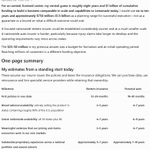


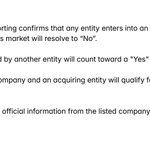
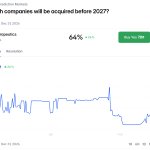
(1/n) A couple of thoughts on where to look (and not to look) for opportunities in the current carnage.
It might be tough to bottom tick AI infrastructure, even though these stocks look very over-sold. It is not difficult to imagine scenarios where some of these stocks go down a lot more.
For example AI models could do to chip design what they did to advanced math.
Or companies relying on capital market access for their business models hit the wall as other companies with superior access to capital (think $SPCX, $ANT) "take up all the oxygen in the room."
1
1
462
(3/n) Right now, if I could only pick one, it would be $LMND. Earlier this year there was a short-term mis-alignment of investor expectations that caused the stock to (fairly) sell off. But those issues are now moving into the rear view mirror.
Meanwhile, the valuation has gotten preposterously cheap. Getting to precise valuations for high growth companies like $LMND is challenging, but my base case fair value estimate for the stock is roughly triple its current price. Even my bear case scenario is now a double. And this business grows at a rate in excess of 30% Y/Y and will demonstrate rapidly expanding profitability over the next couple of years. The proof points are not far away.
Moreover, the comparisons get really easy from 2Q27, once the company anniversaries some of the expense pressures from earlier this year. Maybe we have to wait for 2Q27 to be reported. Maybe the market is forward looking and we get that realization a couple of quarters in advance?
I strongly encourage you to do your own due diligence here. Otherwise it is hard to develop the conviction to hold a stock like this through markets like the current one.
Good luck and stay safe out there...
1
4
229
(4/n) And one more thing. In case this is not already obvious, I am not trying to call a bottom here. There are some fundamental reasons for the overall sell-off, and there is certainly a rolling de-grossing / liquidation wave ongoing. No one knows precisely when this will stop. And some stocks might go down a lot more before this is all done. Including some of the best ones.
In an environment like this any leverage is dangerous (except for a very small group of people with exceptional risk management - most should probably assume they are not among them).
You could be right fundamentally, but get called out of your hand at the absolute bottom. Google Rick Guerin if you want a vivid cautionary tale.
Excessive concentration is dangerous as well. While I have a higher tolerance for concentration than most professional investors, I will never go "all in" on any bet, regardless of how attractive it looks. No single bet is worth risking everything, and there is a lot of value in diversification that allows you to reallocate capital in times of stress.
For now everything is about survival first, and about setting yourself up for the best opportunities exiting this mess second.
Again, good luck to all.
120


(2/2) Actual $LMND is 11 years old. So current AI systems make it faster and easier to set up. I don't think even $LMND would argue with that. But there are only certain parts of the process that can be accelerated. That's why the time line drops from 11 years to 8 years, not to 1 or 2.
What AI cannot accelerate is the need for millions of policy years of actual claims experience to develop pricing models, optimize claims operations and customer service, ...
Plus, you need to acquire customers first to be able to gather that data.
I won't post the full business plan Astra developed here (it is long...), but suffice it to say I asked it to go into a great amount of detail, including how many policy years it would take to reach certain confidence bands on pricing, the most efficient state rollout, ...
Personally, if anything I think the answer sounds optimistic on the capital side. I doubt that a startup insurer could drive the contribution margin Astra suggested.
Actual $LMND has a market cap around $3 billion today, and my model has it generating net income close to $4 billion over the next 8 years. And after 8 years the business would be roughly 10x the current scale.
So why would anyone want to spend $1 billion to start a $LMND competitor when they can just buy the stock instead?
And I ask the bears (again) - are you actually aware of anyone trying to do this? If it's so easy, where are all the P&C insurance start-ups?
1
13
610
Andreas Schulz retweeted

imagine telling someone from the 80s that one of these guys was a socialist and the other one was the capitalist


Silly question. There are only 3 competitors in HBM. There are now more than double that in logic chips, including the custom silicon at the hyperscalers and AI labs.
In a few years, AI models might design all chips, potentially wiping out the terminal value of logic chip design companies.
Meanwhile, physical fabs (including those at the memory companies) might stay in short supply for a similar time frame.
Yet SK Hynix and Samsung trade at less than 2x forward consensus earnings, while $NVDA is at ~9x and $AMD at ~27x.
So why shouldn't I buy $EWY and short $NVDA and $AMD right here?
Never mind the fact that Jensen's firing might have permanently damaged $NVDA even if I am wrong about the big picture thesis...
Genuinely, what am I missing here?
1
3
469
One of the most positive surprises from the $LMND Investor Day was this chart on page 66. It shows the increasing gross profit earned over time from $LMND's annual customer cohorts.
The reason it is surprising is that $LMND's ADR since 2022 has fluctuated between 82% and 88%, so the amount of IFP or revenues per cohort should look like an exponential decay curve over time.
Of course, $LMND's loss ratio has declined considerably over this period, so the two statements are not inconsistent with each other.
But it begs the question if there is a structural mechanism at work here. Does $LMND's ADR below 100% reflect the fact that they are continuously "shedding bad customers?" The company has been very explicit that they have been doing this in their homeowner's line of business to reduce catastrophe risk.
Otherwise it seems difficult to explain that gross profit on the oldest cohorts can continue to grow after this many years of attrition, with a more stable (though still declining) loss ratio over 2025 / 2026.
As $LMND discovers that an existing customer is a poor risk, they can raise prices and thus either reset to an appropriate loss ratio or lose this unattractive customer.
Conversely, it suggests that $LMND's most profitable customers are far more loyal than the top line financials would make you believe.
Put differently, this suggests that $LMND may have a "GPR" (Gross Profit Retention) well in excess of 100%. I do not want to over-extrapolate this, because the decline in overall loss ratio since 2022 will not repeat in the future.
Still, with additional cross selling, particularly into high gross profit dollar car insurance, it is possible that this greater than 100% GPR could sustain for a long time.
I don't think anyone, even bulls, is embedding this structurally in their models. Because it suggests that $LMND should grow even with no growth spend at all (Yes, let that sink in...).
It bet most models (including mine), suggest that the business should decline with no growth spend. Because implicit in the standard modeling is an assumption that customer loyalty is independent of profitability (i.e. highly profitable customers are equally likely to churn as less profitable customers).
Incoming CFO Nick Stead hinted in this direction with his harvest scenario slide on page 72 (though to be clear - the harvest scenario still likely includes about $100 million in growth spend).
If $LMND has in fact perfected the art of "editing its customer base," then this is a much better underlying business than most believe. If anything can do that, maybe it's Lemonade OS? Maybe that was the real point of yesterday's Investor Day?
Would anyone from $LMND care to comment?
@daschreiber @shai_wininger
It does not seem that Nick Stead is on X (or at least not under a handle I am aware of). Nick, if someone is passing this along to you, we would be happy to have you. I (and I suspect many others) would love to hear your thoughts.


I think this thread should be mandatory reading for anyone studying $LMND's Investor Day.
In the AI age we see many impressive demos, so we get a little numb to it all. But Midnight is not just a demo - it is $LMND's actual operating system...
nitter.gq/shai_wininger/status/2…

Introducing Lemonade OS Midnight.
Our autonomous software factory, built to take software from idea to production with minimal human intervention.
It doesn't just write code. It writes our code. The vast majority of it.
And yes, it works while we sleep.
1
20
1,665
And then this...
Can you name any other company operating like $LMND? Giving AI the full context of EVERYTHING going on in their business and embedding it in every action? Maybe the big AI labs, but I am not even sure...
Anyway, I'll wait...
nitter.gq/shai_wininger/status/2…
introducing: Lemonade OS Atlas
Agents need two things to do real work: the what (context) and the how (tooling, skills). While models are becoming a commodity, context and tooling aren’t. In Lemonade OS, Atlas handles the 'what'.
At company scale, context is hard. Most of it lives in people’s heads, where agents can’t reach it. The rest goes stale fast, and noise creeps in all the time. Curating it and connecting it across domains is nearly impossible.
Atlas is the neural graph at the core of Lemonade OS. It constantly learns everything that makes Lemonade, Lemonade: how we think and what we’re planning, our values and taste, our org, projects and tasks, procedures and docs, customer feedback, design, code, and business insights.
It’s inspired by the human brain, which is also how it stays clean. Every piece of knowledge is a neuron, connected by synapses. Each agent query strengthens the pathway it fires: neurons that fire together wire together. Noise gets pruned. Critical knowledge doesn’t.
Agents keep indexing and rewiring it as new data arrives. And the part I find most interesting: Atlas knows what it’s missing. When it finds a gap, its Collective Consciousness engine reaches out to the right person on Slack and interviews them.
1
6
374
And you can see from the operational metrics that all this is not a toy.
This is why $LMND is able to roll out new products and geographies at a rapidly accelerating pace, and why the business is compounding at an accelerating rate.
nitter.gq/shai_wininger/status/2…
So far, I've focused on how Lemonade OS works. Now, some numbers on its operational impact.
As AI takes on more of our claims handling, customer service, engineering, and corporate work, we're breaking the traditional relationship between growth and operating costs.
Premium and revenue can grow fast, without headcount and expenses following the same curve.
And the capacity we free up can go toward lowering prices, increasing margins, or building things that previously weren't economical.
That's the compounding nature of the Autonomous Organization.

5
229
$LMND did a great job at today's Investor Day. Alas, it is a tough market day, particularly for many correlated tech and software stocks.
It is as clear as ever that $LMND is an AI winner and a compounding machine. In time, $LMND will have its moment.
nitter.gq/shai_wininger/status/2…
@Lemonade_Inc now has approx. 10% of the US renters market and 9% of the US pet insurance market!
But here's the number that blows my mind:
We estimate that half of all net new renters policies in the US are Lemonade's, and 40% in Pet.
And we're still relatively young, competing with insurers that have been around for generations.
Now consider this: our market share in Car is still tiny -just 0.1%, in a $400B market.

2
45
1,553
Reading this reminds me of Winston Churchill's quip that "democracy is the worst form of government except for all the other forms that have been tried."
What does history teach us about dictatorships? Even by a "benevolent machine god?"
nitter.gq/bgurley/status/2122464…

It is critically important that everyone thinking about AI become familiar with the term “handoverism.”
Many in the AI community believe that humanity should—or inevitably will—hand control of the world over to AI itself. Some view this not as a risk to be avoided, but as an outcome to be welcomed. Are we actually designing toward this future?
This worldview is particularly relevant at Anthropic. Co-founder Tom Brown said: “There’s going to be a handoff where humanity will hand off control to transformative AI at some point.”
In his seminal essay, Machines of Loving Grace, CEO Dario Amodei contemplates:
“It could be a capitalist economy of AI systems, which then give out resources (huge amounts of them, since the overall economic pie will be gigantic) to humans based on some secondary economy of what the AI systems think makes sense to reward in humans (based on some judgment ultimately derived from human values).”
Are you prepared to receive your “resources” from an AI system, based on criteria it determines? The full title of the poem Dario borrowed the title from is "All Watched Over by Machines of Loving Grace." Do you want to be "watched over" by AI?
If Anthropic's founders believe that the ultimate destination is the transfer of human control to AI, the world deserves to know. Washington, D.C. deserves to know. American citizens deserve to know. And if that belief informs Anthropic's corporate objectives, it belongs in the Risk Factors section of its S-1. It isn't there today.
I am decidedly anti-handoverism. I'm not here to tell you what your view should be. But I believe anyone making consequential decisions about AI—especially those drafting, advocating for, or enacting AI regulation—should be required to disclose where they stand on this fundamental question.
A wonderfully thoughtful piece on the subject by @RuxandraTeslo:
writingruxandrabio.com/p/han…

1
279
Andreas Schulz retweeted
It is critically important that everyone thinking about AI become familiar with the term “handoverism.”
Many in the AI community believe that humanity should—or inevitably will—hand control of the world over to AI itself. Some view this not as a risk to be avoided, but as an outcome to be welcomed. Are we actually designing toward this future?
This worldview is particularly relevant at Anthropic. Co-founder Tom Brown said: “There’s going to be a handoff where humanity will hand off control to transformative AI at some point.”
In his seminal essay, Machines of Loving Grace, CEO Dario Amodei contemplates:
“It could be a capitalist economy of AI systems, which then give out resources (huge amounts of them, since the overall economic pie will be gigantic) to humans based on some secondary economy of what the AI systems think makes sense to reward in humans (based on some judgment ultimately derived from human values).”
Are you prepared to receive your “resources” from an AI system, based on criteria it determines? The full title of the poem Dario borrowed the title from is "All Watched Over by Machines of Loving Grace." Do you want to be "watched over" by AI?
If Anthropic's founders believe that the ultimate destination is the transfer of human control to AI, the world deserves to know. Washington, D.C. deserves to know. American citizens deserve to know. And if that belief informs Anthropic's corporate objectives, it belongs in the Risk Factors section of its S-1. It isn't there today.
I am decidedly anti-handoverism. I'm not here to tell you what your view should be. But I believe anyone making consequential decisions about AI—especially those drafting, advocating for, or enacting AI regulation—should be required to disclose where they stand on this fundamental question.
A wonderfully thoughtful piece on the subject by @RuxandraTeslo:
writingruxandrabio.com/p/han…
Would not exactly be shocking. AI is certainly making it faster and easier to be a quant.
There are very large firms spending a lot of money on compute, and they are unlikely to advertise their advances either...
nitter.gq/edward_yu_var/status/2…

176
Andreas Schulz retweeted

Very bad news for Delta inflight wifi

Based on data received by our Launch Director, we confirm that the Vulcan vehicle launched from Space Launch Complex 41 suffered an anomaly 10 minutes into the flight and failed to deliver the Amazon mission to orbit.
Every flight generates data, and every flight teaches us something. Since the anomaly just occurred, we don’t have any specific data yet to understand what occurred today.
ULA exists to provide assured access to space for our nation and for the customers who depend on us. That purpose is why we take on some of the hardest missions in spaceflight, and why we hold ourselves to the standard of mission success. Today, we did not meet that standard.
We will work closely with our customer and other appropriate organizations to find the cause, determine the appropriate corrective action, and return to flight as quickly as possible.
ULA is committed to full transparency with our customers, and they will have visibility into the investigation process, which utilizes rigorous methodology and corrective action.
We will provide further updates when new information becomes available.

Andreas Schulz retweeted

This letter was sent to the Nvidia Board today which we believe outlines the minimum acceptable standards the Board owes shareholders as it manages this difficult situation. Onward. 🫡

