
Building datacenter networks. Tech ideas with strong confidence and also some amateur trading ideas definitely NFA
Sunnyvale
Joined February 2026
- Tweets205
- Following65
- Followers311
- Likes395




A Wild Substitute retweeted
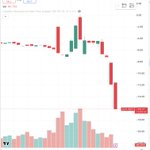
It shot up right as the China stock trading session opened... Coincidentally or non-coincidentally. I think Chinese will not rescue any more
A Wild Substitute retweeted

Bc nobody wants to own this rally, Spec positioning is insanely light and vol is dirt cheap.
Tbh maybe the only oil bulls left are $30k acoount fintwit degens with conspiracy theories lol.
Clowns with no skin in the game dunk on bulls all day, but with positioning this pathetic at these prices, where are the bulls even at?
#oott #iran

A Wild Substitute retweeted
If there is any actual progress on Iran, he would just post it out as well. Don’t see any reason for keeping the good news as a secret before midterms. The actual intention is to pressure (more) on EU to release the diesel reserve.
A Wild Substitute retweeted
I hardly agree on any of this, especially in 2026 and maybe onward. Vitol took a very significant loss by betting against the Iran-US war. It seems that the largest oil trader do not have edge on geopolitics. Annnnd something new this year, retail traders are inventing and publishing method to count the Hormuz flows and that method is adopted by Kpler weeks later.
I believe similar stuff is also happening in techs. Retails are becoming much much smarter thanks to AI and platforms like X, Substack and Discord etc.
A Wild Substitute retweeted
It's actually a bit more complicated. Murata have ~50% mlcc produced in Wuxi China and keeps expanding there.
So my take is that export control is less likely to happen but when it happens it's more violent.

A Wild Substitute retweeted

I’ve been doing a lot of myth-busting around how recent OpenAI communications are being interpreted. If any OpenAI friends see this, please forward it to the CFO or @sama —I’m starting to feel like an unofficial extensions-of-comms team.

Research|OpenAI: What Is OpenAI's $600B Compute Spending? Did They Really Cut the $1.4T Investment Commitment?
The Information’s latest report contains this quote: “But it warned it will burn more than twice as much cash through 2030 than previously predicted, as it spends $665 billion on the costs of running and training its AI, according to the financial forecasts.”
In the past two hours, I’ve seen numerous news mentioning that OpenAI has reduced its $1.4 trillion CAPEX commitment to $600B, interpreting this as an extremely negative signal. I feel compelled to write this report to clarify the misconceptions.
Let me state two key conclusions upfront before diving into the details
Misaligned Metrics
-The $1.4 trillion refers to CAPEX Commitment, which includes not only OpenAI’s direct investment but also investments from Azure, AWS, ORCL, and CRWV.
-The $600B refers to Compute Spending/Compute Cost within OPEX. The Information has historically shared excellent reports that you can track - they’re all OPEX metrics. In fact, I understand OpenAI never discusses CAPEX metrics because they’ve had virtually no CAPEX until now.
-The key difference between CAPEX and OPEX is that this year’s CAPEX gets depreciated over the next 5 years, making CAPEX a leading indicator. During CAPEX upcycles, CAPEX will consistently exceed OPEX.
Misaligned Time Period
-The $1.4 trillion commitment was first mentioned by Sam in a podcast about the AVGO partnership after AVGO’s earnings, where he referenced the next 8 years. So $1.4 trillion covers investment commitments from 2025 to 2032/2033.
-The $600B represents Compute Spend (Training Compute + Inference Compute) from 2026 to 2030.
We analyzed in detail how to break down the $1.4 trillion commitment back in November 2025 and explained why $1.4 trillion is achievable, not just random speculation. I believe the certainty should be even higher now.
Deep|OpenAI: Can OpenAI Deliver on Its $1.4 Trillion CapEx Commitment?
fundaai.substack.com/p/deepo…
Detailed Report
open.substack.com/pub/fundaa…


