Pre-IPO Funds for Financial Advisors (@AaronGDillon) header
Pre-IPO Funds for Financial Advisors (@AaronGDillon) profile picture

Venture Capital Funds for RIAs | Pre-IPO Stock Research | AG Dillon & Co

Joined September 2011
Photo by Pre-IPO Funds for Financial Advisors (@AaronGDillon)Photo by Pre-IPO Funds for Financial Advisors (@AaronGDillon)Photo by Pre-IPO Funds for Financial Advisors (@AaronGDillon)Photo by Pre-IPO Funds for Financial Advisors (@AaronGDillon)Photo by Pre-IPO Funds for Financial Advisors (@AaronGDillon)Photo by Pre-IPO Funds for Financial Advisors (@AaronGDillon)Photo by Pre-IPO Funds for Financial Advisors (@AaronGDillon)Photo by Pre-IPO Funds for Financial Advisors (@AaronGDillon)Photo by Pre-IPO Funds for Financial Advisors (@AaronGDillon)Photo by Pre-IPO Funds for Financial Advisors (@AaronGDillon)
Pre-IPO Stock Secondary Market Update | as of Nov 3, 2026 | AWS Capacity Constraints, Anduril's BlueChip Laptop, Nvidia Robotics and Kalshi Watch full video = youtube.com/watch?v=8IZhNhR6… AWS is reportedly fully sold out of compute through 2027 and mostly sold out through 2028, which we see as clear evidence that demand remains ahead of capacity. Public markets keep questioning whether neoclouds can fund their buildouts, but we do not see how that skepticism sits alongside an inability to get Amazon compute until 2028. We agree the hard part is pricing a company that is already at full capacity for years, even if Amazon keeps taking share. Data center build timelines and demand timelines are not the same, and the market worry is that capital floods into projects and then demand plateaus into an overbuild. We do not think we are close to that cycle. In our view we are still in the first inning, and sold-out capacity into 2028 while still early points to years before a real overbuild conversation. Anduril is developing BlueChip, a security-focused laptop with Qualcomm, and we see it as an ambitious expansion beyond defense technology into personal computing. The initial focus on government, police and other public-sector users fits Anduril's existing business, while the emphasis on domestic manufacturing addresses an important market need. The move also fits a founder willingness to build personal electronics, alongside the ModRetro gaming device. We would not be surprised to see a phone or other personal technology products follow, although that is our speculation rather than an announced plan. The Microduck demonstration from Nvidia, Hugging Face and Pollen Robotics puts home robotics in focus, and we think it could mark the beginning of robots becoming common in homes. The demonstration recalls Star Wars, with the small Microduck resembling R2-D2. Microduck is ready to use out of the box, while the related ReachyMini arrives in parts and takes about four hours to assemble. Orders are taking months rather than days to arrive. We are excited about the products and view them as an early step toward useful robots in the home, rather than just another technology demonstration. Kalshi is a prediction-market and betting platform that lets users wager on outcomes including elections, and we think the core business works because people like to gamble. The open question is whether they gamble specifically on Kalshi versus peers such as Polymarket or other online gaming providers. Brand, user traction, and sponsorship reach look strong to us. Election odds with real money at risk can be more useful than traditional polls, though overseas capital on domestic races shows how these markets can be distorted. Regulation is the clear risk if a future administration turns less friendly. We also see proprietary value in what people actually bet, not just what they say. We expect both Kalshi and Polymarket to remain relevant and continue to watch their progress, although regulation is an important risk.
2
396
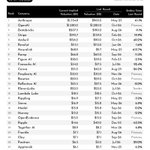
Pre-IPO Stocks Secondary Market Valuations | as of November 2, 2026 | Download full report = agdillon.com/reports
1
2
655
Pre-IPO Stocks Secondary Market Performance | as of November 2, 2026 | Download full report = agdillon.com/reports
2
303
Pre-IPO Stock Secondary Market Update | as of Oct 27, 2026 | Anthropic's IPO S-1, SpaceX's AI Playbook & Fireworks AI's Potential $40B Round Watch full video = youtube.com/watch?v=Gv6Ykc2u… Anthropic's S-1 landed on the good side of expectations, and we read the headline $80 billion net loss as mostly an accounting item rather than a cash problem. Of that $80 billion, roughly $72 billion is a non-cash accounting treatment, so the underlying loss for the first half of the year was about $8 billion. That loss is set against roughly $130 billion of cash and short-term investments on the balance sheet, which is why the market's reaction to cash burn has been measured. GAAP accounting is GAAP accounting, and we think the charge is easily explained to public investors. Revenue held up well, and the customer mix has improved materially: early on the business appeared heavily concentrated in one or two customers, and it now serves ballpark 10,000+ customers with $100,000+ in trailing 12 month revenue, which we view as a better and more diversified revenue base. Our net read on the filing is very positive. We believe Anthropic can also serve as a hedge for a pure-play software portfolio, since in our opinion the company is positioned to take a large share of the software and knowledge-work market, and we expect capital to keep rotating out of software and into hardware. The open question is whether Anthropic can grow revenue by something like 10x from here into 2027/8, and that is what the public market will test. Anthropic is reportedly targeting a $2 trillion IPO, and while we think that level is achievable, our preference would be a price nearer $1.5 trillion to $1.6 trillion that leaves room for the stock to run. The secondary market is trading Anthropic at about $1.55 trillion today. Ahead of the SpaceX listing, some private holders sold at discounts to avoid the lockup while other buyers paid premiums to get in early, and we expect similar volatility here. Anthropic is using a staggered early-release lockup much like SpaceX's, with eight+ release cycles, and we expect inclusion in the major indices. SpaceX listed at $135, ran to about $220 a share for a day or two, and has since pulled back to around $150. If Anthropic prices at $1.5 trillion to $1.6 trillion, we would expect it to settle around $1.7 trillion after the initial post-IPO swings. We spoke with one investor who wants to buy now at a discount on the view that the stock goes north of $2 trillion, and to sell when the lockup ends, a trade that in our opinion has a lot of moving parts. We think OpenAI's reported $1.25 trillion target is the smarter approach, and we believe pricing Anthropic for investor returns rather than for the largest IPO in history could push the stock above $2 trillion on its own. There is also a case for a $2 trillion debut that still trades up in the first six months, given that public investors have never been able to buy a pure-play large language model company. Public markets will want both the growth story and the revenue, and on the question of who finishes 2027 with more revenue, our view is SpaceX. SpaceX is adding data center revenue, and Elon Musk has talked about going from roughly $18 billion of revenue to as much as $500 billion next year. Musk has said he expects SpaceX to reach $100 billion of annualized revenue in December, and the company was profitable this past quarter. We believe SpaceX can secure the GPUs, appears to have a plan for power, and has shown it can stand up data centers quickly, and we expect strong demand for compute on the other side. On that math we see SpaceX as an AI data center business rather than a space company: if it does $100 billion a year in revenue and only a few billion comes from Starlink and launch, the data center business defines it, and data centers in Nashville, Tennessee have nothing to do with space. Anthropic, by contrast, needs to keep revenue growth going, and we are watching whether Claude Duet, the AI assistant it launched on October 21, takes off against heavy competition. We also question how its CEO's famously candid style will play on public company earnings calls. More broadly, we think the world is moving toward hardware, and Anthropic will likely need to become more of a compute company to deliver strong model results (...Anthropic will need to have their own data centers). Fireworks AI is reportedly looking to raise at $30 billion to $40 billion, up from a $17.5 billion round in July, and in our opinion the AI inference category deserves a close look. Fireworks is an AI inference platform and had about $1 billion in annualized revenue at the time of the July round, which Gavin Baker backed. We expect the new round to land in the $35 billion to $40 billion range, roughly three months after the last one. Unlike Etched, which has moved from $12 billion to $21 billion and is now reportedly considering $41 billion with no revenue, Fireworks is showing the revenue behind its step-up. Databricks offers a reference point: it was at about $212 billion in the secondary market this past week, making it the third-largest pre-IPO stock in the world, after a round at $190 billion in August. Databricks runs a business similar to Fireworks AI and Baseten, so we ask whether Fireworks could become a $200 billion company within two years, which would be a 5x from $40 billion before dilution. We see the platforms that help businesses run and customize open-source models as an intriguing part of the AI market. Together AI trades at about a $10 billion secondary market valuation with more revenue than Fireworks, and our preference is to keep Fireworks AI, Baseten and Together AI on the watch list as a group.
1
498
Pre-IPO Stocks Secondary Market Valuations | as of Oct 26, 2026 | Download full report = agdillon.com/reports
4
411
Pre-IPO Stocks Secondary Market Performance | as of Oct 26, 2026 | Download full report = agdillon.com/reports
1
232
Pre-IPO Stock Secondary Market Update | as of Oct 20, 2026 | CoreWeave's 15% Bonds vs. $104B Backlog, Modal, ElevenLabs & Science Corp
Watch full video = youtube.com/watch?v=b_41YRvH… CoreWeave's bonds have sold off, with yields approaching 15%, even as the company carries a $104 billion backlog, and we see the disconnect as a dislocation in the market and a buying opportunity. When a company faces a tidal wave of demand it cannot fully meet and executes on par with or slightly better than its peers, we view that as a strong setup for investment returns. Even if SpaceX executes twice as well as CoreWeave, demand is large enough that CoreWeave still looks good … in our opinion. Modal has reportedly crossed $1 billion in annualized run rate revenue and raised a $750 million Series D at a $15.75 billion post-money valuation led by Accel, and we like both the company and the category it represents. Modal is an AI inference and training platform, part of an emerging group of developer tools that are not data centers or chips but are clearly infrastructure, helping developers customize their own models, run them in a harness and work with open-source models. ElevenLabs has reached a $22 billion valuation and released a real-time voice model, and we see it as an interesting AI application company that has clearly found its market in voice. The new real-time model is designed to remove the lag in current voice assistants and respond with human-like inflection and back-and-forth timing, which matters as more users talk to AI assistants instead of typing. Max Hodak's Science Corp, a brain-computer interface company and an emerging Neuralink competitor, is showing promise, but we are not yet convinced by the business model for implanted devices. Restoring sight to the blind and treating other neurological diseases and disabilities is valuable work that we want to see succeed, but an investor targeting 3x to 10x returns needs a very large addressable market, and we question whether the patient population is large enough to support exponential revenue growth.
1
386
Pre-IPO Stocks Secondary Market Valuations | as of Oct 19, 2026 | Download full report = agdillon.com/reports
1
2
384
Pre-IPO Stocks Secondary Market Performance | as of Oct 19, 2026 | Download full report = agdillon.com/reports
1
200
Pre-IPO Stock Secondary Market Update | as of Oct 13, 2026 | Lambda's $18.5B Raise, Reflection AI's Open-Source Model, micro1 Buys Enterprise Data, and Ghost's Local AI Computer Watch full video = youtube.com/watch?v=Lae3x6uC… Lambda Labs is reportedly raising $4 billion at a $18.5 billion post-money valuation ahead of a planned 2027 IPO, and we view it as a core AI infrastructure holding despite the balance sheet optics. The business buys GPUs from Nvidia, stands them up and rents out the compute, and Nvidia is also an investor, which we read as a signal that the company will receive chip allocation. Lambda reportedly carries a $50 billion backlog, so the company is raising capital to build capacity fast enough to capture demand it cannot yet serve. We expect the financial statements of Lambda, Nscale and CoreWeave to look like a disaster until they do not, and then to look very strong. Lambda has moved founder and CEO Stephen Balaban into the chief technology officer role and brought in a slate of public-company executives, which we see as the right call because the neocloud model is in large part a capital-raising exercise with banks, debt markets and large asset managers. CoreWeave is down 45% over the past year and trades at about $42 billion, which makes Lambda at $18.5 billion look attractive, and OpenAI cutting ChatGPT Pro usage in half at the same price as evidence of how tight compute remains. Our thesis rests on the logic Mark Zuckerberg: if AI succeeds at the macro level, unused data center capacity can simply be rented to someone else, so the real risk is that AI does not play out. We believe investors without an allocation to neocloud data centers should consider one, sized appropriately for the risk. Reflection AI has released a US open-source model that appears to perform well, particularly for coding, and reportedly uses less inference compute than some of the Chinese open-source models, but we are not convinced by the equity at a $25 billion valuation. That price is roughly a third of DeepSeek's roughly $75 billion IPO valuation even though Reflection has just shipped its first offering, which reflects the discount applied to Chinese technology companies more than relative scale. The commercial case leans on US versus China sourcing, and we expect that question to be polarizing enough to win Reflection customers as long as it outperforms Nvidia's Nemotron. There is also buzz that Nvidia, already an investor, may try to acquire Reflection, and we would be surprised if Nvidia does not ultimately dominate US open-source models. A separate risk: OpenAI and Anthropic are indirectly responsible for about 7% of US debt over the past two years, so if open source takes share faster than the overall AI market grows, the circular financing around the frontier labs could be disrupted. Even in that case, the compute would still be needed, which reinforces our preference for neoclouds. As investors, we would rather express the open-source trend through AI inference providers such as Together AI, Baseten, Fireworks and Modal, which host these models and have a clearer revenue model than the model developers themselves. micro1 has announced a $1 billion commitment to acquire enterprise data over the next 12 months, and it is reportedly past $1 billion in annual recurring revenue, but we see real uncertainty in the model. The thesis is that public internet data has largely been scraped and high-quality data is now the scarce input, so micro1 is buying Slack messages, emails and workflows from top firms and selling the processed data to model companies, with founders on X posting tutorials on how to sell a workflow to micro1 for $1.2 million. This is the first company we have seen try to buy enterprise data directly, which differs from players such as Scale AI that pay doctors and lawyers to complete questionnaires. Private company and personal data is a large share of the world's data and is not readily available, and pairing it with an open-source model inside a harness could deliver better results at much lower cost. Our main concern is historical behavior: people tend to give away data in exchange for free products, so a small law firm may hand over its data to get Harvey or a similar tool for free rather than sell it. Large incumbents such as Meta, which Zuckerberg said will collect interaction data as people use Meta Muse every day, may acquire this data at no cost, leaving smaller incumbents as the more likely buyers. We remain undecided on micro1's risk-adjusted return profile, but some market participants are calling micro1 the next Anthropic. Ghost is a hardware company selling a roughly $3,500 home computer with a high-powered GPU that runs a user's AI agents locally, and while the first batch reportedly sold out quickly, we are skeptical of privacy as the investment case. The product pairs the hardware with its own personal agent and is pitched on keeping sensitive connections, such as bank accounts, health data from a Whoop and home cameras, off third-party systems, and its founder is 19 and has been working since age 12. We see it as competing with Apple's Mac Mini, which can be stacked for more local compute, and competing with Apple is a difficult position. Our view is that most people do not meaningfully care about data privacy, as social media and the widespread loading of bank, brokerage and email accounts into assistants such as Instinct suggest. The case changes if local compute becomes an economic driver, much like rooftop solar versus buying from the utility: if a family of four faces a $3,000 monthly bill from a cloud assistant, a one-time $3,500 device becomes an easy decision, especially as robots, appliances and automated tasks run around the clock.
1
3
1,002
Pre-IPO Stocks Secondary Market Valuations | as of Oct 12, 2026 | Download full report = agdillon.com/reports
1
367
Pre-IPO Stocks Secondary Market Performance | as of Oct 12, 2026 | Download full report = agdillon.com/reports
1
260
Pre-IPO Stock Secondary Market Update | as of Oct 7, 2026 | DeepSeek’s China Discount, Hark AI Personal Assistant Launches, Anduril Goes to Sea, and the Inference Chip Race (Etched, Fractile, Positron) Watch full video = youtube.com/watch?v=BPp4ei4l… DeepSeek’s reported push to raise at least $12 billion at a valuation of about $74 billion ahead of a listing on Shanghai’s STAR Market will be the first real test of how the China discount applies to a frontier AI lab. That discount is structural. Alibaba and Baidu serve hundreds of millions of customers on large and growing revenue bases, yet trade at valuation multiples well below their US counterparts, and we see little reason a mainland listing of an AI lab will escape the same overhang. A STAR Market debut should find strong domestic demand, but US investors will likely be limited to indirect access through China-focused ETFs, and we do not expect the hundred-billion-plus outcomes we anticipate from US AI leaders. The more important story is the model itself. DeepSeek’s open-source models are competitive and far cheaper than closed alternatives, and they can run locally or on US inference platforms such as Together AI and Baseten with no data flowing back to China. One recent estimate attributes roughly 7% of all debt created over the past seven years indirectly to OpenAI and Anthropic, so the real pressure point for the frontier labs is not a bubble in AI demand but a shift of that demand toward open models. That shift would not strand the infrastructure: if Anthropic’s reported $518 billion in compute commitments went underused, providers like Lambda would rationally release the capacity and resell it to other buyers rather than litigate for years. Our house view is that if AI demand holds, compute finds a buyer whether workloads run on closed or open models, which makes the neoclouds a natural hedge across both outcomes. Brett Adcock, CEO of Figure AI and founder of publicly traded eVTOL maker Archer, has launched Hark Pro into a personal-agent market forming quickly around Meta’s Muse, OpenAI’s Dots, and Instinct. The launch demo shows where the category is heading: a single request to plan a date night produced concert tickets matched to both partners’ Spotify playlists, a reserved parking spot, and a calendar entry timed to the drive. Tasks that once took an hour of planning collapse into one sentence, and as these agents become proactive they will increasingly suggest the plan before the user asks. Adcock’s record of multiple exits makes Hark worth taking seriously, and Meta’s context across WhatsApp and Instagram gives it a strong position as well. Our house view, however, is that the long-term consumer winners will be Apple and Google, which already hold users’ email, messages, photos, payments, and app usage across iOS and Android and can deliver an exceptional AI personal agent the moment they choose to switch it on. For that reason we are cautious on private B2C agent startups, which may carve out niches but lack the data advantage, while B2B agents remain an open field. In the enterprise, agents are likely to follow the data, favoring incumbents like Microsoft Copilot and Google Workspace, where firms such as RIAs can deploy an agent without moving client information to a new vendor. We expect widespread personal-agent adoption within 6 to 12 months. Anduril’s Arsenal-2, a $3.7 billion shipyard at Sparrows Point, Maryland, backed by a Navy contract worth up to $2.9 billion, takes the company from existing undersea work into a full-scale maritime push and puts it in direct competition with Saronic and Huntington Ingalls. The facility will build Virginia-class submarine components and undersea systems, and it reinforces how quickly Anduril converts new products into production capacity, even as talk of a defense bubble grows around richly valued peers such as Shield AI. Palmer Luckey, alongside Elon Musk, operates on a different level in real-world manufacturing, and it is hard to bet against him winning more mandates of this kind. The key structural question is concentration. With the US military as essentially its only customer, Anduril’s revenue is likely to follow an S-curve, accelerating sharply before eventually plateauing, which raises questions about the revenue multiple it can sustain absent a move into commercial markets. That need not be a problem, since a public listing followed by a healthy dividend once growth matures would be a successful outcome for early investors in what becomes a value stock. We also expect a meaningful founder premium at IPO, with demand that could resemble SpaceX’s but potentially without the same post-listing comedown, since private-market access to Anduril has been far tighter than it was for SpaceX. Etched is reportedly fielding offers at $40 billion or more, roughly double the $21 billion valuation it set in September, despite not yet having a chip in market. The company has taped out its chip, reportedly holds about $1 billion in customer orders, and counts a strong investor roster, but paying that price for a business without revenue looks rich to us. We prefer Positron, last priced at $5 billion, which already has systems deployed in data centers and is generating revenue before its next-generation chip, combining memory and inference, has even shipped. The design differences matter for deployment: Etched’s chip is liquid-cooled, while Positron’s is air-cooled and built to drop into virtually any data center. The closest parallel is Groq, which later drew a deal from Nvidia, and which did not offer the most groundbreaking technology but delivered fast, US-fabricated, high-volume inference with clear customer value. Positron fits that same profile of solid technology meeting overwhelming demand. More broadly, we view AI inference semiconductors as a sector to watch, with real money to be made among the companies racing Nvidia.
2
2
1,199
Pre-IPO Stocks Secondary Market Valuations | as of Oct 5, 2026 | Download full report = agdillon.com/reports
1
409
Pre-IPO Stocks Secondary Market Performance | as of Oct 5, 2026 | Download full report = agdillon.com/reports
1
1
266
Pre-IPO Stock Secondary Market Update | as of Sep 29, 2026 | Higgsfield at $1B revenue, the Inference Platform Repricing (Together AI, Baseten, Fireworks AI, Modal, Fal), and AMD Moves Toward Robots Watch the full video here = youtube.com/watch?v=l_YuBjv9… Higgsfield's climb to a $1 billion annualized revenue run rate roughly 18 months after launch ranks among the fastest ramps in private market history, and the August Series B at a $5.4 billion valuation now looks measured against that figure. The product sits on top of third-party models from ByteDance, OpenAI, and Anthropic, which invites the "AI wrapper" critique: if OpenAI launched a video platform tomorrow, would Higgsfield survive? We believe it can, because the complexity of the interface and the pace of product innovation are hard to replicate, and because revenue is shifting from individual creators toward business customers. B2B moats look structurally stronger than B2C ones. Forward deployed engineers and embedded workflows mean a rival must be better by multiples, not percentages, before a customer rips a vendor out, while consumers can cancel a subscription and switch in a day. Higgsfield is roughly split between the two today, so its upmarket move is the key to building durable lock-in. The longer-term vision of on-demand, personalized Hollywood-quality film, with a family member cast as the lead, shows how large the creative market could become. Inference platforms, the companies that host and run open-source models such as those from ByteDance, Moonshot AI, DeepSeek, and Nvidia, are repricing at speed. Fireworks AI is reportedly heading toward $30 billion, Baseten toward $26 billion, Fal toward the high teens, and Modal near $15.75 billion. Against that backdrop, Together AI's July Series C at $8.3 billion, on more than $1.15 billion in annual bookings, stands out as relative value in the group, even though it owns its GPUs and runs a different business model. The strategic logic is a hedge. Roughly 7% of US debt, including hidden obligations, is reportedly tied to OpenAI and Anthropic, so the frontier labs must succeed, yet the scale of open-source disruption remains unknown. Inference platforms benefit either way: if the labs keep accelerating they need more compute and book more contracts, and if growth slows the compute is still consumed by open models. Our house view is that 90% of compute will be inference rather than training, and that 90% of inference will run on open models. Closed labs can still grow revenue 50% to 75% a year while ceding share, since a smaller slice of a much bigger pie is acceptable to investors. The cloud computing analogy applies: few businesses want to run servers themselves, and most will pay for an API. We see a 3x return over five years as the higher probability outcome from current prices, with several names capable of reaching $100 billion or more. Island's $400 million raise in September at a $6.4 billion valuation shows that cybersecurity is increasingly an AI infrastructure story. The company has doubled ARR every year since its 2022 launch and consolidates security, identity, data protection, and application access in a single enterprise browser, which positions it to govern AI agents. Demand backdrop is strong: Palo Alto Networks, arguably the largest cybersecurity platform, is up 112% year to date, and agents online now reportedly outnumber humans. The media narrative around AI hacking points directly to better security as the answer, yet investors have been slow to connect those dots. Exit planning matters, because many cyber vendors are strong in a niche with a limited TAM (total addressable market) and are ultimately acquired, as Wiz was by Google for roughly $32 billion. The question for Island is whether Palo Alto buys it or builds the capability itself. We like the space on a risk-adjusted basis, but stock selection will drive returns. AMD's roughly $8.2 billion all-stock acquisition of Fei-Fei Li's World Labs, which builds simulated 3D worlds used to train robots, signals that chipmakers intend to move closer to the model layer as physical AI comes into view. The deal may position AMD as the preferred chipmaker for robotics, tuning silicon to run world models efficiently. Decart, a similar business, reportedly drew a bidding war from SpaceX, Anthropic, Nvidia, and Google, so demand for the category is clear. Both companies chose a buyout over building independent frontier labs, suggesting world models are not yet seen as the next trillion dollar standalone opportunity. The broader trend is full-stack specialization, with chips, models, and software tuned for a specific outcome such as a robot, which can lower power use and shrink model size without sacrificing quality. We expect robots in homes within a couple of years, and note that investors may find AI infrastructure suppliers to robotics a more attractive entry point than the humanoid makers themselves.
1
1
845
Pre-IPO Stock Secondary Market Valuations | as of Sep 28, 2026 | Download full report = agdillon.com/reports
1
263
Pre-IPO Stock Secondary Market Performance | as of Sep 28, 2026 | Download full report = agdillon.com/reports
192
Pre-IPO Stock Secondary Market Update | as of Sep 22, 2026 Watch full video = agdillon.com/reports ** Harvey, Glean, Together AI, Baseten, Positron pre-IPO funds accepting investors, closing Oct 2 ... email [email protected] to receive fact sheets (see disclosure at end of email) ** Unconventional AI is attempting something few infrastructure companies dare to try: replacing the compute architecture that has powered computers for the past 60 to 70 years. Founder Naveen Rao, whose MosaicML now accounts for roughly a quarter of Databricks revenue following its acquisition, raised a reported $475 million seed at a $4.5 billion valuation to build brain-inspired, dynamical-system chips designed alongside biologists. The thesis is simple. Energy is the binding constraint on AI, and every token and API call ultimately prices back to power. The human brain runs on roughly 20 watts, and the company's stated target is a 1,000x reduction in inference power. Its first model, Un-0, already matches state-of-the-art image diffusion while running on a software simulation of the chip. Demand is not the problem, with Google alone processing more than 3.2 quadrillion tokens per month and premium AI subscription tiers still selling out. We view energy efficiency as the defining infrastructure trade of the next decade, and the milestone that matters here is working silicon, not simulation. TypeSafe AI attacks the same cost curve from the model side. Founder Diogo Almeida, a former OpenAI researcher behind the InstructGPT and RLHF (reinforcement learning from human feedback) work that became ChatGPT, emerged from two years in stealth with a $40 million DCVC-led seed. Its model, Jev, outputs structured decisions rather than English text, letting machines communicate in their own language instead of translating everything into prose. Pricing is $0.042 per million input tokens with 70 to 500 millisecond response times, and within days Vercel called it the fastest-adopted model in the history of its AI Gateway. The dynamic mirrors China, where GPU constraints pushed labs toward software efficiency and ultimately into open source leadership. Power and token scarcity will now force the same innovation in the US. Both TypeSafe and Unconventional remain early, and our preference is to underwrite companies once product, revenue, and a visible addressable market are in hand. Still, the arrival of two architectures this different is the clearest signal yet that AI remains in its first inning. ElevenLabs Reception marks the voice leader's move from infrastructure into outcomes. The product is a 24/7 AI receptionist that answers calls, books appointments, and speaks more than 70 languages for roughly $29 per month. The economics are striking. One business owner pays $80,000 per year for a single offshore employee whose only job is to call new leads within five minutes, day or night, because speed to lead is his single biggest driver of new revenue. The broader point is that AI applications are converging on outcomes rather than categories. A CEO buying a booked meeting does not care whether it came from a voice company like ElevenLabs, a customer service platform like Sierra, or an enterprise search company like Glean. The winners will be those with the deepest access to company data, workflows, and context, and we expect six to nine months of learning before these agents perform at full capacity. Sales and marketing may prove to be the biggest near-term beneficiary of the AI cycle. Shield AI is reportedly in talks to raise at a valuation of at least $20 billion, up from $12.7 billion in March. The company is guiding to 80% revenue growth and more than $540 million in 2026 revenue, up from $276 million in 2024. Hivemind, its autonomy software embedded across US military aircraft and drones, anchors the software narrative. V-BAT and the upcoming X-BAT, however, make this a hardware business priced at roughly 37x 2026 revenue, a multiple we find difficult to justify outside of a sector leader like Anduril, now at roughly $120 billion implied valuation. Defense budgets are finite, incumbent primes are entrenched, and no startup is likely to capture Google-like market share. The path to sustained growth likely runs through a Palantir-style expansion from government into commercial markets such as stadium and office security. Absent that, we frame defense tech as a durable value franchise with margin expansion and eventual dividend potential rather than a growth story. Castelion illustrates the entry-point discipline required, since a 3x return from a $13 billion valuation implies a $39 billion missile company within five years. * NOTE: AG Dillon ("AGD") is not affiliated with any pre-IPO company in its funds. Some pre-IPO companies require company approval for purchases (aka transfers). AGD has not been pre-approved by any pre-IPO company to purchase their stock. AGD purchases pre-IPO stocks in the secondary market and may gain exposure by directly purchasing the stock (on the company's capitalization table) and/or through a third party fund (aka special purpose vehicle, or SPV). When AGD purchases through a SPV the SPV general partner is responsible for obtaining the pre-IPO stock company approval, not AGD.
2
1
2
832
Pre-IPO Stock Secondary Market Valuations | as of Sep 21, 2026 | Download full report = agdillon.com/reports | Harvey, Glean, Together AI, Baseten, Positron pre-IPO funds accepting investors, closing Oct 2 ... email [email protected] to receive fact sheets* * NOTE: AG Dillon ("AGD") is not affiliated with any pre-IPO company in its funds. Some pre-IPO companies require company approval for purchases (aka transfers). AGD has not been pre-approved by any pre-IPO company to purchase their stock. AGD purchases pre-IPO stocks in the secondary market and may gain exposure by directly purchasing the stock (on the company's capitalization table) and/or through a third party fund (aka special purpose vehicle, or SPV). When AGD purchases through a SPV the SPV general partner is responsible for obtaining the pre-IPO stock company approval, not AGD.
1
253