

Trenchless, No Dig Pipe Repair. We are 100% dedicated to providing a long term cost effective solution. Call us today at 847.746.4646 or 214.273.3703
United States
Joined August 2011
- Tweets3.5K
- Following276
- Followers355
- Likes400





Large-diameter infrastructure can carry stormwater, wastewater, industrial process flow, and other critical services.
When one of those systems fails, the consequences can extend far beyond the damaged section of pipe.

Replacement is one option. It is not automatically the right option.
Depending on the pipe's condition, location, material, and structural needs, rehabilitation may allow an existing pipeline to remain in place while restoring its performance and integrity.

A crack does not have to become a collapse.
Corrosion does not have to become a major leak.
Pipeline deterioration often develops over time, which creates an opportunity to identify problems before the consequences become more expensive and disruptive.

The cost of a pipeline project is not limited to the repair itself.
For a manufacturing facility, hospital, university, commercial property, or public infrastructure system, downtime can affect employees, customers, tenants, production schedules, traffic, and daily operations.

Aging infrastructure rarely chooses a convenient time to fail.
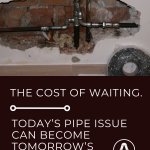
A pipe that can be evaluated and planned for today may become an emergency repair tomorrow, bringing unexpected shutdowns, emergency crews, property damage, and budget pressure with it.

A deteriorating pipeline does not automatically need to be replaced.
Before committing to excavation, replacement, traffic disruption, or an extended shutdown, the first question should be: What condition is the existing pipe actually in?
Learn more: advancedpiperepair.com

Putting off a known pipe issue may protect today’s budget, but it can create a much harder decision later when the work has to happen on short notice.
Planned rehabilitation gives teams more control over timing, access, staffing, and project costs.

Too little repair can leave risk behind. Too much repair can waste budget and create unnecessary disruption.
The goal is to understand what actually needs attention and build the project around that information.

One gives your team time to coordinate work, staffing, access, and production.
The other forces everyone to react.
Identifying developing pipe problems early can make the difference between the two.
Plan ahead with Advanced Pipe Repair at advancedpiperepair.com.

Replacing assets according to age alone can lead to unnecessary spending in some areas and overlooked risk in others.
Condition data can help owners prioritize investments based on actual need.
Advanced Pipe Repair can help support rehabilitation and replacement planning.

A leak, backup, or odor may point to a larger issue inside the system.
That is why surface symptoms should be investigated before deciding on a repair.
A clearer diagnosis can help avoid treating only one part of the problem.

Some pipe systems run beneath buildings, roads, production areas, or other spaces where excavation is difficult.
In these situations, access can become one of the biggest factors in the repair plan.
advancedpiperepair.com.

Flow conditions, chemicals, soil, temperature, pipe material, and previous repairs can all affect how quickly a system degrades.
That makes condition-based decisions more useful than relying on age alone: advancedpiperepair.com

For commercial and industrial facilities, success means more than repairing the pipe.
It also means protecting access, keeping downtime manageable, coordinating around operations, and avoiding unnecessary disruption.

If the same section of pipe keeps creating problems, repeated service may only be addressing the symptom.
At some point, it makes sense to step back and evaluate the condition of the asset itself.
Advanced Pipe Repair can help identify what is driving the problem.

What is causing the problem?
How severe is the damage?
What happens if nothing is done?
What level of disruption can the site tolerate?
Those answers should guide the repair method, not the other way around.
advancedpiperepair.com.

Pipe networks are interconnected. A problem in one area can affect flow, capacity, access, and operations far beyond the original defect.
That is why identifying vulnerable sections early can help teams prioritize repairs before the impact spreads.

Scheduling work during a planned shutdown, lower-demand period, or seasonal window can reduce disruption and make the project easier to manage.
Good timing is part of good infrastructure planning.

Pipes beneath roads, buildings, production areas, landscaped spaces, or other critical infrastructure can be difficult and expensive to reach.
In those situations, the method used to restore the pipe matters just as much as the repair itself.

